Chicken breast is excellent. It deserves its reputation — 31 grams of protein per 100 grams, low fat, affordable, versatile. But eating chicken breast every day is neither sustainable for most people nor necessary for meeting protein targets. There are dozens of foods with comparable or superior protein content that most people barely consider.
More importantly, for the majority of Indians — vegetarians, people who do not cook meat at home, people who simply want variety — the chicken-centric protein conversation leaves out the foods that are most accessible, most culturally familiar, and often most affordable. This post lists 20 high-protein foods that are not chicken breast, ranked within categories by protein content, with specific numbers, practical context, and honest notes on how to actually eat them.
Before you dive in: if you are still figuring out how much protein you actually need per day, that guide is worth reading first — it covers the research-backed targets by goal, age, and diet type.

| Category | Foods covered |
|---|---|
| Dairy and eggs | Paneer, Greek curd, eggs, egg whites, low-fat paneer, whey |
| Legumes and plant proteins | Soy chunks, edamame, tofu, chana, rajma, moong |
| Seeds | Pumpkin seeds |
| Fish and seafood | Tuna, rohu/catla, prawns, salmon |
| Other animal proteins | Mutton/goat, turkey |
| Pantry and speciality | Hemp seeds |
Dairy and Eggs
Paneer is India's most underrated fitness food. Eighteen grams of protein per 100 grams, made from whole milk, with a complete amino acid profile comparable to other dairy proteins. It is one of the few vegetarian foods that qualifies as a genuinely high-density protein source rather than a moderate one. Unlike tofu, paneer holds its texture during cooking without turning rubbery. Unlike legumes, it requires no soaking or long cooking time.
How to use it: Cubed and pan-fried in minimal oil for a salad or wrap, grilled on a skewer, added raw to raita, or cooked in any sabzi. Homemade paneer from 1 litre of full-fat milk yields approximately 200–220g of paneer (roughly 36–40g protein) at a fraction of packaged cost.
Regular curd contains 3.5 to 4g of protein per 100g — useful but not high. Straining curd through a muslin cloth for 2 to 4 hours produces hung curd or Greek-style curd, removing the whey and concentrating the protein to 9 to 10 grams per 100g. This makes it one of the most versatile and accessible high-protein dairy options available in any Indian kitchen, at essentially no additional cost.
How to use it: Eaten as is with fruit and a drizzle of honey, used as a dip with vegetables, as a base for raita with enhanced protein, blended into a smoothie, or used instead of cream in marinades. A 200g serving delivers approximately 18–20g of protein.
Eggs sit at the top of nearly every protein quality ranking. Two large eggs provide approximately 12 to 14 grams of protein with one of the highest biological values of any food — meaning the amino acid profile matches human needs extremely closely. The yolk, despite containing fat, also contains most of the micronutrients — choline, B12, fat-soluble vitamins, and the majority of the selenium and zinc.
How to use it: Boiled and kept in the fridge for the week's quickest protein source, scrambled, poached, made into an omelette with vegetables, or added to any meal. Egg bhurji with vegetables provides a quick 20+ gram protein meal in under 10 minutes.
Egg whites are pure protein with essentially no fat. Three egg whites provide approximately 11 grams of protein for roughly 50 calories. This makes them useful when protein targets need to be hit while keeping total caloric intake lower — or for people who want to add protein to a dish without adding significant fat or calories. The downside: no micronutrients to speak of, and the taste is bland on its own.
How to use it: Combined with one or two whole eggs to retain nutrition and flavour while increasing protein density. Added to omelettes, mixed into scrambled egg preparations, or used in egg white bhurji. Three egg whites + one whole egg = approximately 22g protein.
Low-fat paneer — made from skimmed milk — retains most of the protein content of full-fat paneer while significantly reducing caloric density. For people managing calories while hitting protein targets, this is a practical option. The texture is slightly firmer and drier than full-fat paneer, which affects some cooking applications but works well in curries, bhurji-style preparations, and crumbled applications.
How to use it: Crumbled into a salad or wrap as a high-protein, lower-calorie base. Used in tikka preparations where it absorbs marinade well. Bhurji with vegetables — particularly effective with low-fat paneer because the drier texture holds less moisture.
Whey is included here not as a whole food but as a reference point. It is a byproduct of cheese production — the liquid separated during cheesemaking, dried and concentrated into powder. As a supplement it is genuinely useful for closing protein gaps. The bloating some people experience from whey concentrate can be addressed by switching to whey isolate, which has the lactose removed.
How to use it: Mixed with water, milk, or plant milk for a quick protein addition. Added to oats, smoothies, or curd. One standard scoop (roughly 30g of powder) delivers approximately 22–25g of protein. For a full safety breakdown, see our guide on protein powder and creatine.
Legumes and Plant Proteins
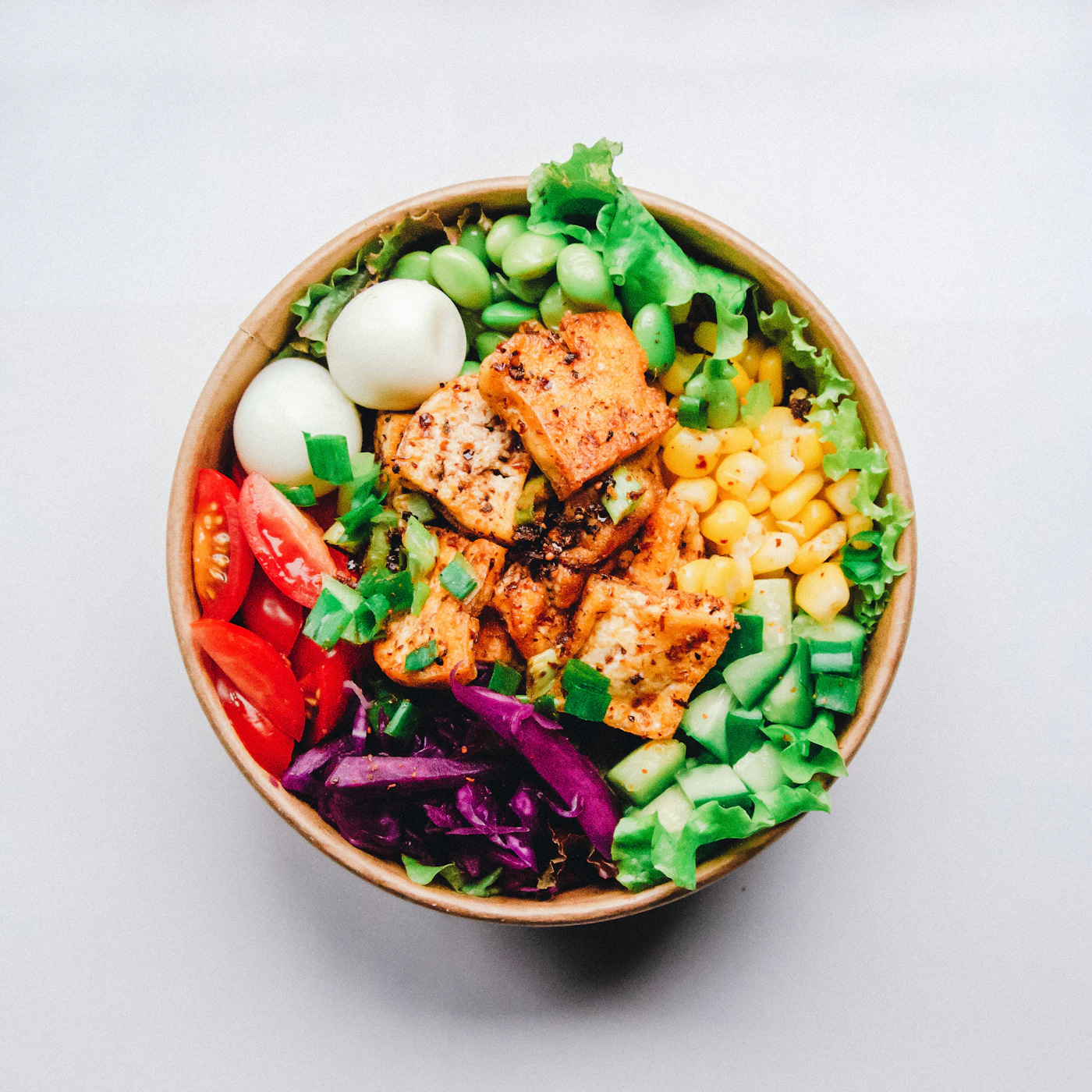
Soy chunks are the single most protein-dense plant food commonly available in India, and one of the most underused. Dry soy chunks contain approximately 52 grams of protein per 100 grams — higher than chicken breast by a substantial margin. Once soaked and cooked, the value drops to approximately 17 grams per 100 grams of prepared chunks, which is still excellent. Soy protein has a complete amino acid profile comparable to animal proteins, and soy specifically has a leucine content that makes it the most effective plant protein for muscle protein synthesis.
How to use it: Soaked in warm water for 15–20 minutes, squeezed dry, and then cooked exactly as you would cook chicken — in curries, stir-fries, biryanis, or tossed in a sabzi. The texture absorbs flavours readily. Nutrela and similar brands are widely available across India at very low cost.
Edamame — immature soybeans — is increasingly available in urban Indian stores and online, typically in frozen form. At 11 grams of protein per 100 grams cooked, they are among the most protein-dense vegetables available. Like other soy products, they contain a complete amino acid profile. They are also genuinely high in fibre, folate, vitamin K, and iron. The flavour is mild and slightly sweet, making them one of the most palatable high-protein plant snacks.
How to use it: Boiled or steamed and eaten as a snack with a pinch of salt and chilli — the simplest preparation. Tossed into salads, stir-fries, rice dishes, or dal for added protein. A 200g serving of cooked edamame provides approximately 22g of protein.
Tofu is made from coagulated soy milk — essentially the paneer of the soy world. Firm tofu provides 8 to 10 grams of protein per 100 grams with a complete amino acid profile. Extra-firm tofu reaches closer to 10 to 12 grams. It is lower in protein density than paneer but suitable for people avoiding dairy entirely. The bland flavour means it absorbs marinades and spice profiles extremely well — it takes on whatever it is cooked in.
How to use it: Pressed and marinated (soy sauce, garlic, chilli, lemon) for 30 minutes then pan-fried or grilled until golden — transforms the texture and flavour entirely. Crumbled into bhurji-style preparations with the same spice profile as egg bhurji. Added to curries, soups, or fried rice.
Chickpeas — both kabuli chana (white) and kala chana (black) — are among the higher-protein legumes and arguably the most satisfying. At 9 grams of protein per 100 grams cooked, they are a reliable protein contributor with a fibre content of approximately 7 grams per 100g cooked, making them one of the most satiating foods available. Kala chana is nutritionally comparable and slightly higher in certain micronutrients.
How to use it: Classic chole preparation, chana chaat with vegetables and chutney, roasted chana as a dry snack (approximately 19g per 100g when dried and roasted), added to salads, or sprouted and eaten raw as a snack or salad component.
Rajma provides approximately 9 grams of protein per 100 grams cooked with a fibre content comparable to chana. As with all legumes, the protein is incomplete — lysine-rich but methionine-limited — which makes the classic rajma-chawal pairing nutritionally astute: rice provides methionine to complement rajma's lysine. It is one of the most popular legumes in north Indian cooking and genuinely satisfying from its combination of protein and fibre.
How to use it: Rajma masala with rice is the definitive preparation. Can also be mashed and used as a high-protein filling for wraps and parathas, or made into rajma tikki.
Moong dal — both split and whole — is among the most digestible legumes, making it particularly useful for people with sensitive digestion or for recovery meals. Sprouted moong is higher in protein density and provides additional bioavailability of nutrients. Whole moong has slightly higher protein than split yellow moong due to the intact seed coat.
How to use it: Classic moong dal tadka, moong dal soup, moong dal chilla (protein pancake) which provides approximately 8–10g of protein per chilla, or sprouted and eaten raw in salads or as a breakfast component. Moong chilla with paneer filling is an excellent high-protein breakfast option.
Pumpkin seeds are genuinely impressive in protein density for a plant food — 19 grams per 100 grams puts them well ahead of most legumes. They are also among the highest plant sources of zinc (a mineral most plant-based eaters are low in), magnesium, and iron. The catch: they are high in fat (approximately 45g per 100g), making the caloric density high. A practical serving is 30 grams, providing approximately 5.7g of protein and 135 calories.
How to use it: Eaten by the handful as a snack, added to trail mix, sprinkled over salads or dal, toasted with spices as a topping for soups, or blended into smoothies. Reasonably affordable in Indian stores and widely available as a packaged snack.
Fish and Seafood

Canned tuna is one of the most protein-dense, most convenient, and most affordable fish protein sources available. Per 100 grams drained, it provides 25 to 30 grams of protein — comparable to chicken breast — with essentially zero preparation time. The omega-3 content (particularly in tuna in water rather than oil) is meaningful. The sodium in canned varieties is higher than fresh fish, which is worth noting for people monitoring sodium intake.
How to use it: Eaten directly from the can with a fork and some seasoning, mixed into a salad with curd or avocado, stirred into pasta or rice, or used as a filling in a wrap with vegetables. For people who eat fish, canned tuna is the most protein-efficient convenience food available.
Rohu and catla are the most widely consumed freshwater fish in India — affordable, widely available, and genuinely high in protein. At 17 to 20 grams of protein per 100 grams cooked, they are a strong protein source with a complete amino acid profile. Unlike salmon or tuna, they are typically bought fresh from local fish markets at accessible price points, making them a practical everyday option for non-vegetarians.
How to use it: Cooked in any regional style — Bengali fish curry, simple masala, or steamed. Rohu cutlets or fish tikka using these species provide high-protein meal options that are culturally familiar across large parts of India.
Prawns are one of the most protein-dense and lowest-fat animal proteins available — 20 to 24 grams of protein per 100 grams cooked with very little fat and only about 85 to 100 calories per 100 grams. This caloric efficiency makes them particularly useful for people who are protein-targeting while managing calories. They cook in under 5 minutes, which makes them one of the fastest animal protein options for meal preparation.
How to use it: Stir-fried with garlic and chilli for a quick protein side, added to rice dishes, curried in coastal-style preparations, or eaten in a prawn salad. A 150g serving of cooked prawns provides approximately 30–36g of protein at a caloric cost of around 130–150 calories.
Salmon provides 20 to 25 grams of protein per 100 grams cooked with the highest omega-3 (EPA and DHA) content of any commonly available fish. The omega-3s are independently valuable for cardiovascular health, inflammation reduction, and cognitive function — making salmon one of the most nutritionally comprehensive protein sources available. The price point in India is higher than local freshwater fish, making it an occasional rather than daily option for most people.
How to use it: Baked in the oven with minimal spicing to preserve the natural flavour, pan-seared with a simple seasoning, or added to salads. Frozen salmon fillets are increasingly available in urban Indian supermarkets at more accessible price points than fresh salmon.
Other Animal Proteins
Mutton — goat meat, as it is commonly called in India — is nutritionally comparable to chicken in protein content at 25 to 27 grams per 100 grams cooked, while providing significantly higher iron, zinc, and B12. The iron in red meat is haem iron — the most bioavailable form — making lean mutton particularly valuable for people prone to anaemia, women of reproductive age, and older adults. Lean cuts (shoulder, leg) are lower in saturated fat than fatty cuts.
How to use it: The traditional curry preparation is the default, but lean mutton can also be made into kebabs, keema with peas or soy, or a simple stir-fry. Mutton keema mixed with soy mince stretches the volume while maintaining protein density.
Turkey provides slightly more protein than chicken breast at a comparable fat level — making it arguably the densest animal protein source among common poultry. Turkey mince in particular is becoming more available in Indian cities and online. It is lower in saturated fat than red meat and leaner than most cuts of chicken other than breast. The mild flavour absorbs spices well, making it easy to use in Indian cooking styles.
How to use it: Turkey mince keema (prepared identically to mutton keema) is the most practical Indian application. Turkey slices can be used in wraps and sandwiches. As turkey becomes more widely available in Indian stores, it is worth adding to the regular rotation for non-vegetarians.
Pantry, Seeds, and Speciality
Hemp seeds contain approximately 31 grams of protein per 100 grams raw — placing them at the very top of plant protein density alongside soy. Unlike most plant proteins, hemp provides a complete amino acid profile and a favourable omega-6 to omega-3 ratio. They are also rich in magnesium and zinc. Hemp seeds have no psychoactive properties and are legally sold as a food supplement in India. Practical serving sizes are smaller (2 to 3 tablespoons, approximately 20 to 30 grams), providing 6 to 9 grams of protein per serving.
How to use it: Sprinkled over salads, smoothies, curd, or oatmeal. Blended into smoothies. Added to roti dough in small quantities for a protein boost. Available in health food stores and online — one of the more expensive items on this list per gram of protein, but a practical addition for vegan eaters looking to boost protein density without volume.
Bonus: The Protein Contributor Category
Several foods do not qualify as 'high protein' sources on their own but consistently contribute meaningful protein when eaten as part of a well-designed diet. These are worth knowing:
| Food | Protein per 100g | Best used as |
|---|---|---|
| Quinoa | 4g (cooked) | Grain base that provides a more complete amino acid profile than rice — useful for vegetarians and vegans as a rice substitute |
| Oats (rolled, cooked) | 2.5g cooked / 13g dry | Breakfast base — dry oats are surprisingly protein-dense; 80g dry oats (a large bowl before cooking) provides ~10g protein |
| Whole milk | 3.4g per 100ml | Liquid protein source that adds up — 500ml per day contributes approximately 17g without any additional food |
| Peanuts / groundnuts | 26g per 100g raw | One of the most affordable high-protein plant foods; peanut butter (100% groundnut) carries the same protein density — 2 tablespoons = approximately 7g |
| Sprouts (mixed moong/chana) | 3–4g per 100g sprouted | Easy addition to salads and breakfast — sprouting increases digestibility and bioavailability of protein |
| Skim milk powder (SMP) | 35g per 100g dry | Added to curd, smoothies, or cooking to increase protein density without significant flavour change — affordable and widely available |
The Full Reference: All 20 Foods at a Glance
| # | Food | Protein per 100g (cooked) | Category | Vegetarian? | Approx. cost |
|---|---|---|---|---|---|
| 1 | Paneer | 18g | Dairy | Yes | Moderate |
| 2 | Greek / Hung Curd | 9–10g | Dairy | Yes | Low (homemade) |
| 3 | Whole Eggs | 13g | Egg | Lacto-veg OK | Very low |
| 4 | Egg Whites | 11g | Egg | Lacto-veg OK | Very low |
| 5 | Low-Fat Paneer | 16–18g | Dairy | Yes | Moderate |
| 6 | Whey Protein (supplement) | 70–90g dry | Dairy supplement | Yes | Moderate–High |
| 7 | Soy Chunks / Meal Maker | 17g cooked | Plant/Soy | Yes | Very low |
| 8 | Edamame | 11g | Plant/Soy | Yes | Low–Moderate |
| 9 | Tofu (Firm) | 8–10g | Plant/Soy | Yes (vegan) | Low–Moderate |
| 10 | Chana / Chickpeas | 9g | Legume | Yes | Very low |
| 11 | Rajma | 9g | Legume | Yes | Very low |
| 12 | Moong Dal | 7–8g | Legume | Yes | Very low |
| 13 | Pumpkin Seeds | 19g raw | Seeds | Yes (vegan) | Moderate |
| 14 | Canned Tuna | 25–30g | Fish | No | Low–Moderate |
| 15 | Rohu / Catla Fish | 17–20g | Fish | No | Low |
| 16 | Prawns | 20–24g | Seafood | No | Moderate |
| 17 | Salmon | 20–25g | Fish | No | High |
| 18 | Mutton / Goat (lean) | 25–27g | Red meat | No | Moderate |
| 19 | Turkey | 27–29g | Poultry | No | Moderate–High |
| 20 | Hemp Seeds | 31g raw | Seeds | Yes (vegan) | High |
Building Meals Around These Foods: Three Practical Day Plans
Knowing the foods is useful. Knowing how to assemble them into actual meals is more useful. Here are three day plans — vegetarian, non-vegetarian, and vegan — built around the foods in this list, targeting approximately 100 to 110 grams of protein. If you want to calculate your own daily target, use our free Protein Calculator.
| Meal | What you eat | Protein |
|---|---|---|
| Breakfast | Moong dal chilla × 2 (with paneer filling, 80g paneer) + 200g hung curd | ~38g |
| Mid-morning | 30g pumpkin seeds + 1 glass milk (250ml) | ~14g |
| Lunch | Soy chunk curry (150g cooked chunks) + 2 roti + sabzi | ~30g |
| Evening | 100g paneer bhurji with vegetables | ~20g |
| Dinner | Rajma (150g cooked) + rice + salad | ~14g |
| Total | ~116g |
| Meal | What you eat | Protein |
|---|---|---|
| Breakfast | 3 whole eggs + 2 egg whites scrambled + 1 glass milk | ~38g |
| Mid-morning | 100g canned tuna with cucumber and lemon | ~27g |
| Lunch | Rohu fish curry (150g fish) + dal + rice | ~35g |
| Evening | 200g curd + 30g pumpkin seeds | ~14g |
| Dinner | Prawn stir-fry (150g prawns) + 2 roti + salad | ~34g |
| Total | ~148g — adjust portions for your target |
| Meal | What you eat | Protein |
|---|---|---|
| Breakfast | 80g dry oats cooked + 2 tbsp hemp seeds + 200g edamame (as side) | ~36g |
| Mid-morning | 150g firm tofu stir-fry with vegetables | ~15g |
| Lunch | Soy chunk curry (150g cooked) + brown rice + sabzi | ~30g |
| Evening | Roasted chana (40g) + 2 tbsp pumpkin seeds | ~13g |
| Dinner | Rajma (200g cooked) + 2 roti + salad | ~18g |
| Total | ~112g |
Vegan protein planning requires more deliberate effort than omnivore or vegetarian patterns. The combination of soy products (chunks, tofu, edamame), legumes, and seeds makes 100g achievable — but it requires intentional meal design rather than incidental eating. You can track your daily intake with our free Protein Tracker.
The Protein Affordability Ranking: Highest Protein Per Rupee
For many people, the practical question is not just which foods are high in protein but which provide the most protein for the least cost. Here is an approximate ranking for Indian markets:
| Rank | Food | Why it wins on cost |
|---|---|---|
| 1 | Eggs | Consistently the best protein-per-rupee food available anywhere in India. A box of 12 eggs provides approximately 80g of protein for around Rs. 60–80. |
| 2 | Soy chunks (meal maker) | Among the most protein-dense foods available at the lowest price points. A 200g pack costs Rs. 25–40 and provides approximately 100g of protein (dry weight). |
| 3 | Moong / toor / masoor dal | The backbone of affordable protein in Indian cooking. Dal from bulk purchase costs very little per gram of protein. |
| 4 | Roasted chana (dry snack) | 19g protein per 100g at very low cost — one of the best snacking protein values available. |
| 5 | Curd (plain, homemade) | Homemade curd from full-fat milk is inexpensive and provides protein alongside live cultures (provided it isn't boiled). Straining to make hung curd doubles the protein concentration for free. For what those live cultures actually do — and when heat kills them — see fermented foods and gut health. |
| 6 | Paneer (homemade) | Store-bought paneer at Rs. 300–400/kg is moderate cost. Homemade paneer from 1 litre of milk (Rs. 60–70) yields 200g+ of paneer at roughly half the packaged price. |
| 7 | Rohu / catla fish | Local freshwater fish bought fresh from fish markets is among the more affordable animal protein options for non-vegetarians. |
Final Thoughts: Variety Is the Point
The 20 foods in this list share one characteristic: they give you options. The protein conversation in fitness media has become so focused on chicken breast, protein powder, and little else that it has effectively narrowed the dietary imagination of anyone trying to eat well.
The reality is that Indian kitchens have access to some of the best protein variety in the world — a legacy of necessity (a large vegetarian population that needed to be well-nourished) and agriculture (legumes, dairy, and fish available across the country). Soy chunks are among the world's best plant proteins. Paneer is legitimately excellent. Eggs are irreplaceable in their protein quality and convenience.
The goal is not to replace chicken breast. It is to have enough variety that eating adequate protein every day does not become monotonous, expensive, or dependent on a single food. A rotating cast of the foods in this list — paired with intentional meal design — makes hitting protein targets sustainable in a way that any single-food approach never will.
Start with two or three foods from this list that you do not currently eat regularly. Add them to your weekly shop. Notice what they do to your satiety, your energy, and your recovery from training. The variety will build itself.