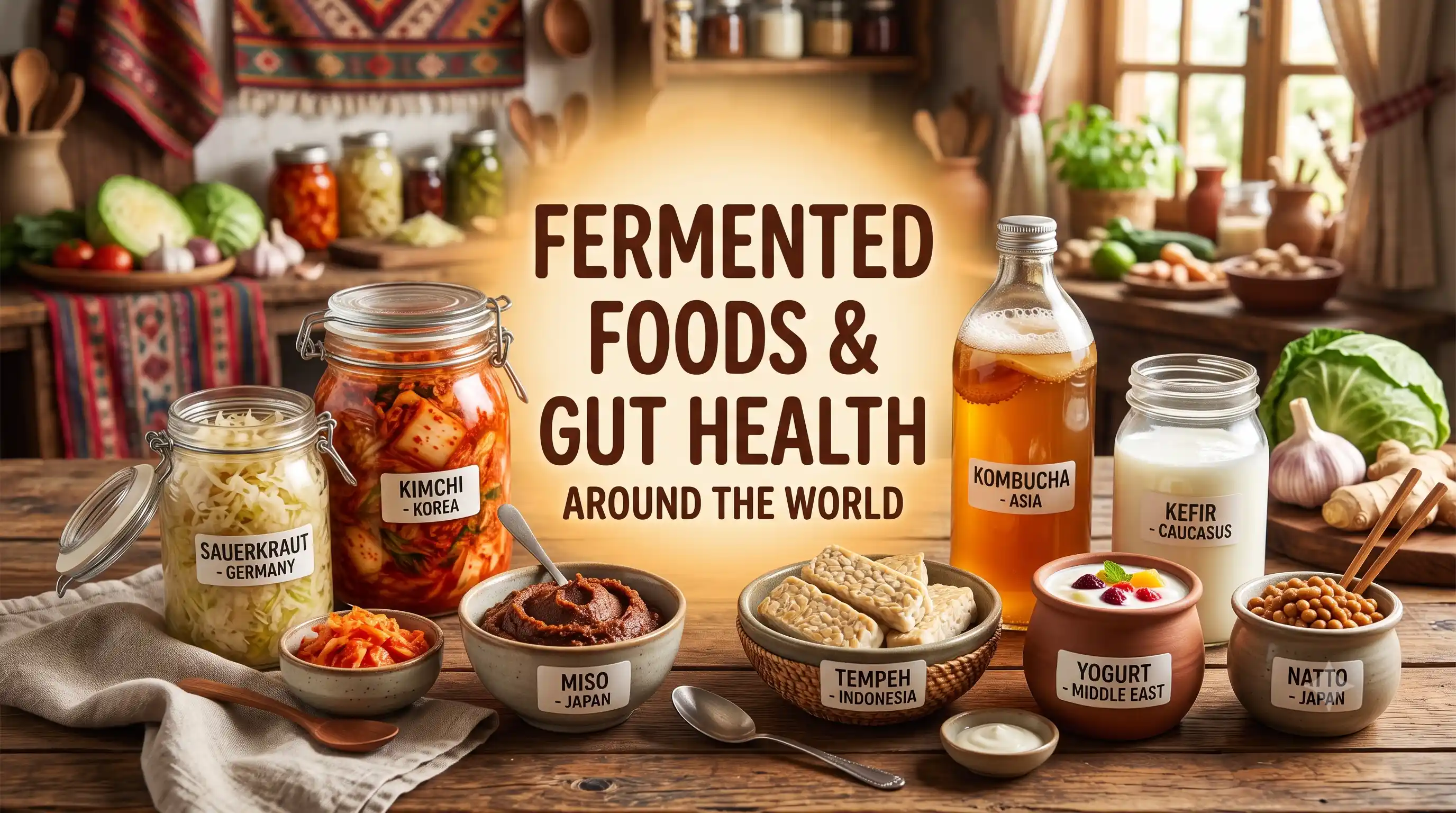
Kimchi, natto, kefir, miso, sauerkraut, idli batter, injera — none of these foods share a cuisine, a climate, or a single ingredient in common. What they share is a process: microorganisms — bacteria, yeast, or mould — breaking down sugars and proteins in food before you do. Fermentation shows up on every inhabited continent for the same practical reason it existed before refrigeration: it preserves food, and as a side effect, it changes the food's nutrition in ways that happen to matter for gut health.
The "gut health" conversation around fermented food has gotten louder than the evidence supporting it, though — and the gap between the two is usually the same gap: people talk about fermented foods as if they're interchangeable probiotic supplements, when in practice, whether you get a live-microbe benefit at all depends heavily on how the specific food is made, stored, and eaten. This is what's actually going on, food by food, and then what the current research says once you strip out the marketing.
Korea — Kimchi
Napa cabbage (or radish) salted, then fermented with garlic, ginger, chilli, and often salted seafood or fish sauce, for anywhere from a few days to several months. The fermentation is dominated by lactic acid bacteria — Leuconostoc, Lactobacillus species (many reclassified into the genus Lactiplantibacillus in recent taxonomy), and Weissella — which develop in succession as the kimchi ages, shifting its flavour from mild and slightly sweet to sharply sour.
Kimchi is eaten raw far more often than it's cooked, which matters for the live-culture argument below. It's also one of the most-studied fermented foods for gut microbiota effects, though most human trials remain small and short.
Japan — Natto and Miso
Whole soybeans fermented with Bacillus subtilis var. natto, producing the food's signature sticky, stringy texture and strong smell. Natto is also the richest common dietary source of vitamin K2 (menaquinone-7), and contains nattokinase, an enzyme studied for potential effects on blood clotting — which is also why it's a genuine caution point for anyone on blood-thinning medication, not just a wellness footnote.
Soybean paste fermented with koji — rice or barley inoculated with Aspergillus oryzae mould — plus salt, for anywhere from a few weeks to several years depending on the variety. The important caveat: a large share of commercial miso sold outside Japan is pasteurized for shelf stability, which kills the live cultures. Unpasteurized, refrigerated miso retains them; the label or the refrigerated placement is usually the only way to tell the difference.
The Caucasus and Eastern Europe — Kefir
Originating in the Caucasus mountains and now a staple across Russia and Eastern Europe, kefir is made by fermenting milk with kefir grains — not a grain in the cereal sense, but a gelatinous cluster of bacteria and yeast living together in a symbiotic culture. That combination typically includes several times more distinct bacterial and yeast species than are used to make yogurt, which is usually fermented with just Streptococcus thermophilus and Lactobacillus bulgaricus.
More strains per serving doesn't automatically translate to a proportionally bigger health effect for any one person, but it does mean kefir exposes your gut to a broader range of live microbes than most yogurts on the same shelf.
India — Idli and Dosa Batter
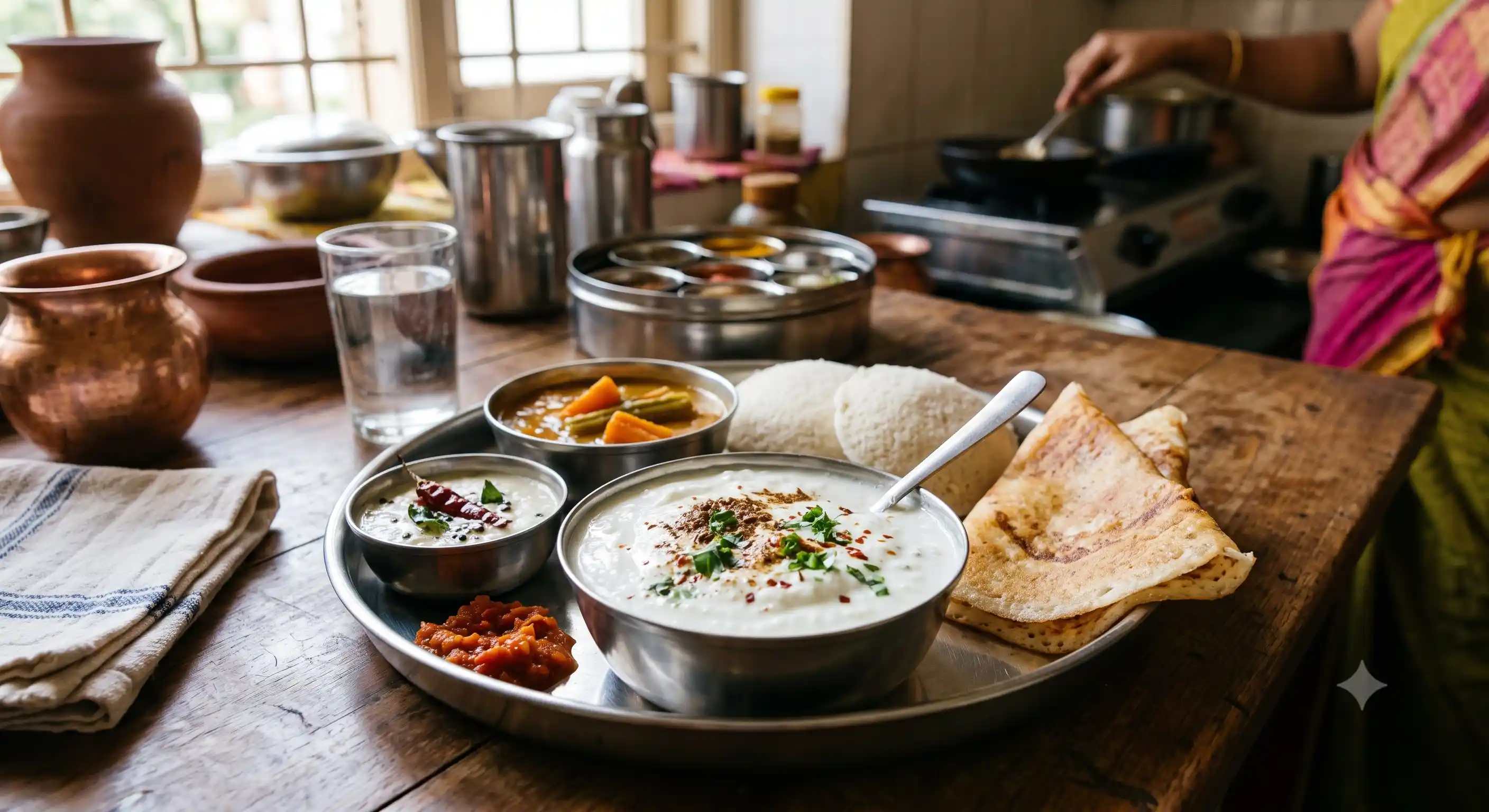
Ground rice and urad dal (split black gram), soaked, ground, and left to ferment overnight through wild lactic acid bacteria (largely Leuconostoc mesenteroides) and naturally occurring yeasts — no starter culture required, unlike most Western ferments. The batter rises, turns lightly sour, and becomes visibly aerated before it's steamed into idli or pan-cooked into dosa.
The fermentation step does real nutritional work regardless of whether the microbes survive the steaming or cooking that follows: it increases the bioavailability of B vitamins, reduces phytic acid (which otherwise binds minerals like iron and zinc), and partially breaks down proteins, making the finished idli or dosa easier to digest than a batter cooked without fermenting it first. For a practical sense of how easily idli and dosa fit into a protein-complete Indian breakfast, 30g protein Indian breakfast ideas includes how to pair them with dal, eggs, or curd to hit a meaningful morning protein target.
Germany and Ethiopia — Sauerkraut and Injera
Cabbage fermented in its own salted brine, with no added spices — the plainer, more austere cousin of kimchi, using the same broad family of lactic acid bacteria. Historically significant beyond flavour: sauerkraut's vitamin C content helped prevent scurvy on long sea voyages, most famously stocked by Captain Cook's crew.
A spongy, sour flatbread made from teff flour batter, left to ferment for several days through wild yeast and lactic acid bacteria before being cooked on a large flat griddle. The extended fermentation is what gives injera its distinctive sourness and porous texture, and — similar to idli batter — improves the mineral availability of the teff grain.
Seven Ferments, Side by Side
| Food | Origin | Base ingredient | Primary microbes | Usually eaten |
|---|---|---|---|---|
| Kimchi | Korea | Cabbage/radish | Lactic acid bacteria (Leuconostoc, Lactiplantibacillus) | Raw |
| Natto | Japan | Soybeans | Bacillus subtilis var. natto | Raw |
| Miso | Japan | Soybeans + koji | Aspergillus oryzae (mould) | Raw or cooked — check pasteurization |
| Kefir | Caucasus/E. Europe | Milk | Multiple bacteria + yeast species | Raw |
| Idli/dosa batter | South India | Rice + urad dal | Leuconostoc mesenteroides + wild yeast | Cooked |
| Sauerkraut | Germany | Cabbage | Lactic acid bacteria | Raw (fresh) or pasteurized (jarred) |
| Injera | Ethiopia | Teff flour | Wild yeast + lactic acid bacteria | Cooked |
What the Science Actually Says
The strongest single piece of evidence in this space is a 2021 study from Stanford, led by researchers in the Sonnenburg lab and published in Cell. Over 10 weeks, one group of participants ate a diet high in fermented foods — averaging around six servings a day across yogurt, kefir, kimchi, and other ferments — while another group ate a diet high in fibre. The fermented-food group showed measurably increased gut microbiome diversity and a reduction in several inflammatory markers. The high-fibre group did not show the same reduction in inflammation over the same period, which surprised the researchers, since fibre is the more commonly recommended intervention for gut health.
That's a genuinely significant finding, and it's one of the better-designed human studies in this space. It is also one study, over 10 weeks, in a specific population — not a settled verdict on every fermented food for every person. Most of the more specific claims attached to individual foods (kimchi for cholesterol, kefir for immune function, miso for blood pressure) rest on a smaller and more mixed body of evidence, often from shorter trials or animal studies that haven't been replicated at scale in humans.
The Distinction Almost Nobody Mentions: Live Microbes vs. Fermentation Byproducts
Fermented food does two genuinely different things for you, and most "gut health" content collapses them into one claim.
The first is live microbial exposure — the actual probiotic effect, where living bacteria or yeast from the food interact with your existing gut microbiome. This only happens if the microbes are still alive when you eat the food, which means raw or minimally heated, unpasteurized, and not sitting past the point where the culture has died off. Boiled miso soup, cooked kimchi jjigae, baked sourdough bread, and shelf-stable pasteurized sauerkraut or kombucha do not deliver this effect — heat above roughly 45 to 50°C kills most of the relevant bacteria and yeast.
The second is the fermentation byproduct effect — the nutritional changes fermentation makes to the food itself, independent of whether any microbes survive. This includes the reduced phytic acid and increased B-vitamin availability in idli batter, the vitamin K2 natto retains after cooking, and the broken-down proteins that make many fermented foods easier to digest than their unfermented counterparts. This effect survives cooking, because it already happened before the food reached the pan.
Where the Hype Outruns the Evidence
- Fermentation doesn't remove FODMAPs. Kimchi and sauerkraut are still made from cabbage, which remains a FODMAP-containing vegetable after fermentation. People with IBS or known FODMAP sensitivity can still react to these foods despite their "gut health" reputation.
- Fermented foods are high in histamine and biogenic amines. Aged and fermented foods — kimchi, aged miso, kefir, kombucha — are a common trigger for people with histamine intolerance, causing symptoms like flushing, headaches, or digestive discomfort. Tyramine-rich aged ferments can also interact with MAOI medications, which is a genuine medical interaction, not a wellness caveat.
- "Probiotic" on a label doesn't guarantee a meaningful dose. Commercial products vary enormously in how many live organisms actually survive manufacturing, shipping, and shelf storage by the time you eat them — a jarred, shelf-stable, vinegar-based "kimchi" is a different product from small-batch, refrigerated, actively fermenting kimchi, even with an identical label. The food label decoder is a useful reference for reading past front-of-pack claims on any packaged food.
- More fermented food isn't automatically better. The Stanford study used a specific, moderate serving pattern across multiple food types — it wasn't testing whether doubling or tripling intake produces a proportionally bigger effect, and there's no strong evidence that it does.
What to Actually Do With This
Eat a variety of fermented foods regularly rather than relying on one, since different ferments carry different microbial strains and different nutritional byproducts. If you want a framework for building this variety into a real weekly routine, the 2-hour Sunday reset covers how to prep a week of meals — including fermented sides like dahi, kimchi, and miso — without making it a three-hour project. For a fuller approach to eating well, the Eat With Intent course covers protein, balanced plates, meal planning, and food labels across six free lessons. If the live-culture effect matters to you specifically, eat at least some of your fermented food raw or minimally cooked — a spoonful of kimchi as a side rather than only in kimchi jjigae, dahi rather than only cooked-in yogurt-based curries, unpasteurized miso stirred in off the heat rather than boiled. And don't discount the cooked versions entirely: fermented, then cooked, still beats never fermented at all for nutrient availability and digestibility, even without the live-microbe bonus.
If gut health is the reason you're interested in fermented food in the first place, it works best alongside — not instead of — the basics covered in how different countries build a balanced plate: plenty of vegetables and fibre, since fermented foods complement fibre intake rather than replace it. The two work through different mechanisms — fermented foods can introduce new bacterial strains, while getting enough fiber feeds the bacteria you already have — which is why most people's gut health efforts benefit more from fixing a fiber shortfall first.
None of the ferments in this list need to be treated as a supplement standing in for a full diet. Kimchi, dahi, idli batter, and miso earned their place in their respective cuisines for taste, preservation, and practicality first — the gut health case for eating them regularly is real, but it's a bonus on top of foods that were already worth eating, not the whole reason to start.