Every fitness facility needs a clear emergency policy, and every trainer needs to know it before an emergency happens — not during one. The Cardiac Chain of Survival (early recognition, early CPR, early defibrillation, early advanced care) is the backbone of responding to the most serious situations, but this chapter also covers choking, heart attack recognition, and AED safety.
Lessons 1 through 15 have all been about what a trainer does under normal circumstances. This chapter is about what happens when circumstances stop being normal — and why preparation, not improvisation, is what separates a good outcome from a bad one.
Facility Emergency Policy Comes First
Before any specific skill — CPR, AED use, choking response — a trainer needs to know their facility's actual emergency policy: where the AED is located, who calls emergency services, what the internal communication protocol is, and what's documented afterward. Skills are useless if nobody knows the plan they fit into.
Picture a trainer who's excellent at CPR but has never actually walked to where the facility keeps its AED. In a real emergency, those first 60-90 seconds spent searching are exactly the seconds the Cardiac Chain of Survival below is built to protect. Knowing the policy isn't a bureaucratic formality — it's what makes the hands-on skill usable in the moment it's needed.
The Cardiac Chain of Survival
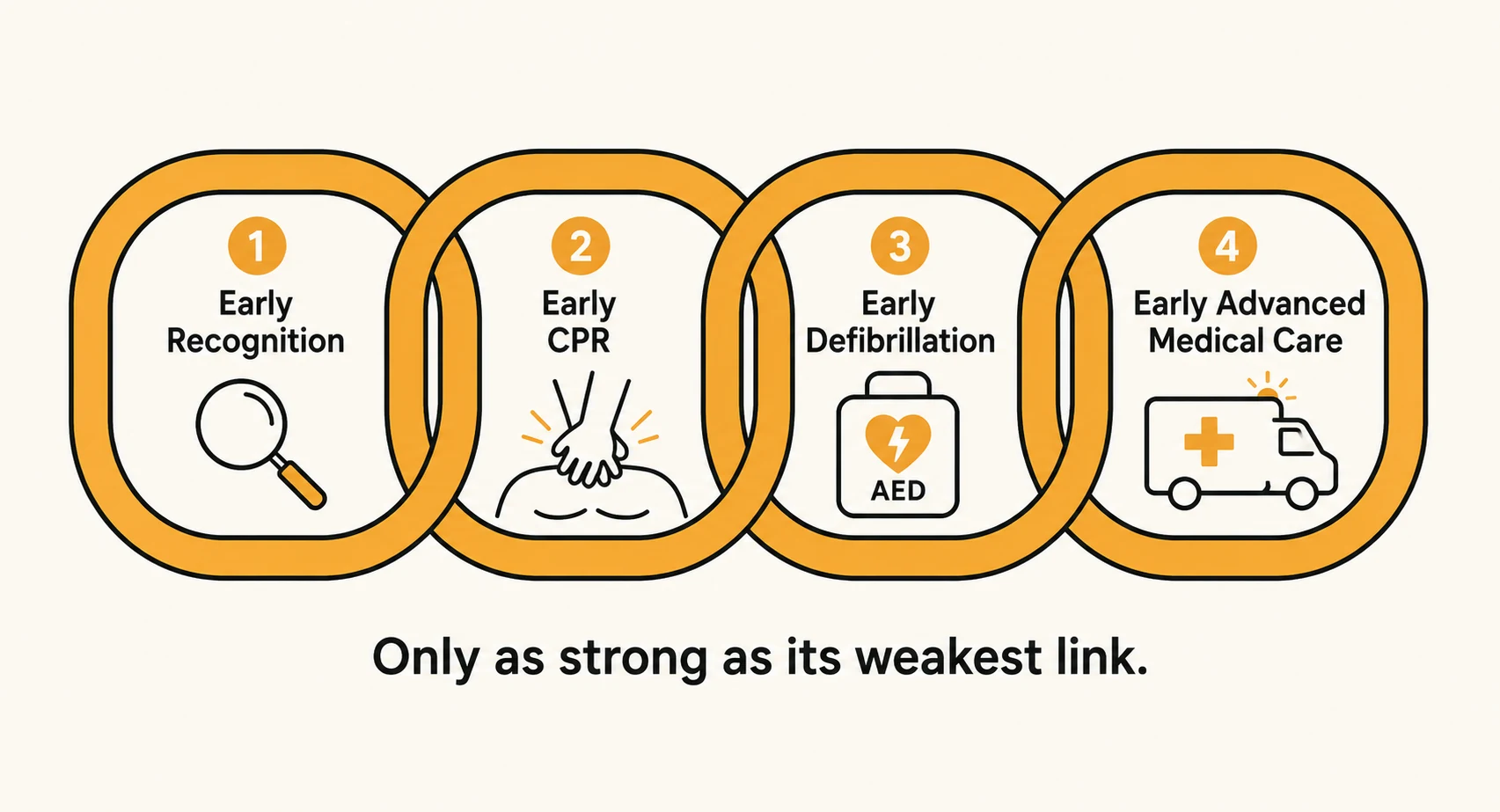
For cardiac emergencies specifically, ACE frames the response as a chain — and like any chain, it's only as strong as its weakest link.
- Early recognitionIdentifying a heart attack or cardiac arrest quickly enough for the rest of the chain to matter.
- Early CPRStarting chest compressions promptly to maintain blood flow.
- Early defibrillationUsing an AED as soon as it's available.
- Early advanced medical careGetting emergency medical services involved without delay.
CPR and AED Basics
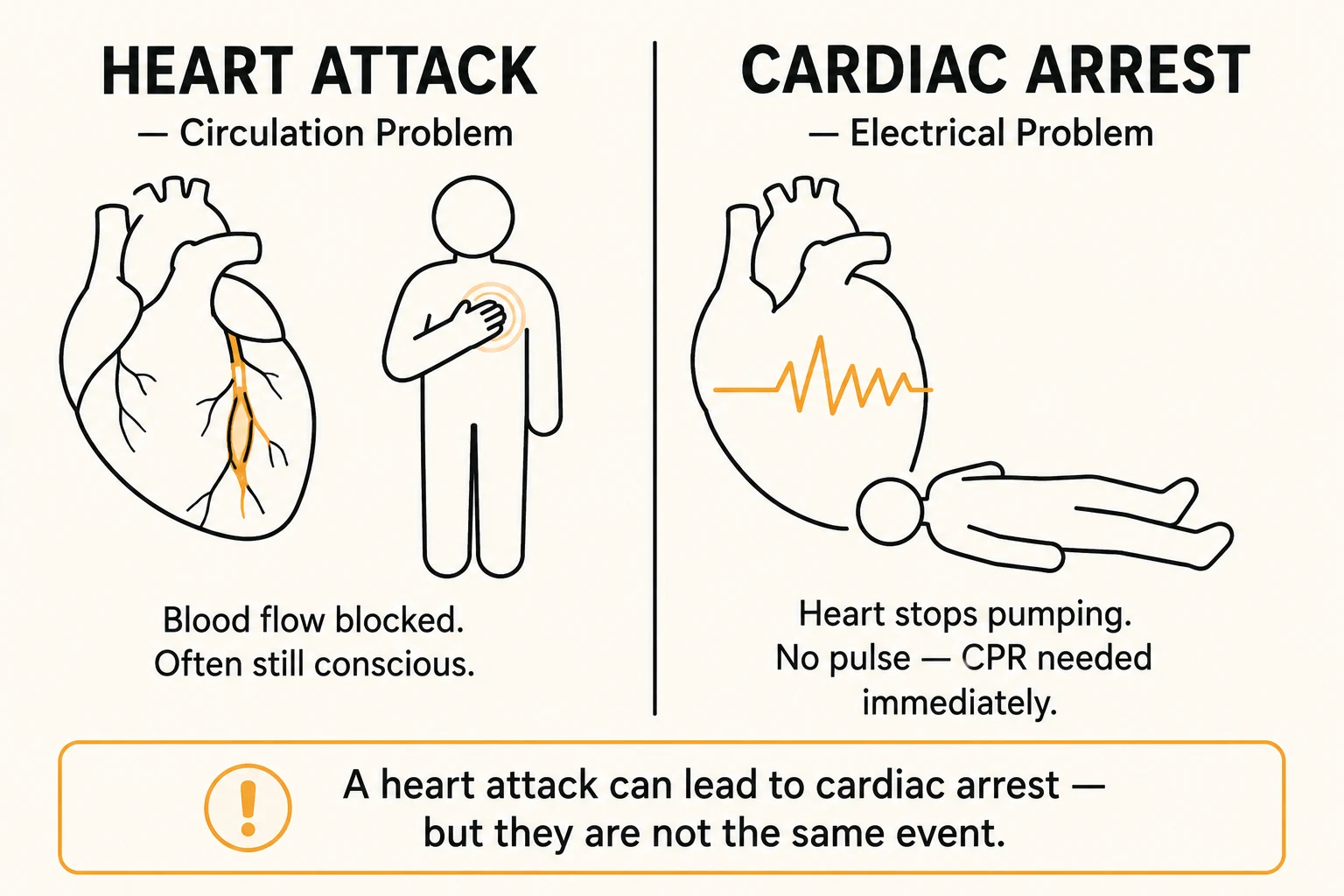
For an adult in cardiac arrest, CPR is delivered in cycles of 30 chest compressions followed by 2 rescue breaths. Recognizing a heart attack in progress means watching for uncomfortable pressure, squeezing, crushing, or tightness in the chest — not waiting for a dramatic collapse before responding.
| AED safety precaution | Why it matters |
|---|---|
| Keep the victim away from flammable materials and water | Reduces risk of fire or electrical hazard during defibrillation |
| Avoid touching the victim during analysis or shock delivery | Prevents interference with the device or injury to the responder |
| Don't use alcohol to wipe the chest dry | Alcohol is flammable and can interfere with pad adhesion |
Recognizing a Stroke: The FAST Method
Stroke is another emergency a trainer needs to recognize quickly, and it follows its own distinct pattern rather than the chest-focused signs of a heart attack. The standard memory tool is FAST:
- Face droopingAsk the person to smile — check for one side of the face drooping or feeling numb.
- Arm weaknessAsk the person to raise both arms — watch for one arm drifting downward.
- Speech difficultyAsk the person to repeat a simple phrase — listen for slurred or strange speech.
- Time to call emergency servicesIf any of the above are present, note the time symptoms started and call for help immediately — stroke treatment is highly time-sensitive.
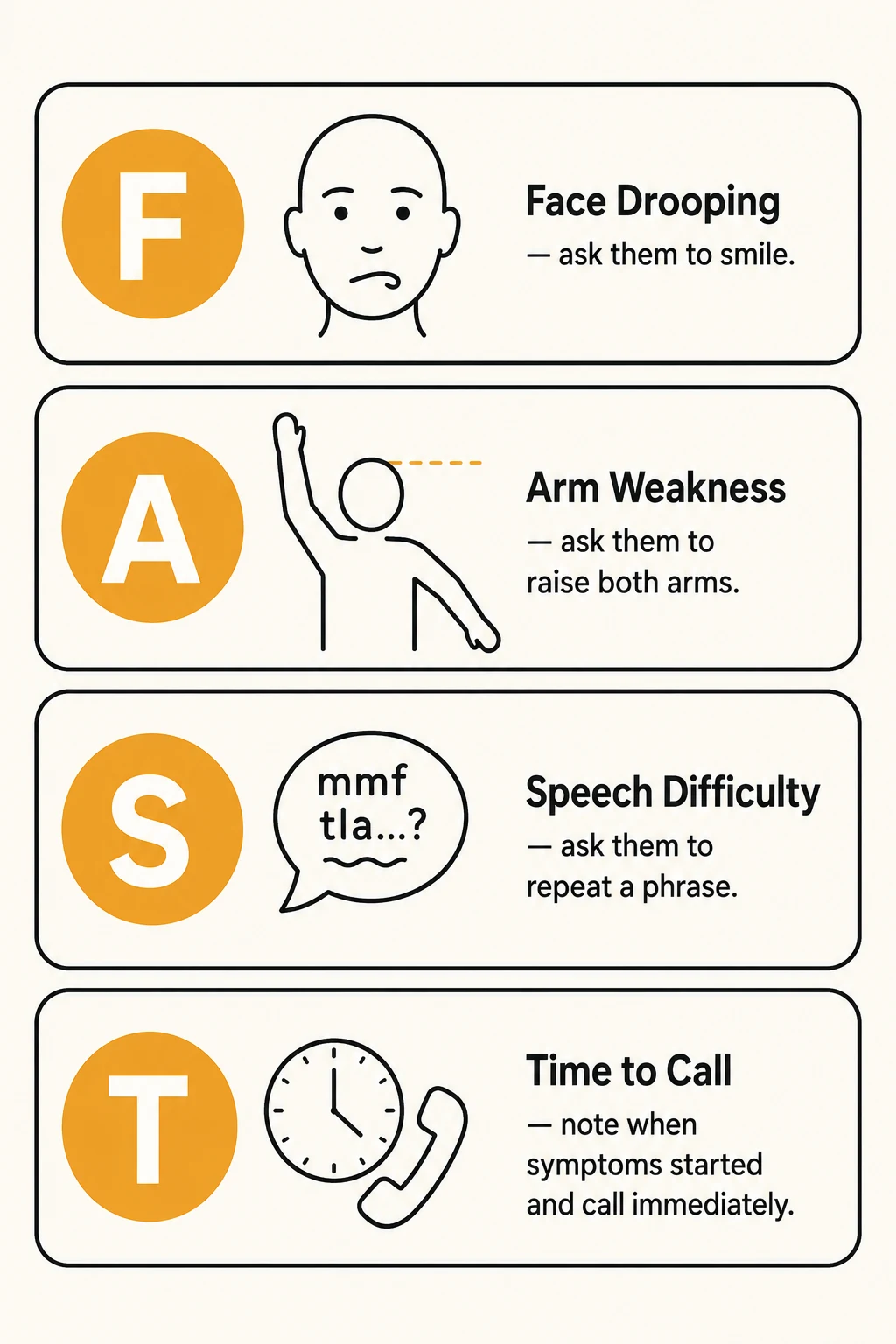
The FAST checks matter because stroke symptoms can look deceptively mild at first — a client might describe it as feeling "a little off" rather than reporting obvious distress. The response isn't to wait and see if it passes; it's to run the quick check and activate emergency services immediately if anything is abnormal.
Choking Response
For a conscious choking adult or child, the standard response involves abdominal thrusts (or back blows and chest thrusts for infants), continuing until the object is dislodged or the person becomes unconscious — at which point the response shifts toward CPR-style intervention and immediate activation of emergency services.
A useful mental checklist across all three emergencies in this chapter — cardiac, stroke, and choking — is the same three steps in the same order: recognize what's actually happening, activate the facility's emergency plan (which usually means someone calling emergency services while another person begins first response), and then apply the specific skill the situation calls for. Skipping straight to a skill without first recognizing and activating is how well-intentioned responders waste the minutes that matter most.
8 questions, modeled on ACE's real exam style. Score 72%+ to mark this lesson complete.
- Every trainer needs to know their facility's emergency policy before an emergency happens, not during one.
- The Cardiac Chain of Survival is early recognition, early CPR, early defibrillation, and early advanced medical care.
- Adult CPR is delivered in cycles of 30 compressions to 2 rescue breaths.
- AED safety includes avoiding flammable materials/water, not touching the victim during shock delivery, and never using alcohol to dry the chest.
- This lesson summarizes CPR/AED concepts but does not replace hands-on certification, which most facilities require.
- A heart attack (circulation problem) and cardiac arrest (electrical problem, no pulse) are related but different — CPR responds to arrest, not chest pain alone.
- The FAST method (Face, Arm, Speech, Time) is the standard quick check for recognizing a possible stroke.
Before moving to Lesson 17:
- Write out the four links of the Cardiac Chain of Survival from memory.
- If you're not currently CPR/AED certified, look up a certification course near you as a real next step.
- Write one sentence distinguishing a heart attack from cardiac arrest, and one sentence explaining each letter of FAST.
- Complete the knowledge check above and review any question you missed.