Common musculoskeletal injuries — rotator cuff, low back, knee, ankle — don't put a client's training on pause; they change what "appropriate programming" looks like. The trainer's role is to continue what a rehab professional has already outlined, safely and progressively, never to independently design or replace that plan.
Lesson 14 covered chronic conditions and life-stage populations. This chapter narrows in on a different, extremely common category: the client who's dealing with — or recovering from — a specific musculoskeletal injury.
Common Tissue Injury Categories
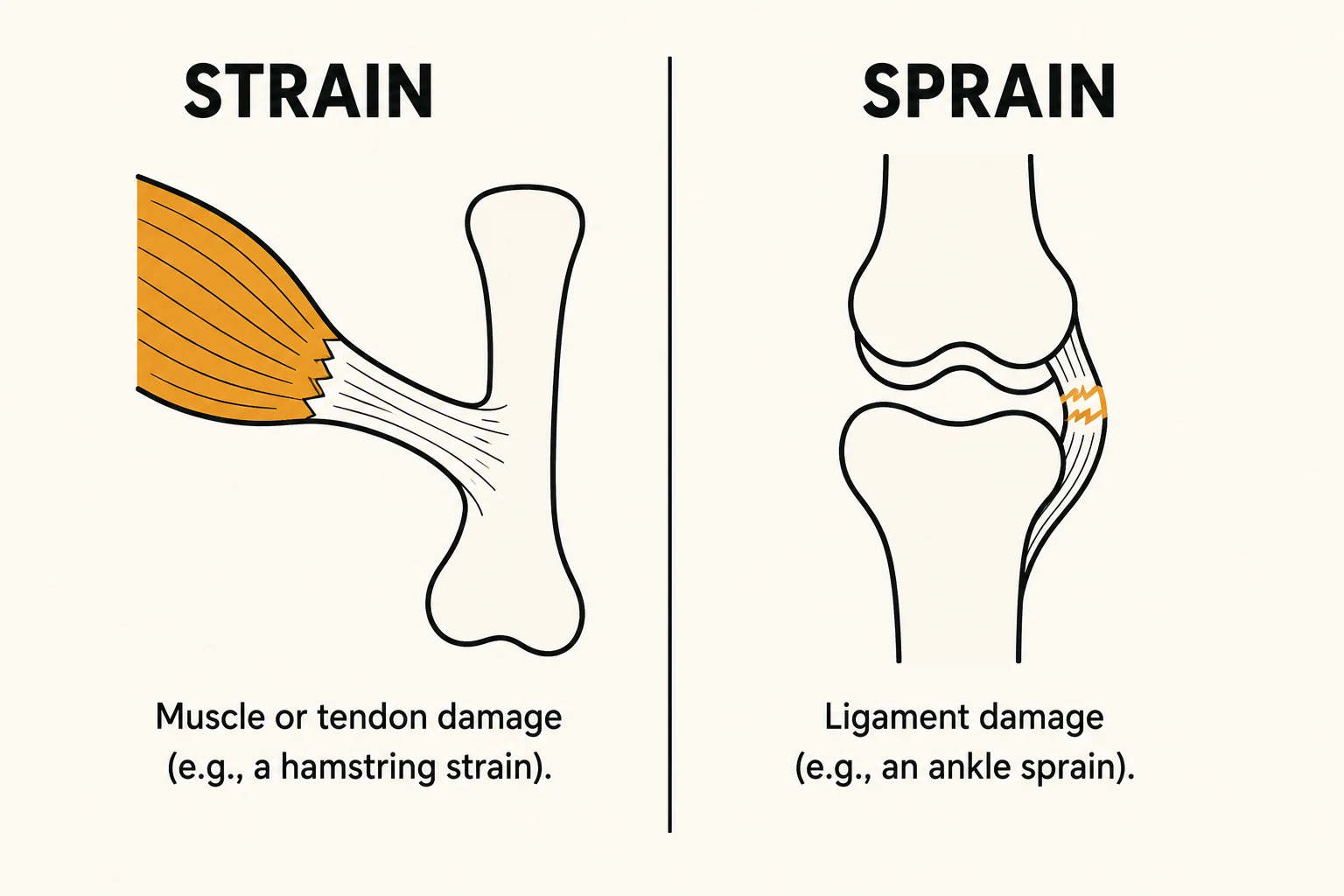
Before looking at specific joints, it helps to know the broad categories of tissue injury this chapter groups everything into: muscle strains, ligament sprains, tendinitis, cartilage damage, fractures, and overuse conditions. Most of the specific injuries below are really just one of these categories showing up at a particular joint.
Two of these get mixed up constantly, and it's worth being precise: a strain is damage to a muscle or the tendon connecting it to bone, while a sprain is damage to a ligament connecting bone to bone. A hamstring strain and an ankle sprain are both common, but they're injuries to entirely different tissue types — which is part of why they show up with different symptoms and different rehab timelines.
Rotator Cuff Injuries
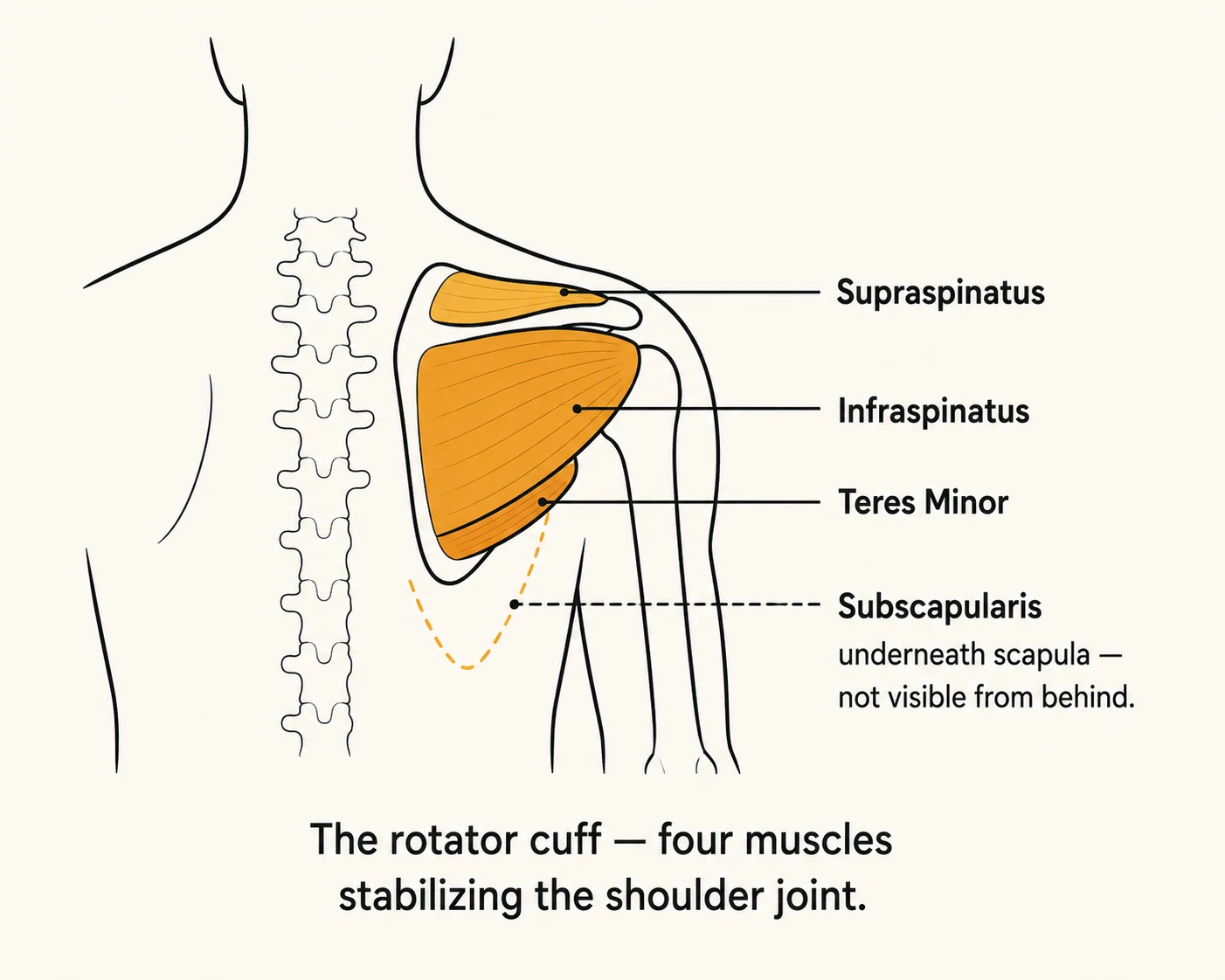
The rotator cuff is a group of four muscles — supraspinatus, infraspinatus, teres minor, and subscapularis — that stabilize the shoulder joint and control its rotation. Because the shoulder trades stability for an unusually large range of motion, this muscle group takes on a disproportionate amount of stabilizing work, which is part of why rotator cuff injuries are so common, especially with repetitive overhead movement or after direct trauma.
For a client recovering from a rotator cuff injury, the trainer's role is to obtain specific exercise guidelines from the physical therapist or surgeon involved, with the explicit goal of continuing what was already established in physical therapy — safely and progressively, not independently. Restoring proper flexibility and strength around the shoulder is the underlying goal, but the specific protocol comes from the rehab team, not from the trainer's own judgment. In practice, that usually looks like a trainer picking up a client somewhere in a graded strengthening phase — light resistance-band work, controlled range of motion — and progressing load only in step with what the rehab team has cleared, never ahead of it.
Low Back Pain
Low back pain is one of the most common complaints a trainer will encounter, and it frequently connects directly back to findings from Lesson 7's functional assessment. An anterior pelvic tilt or poor transverse abdominis engagement — exactly the kind of compensation the postural assessment and core-function test are built to catch — often shows up downstream as low back discomfort, especially in clients who sit for long stretches during the day.
The general programming approach mirrors the rest of this chapter: core stability work, in the spirit of Lesson 9's Functional Training principles, generally comes first, and any exercise that clearly aggravates a client's specific symptoms gets modified or avoided rather than pushed through. For a client with a diagnosed low back condition rather than general discomfort, the same rule as the rotator cuff applies — the trainer continues a plan the client's physician or physical therapist has already outlined, rather than designing one independently.
Knee Injuries and the IT Band Connection
Knee pain often has a contributor that's easy for a trainer to actually address: tightness in the IT band complex. Working on that tightness through stretching and myofascial release can meaningfully change the dynamics of the patellofemoral joint (where the kneecap tracks against the thigh bone).
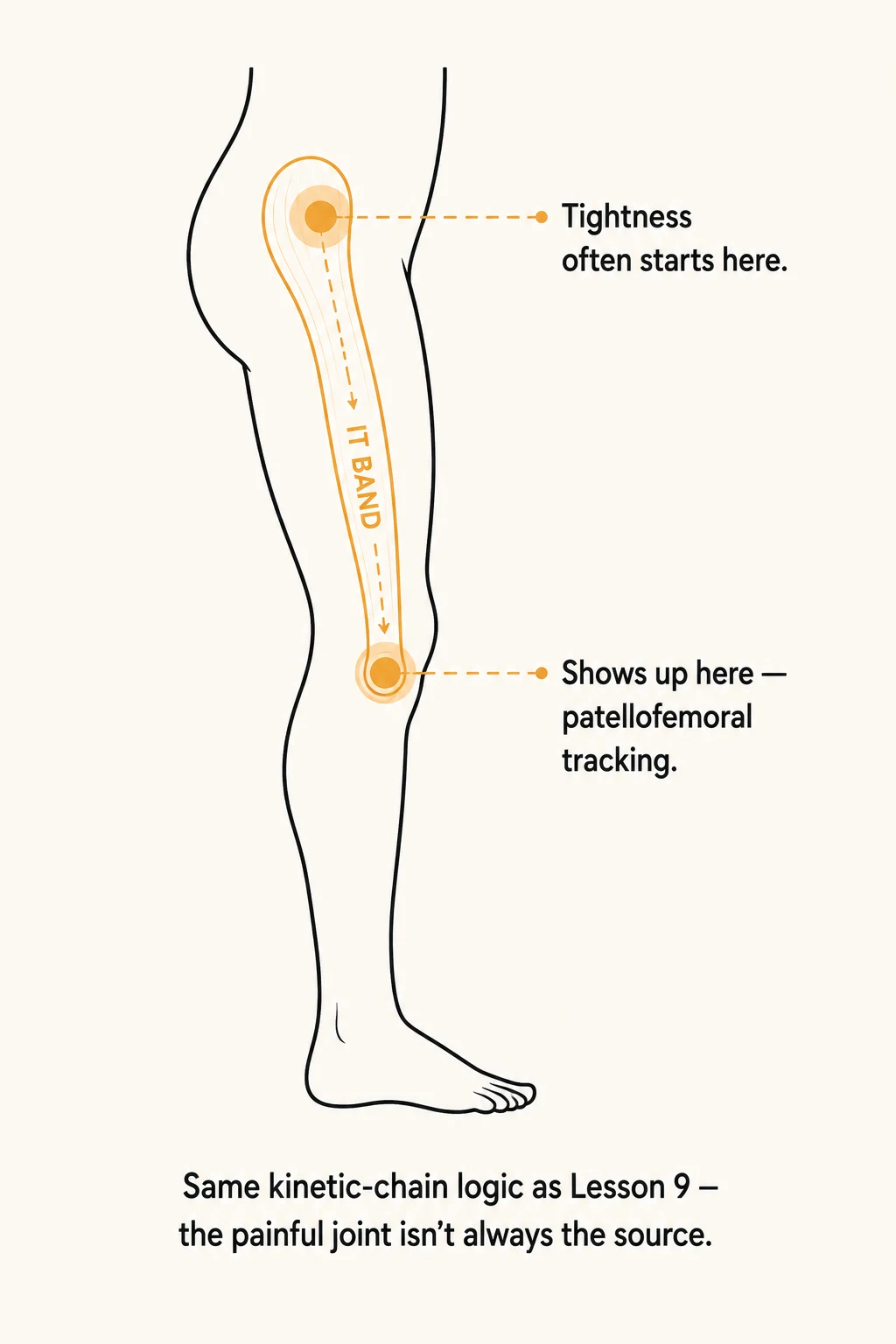
Beyond the IT band, programming for knee issues typically focuses on restoring proper strength throughout the whole kinetic chain — hip, knee, and ankle together — rather than isolating the knee joint alone. This is the same kinetic-chain logic from Lesson 9's stability-mobility principle: a knee that hurts isn't necessarily the joint that's actually broken — it's often just the joint absorbing a problem that started at the hip or ankle.
Other Common Injuries
- Carpal tunnel syndromeCompression of the median nerve at the wrist — programming should avoid aggravating grip-heavy, repetitive wrist positions. Clients whose work involves a lot of typing or repetitive hand motion are especially prone to this.
- Ankle sprainsBalance and proprioception work is typically emphasized once cleared, tying directly back to Lesson 7's balance assessment — a prior ankle sprain is one of the strongest predictors of a future one, which is exactly why that reassessment matters.
- Plantar fasciitisInflammation of the tissue along the sole of the foot — often responds to calf and foot flexibility work alongside load management. Tightness further up the kinetic chain, like the calves, is frequently part of the picture here too.
8 questions, modeled on ACE's real exam style. Score 72%+ to mark this lesson complete.
- Common tissue injury categories are muscle strains, ligament sprains, tendinitis, cartilage damage, fractures, and overuse conditions — strains affect muscle/tendon, sprains affect ligament.
- Rotator cuff programming continues what the physical therapist or surgeon has outlined — safely and progressively, not independently.
- Low back pain frequently traces back to postural or core-engagement findings from Lesson 7, and follows the same "continue the plan" rule for diagnosed conditions.
- IT band tightness is a common, trainer-addressable contributor to knee pain, alongside hip-knee-ankle strengthening.
- Carpal tunnel, ankle sprains, and plantar fasciitis each carry specific, actionable training implications.
- Rehabilitating an existing injury stays outside a trainer's scope of practice — the job is continuing a plan, not designing one.
Before moving to Lesson 16:
- Pick one injury from this lesson and write two sentences on what information you'd need from a client's physical therapist before programming around it.
- Write one sentence explaining why IT band tightness affects the knee joint even though the IT band isn't part of the knee itself.
- Write one sentence distinguishing a strain from a sprain, and give one example of each.
- Complete the knowledge check above and review any question you missed.