Chapters 1 through 20 built genuine coaching competence — the science, the coaching process, and the population-specific skill needed to work with real clients. None of that guarantees a sustainable practice on its own. This closing chapter covers the business fundamentals that turn coaching skill into an actual, viable practice: finding clients, pricing sustainably, retaining clients through real results, and putting basic professional protections in place.
Chapter 20 closed the content-specific stretch of this course with one of its most clinically specific scenarios. This chapter shifts entirely — from nutrition science and coaching skill to the business literacy a coach needs to actually build a practice around everything covered so far.
From Coaching Skill to Coaching Business
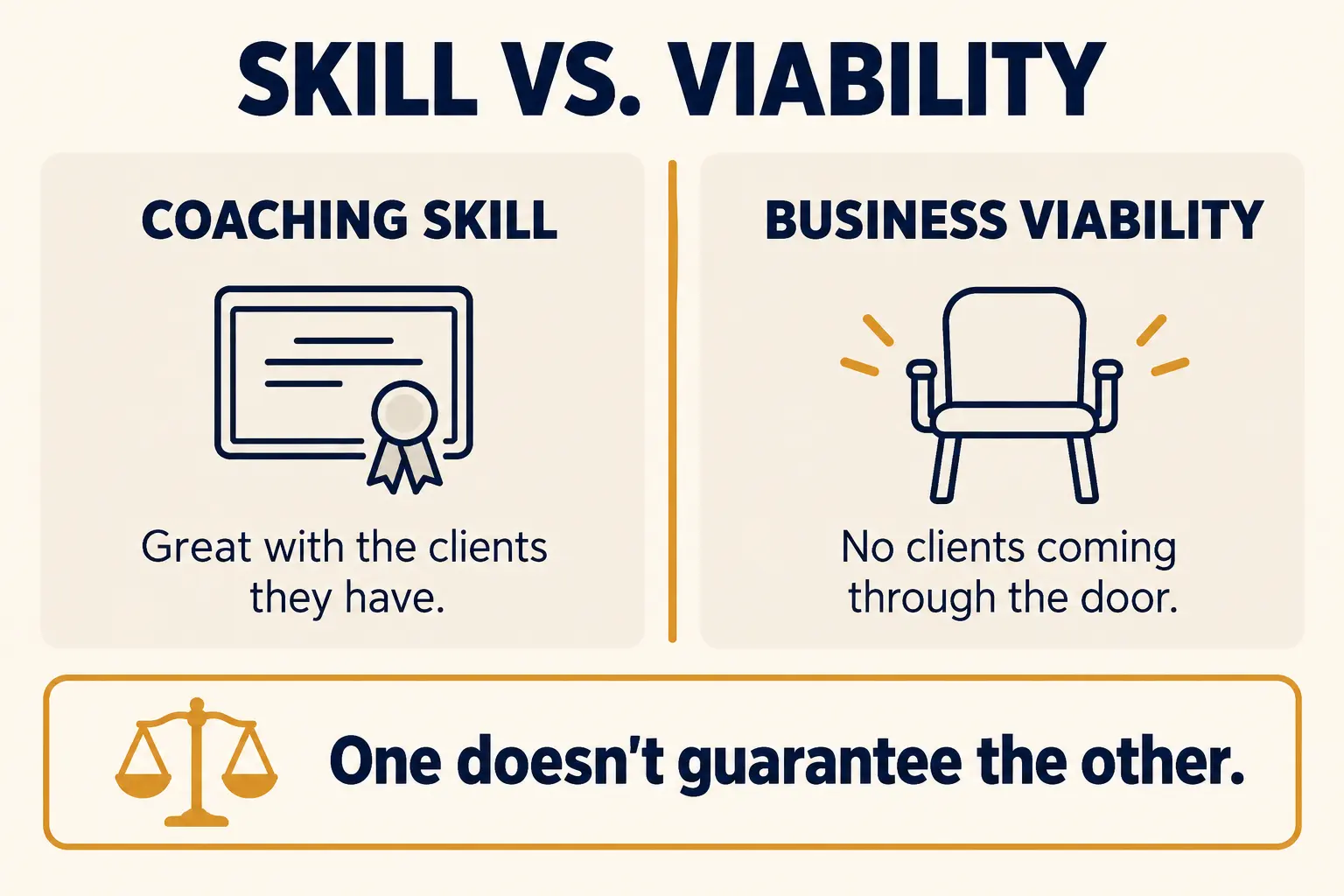
A coach who has worked through this entire course now has genuine coaching competence — the science from Unit 2, the coaching process from Unit 3, and the population-specific and special-scenario skill covered in the chapters just before this one. Competence and business viability, though, are not the same thing. A brilliant coach with no clients coming through the door isn't sustaining a practice, no matter how skilled their Chapter 15 conversation-structuring or Chapter 18 precision coaching happens to be.
In practice, the gap usually comes down to one of three things. Coaches often don't know how to find clients beyond word-of-mouth luck, so growth stalls the moment their existing network runs dry. Some price their services in a way that's genuinely unsustainable — too low to build a real income, or set without the positioning to justify a higher number. And many never build the basic professional protections that let them practice with real confidence, leaving them exposed the first time something goes wrong with a client.
The stakes are worth making concrete. A genuinely skilled coach who under-charges just to attract clients often burns out within a year, not because their coaching wasn't good enough, but because the business fundamentals were never established alongside the coaching fundamentals. Skill without a sustainable business around it tends not to last, regardless of how good that skill is.
Consider two coaches with identical training and nearly identical skill. The first describes themselves as someone who "coaches anyone who wants to eat better" — technically true, but vague enough that no potential client or referral source knows exactly who to send their way. The second describes themselves as someone who specifically helps new parents rebuild consistent eating habits in the chaos of a baby's first year. The second coach is easier to remember, easier to refer, and easier to price with confidence, precisely because the specificity does work that generic competence never can on its own.
Building the Fundamentals
None of these fundamentals require a business degree. They're a small set of practical habits that, together, turn coaching competence into a practice that can actually run for years.
- Finding clientsReferrals from existing clients and a clear, specific niche — rather than "I coach everyone" — make a coach both findable and easy to refer to someone else.
- Pricing servicesPricing should reflect the value and outcomes delivered, not just hours worked, and should be sustainable enough to support the coach's own long-term practice — not just whatever feels comfortable to charge at first.
- RetentionA client who gets real results and feels a genuine relationship with their coach stays far longer than acquisition alone can account for — retention is cheaper and more sustainable than constantly chasing new clients.
- Professional foundationsLiability insurance, a clear written scope-of-practice policy, and an actual referral network are the practical infrastructure a real practice runs on — not optional extras for later.
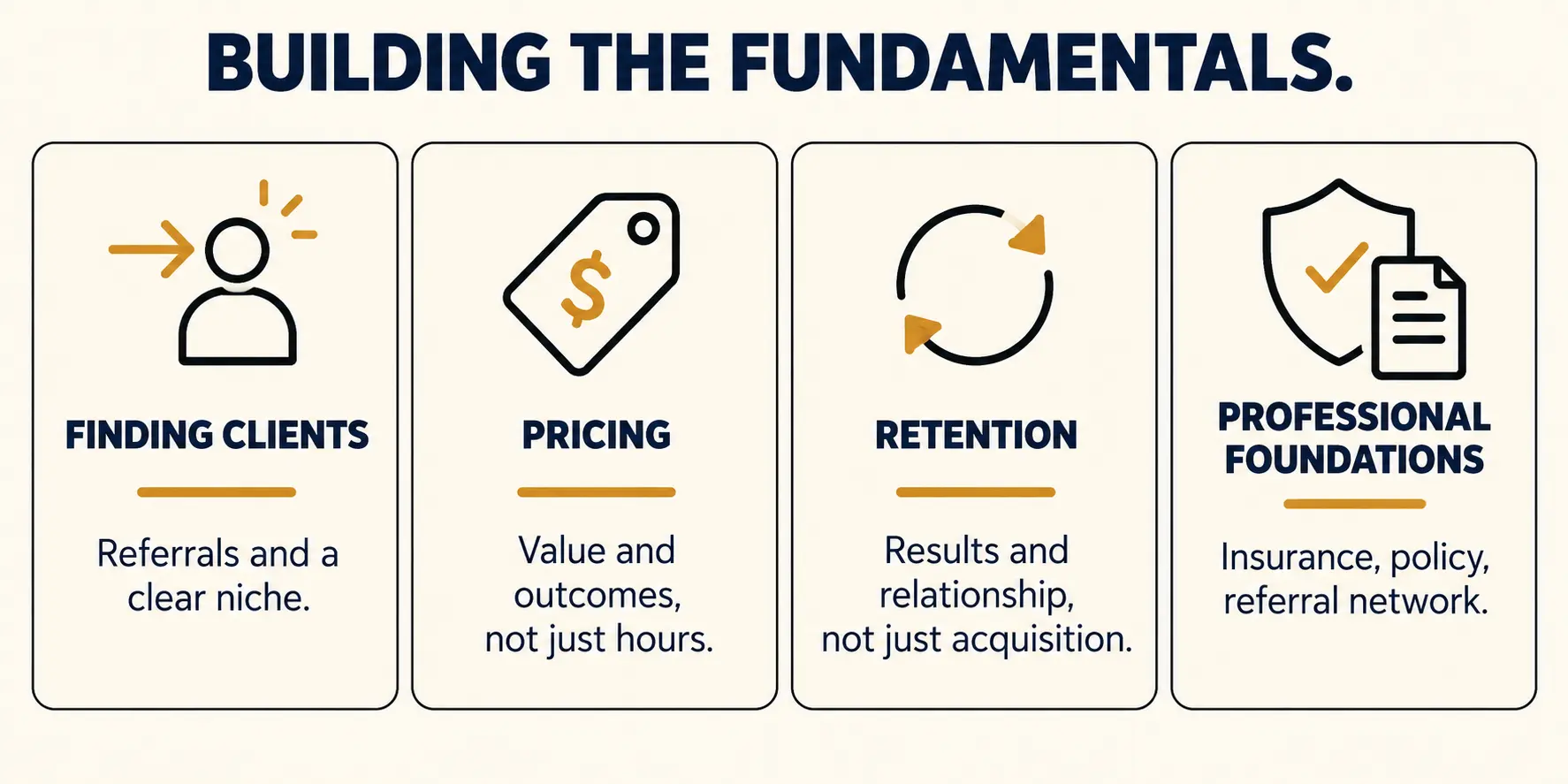
These four aren't independent either. A coach with no clear niche struggles to price confidently, because vague positioning makes it hard to justify a specific number. A coach without a referral network can't act on the scope-of-practice instinct built across Chapters 19 and 20, even if they recognize exactly when a referral is needed — recognizing the signal and having somewhere to send the client are two different capabilities, and a practice needs both.
Retention deserves special attention here because it's the fundamental most coaches underweight. It's substantially cheaper to keep an existing client engaged and seeing results than to constantly replace departing clients with new ones, yet many coaches pour nearly all their effort into acquisition and almost none into the ongoing relationship that keeps a client past the first few months. A coaching practice that retains well needs to find far fewer new clients to stay full than one that doesn't.
None of this requires anything elaborate. A short check-in message between sessions, a genuine acknowledgment of a small win a client might otherwise dismiss, or simply remembering the detail a client mentioned in passing two weeks ago all signal the kind of relationship that keeps someone engaged well past the point where results alone would have carried them. Coaches who treat retention as a habit built into every session, rather than an afterthought handled only when a client seems at risk of leaving, tend to build practices that compound rather than constantly restart.
A genuinely skilled coach is frustrated that clients aren't finding them, despite real results with the handful of clients they do have. A closer look reveals they've never clearly described what they specifically do, and have never directly asked an existing client for a referral. The fix here isn't more coaching skill — it's positioning and simply asking, two of the most overlooked fundamentals in this chapter.
Why This Matters for Coaching
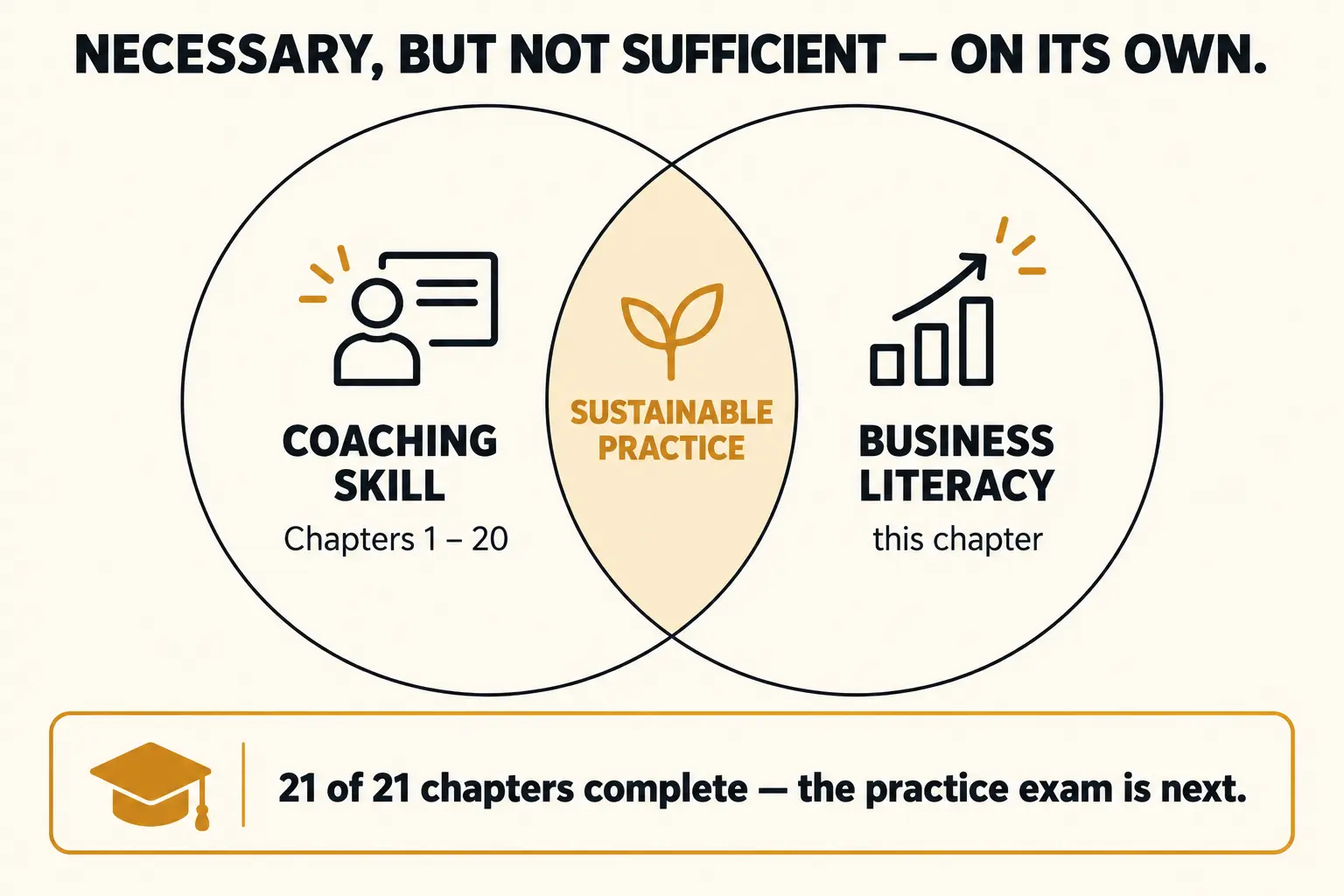
Everything covered from Chapter 1 through Chapter 20 is necessary but not sufficient on its own. A sustainable coaching practice needs both genuine coaching competence and enough business literacy to turn that competence into an actual, ongoing practice — neither one substitutes for the other.
The professional foundations from this chapter are also what make the referral instinct from Chapters 19 and 20 actually actionable rather than purely theoretical. Knowing that a client's disordered eating history or unusually fast GLP-1-driven weight loss calls for a referral means little if a coach has never built a relationship with a dietitian, physician, or specialist to refer to — the scope-of-practice judgment from those chapters and the business infrastructure from this one work together, not separately.
This is the last content chapter of the full 21-chapter Precision Nutrition Level 1 curriculum built across Units 1, 2, and 3. From here, the course's cumulative practice exam pulls from everything covered across all three units, mirroring PN's real open-book, untimed, cumulative-score format.
8 questions, modeled on PN's real open-book exam style. Score 75%+ to mark this lesson complete.
- Coaching competence and business viability are not the same thing — a skilled coach still needs to be found, priced sustainably, and retained by clients.
- The four business fundamentals are finding clients, pricing services around value, retention, and professional foundations like liability insurance and a referral network.
- Pricing should reflect the value and outcomes delivered, not just hours worked, and should sustain the coach's own long-term practice.
- Retention is cheaper and more sustainable than constant new-client acquisition, yet it's the fundamental most coaches underweight.
- The scope-of-practice judgment from Chapters 19 and 20 only becomes actionable with the professional foundations — like a referral network — covered in this chapter.
Before moving to the practice exam:
- Write, in one sentence, the difference between coaching competence and business viability.
- List the four business fundamentals this chapter covers, in your own words.
- Think of one professional foundation — insurance, a scope-of-practice policy, or a referral contact — you don't currently have in place.
- Complete the knowledge check above and review any question you missed.