This is the "why" chapter that everything else in this course builds on. Integrated training means treating flexibility, core, balance, strength, and cardio as one connected system, not separate boxes to check — because that's how the body actually moves in real life.
This chapter explains why NASM structures training the way it does — the philosophy that every later lesson in this course, from assessment to program design to exercise technique, ultimately builds on.
What "Integrated Training" Means
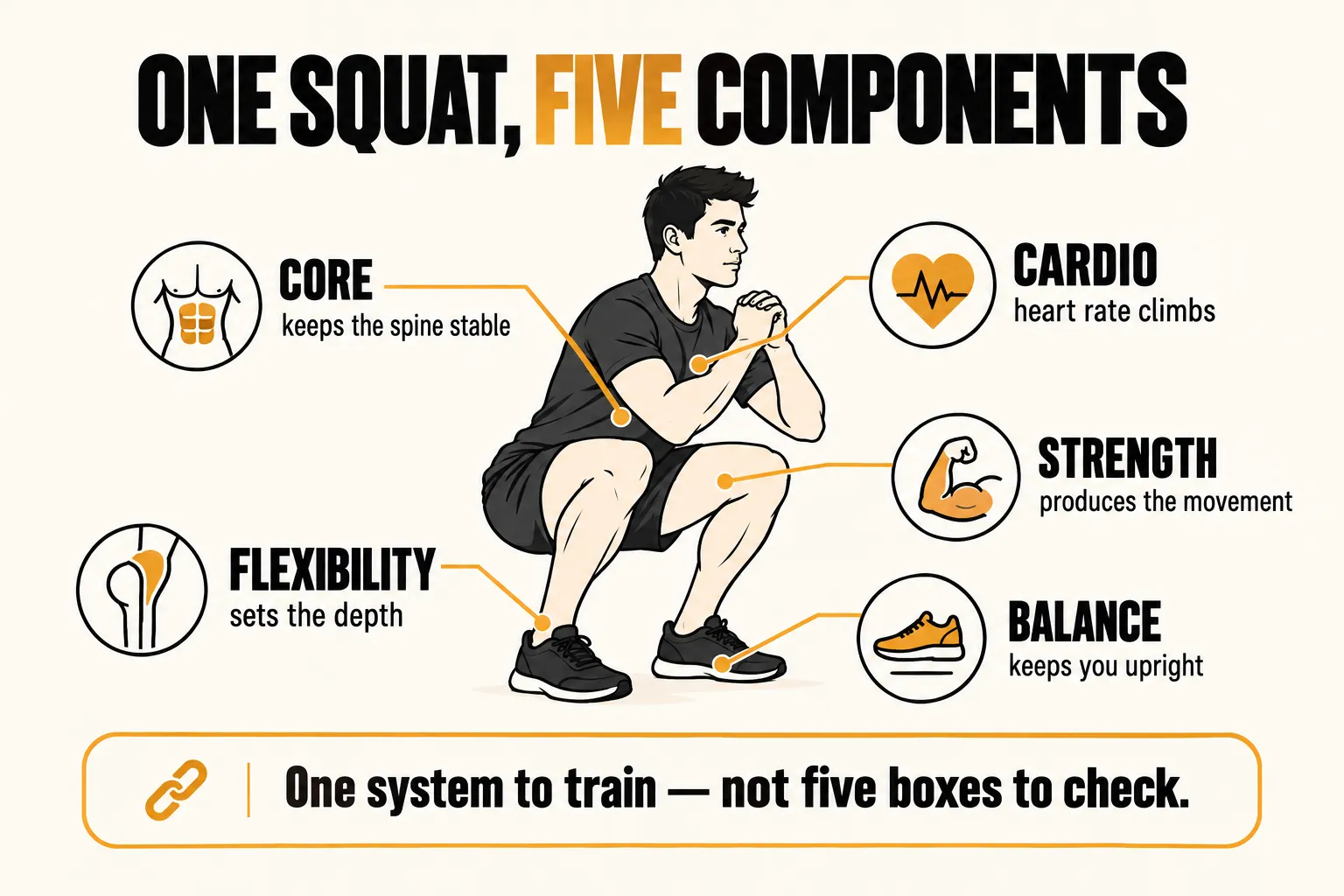
Older training models often isolated fitness components — a "cardio day," a "flex day," a separate "core workout." NASM's integrated approach instead trains flexibility, core, balance, strength, and cardiorespiratory fitness together, because that's how the body is actually used outside the gym: nobody stabilizes their core in isolation from moving their limbs, or builds strength without some cardiovascular demand alongside it.
Take something as ordinary as a single bodyweight squat. Ankle and hip flexibility determine how deep the movement can go without compensation. Core stabilization keeps the spine from collapsing under load. Balance keeps the whole structure from tipping. Strength actually produces the movement. And heart rate climbs the moment reps start adding up. Five "components" from five different training philosophies, all firing in the same two seconds — which is exactly why NASM treats them as one system to train, not five boxes to check off across five different days.
The Kinetic Chain
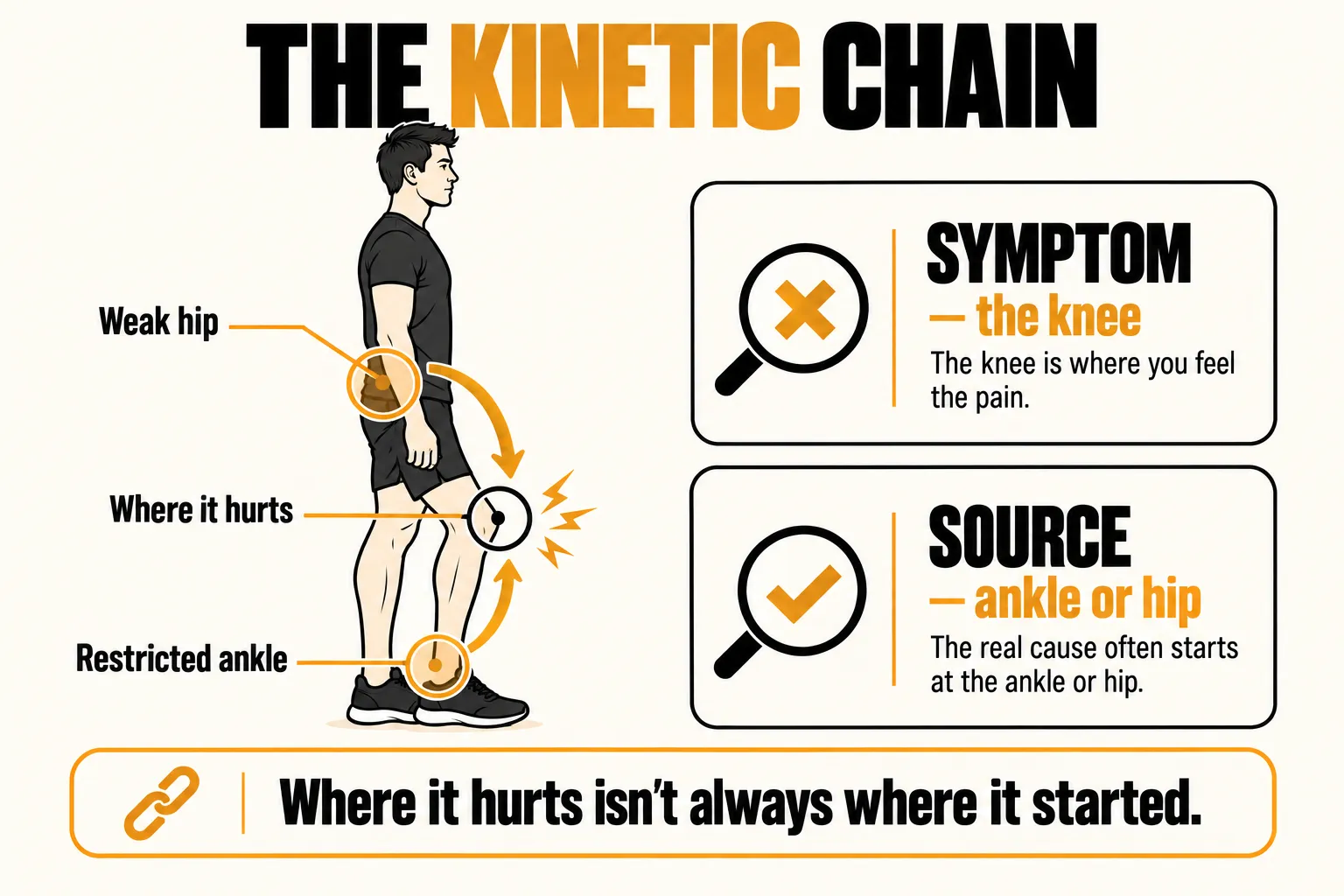
The kinetic chain is the combination of the muscular, skeletal, and nervous systems working together as one linked system, not as independent parts. This is the same underlying idea behind the five kinetic chain checkpoints you'll meet in Lesson 6's assessment framework — a compensation at the ankle can show up as a problem at the knee or even the shoulder, because everything in the chain is connected.
This is also why a trainer who only ever looks at the joint where a client feels pain is often looking in the wrong place. A client with knee pain might have a perfectly healthy knee and a genuinely restricted ankle or a weak hip — the knee is just where the compensation happened to show up. Chasing the symptom instead of the actual restriction is one of the most common mistakes a new trainer makes, and it traces directly back to not taking the kinetic chain seriously.
The SAID Principle
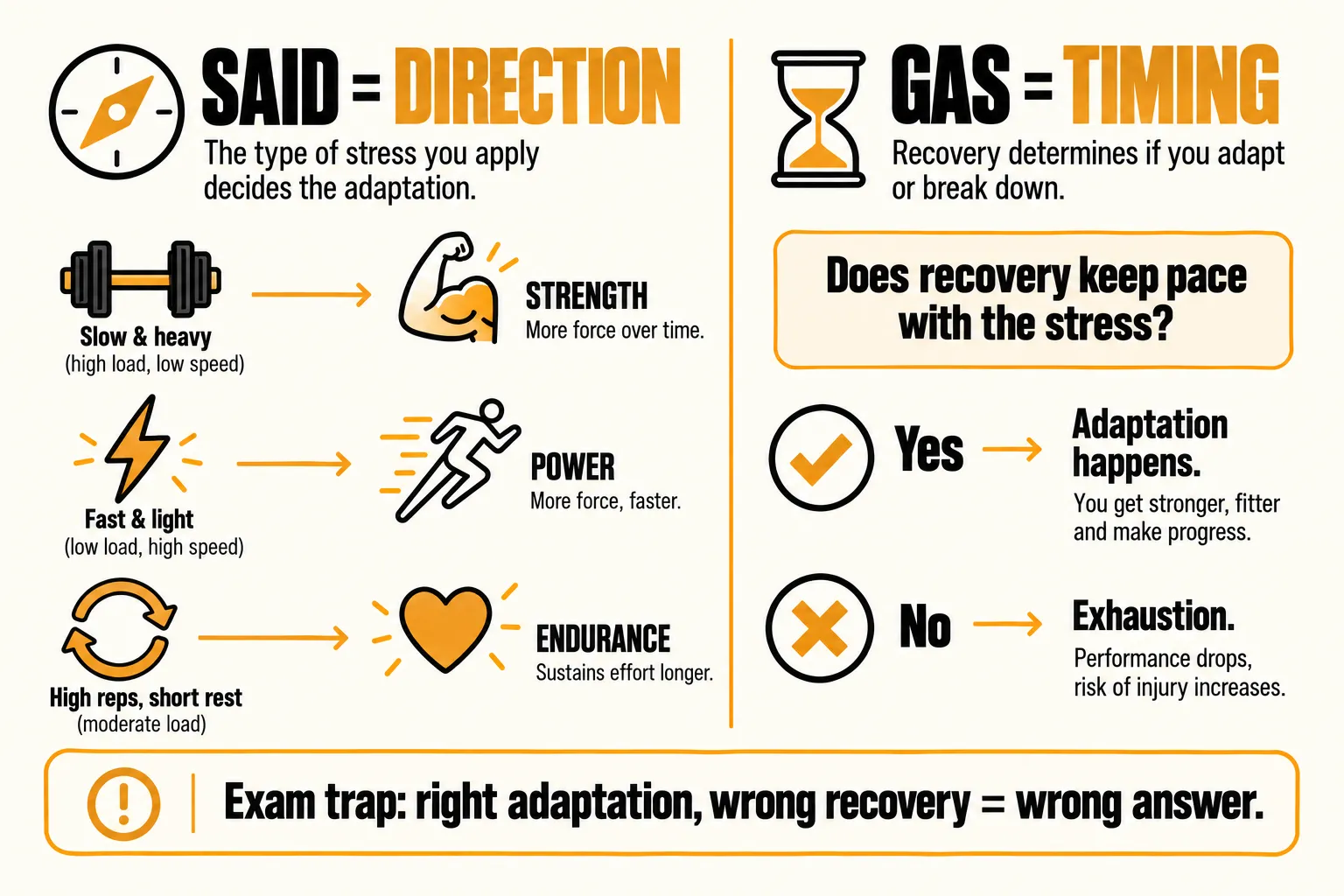
SAID stands for Specific Adaptation to Imposed Demand — a foundational idea that shows up throughout program design. The body adapts specifically to whatever demand is placed on it:
- Train slow and heavyThe body adapts toward maximal strength — this is the logic behind Lesson 14's Phase 4 prescription.
- Train fast and lightThe body adapts toward speed, power, and rate of force production — the logic behind Lesson 14's Phase 5 and Lesson 12's SAQ training.
- Train with high reps and short restThe body adapts toward muscular endurance — the logic behind Lesson 14's Phase 1.
Every acute variable decision from Lesson 13, and every OPT phase from Lesson 14, is really just an application of SAID — deciding what specific adaptation a program should produce, then choosing the demand that produces it.
The General Adaptation Syndrome
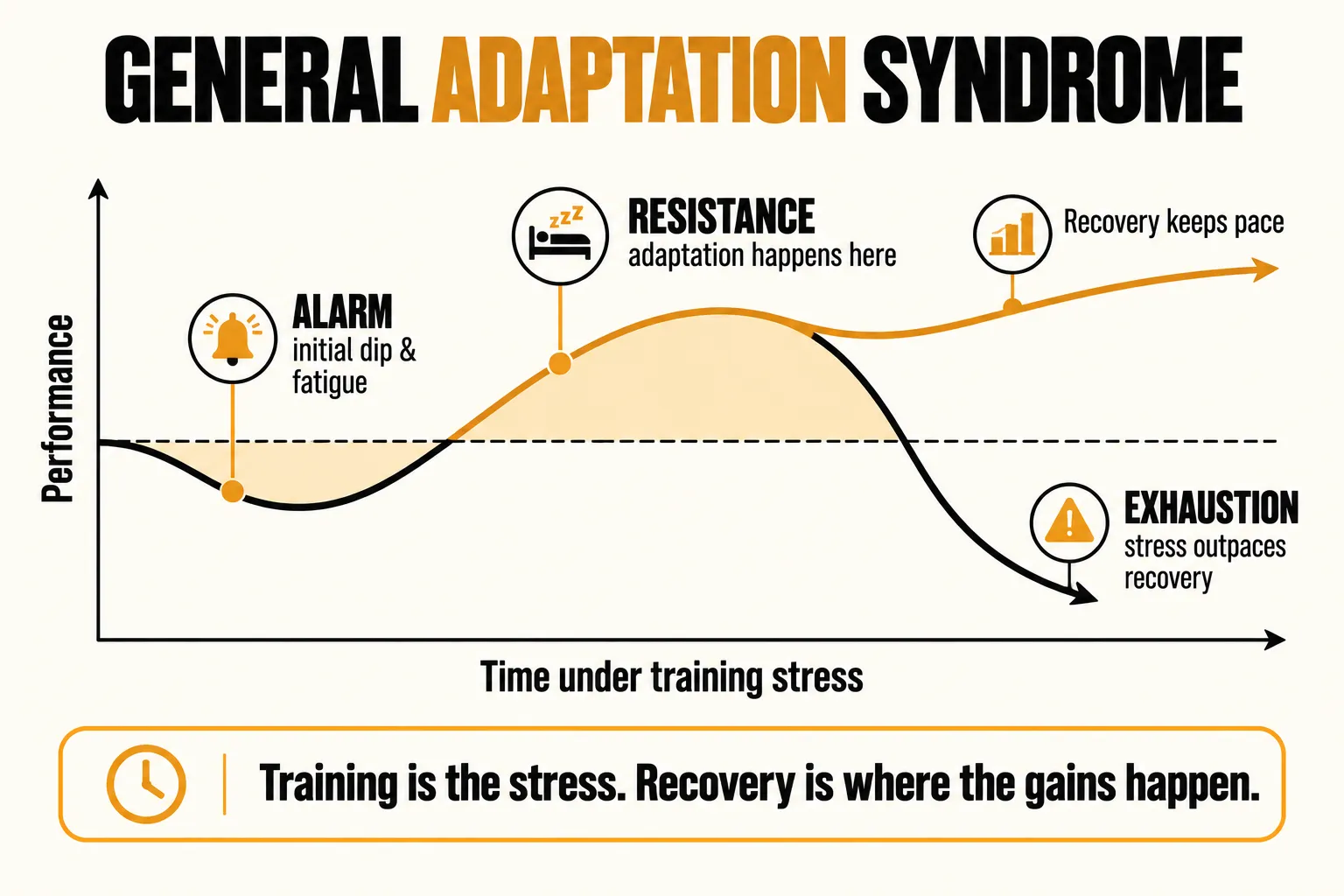
The General Adaptation Syndrome (GAS) describes how the body responds to any stressor — including exercise — across three stages:
| Stage | What happens |
|---|---|
| Alarm reaction | The body's initial response to a new stressor — some initial performance dip and fatigue as the body registers the demand |
| Resistance (adaptation) | With adequate recovery, the body adapts to handle the stressor better over time — this is where fitness gains actually happen |
| Exhaustion | If stress consistently outpaces recovery, adaptation fails and overtraining sets in — Lesson 8 covers these same overtraining signs |
GAS is the theoretical foundation behind why progressive overload works, and why recovery isn't optional — training is the stressor, but adaptation only happens during the resistance stage, with adequate recovery.
How the Three Pillars of This Chapter Work Together
Integrated training, the kinetic chain, and SAID aren't three separate ideas to memorize in isolation — they answer three different questions about the same client. Integrated training answers "what should I train?" (all the components together, not one at a time). The kinetic chain answers "where do I look when something's wrong?" (the whole connected system, not just the painful joint). SAID answers "what will this specific exercise actually produce?" (an adaptation matched to the demand, not a generic result). GAS then adds the timeline: adaptation to any of this only happens if recovery keeps pace with the stress.
Put those four ideas together and you get the actual logic behind every program you'll design starting in Lesson 13: pick a demand (SAID) that fits the client's goal, apply it to the whole connected system (kinetic chain) using all the relevant components together (integrated training), and manage the dose so adaptation — not exhaustion — is the result (GAS). Every later lesson in this course is really just filling in the details of that one sentence.
8 questions, modeled on NASM's real exam style. Score 70%+ to mark this lesson complete.
- Integrated training trains flexibility, core, balance, strength, and cardio together, matching how the body actually moves in real life.
- The kinetic chain is the muscular, skeletal, and nervous systems working as one linked system — the same idea behind the checkpoints you'll meet in Lesson 6's assessment framework.
- The SAID principle: the body adapts specifically to the demand placed on it — the logic behind every acute variable and OPT phase choice.
- The General Adaptation Syndrome has three stages: alarm, resistance (where adaptation happens), and exhaustion (overtraining).
- Individual differences mean recovery capacity and adaptation rate vary by client — which is why assessment always comes first.
- SAID describes the direction of an adaptation; GAS describes whether it actually happens, based on recovery — the two answer different questions.
Before moving to Lesson 2:
- Explain the SAID principle in your own words, with one training example.
- Name the three stages of the General Adaptation Syndrome in order.
- Write one sentence each on how integrated training, the kinetic chain, SAID, and GAS work together in a single program decision.
- Complete the knowledge check above and review any question you missed before moving on.