Domain 1 covered how a coach shows up — presence, the relationship, running a session, ending one well. Domain 2 covers why those skills actually work, starting with the science and models NBHWC's content outline treats as foundational: neuroplasticity (the brain's real capacity to change, at any age), the cue-routine-reward loop behind how a habit actually forms, and the Transtheoretical Model — better known as the Stages of Change — which says a client's readiness to change isn't one fixed thing, and the coaching response that helps most is different depending on where they actually are.
Lesson 4 closed out Domain 1 by completing the arc of a coaching relationship, start to finish, and forward-referenced what comes next: the theories and models that explain why the relationship skills covered so far actually support lasting behavior change. This lesson opens Domain 2 with three closely related pieces. First, neuroplasticity — what it actually means for the brain to "change," and why that matters for how a coach sets expectations around repetition and setbacks. Second, the habit loop — the mechanism by which a repeated behavior stops requiring conscious effort. And third, the Transtheoretical Model, which gives a coach a way to read where a client actually is in the process of changing, instead of assuming everyone who walks in the door is equally ready to act.
Neuroplasticity: Why the Brain's Capacity to Change Actually Matters for Coaching
Neuroplasticity is the brain's ability to reorganize itself by forming new neural connections in response to experience — and, critically, it isn't something that shuts off after childhood. The brain keeps this capacity throughout adult life, which is the whole reason behavior-change coaching is possible in the first place. Every time a behavior is repeated, the neural pathways behind it are used again, and connections that get used repeatedly tend to strengthen — a principle often summarized as neurons that fire together, wire together.
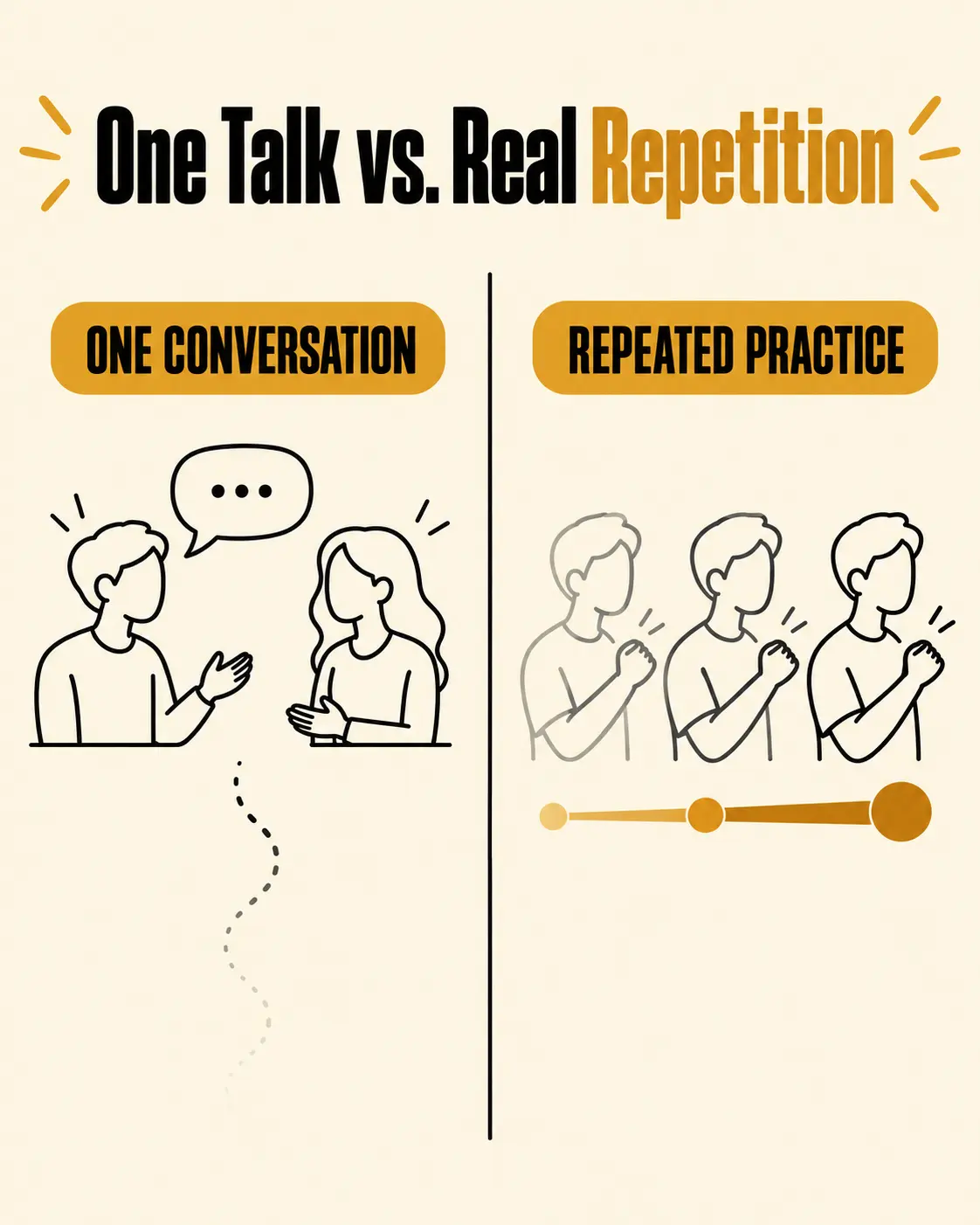
The coaching implication is a specific and testable one: a single motivating conversation, even a genuinely powerful one, rarely produces a lasting change by itself. What makes a change durable is repetition — doing the new behavior enough times that the pathway behind it actually strengthens, while the pathway behind the old behavior gets used less and gradually weakens. That reframes something coaches see constantly: a client who backslides after one strong session isn't failing at willpower. They're in the ordinary, expected middle of a neurological process that simply takes repeated practice to complete, not a single insight.
How a Habit Actually Forms: The Cue-Routine-Reward Loop
Underneath most of the specific habits a coaching client is trying to build or break is the same basic mechanism: a cue triggers a routine, the routine produces a reward, and enough repetitions of that cycle make the behavior more automatic — requiring less conscious effort each time it happens. Early on, a new behavior takes real deliberate attention. With enough repetition of the same cue-routine-reward cycle, it can start running with very little conscious thought at all, which is exactly what makes long-held habits — good or bad — feel almost involuntary.
| Loop stage | What it is |
|---|---|
| Cue | The trigger that kicks the loop off — a time of day, a location, an emotional state, or something else that's already present right before the routine happens. |
| Routine | The behavior itself — the specific action the cue sets in motion, whether or not it's the action the client would consciously choose if asked. |
| Reward | What the behavior delivers that makes the brain want to repeat the loop next time the same cue shows up — relief, comfort, energy, a sense of accomplishment. |
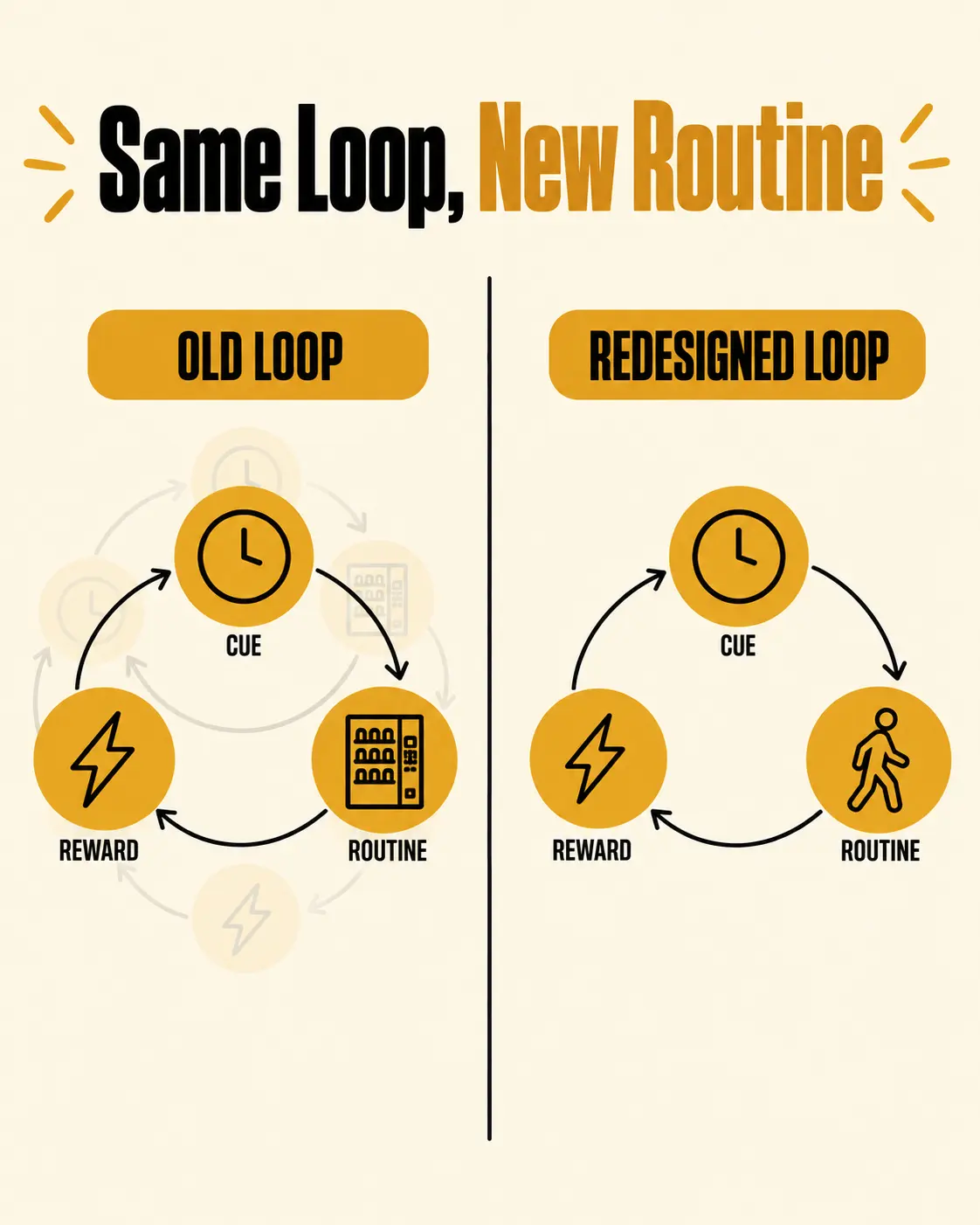
A client's 3pm energy dip (cue) reliably sends them to the vending machine for a candy bar (routine), which delivers a quick sugar-and-caffeine lift (reward). Telling this client to simply "have more willpower" ignores that the loop itself is working exactly as loops work. A coach who understands the mechanism targets the routine instead: keep the same cue, keep a version of the reward, but help the client swap in a short walk or a protein-forward snack that still delivers real energy — without asking them to out-muscle a cue that isn't going away on its own.
The Transtheoretical Model: Meeting a Client Where They Actually Are
The Transtheoretical Model — almost always called the Stages of Change in coaching contexts — starts from a simple but easy-to-forget premise: behavior change isn't a single event a person either does or doesn't do. It's a process people move through, typically at different speeds and not always in a straight line, and the coaching response that actually helps is different depending on which part of that process a client is in right now.
- PrecontemplationNo real intention to change in the foreseeable future — often because the client doesn't yet see the behavior as a problem worth addressing.
- ContemplationAware a change might be worth making and genuinely weighing it, but still ambivalent — not yet committed to a timeline for acting.
- PreparationHas decided to change and is actively getting ready to act soon — gathering information, making a plan, taking small preliminary steps.
- ActionActively doing the new behavior, typically for a relatively recent stretch of time — the stage most people picture when they think of "making a change."
- MaintenanceHas sustained the change for a longer stretch and is now focused on preventing relapse rather than initiating the behavior all over again.
The model's original authors also described a sixth stage, termination, marking a theoretical point of zero temptation and complete confidence in the new behavior. It's worth knowing the name, but it's rarely used in practical application — it's difficult to demonstrate that temptation has truly reached zero, and most real-world coaching and public-health work treats maintenance, not termination, as the durable end state to aim for.
| What the client sounds like | What tends to help at that stage |
|---|---|
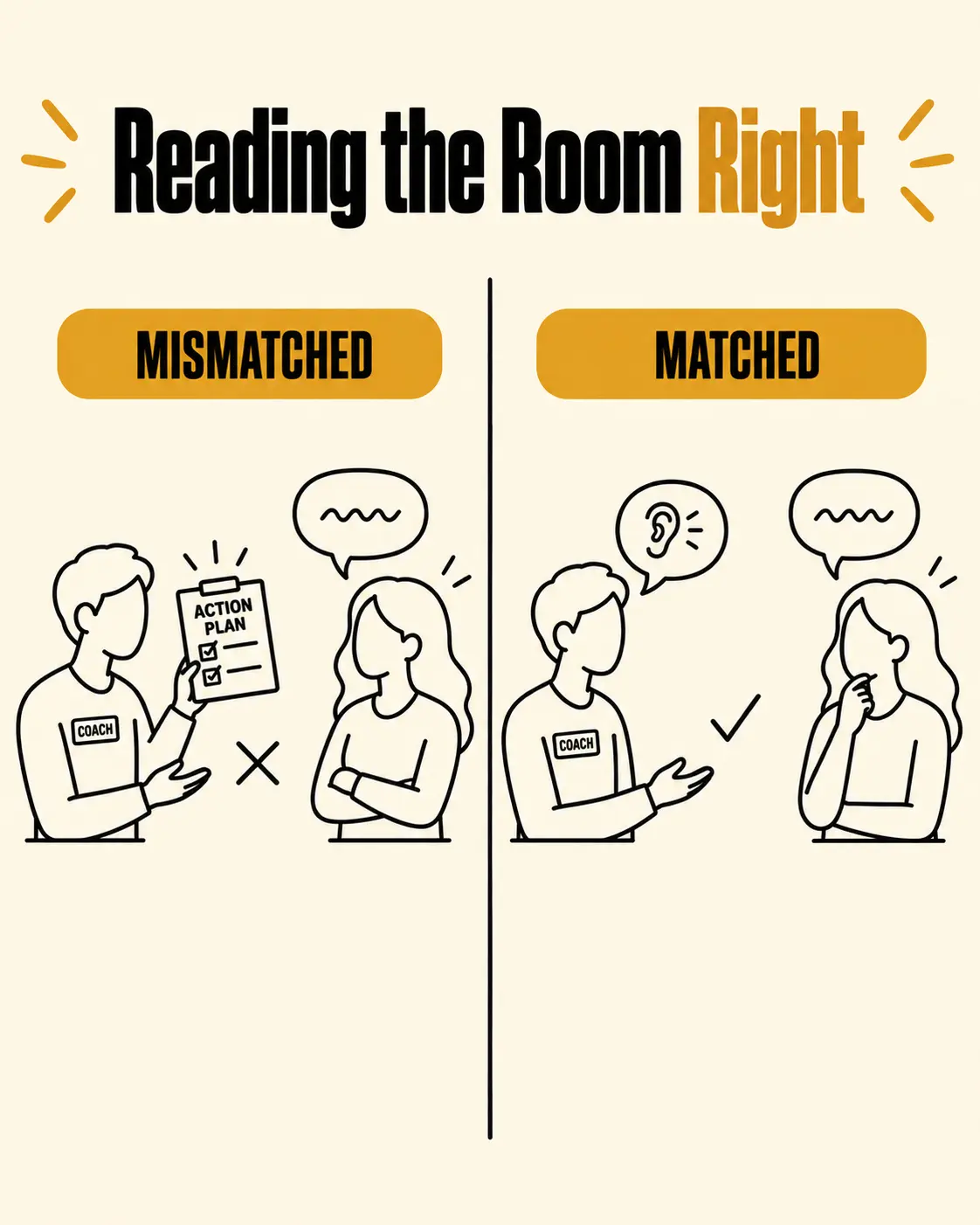
| Precontemplation — "I don't really see this as a problem." | Gently building awareness and offering information, without pushing toward action the client hasn't asked for. |
| Contemplation — "I know I probably should, but I'm not sure I'm ready." | Exploring the ambivalence itself — the real pros and cons — rather than pressuring a commitment before the client feels it. |
| Preparation — "I've decided. I just need a plan." | Helping co-create a concrete, specific, workable plan the client actually believes they can follow. |
| Action — "I'm doing it, but some days are hard." | Reinforcing what's working, problem-solving specific obstacles, and building confidence in the new behavior. |
| Maintenance — "I've been doing this for months now." | Shifting focus to relapse prevention and reinforcing the new behavior as part of who the client is now. |
A client starts coaching saying they're only there because their partner suggested it — precontemplation. A few sessions later, they're bringing up the idea themselves, weighing whether it's really worth the effort — contemplation. Once they decide it is, they spend a session mapping out exactly how they'll start — preparation. The next several sessions track the early, effortful weeks of actually doing it — action. And months in, the conversation shifts from "how do I keep this up" to "how do I not lose this" — maintenance. A coach offering action-stage advice back at the first session — a detailed plan, a start date — would have missed where this client actually was.
Decisional Balance, Self-Efficacy & the Processes of Change
Alongside the five stages, the Transtheoretical Model uses a small set of constructs to explain what's actually shifting as a client moves from one stage to the next — and two are worth knowing by name.
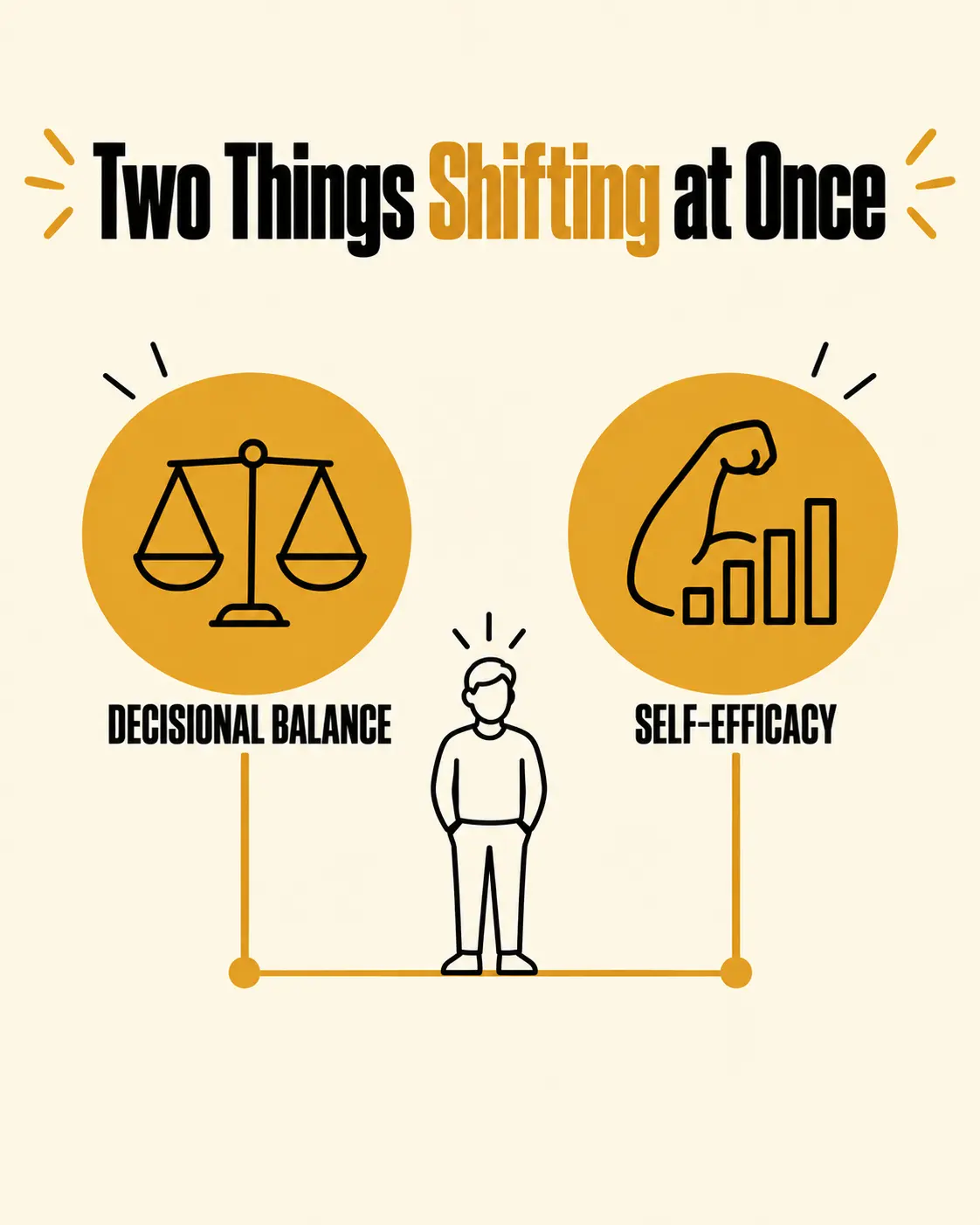
- Decisional balanceHow a client weighs the pros of changing against the cons of changing (and, just as often, the pros of staying the same against the cons of staying the same). The balance tends to tip toward change as a client moves from precontemplation into later stages.
- Self-efficacyHow confident a client feels in their own ability to actually make and sustain the change — a concept that gets its own fuller treatment later in this course. Self-efficacy is typically lowest early on and grows as a client accumulates real, successful experience with the new behavior.
The model also describes ten processes of change — the cognitive and behavioral strategies people actually use to move between stages, things like raising awareness of a problem, reevaluating how a behavior fits one's self-image, or managing the reinforcement around a new behavior. The exam-relevant point isn't memorizing all ten by name; it's recognizing that different processes tend to fit different stages, and a coach who understands that can offer a strategy that matches where the client already is instead of one that would fit a later stage they haven't reached yet.
Why This Lesson Sets Up the Rest of Domain 2
These three pieces work together. Neuroplasticity explains why repetition — not a single insight — is what actually makes a change stick, and why setbacks along the way are an expected part of that process rather than evidence it's failing. The habit loop explains the specific mechanism repetition is working on, and gives a coach something concrete to target when a behavior isn't budging. And the Transtheoretical Model gives a coach a way to read a client's actual readiness, instead of offering the same action-oriented advice regardless of whether the client has decided to change yet.
From here, the course moves into Lesson 6: Motivational Interviewing 4.0 and goal-setting theories — the conversational approach and the research on what actually makes a client's goals durable, both of which build directly on knowing which stage a client is really in.
8 questions on neuroplasticity, the cue-routine-reward habit loop, and the Transtheoretical Model's stages of change. NBHWC doesn't publish a fixed pass/fail line for its own exam, so this knowledge check doesn't invent one either — you'll get a raw score and a rationale for every question instead.
- Neuroplasticity is the brain's lifelong ability to form new neural connections through repetition — it's why lasting change comes from repeated practice, not a single motivating conversation.
- A habit forms through a cue-routine-reward loop; enough repetitions of that loop make a behavior progressively more automatic and less effortful.
- The Transtheoretical Model's five stages — precontemplation, contemplation, preparation, action, maintenance — describe different levels of readiness to change, each calling for a different coaching response.
- A rarely-used sixth stage, termination, exists in the original model but is usually skipped in practice in favor of treating maintenance as the durable end state.
- Decisional balance (weighing pros and cons) and self-efficacy (confidence in one's own ability to change) both shift as a client moves through the stages, alongside a broader set of processes of change.
Before moving to Lesson 6:
- Think of a habit of your own, good or bad, and identify its cue, routine, and reward. What would it take to keep the cue and the reward but change the routine?
- Pick a change you've made or attempted in your own life, and map it loosely onto the five stages of change. Where did you spend the longest? Where did you almost stall out?
- Write, in your own words, what a coach should say differently to a client in precontemplation versus a client in action — using the same underlying goal.
- Complete the knowledge check above and review the rationale for any question you missed.