Lesson 5 covered how the brain changes and how readiness to change shows up in stages. This lesson covers the conversational approach built for exactly that: motivational interviewing, in its current (informally, "4.0") form, plus the research on what actually makes a goal durable once a client has decided to act. Neither one is a script — MI is a way of talking with a client that draws out their own motivation instead of supplying it externally, and goal-setting theory explains why some goals reliably produce effort and others quietly stall. Together they carry a real share of NBHWC's Domain 2, and both show up as named, testable concepts on the real exam.
Lesson 5 opened Domain 2 with the science of how habits form and the Transtheoretical Model's way of reading a client's readiness to change. This lesson builds directly on that foundation with two more pieces NBHWC's content outline treats as core to Domain 2. The first is motivational interviewing — specifically, what's changed in its most current form, informally called "MI 4.0," and the underlying spirit and structure that make it more than a set of clever questions. The second is goal-setting theory, which explains why a goal that sounds reasonable can still fail to move a client, and what separates a goal that actually works.
What "MI 4.0" Actually Means
Motivational interviewing isn't new — Miller and Rollnick have been developing it since the 1980s — but the field keeps referring to its current form informally as "MI 4.0," after the fourth edition of their book, Motivational Interviewing: Helping People Change and Grow, published in 2023. It's worth knowing what that update actually changed, because a couple of the changes are specific enough to show up as exam-relevant details rather than just publishing trivia.
The clearest change is a renaming: what earlier editions called the "Four Processes" of MI are now called the "Four Tasks." The underlying structure is the same — the label shifted to better reflect that these are things a coach actively does in a conversation, not stages that simply unfold on their own. The fourth edition also simplified MI's core definition, put more emphasis on genuine, attentive listening as the foundation everything else depends on, and made the case that MI isn't limited to clinical or therapy settings — it's a way of talking with people that supports professionals across many fields, health and wellness coaching very much included.
The Spirit of MI: Partnership, Acceptance, Compassion, Evocation
Before any specific technique, MI rests on an underlying mindset — what the field calls its "spirit." It's usually remembered by the acronym PACE, and it matters because the same question asked in a spirit of genuine partnership lands completely differently than the same question asked to steer a client toward a predetermined answer.
- PartnershipAn active collaboration, not a lecture — the coach is influential, but the client drives the conversation and remains the expert on their own life.
- AcceptanceRespecting the client's absolute worth, offering accurate empathy, supporting their autonomy, and affirming their strengths — without requiring agreement with every choice they make.
- CompassionActively promoting the client's welfare and prioritizing their needs, rather than the coach's own agenda for how the conversation should go.
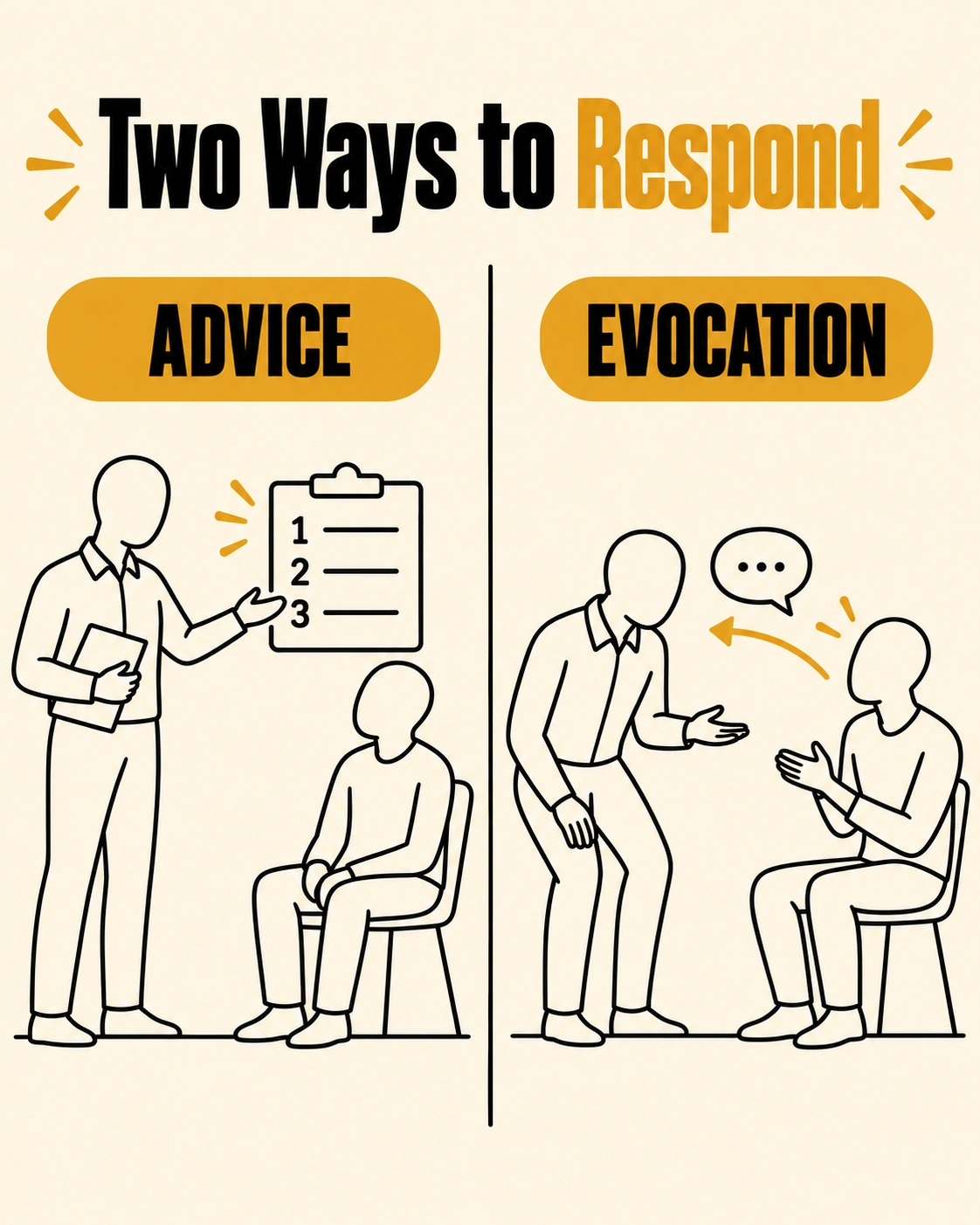
- EvocationDrawing out motivations, values, and resources the client already has — rather than installing motivation from the outside, as if the client arrived without any.
A client mentions they know they should cut back on late-night snacking. Coach A responds with a confident list of strategies: a kitchen curfew, pre-portioned snacks, a glass of water first. Coach B asks, "What have you noticed about what usually leads to it?" Coach A's advice might even be good advice — but it comes from the coach's expertise, not the client's own reasoning. Coach B's question is evocation in practice: it assumes the client already has real insight into their own pattern, and treats drawing that out as more valuable than supplying an answer.
The Four Tasks of MI
Where the spirit describes the underlying mindset, the four tasks describe the rough shape of an MI conversation in practice. They aren't a rigid script to complete in strict order — a coach can circle back to an earlier task at any point — but they do build on each other, and skipping straight to the later ones tends to backfire.
| Task | What it involves |
|---|---|
| Engaging | Building a genuinely trusting, respectful working relationship — usually through open questions, affirming, reflective listening, and summarizing. |
| Focusing | Agreeing with the client on what, specifically, this conversation is actually about — a clear, mutual target instead of a vague general direction. |
| Evoking | Drawing out the client's own reasons for change — their desire, ability, reasons, and need to change — rather than the coach supplying the case for it. |
| Planning | Collaboratively building a change plan the client sees as acceptable, realistic, and genuinely theirs — the shift from why and what to how. |
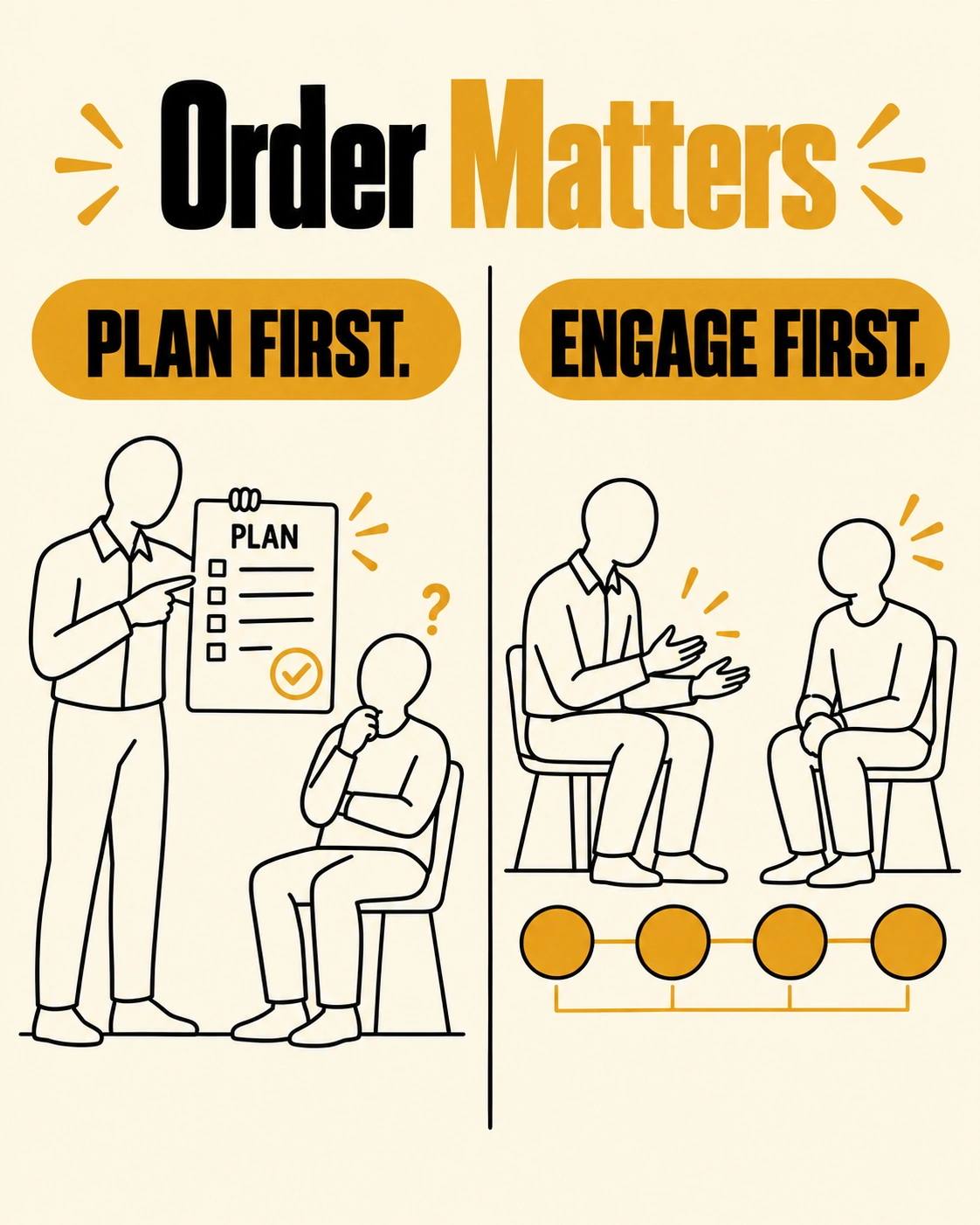
A new client mentions wanting to sleep better. Coach A moves straight into planning: a bedtime, a wind-down routine, a screen cutoff — all reasonable, all offered before the coach has any real sense of the client's specific situation. Coach B spends the first part of the session just listening, then asks what's already been tried and what the client thinks is actually getting in the way, before building anything resembling a plan. Coach A's plan may be technically sound and still land flat, because it skipped engaging and evoking — the parts that make a plan feel like the client's own.
Goal-Setting Theory: Locke and Latham's Five Principles
Once a client has real motivation to change — the work MI is built for — the next question is what turns that motivation into a goal that actually holds up. Locke and Latham's goal-setting theory, built from decades of research, describes five principles that separate a goal that reliably drives effort from one that quietly fizzles.
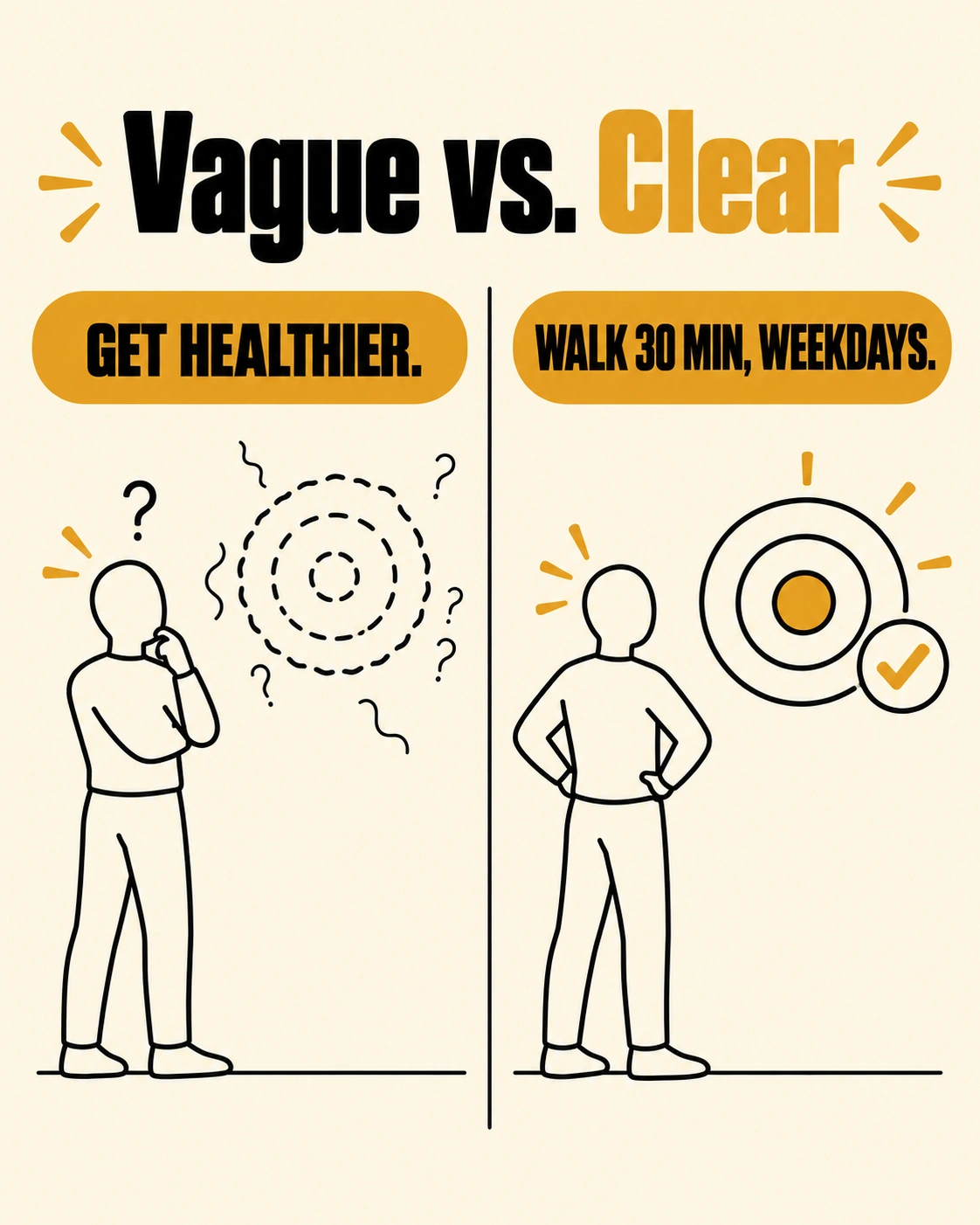
- ClarityA specific, well-defined goal beats a vague one — "walk 30 minutes on weekday mornings" gives a clear target; "get healthier" doesn't.
- ChallengeA goal that stretches beyond what's comfortable tends to produce more effort than an easy one — up to the point where it stops being realistic.
- CommitmentThe client has to genuinely want the goal, not just agree to it politely — which depends on understanding why it matters and believing it's actually achievable.
- FeedbackVisible, timely information about progress toward the goal — without it, a client can't tell whether to keep going as planned or adjust.
- Task complexityThe type of goal should match the task — a clear outcome goal for familiar territory, a learning-focused goal for something genuinely new or complex.
A client's stated goal is "eat better." It's sincere, but it fails on clarity — there's no way to know what success even looks like next week. Working with the coach, it becomes: "cook dinner at home four nights a week instead of ordering out," with a shared note-taking check-in every Friday (feedback), pitched slightly above what the client's been doing but not miles beyond it (challenge), and tied to a reason the client named themselves — more energy for their kids in the evening (commitment). Same underlying intention. One version can actually be acted on and tracked; the other can't.
Why MI and Goal-Setting Theory Belong in the Same Lesson
These two pieces sit at different points in the same process. Motivational interviewing is largely about the conversation that happens before a client has committed to specific action — drawing out real motivation rather than assuming it or supplying it externally. Goal-setting theory picks up right after that: once motivation is genuinely there, it explains what turns it into a goal that holds up under the ordinary friction of daily life. A coach who's skilled at MI but hands over a vague goal at the end, or one who writes a technically perfect goal without ever evoking real buy-in, is missing half of what actually makes behavior change stick.
From here, the course continues Domain 2 with Lesson 7: self-efficacy, self-determination theory, mindset, and positive psychology — four related frameworks that dig further into what's actually happening inside a client's motivation once it's there.
8 questions on MI 4.0, the PACE spirit and Four Tasks of motivational interviewing, and Locke and Latham's goal-setting theory. NBHWC doesn't publish a fixed pass/fail line for its own exam, so this knowledge check doesn't invent one either — you'll get a raw score and a rationale for every question instead.
- "MI 4.0" refers to the 2023 fourth edition of Miller and Rollnick's book, which renamed the Four Processes to the Four Tasks and put more weight on genuine, attentive listening.
- The spirit of MI — Partnership, Acceptance, Compassion, Evocation (PACE) — is the underlying mindset that shapes how any MI technique actually lands.
- The four tasks — engaging, focusing, evoking, planning — build on each other, and skipping ahead to planning without engaging and evoking first tends to produce a plan that doesn't stick.
- Locke and Latham's goal-setting theory names five principles — clarity, challenge, commitment, feedback, and task complexity — that separate a goal that drives real effort from one that quietly stalls.
- MI and goal-setting theory cover different parts of the same process: MI draws out real motivation, and goal-setting theory turns that motivation into a goal that actually holds up.
Before moving to Lesson 7:
- Think of a piece of advice you gave someone recently. Rewrite it as an evoking question instead — one that draws out their own reasoning rather than supplying yours.
- Take a goal you're currently working toward yourself and check it against all five goal-setting principles. Which one is weakest?
- Write, in your own words, why skipping straight to planning without engaging and evoking first tends to produce a plan that doesn't stick.
- Complete the knowledge check above and review the rationale for any question you missed.