Lesson 10 covered building a client's self-efficacy and knowing when to expand or narrow a conversation. This lesson closes out Domain 3 with three final skills: helping a client build real support around their goals, setting goals that are specific and genuinely theirs, and using time well inside a session. Two of these connect directly back to frameworks this course already introduced — Locke and Latham's goal-setting theory from Lesson 6, and the expand/narrow skill from Lesson 10.
Everything Domain 3 has covered so far happens inside a single conversation — the tools, the questions, the moment-to-moment moves. This lesson zooms out to the client's life around that conversation: who supports them, what they're actually working toward, and how a coach uses the limited time a session provides. NBHWC names three sub-competencies here: improving support, defining goals and implementing action, and ensuring appropriate time management.
Building a Client's Support Network
NBHWC's outline asks a coach to help a client identify and build supportive relationships across social, familial, and professional contexts; identify and build community resources and networks; and identify and develop structural and environmental supports. These are three layers of the same idea, moving outward from the people closest to a client to the physical world around them.
- Personal relationshipsSocial, familial, and professional relationships already in the client's life.
- Community resourcesPrograms, groups, and networks available where the client actually lives.
- Structural & environmental supportsThe physical world around a client, accounting for systemic barriers that aren't within their control.
- Literacy-aware coachingAdjusting explanations and pacing to the client's own health literacy and numeracy.
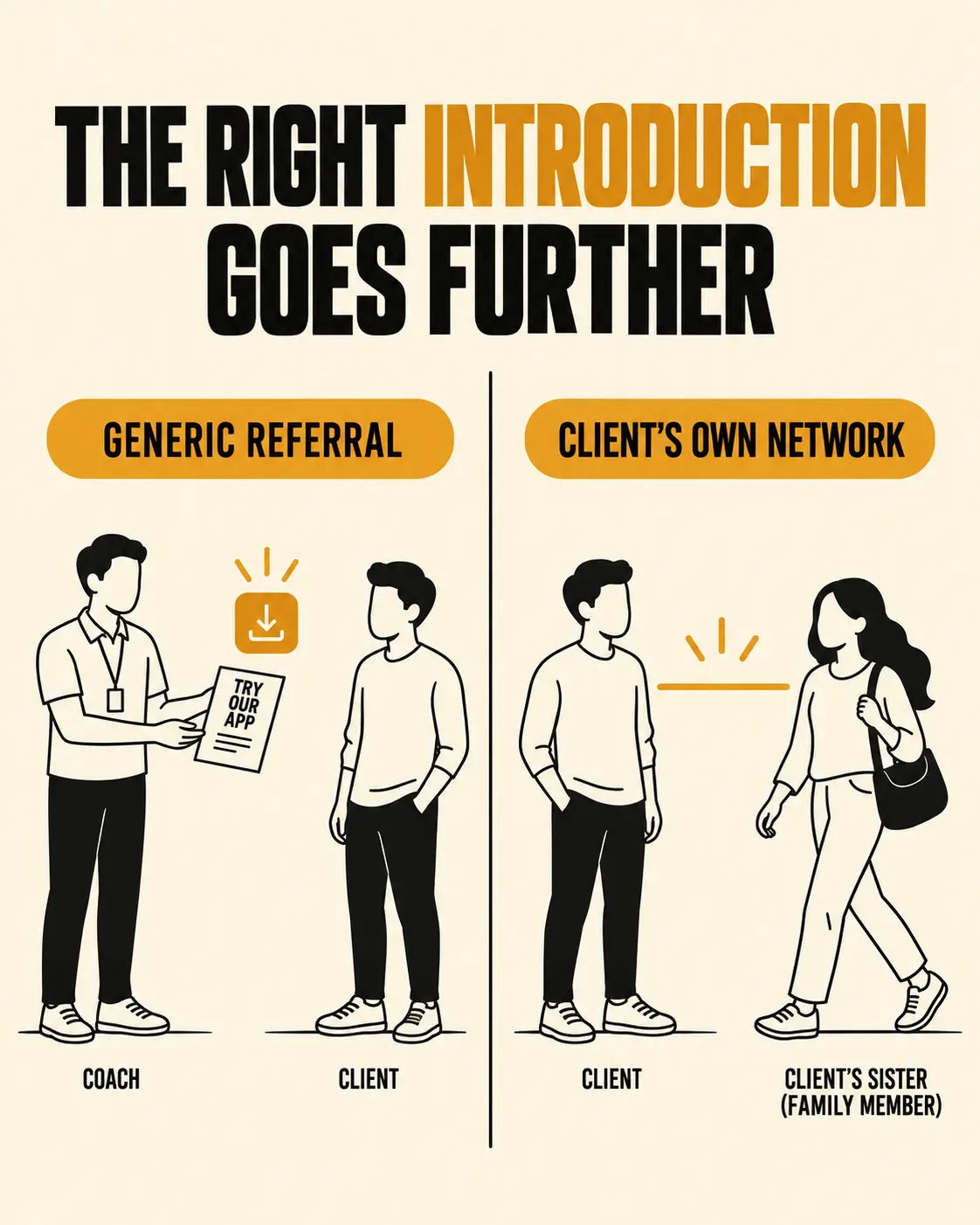
The instinct to hand a client a new resource — an app, a class, a support group — often skips over what's already there. NBHWC's outline pairs this with recognizing non-modifiable systemic barriers, so a coach knows what kind of support is actually realistic for a given client, and considering how a client's health literacy and numeracy shape coaching itself, adjusting explanations and pacing rather than assuming a shared baseline.
A coach's instinct is to suggest a walking group app to help a client stay consistent. Before recommending it, the coach asks who in the client's life is already active. The client mentions a sister who walks every morning but has never asked her to join. The plan uses that existing relationship instead of a new app — the support was already there, just unnoticed.
Setting Goals That Actually Fit the Client
NBHWC's outline asks a coach to help a client establish and refine specific long-term goals that lead toward their own desired outcomes or vision — directly building on the values-and-vision work Lesson 9 covered — and help them identify short-term goals or action plans that get there. Two conditions apply to both: the plan has to align with the client's own pace, interests, needs, and values, and the goals themselves have to be specific, realistic, and timebound, using frameworks like SMART.
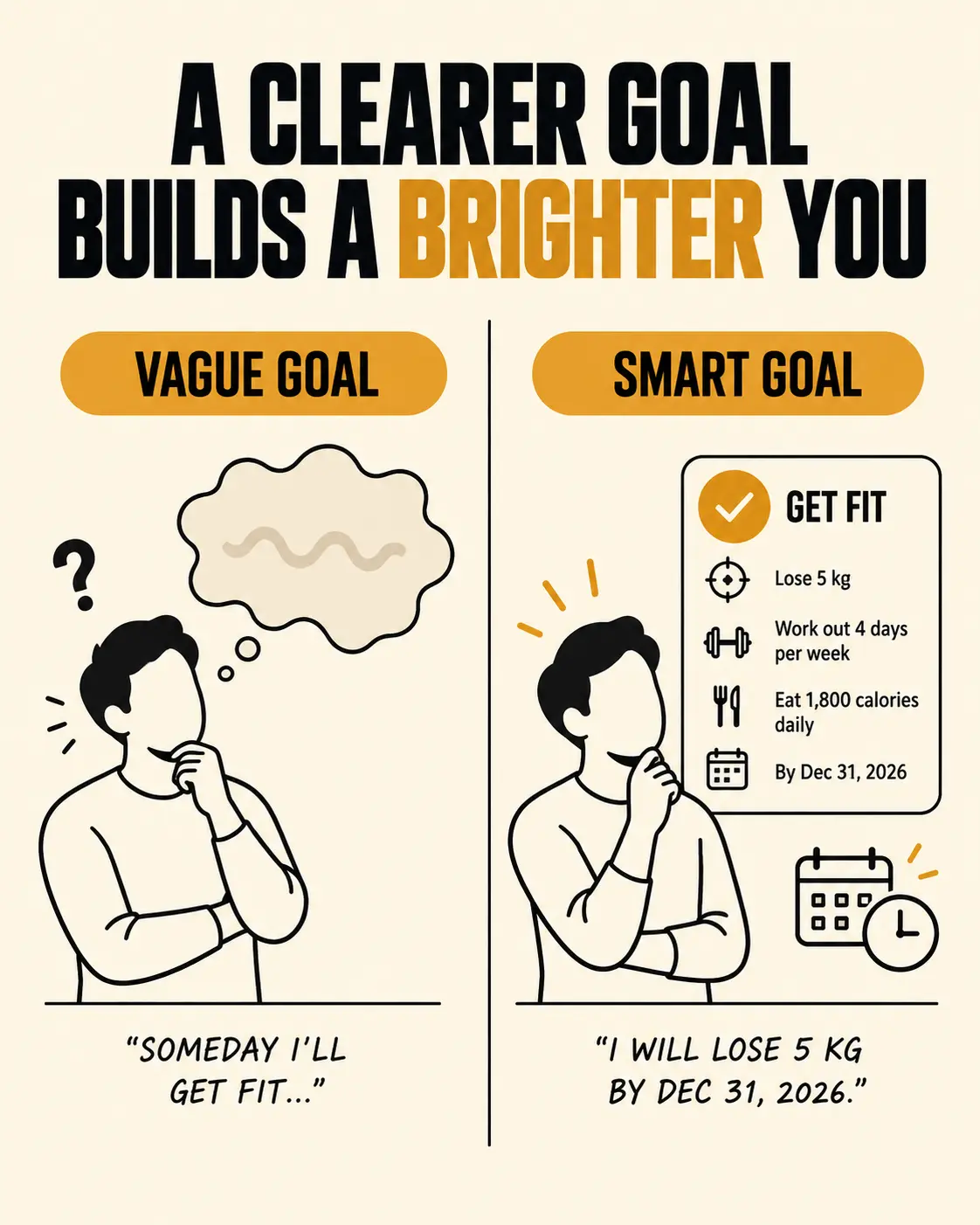
This should sound familiar. Lesson 6 introduced Locke and Latham's goal-setting theory, which found that specific and appropriately challenging goals reliably outperform vague ones like "get healthier." NBHWC's outline is asking a coach to apply that same finding in practice, not introducing a new principle — a goal like "walk more" gives a client nothing to check their progress against, while "walk 20 minutes after dinner, four days this week" does.
From Outcome to Behavior: Translating Goals Into Action
NBHWC's outline also asks a coach to consider thought or mindset changes as well as tangible actions — not everything worth setting as a goal is a behavior; a shift in how a client thinks about themselves counts too. From there, the outline names two connected moves: translate outcome goals into behavioral goals, and guide the client to commit to the action.
| An Outcome Goal | A Matching Behavioral Goal |
|---|---|
| "Lower my A1C." | "Walk 20 minutes, four days a week, after dinner." |
| "Feel less stressed." | "Write down three things on my mind for two minutes before bed." |
| "Build my savings." | "Move $50 into savings the day each paycheck lands." |
An outcome goal describes what a client wants; a behavioral goal describes what they'll actually do this week that moves them there. A client can't act directly on "lower my A1C" — they can act on a daily walk. Once a behavioral goal exists, the coach's job shifts to guiding the client to commit to it out loud, which research on commitment devices suggests makes follow-through more likely than leaving the intention unspoken.
Anticipating Barriers and Building In Accountability
NBHWC's outline closes out goal-setting with five more moves: identify and leverage types of support to facilitate and sustain the change — connecting directly back to this lesson's opening section; anticipate and plan for potential barriers or challenges before they happen, rather than reacting after the fact; establish the client's own methods of accountability and tracking progress, echoing the tracking-preferences work from Lesson 9; incorporate cultural considerations into the goals or action plan; and adapt goals to address the impact of social determinants of health — recognizing that a plan assuming unlimited time, money, or safe outdoor space doesn't work for every client.
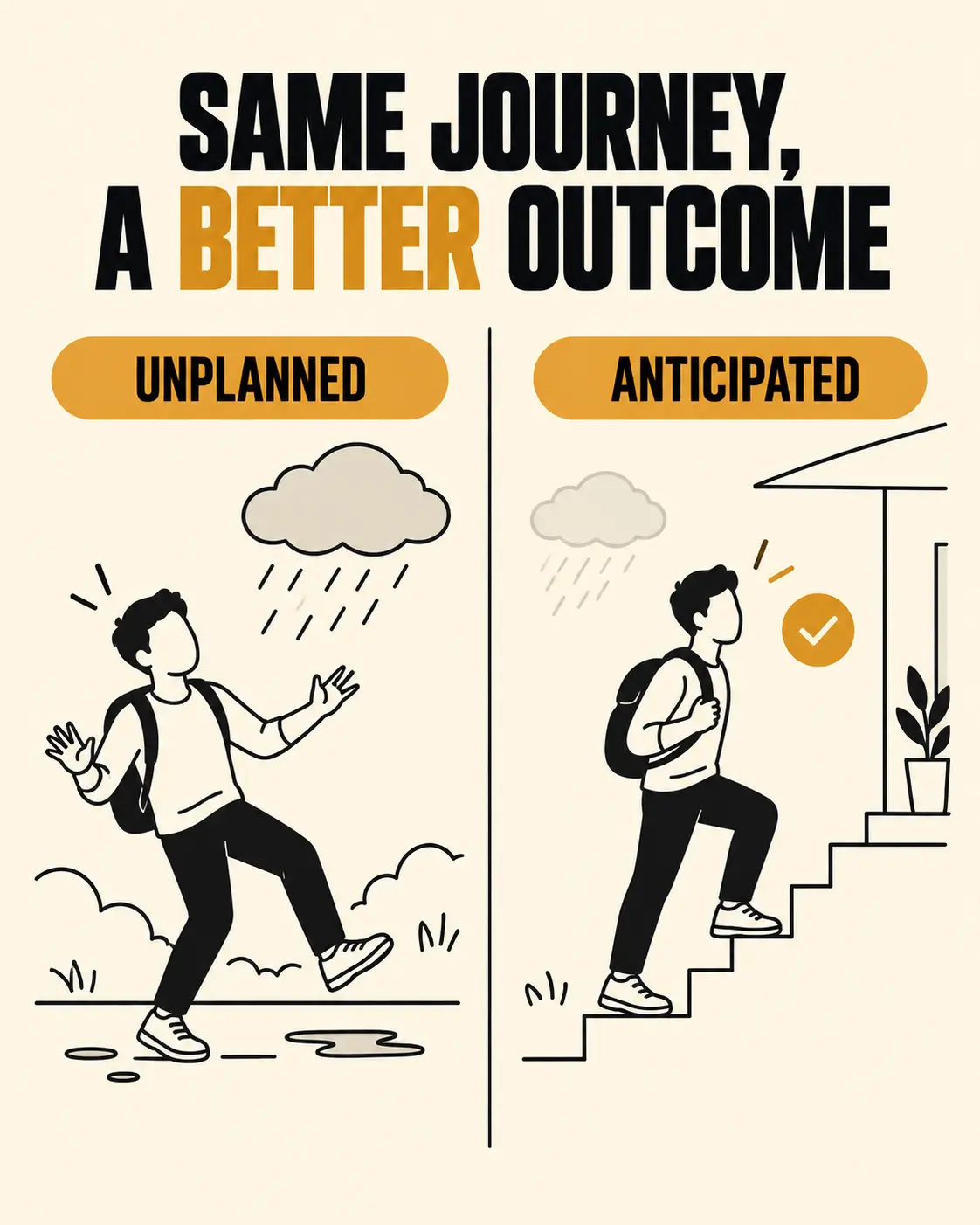
A client commits to walking outside after work. Instead of leaving it there, the coach asks: "What could get in the way of that this week?" The client says bad weather is likely. Together they add a backup — a flight of stairs at home — before the week starts. When it does rain, the plan doesn't collapse; it just switches to the version already agreed on.
Managing Time Inside the Session
NBHWC's outline names one more skill in Domain 3, though with far less detail than the others: ensuring appropriate time management. Unlike the sub-competencies above it, the outline doesn't itemize specific behaviors here — it simply names time management as something a coach must actively handle, which in practice draws directly on a skill this course already covered.
Lesson 10's expand-and-narrow judgment call is exactly this in action. A coach who never narrows lets a session's limited time get consumed by open-ended exploration and reach the end with nothing decided. A coach who narrows too early cuts off material the client actually needed to work through. Managing a session's time well is less a separate technique than the expand/narrow skill applied with the clock in mind — and it operates at the plan level too, since a goal sized to a client's real pace, from earlier in this lesson, is itself a form of managing time well.
Domain 3 Comes Together
This lesson closes Domain 3. Across ten sub-competencies and four lessons, the domain built from facilitation tools and communication skills in Lesson 8, through protecting a client's autonomy and awareness in Lesson 9, building self-efficacy and reading when to expand or narrow in Lesson 10, to this lesson's support, goals, and time management. Every skill in the domain shares one thread this course named back in Lesson 2: the client is the source of the material, and the coach's job is to elicit, structure, and support it — not to supply it.
Domain 4 begins in Lesson 12, which shifts away from in-session skills toward a coach's own professional obligations: scope of practice, NBHWC's Code of Ethics, and staying current through ongoing professional development.
8 questions on building a client's support network, setting SMART goals aligned to the client's own pace, translating outcomes into behavioral action, anticipating barriers, and managing time inside a session. NBHWC doesn't publish a fixed pass/fail line for its own exam, so this knowledge check doesn't invent one either — you'll get a raw score and a rationale for every question instead.
- NBHWC's outline asks a coach to help a client build support from their existing relationships outward, before reaching for a new resource.
- A client's health literacy and numeracy should shape how a coach explains and paces coaching itself.
- Goals need to be specific, realistic, and timebound — the same finding Lesson 6's goal-setting theory already established.
- An outcome goal describes what a client wants; a behavioral goal describes the specific action they'll actually take this week.
- Anticipating barriers before they happen, and building in the client's own accountability method, keeps a setback from derailing the whole plan.
- Managing time inside a session is largely the expand/narrow skill from Lesson 10, applied with the clock in mind.
Before moving to Lesson 12:
- Next time you set a goal for yourself, rewrite it as a specific, timebound action rather than a general intention.
- Before committing to a plan this week, name one likely obstacle and decide your backup now, not after it happens.
- Think of one person already in your life who could support a goal you're working on, rather than looking for a new resource first.
- Complete the knowledge check above and review the rationale for any question you missed.