Technical knowledge is necessary but not sufficient. A good coach knows the science and follows a sound program. A great coach does that too, but adds something that doesn't show up on a certification exam: relentless curiosity about the specific person in front of them, and the consistency to notice and adjust before a client quits rather than after. That gap — not a gap in nutrition facts — is what this chapter is about.
Chapter 2 was about building your own learning plan. This chapter turns the lens outward: once you know the material, what actually makes the difference between a coach who's technically correct and a coach clients get real results with? The honest answer surprises people who assume it's about knowing more.
Knowledge Is Necessary, Not Sufficient
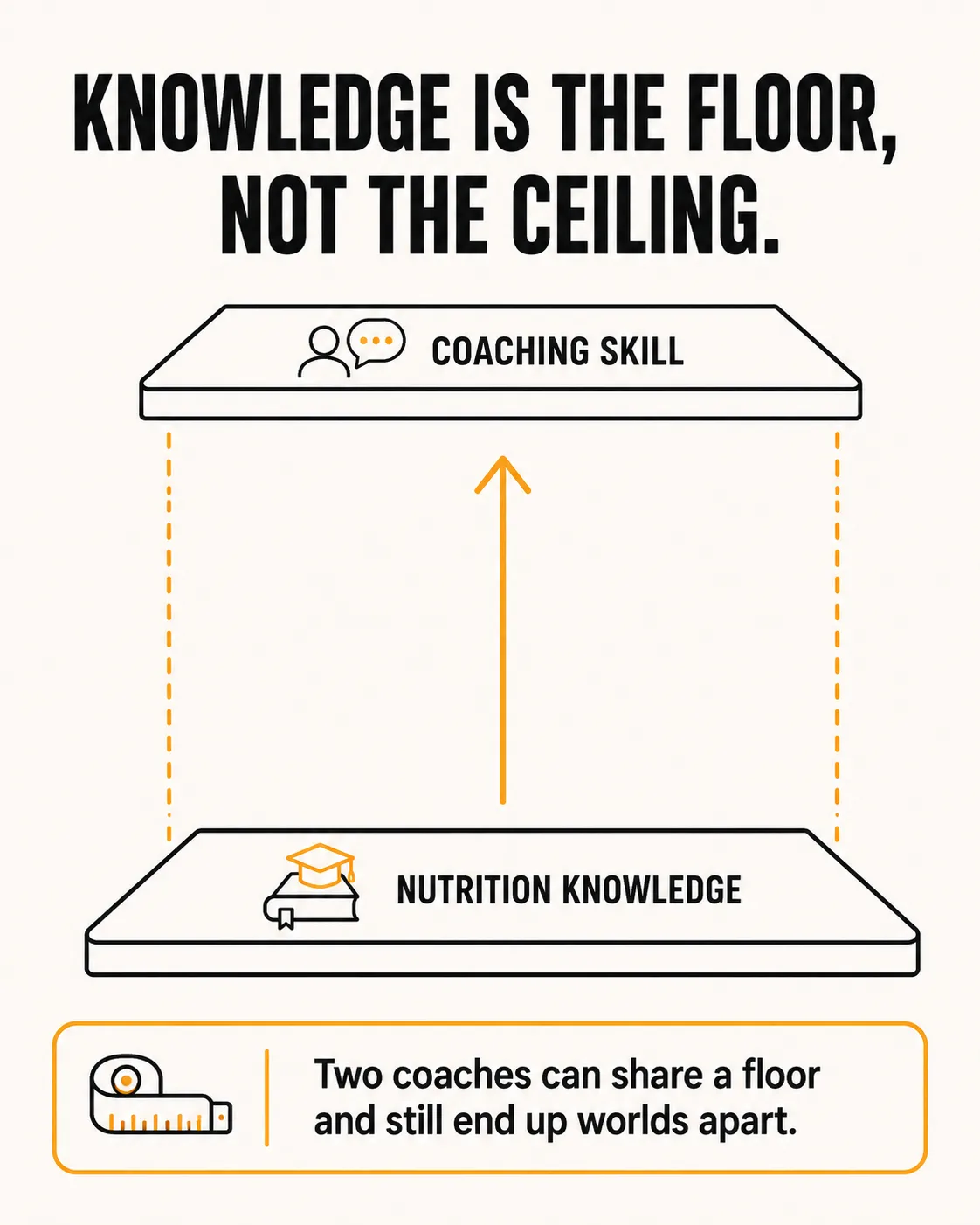
It's tempting to assume the best coaches are simply the ones who know the most — the ones who can recite exact protein targets, name every micronutrient's function, or quote the latest study. That knowledge matters, and Unit 2 will make sure you have plenty of it. But knowledge alone doesn't explain why two coaches with near-identical nutrition science backgrounds can get wildly different results with the same type of client.
The gap shows up in the room, not in the textbook. A technically knowledgeable coach who talks at a client instead of with them, who assumes rather than asks, or who disappears the moment things get hard, will consistently underperform a less encyclopedic coach who does the opposite. This isn't a knock on knowledge — it's a reminder that knowledge is the floor, not the ceiling.
What Actually Separates Good From Great
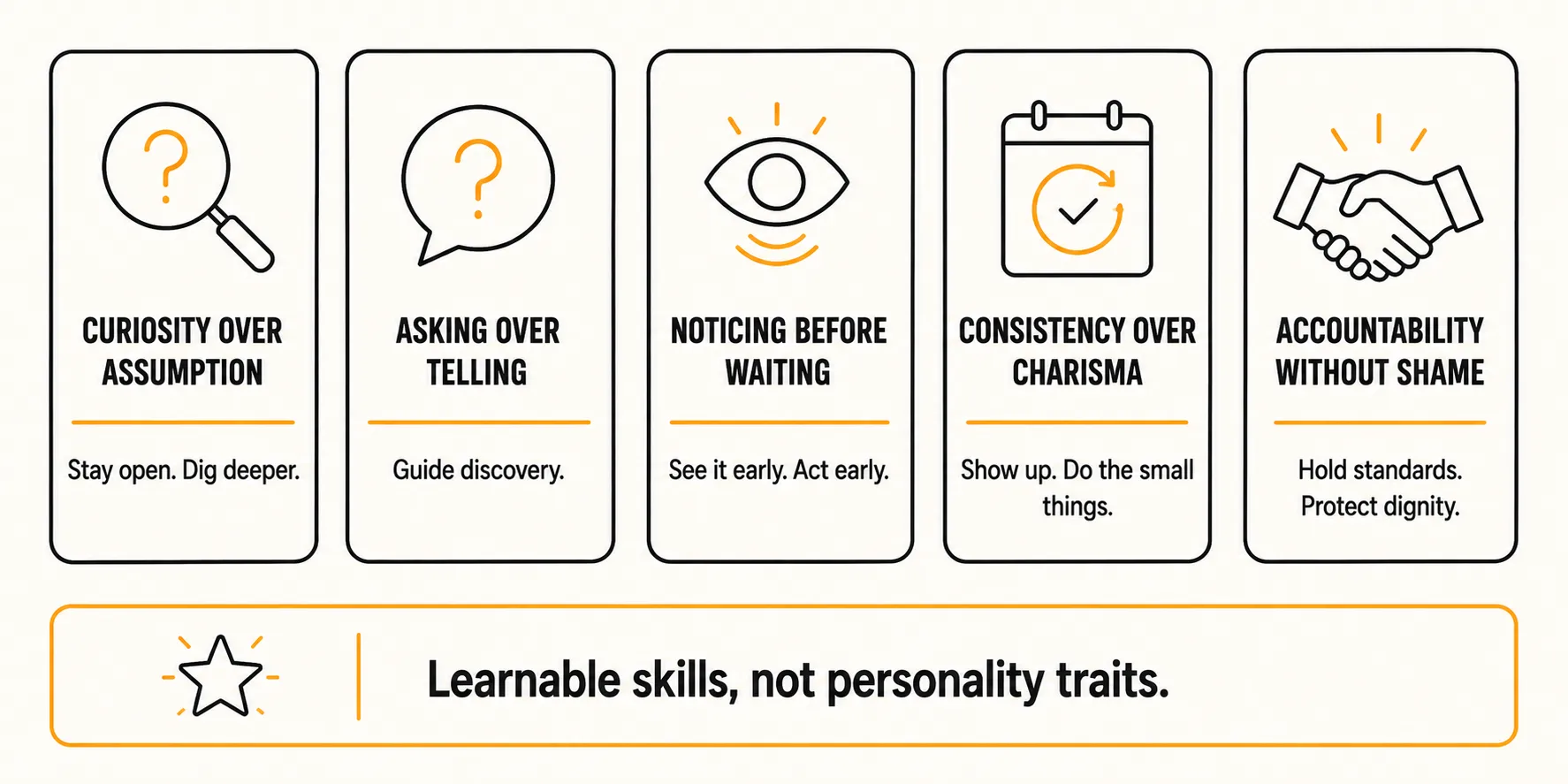
A handful of habits repeatedly show up in coaches who get results other coaches with similar knowledge don't. None of them require charisma, extroversion, or a naturally magnetic personality — they're learnable skills, which is exactly why this chapter exists in a certification course rather than being treated as an innate talent.
- Curiosity over assumptionA good coach assumes they know why a client is struggling. A great coach asks, because the real reason is often something a generic template would never predict. This is the same instinct Chapter 4's behavior-change framework is built around.
- Asking over tellingHanding someone an answer feels efficient, but a question that helps a client arrive at their own answer tends to stick far longer than advice they were simply told to follow.
- Noticing before waitingGreat coaches catch a client quietly disengaging — shorter replies, skipped check-ins — and reach out before it becomes a dropped client, rather than waiting for the client to bring it up first.
- Consistency over charismaA quieter coach who reliably shows up and follows through will usually outperform a more charismatic one whose attention is unpredictable. Clients build trust from patterns, not personality.
- Accountability without shameHolding a client to their own stated goals is part of the job. Doing it in a way that makes them feel judged undoes it. Chapter 15 (Coaching in Practice) is built entirely around getting this balance right.
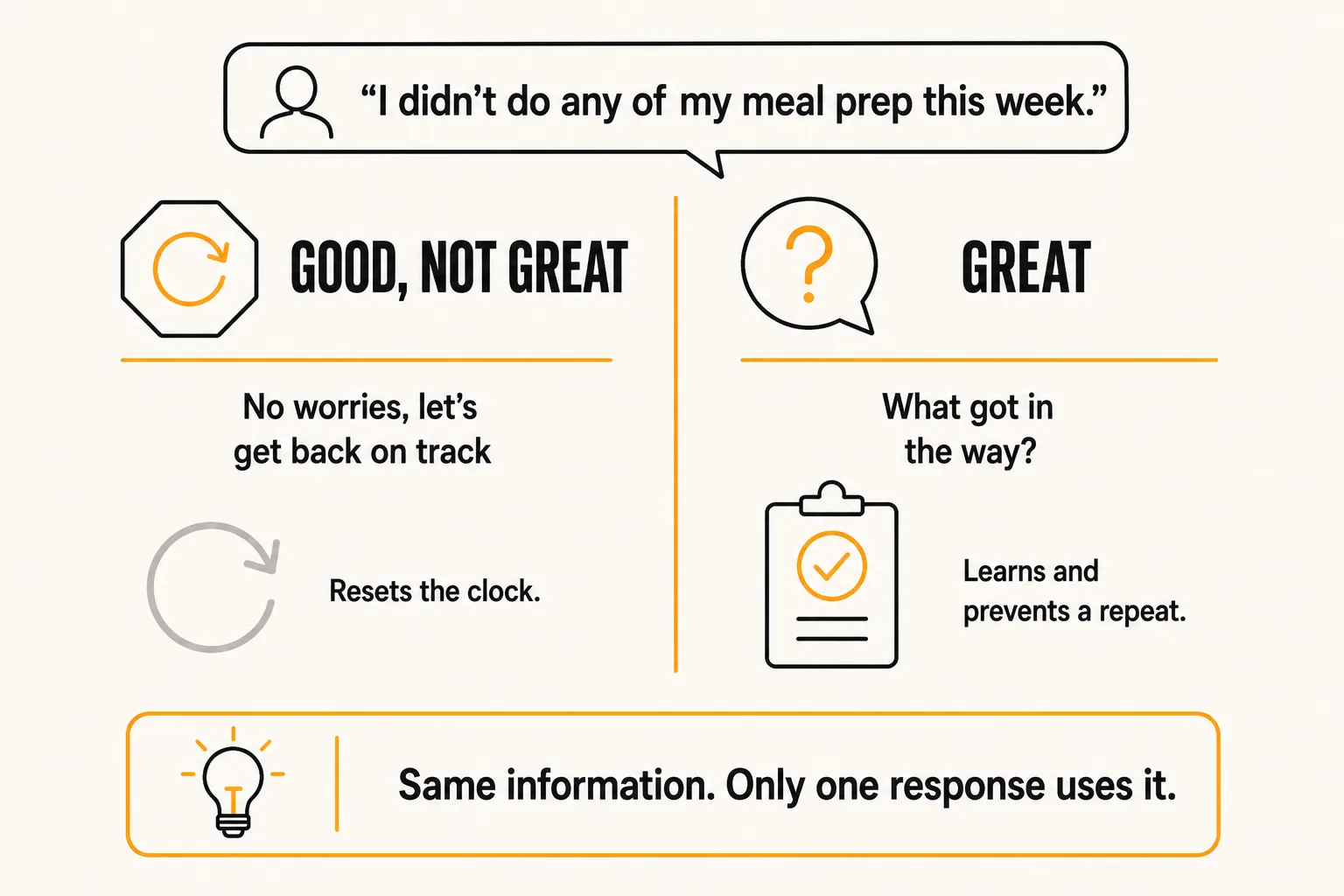
A client messages: "I didn't do any of my meal prep this week." A good-but-not-great coach might reply, "No worries, let's just get back on track next week" — well-intentioned, but it treats the week as a blank rather than a source of information. A great coach instead asks, "What got in the way?" and actually waits for the answer. Maybe the client's schedule changed, maybe the plan itself was unrealistic, maybe something unrelated to nutrition entirely happened that week. The second response takes ten extra seconds and usually prevents the same thing from happening again next week — the first just resets the clock.
Why This Distinction Matters for Results
Client results track more closely with whether they stuck with a program than with which program they were on — most reasonable nutrition approaches work if followed consistently long enough. That means the coach's real job is less "prescribe the right diet" and more "be the reason this person keeps showing up." A great coach's habits — curiosity, noticing early, consistency, non-judgmental accountability — are all, fundamentally, retention tools. They're what keeps a client in the process long enough for any nutrition approach to actually work.
This is also why Unit 1 spends an entire chapter on coaching quality before Unit 2 ever introduces a single nutrient. The science in Unit 2 is what you'll draw on for the content of your advice. The habits in this chapter are what determine whether a client is still listening by the time you give it.
8 questions, modeled on PN's real open-book exam style. Score 75%+ to mark this lesson complete.
- Technical nutrition knowledge is necessary but not sufficient — it's the floor for coaching quality, not the ceiling.
- Five learnable habits separate good coaches from great ones: curiosity over assumption, asking over telling, noticing before waiting, consistency over charisma, and accountability without shame.
- None of these habits require natural charisma — they're skills a coach builds deliberately, which is why this chapter exists in a certification course.
- A client's results depend more on whether they stuck with a program than on which program they followed — so a coach's real job is largely about retention.
- This chapter sets up Chapter 4's behavior-change framework and Chapter 15's applied coaching practice, both of which build directly on these habits.
Before moving to Lesson 4:
- Think of a time someone gave you advice you didn't follow. Was the advice wrong, or was something else missing — attention, timing, trust?
- Pick one of the five habits above that feels least natural to you, and try it once this week in a real conversation, even outside a coaching context.
- Re-read the "Two Responses" example and write your own version using a scenario from your own life or work.
- Complete the knowledge check above and review any question you missed.