Unit 1 made the case that coaching skill is what gets a client to actually apply nutrition advice. Unit 2 exists to make sure that advice is worth applying in the first place. The goal across the next eight chapters isn't to turn you into a biochemist — it's practical fluency: enough real understanding of cells, digestion, metabolism, and nutrients to reason through a client's situation and explain it in plain language, plus enough sense of how nutrition evidence works to avoid overreacting to the next viral headline.
Chapter 5 closed Unit 1 by arguing that "good nutrition" is defined by criteria — adequate, balanced, nutrient-dense, healthful, sustainable — rather than by one specific diet. This chapter opens Unit 2 by setting up how you'll actually learn to judge those criteria for a real person, instead of taking someone else's word for what counts as balanced or adequate.
Why a Coaching-First Course Still Needs the Science
It would be easy to read Unit 1 and conclude that coaching skill is everything and nutrition facts barely matter. That's not quite right, and it's worth being precise about why. Coaching skill determines whether a client actually applies advice consistently. The science determines whether that advice was sound to begin with. A wonderfully delivered, deeply empathetic recommendation that's nutritionally backwards doesn't help anyone — it just fails more pleasantly than a blunt one would have.
Put another way: coaching without accurate science is confident guessing with good bedside manner. The two unit's skills are multiplicative, not competing. A coach who's mastered Unit 1 but skips Unit 2 can build trust and get a client to follow almost anything — which is exactly the scenario where getting the "anything" wrong does the most damage.
Picture a coach with genuinely excellent Unit 1 skills — warm, curious, great at building trust — who confidently tells an anxious client to cut fat from every meal because "fat makes you fat." The client, who trusts this coach completely, follows the advice to the letter for months. Energy tanks, hormones get disrupted, and the client ends up worse off than before, despite doing exactly what a coach they liked and trusted told them to do. The coaching was excellent. The science underneath it was wrong, and no amount of warmth fixed that. This is precisely the failure mode Unit 2 exists to prevent.
What's Ahead in Unit 2
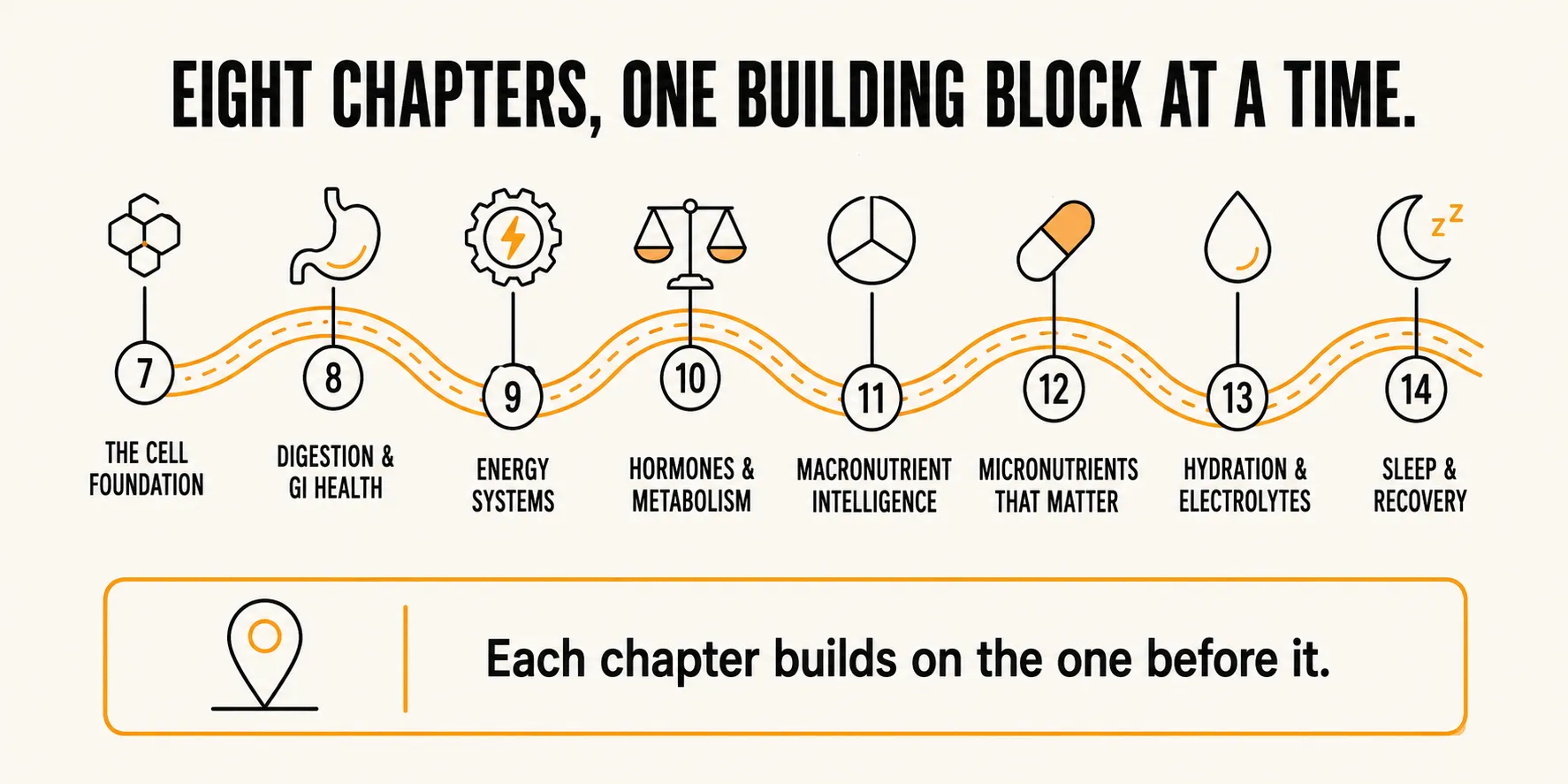
The next eight chapters build on each other in a deliberate order — starting at the level of cells and systems, then working up through digestion, metabolism, and energy balance, before finishing with the specific nutrients and lifestyle factors that round out a full picture of nutrition science.
- Ch. 7 — Systems and CellsThe cellular and systems-level biology everything else in this unit builds on — the foundation layer.
- Ch. 8 — Through the GI TractWhat actually happens to food between the first bite and the nutrients your body can use.
- Ch. 9 — Energy Transformation and MetabolismHow the body converts food into usable energy, and where common metabolism myths go wrong.
- Ch. 10 — Energy BalanceThe real picture behind "calories in, calories out," which is more nuanced than the phrase suggests.
- Ch. 11 — MacronutrientsProtein, carbohydrate, and fat — what each actually does, and how to think about them with real clients.
- Ch. 12 — Micronutrients and Whole FoodsVitamins, minerals, and why food quality matters beyond the macro numbers.
- Ch. 13 — Water and Fluid BalanceHydration status and fluid needs, and how they shift with training and everyday life.
- Ch. 14 — Stress, Recovery, and SleepWhy nutrition coaching can't be separated from stress, recovery, and sleep — the unit's bridge back into Unit 3's coaching practice.
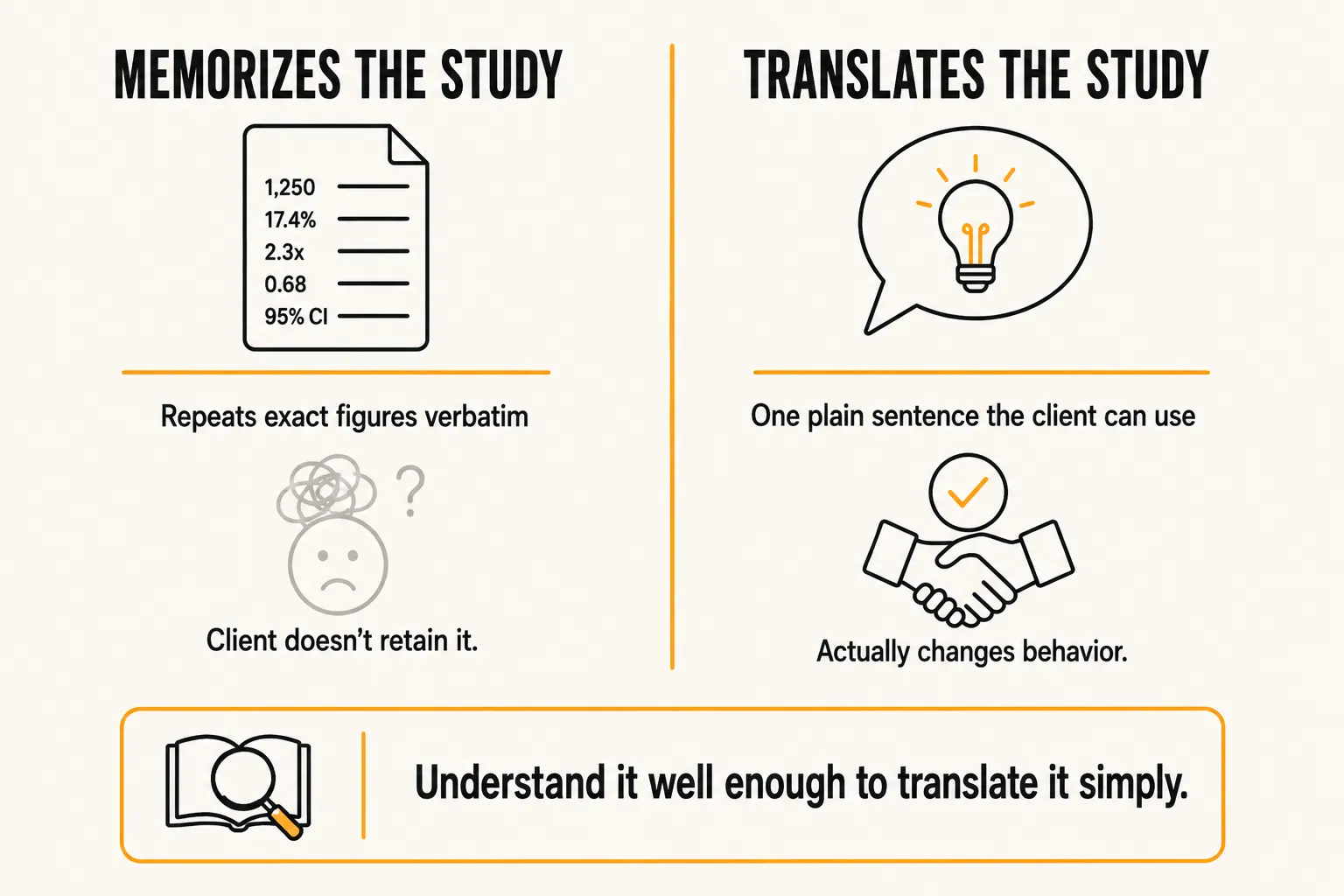
Two coaches read the same new study on protein timing. The first memorizes its exact numbers and repeats them to every client verbatim, treating the finding as settled fact. The second asks a more useful question: does this actually change what I'd tell a specific client, given everything else true about their situation — and if so, can I explain the change in one plain sentence? The second coach is doing the job Unit 2 is actually training you for. You don't need to recite a study's methodology to a client. You need to understand it well enough to know whether it should change your advice, and then translate that into something a non-scientist can use.
A Quick Note on Evidence Quality
A lot of nutrition confusion online comes from treating all evidence as equally strong. It isn't. As a rough mental model: a single small study, a personal anecdote, or "it worked for my cousin" sits at the weak end. A well-designed randomized controlled trial sits well above that. A systematic review or meta-analysis pooling many such trials sits above that again — though even these can be undermined by how consistent the underlying studies actually are. None of this requires you to become a research methodologist, but it's worth building the habit of asking "how strong is this, really?" before updating your advice based on one headline.
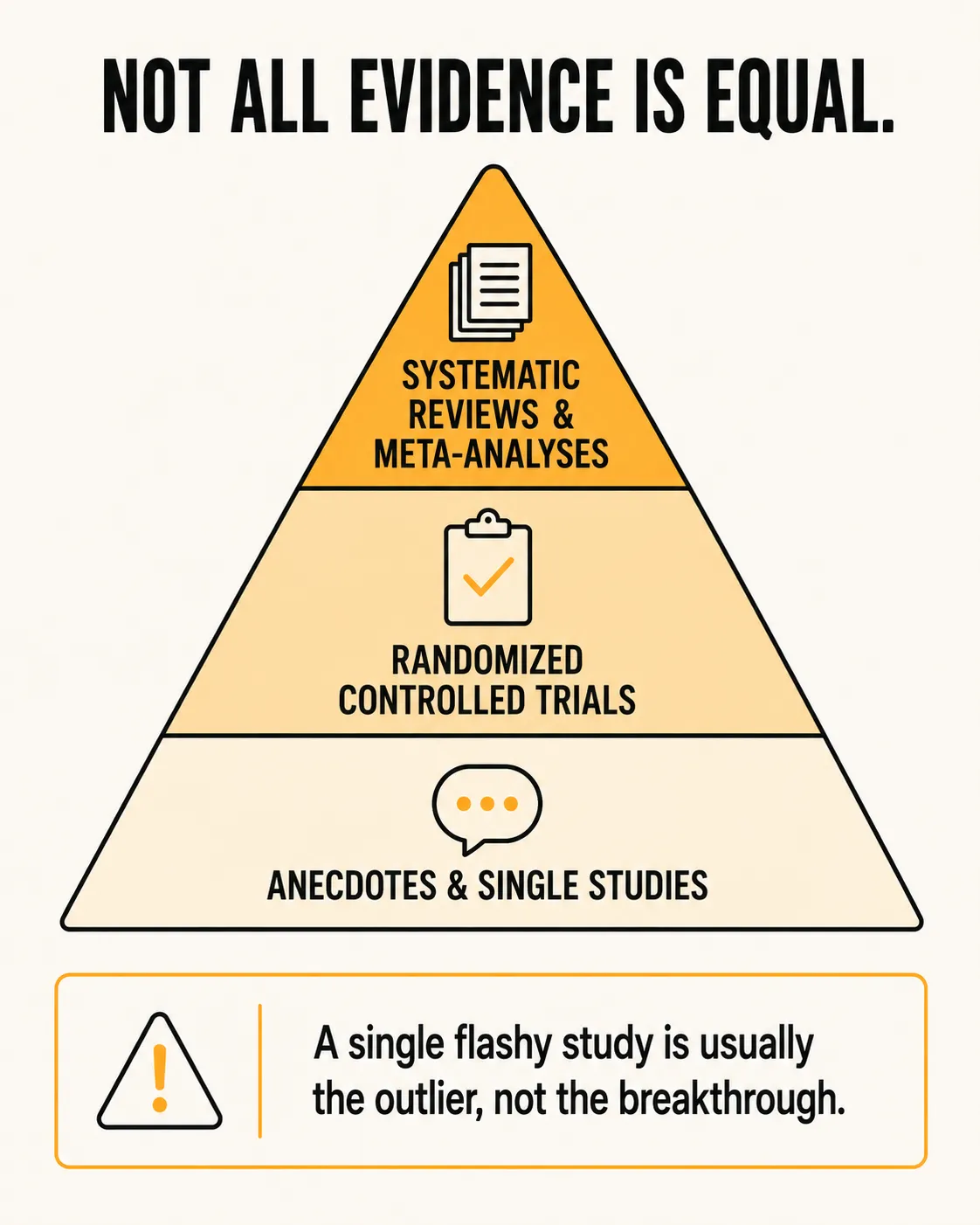
This directly extends Chapter 5's "judge by data, not by dogma." Evidence quality is part of that same discipline — a single flashy study contradicting years of consistent research is usually the outlier, not the breakthrough, and a coach who chases every new headline ends up with less stable advice than one who waits for a pattern to actually hold up.
Nutrition headlines make this mistake constantly: a single observational study links one food to a scary-sounding outcome, a news outlet runs it as a definitive finding, and it circulates for years even after larger, better-designed studies fail to find the same effect or find the opposite. A coach who reacted to the original headline by telling every client to avoid that food would have spent months giving advice a stronger body of evidence never actually supported. Waiting for the pattern to hold up isn't indecision — it's the discipline this chapter is asking you to build.
Starting with Chapter 7, this unit gets concrete: cells and systems first, then the rest of the science builds from there. None of it requires a prior science background — just the willingness to slow down through the denser chapters, the same "spaced beats rushed" study habit from Chapter 2.
8 questions, modeled on PN's real open-book exam style. Score 75%+ to mark this lesson complete.
- Coaching skill (Unit 1) determines whether advice gets applied; nutrition science (Unit 2) determines whether that advice is sound to begin with — the two are multiplicative, not competing.
- Unit 2 covers eight chapters in order: systems and cells, digestion, metabolism, energy balance, macronutrients, micronutrients, fluid balance, and stress/recovery/sleep.
- The goal is practical fluency you can explain simply to a client, not memorizing biochemistry for its own sake.
- Not all evidence is equally strong — anecdotes and single studies sit well below well-designed trials and systematic reviews.
- This chapter extends Chapter 5's "judge by data, not dogma" to evidence quality itself: a single flashy study is usually the outlier, not the breakthrough.
Before moving to Lesson 7:
- Think of a nutrition claim you've seen go viral recently. Where would it sit on the evidence-quality scale — anecdote, single study, or a well-established pattern across many studies?
- Skim the Unit 2 chapter list above and note which topic you expect to find hardest. Plan to slow your pace specifically for that one.
- Practice the "one plain sentence" habit: pick any nutrition fact you already know, and write the version you'd actually say out loud to a client.
- Complete the knowledge check above and review any question you missed.