Unit 2 spent nine chapters building real nutrition science — cells, digestion, metabolism, energy balance, macronutrients, micronutrients, hydration, and recovery. None of it helps a client unless it can survive contact with an actual conversation. This chapter, opening Unit 3, is about exactly that translation: taking what you now know and turning it into an intake conversation, a single well-chosen habit, and a way of asking questions that gets a client talking instead of a coach lecturing.
Chapter 14 closed out Unit 2 by promising that Chapter 15 would turn the science into an actual coaching conversation. That promise is the whole point of Unit 3 — seven chapters that shift the lens from what's true about nutrition to what actually works when a real person is sitting across from you.
The Intake Conversation: Gathering Before Giving
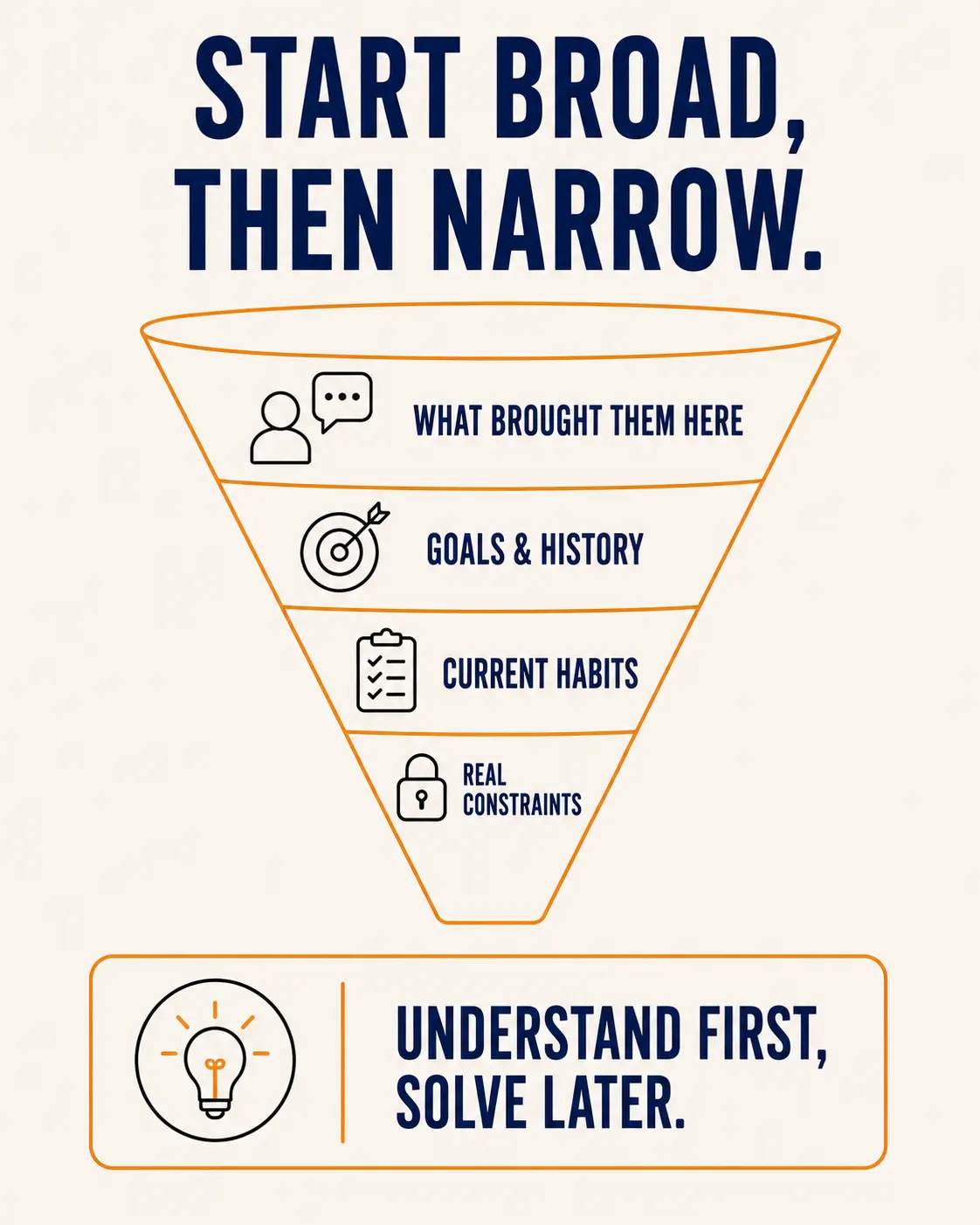
The first structured conversation with a new client sets the tone for everything after it, and the single biggest mistake a new coach makes here is rushing to prescribe. A good intake conversation is almost entirely about gathering, not giving: understanding a client's history with food and exercise, their actual goals (which are often different from what they say in the first sentence), their current habits, and the real constraints on their time, budget, and energy.
This isn't just politeness — it's practical necessity. Chapter 5 established that there's no single "best diet," and Chapter 11 through 14 each showed how individual circumstances (activity level, sleep, stress, sweat rate) change what actually applies to a given person. A coach who skips the intake and jumps straight to a meal plan is essentially guessing, no matter how sound the underlying science is. The intake is where Unit 2's knowledge gets pointed at a specific person instead of staying general.
A useful frame for structuring an intake: start broad (what brought them here, what does success look like to them), then narrow toward specifics (a typical day of eating, sleep and stress patterns from Chapter 14, any past attempts and what happened). Resist the urge to solve anything in this first conversation — the goal is understanding, not action, and jumping to solutions too early is one of the fastest ways to miss what actually matters to a specific client.
Constraints deserve particular attention, because they're the part of a client's life most likely to sink an otherwise well-designed plan. A client who travels for work three weeks a month, cooks for a family with different preferences, or is managing a tight grocery budget needs a genuinely different starting point than a client with none of those pressures — even if their goals and starting numbers look identical on paper. Asking directly about time, money, cooking skill, and support at home during the intake surfaces these constraints before they quietly derail week three of a plan that never accounted for them.
One Habit at a Time, Not a Full Overhaul
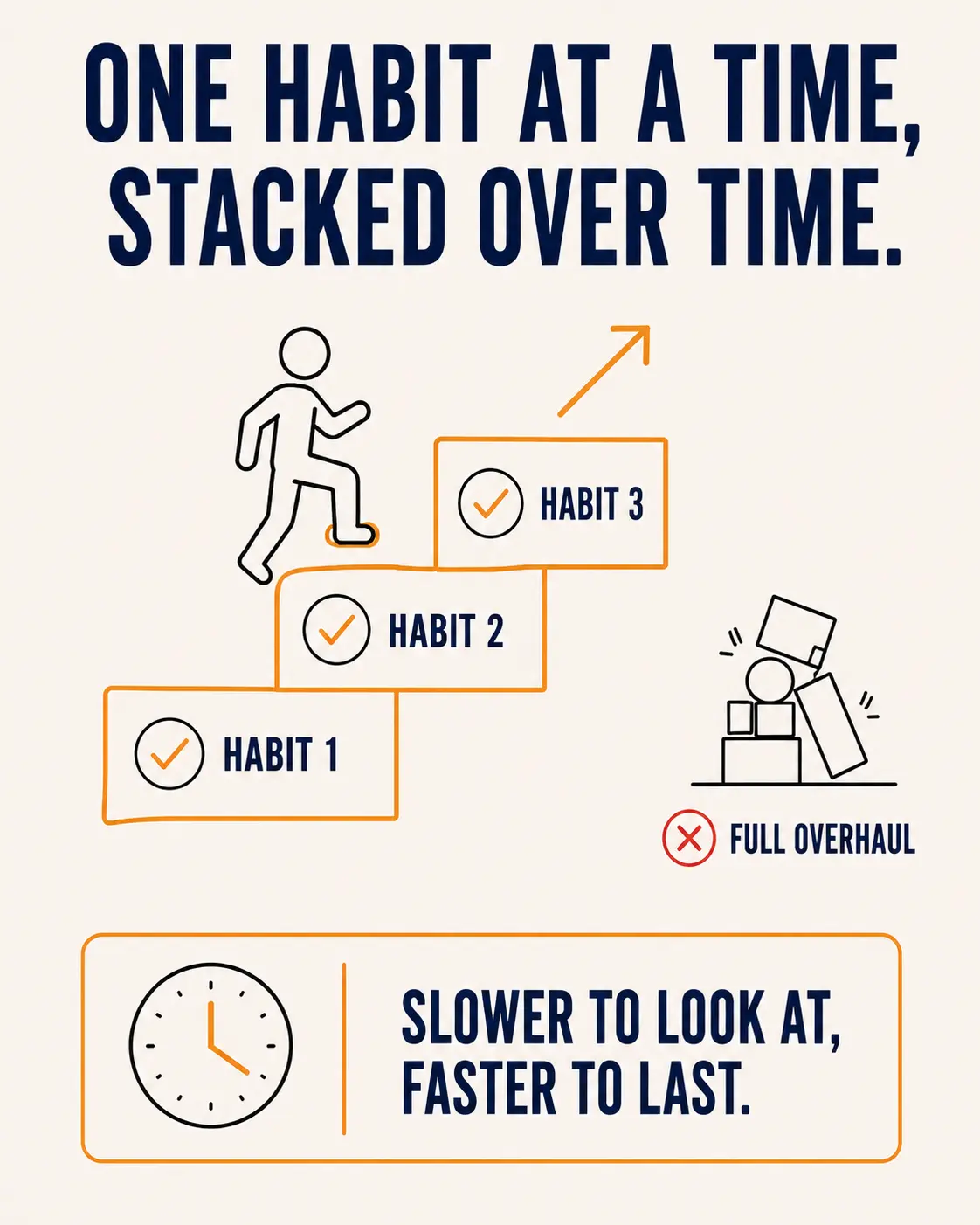
Chapter 4's behavior-change formula established that meaningful change happens through small, practiced, sustainable steps rather than dramatic overnight overhauls. Coaching in practice means actually living that principle, even when it feels slower than a client wants. A client's capacity for change at any given moment is limited — asking someone to fix their protein intake, sleep schedule, hydration, and stress management simultaneously usually produces a burst of short-lived compliance followed by burnout and a return to old patterns.
- Specific and concrete"Eat a palm-sized portion of protein at breakfast" beats "eat more protein" — Chapter 11's macronutrient guidance made specific and actionable.
- Genuinely smallSmall enough that the client feels slightly silly saying no to it — the whole point is a high probability of success, not maximum impact on day one.
- Chosen with the client, not for themA habit the client helps select is one they're far more likely to actually follow through on than one simply assigned to them.
The payoff for starting small isn't just that the first habit is more likely to stick — it's what happens after it does. Once a client has practiced one habit consistently for a couple of weeks, a second habit gets stacked on top, then a third, each one building on the confidence and skill developed by the last. This is slower to look at on paper than handing over a complete plan on day one, but it consistently produces coaches' clients who are still following through months later, rather than clients who followed a detailed plan perfectly for ten days and then quietly stopped.
A new client, frustrated after years of failed attempts, asks a coach to just hand them a rigid meal plan and skip the conversation. It's a tempting shortcut — but a coach applying this chapter recognizes that a plan handed down without the client's input rarely survives the first hard week. A better response acknowledges the frustration honestly, then gently redirects: one small, client-chosen habit, practiced consistently, builds the confidence and skill that a detailed meal plan alone never will.
Why This Matters for Coaching
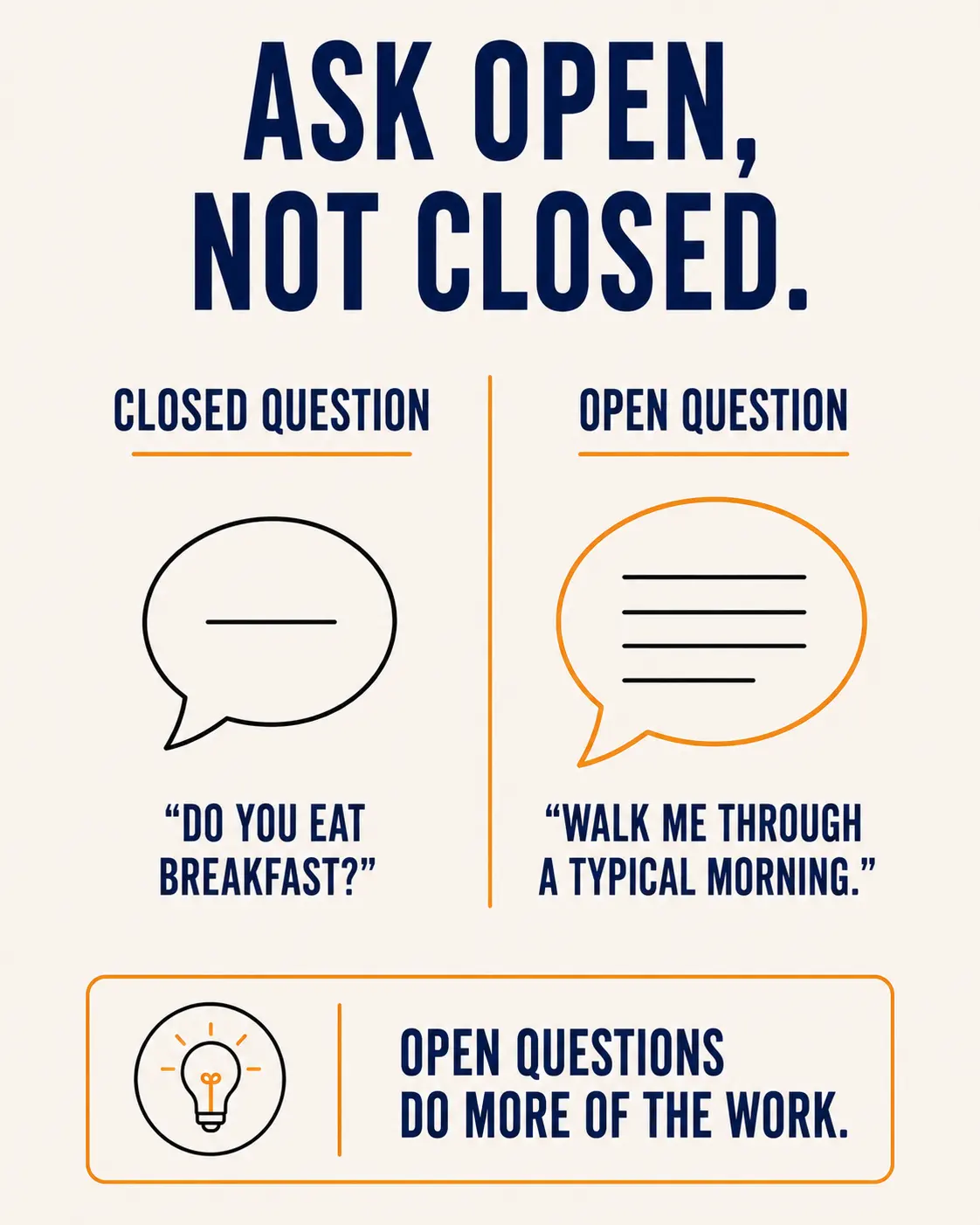
The single biggest skill shift this chapter asks for is trading lecturing for asking. Open questions — ones that can't be answered with a single word — do far more coaching work than any amount of explaining. "Walk me through a typical morning" surfaces more useful detail than "Do you eat breakfast?" ever could, because it invites the client to describe their actual life instead of guessing at the answer a coach wants to hear.
Reflective listening — briefly summarizing what a client just said before responding — pairs naturally with open questions and does double duty. It confirms the coach actually understood correctly, and it lets the client hear their own situation described back to them, which often surfaces insights the client hadn't fully put into words themselves. A simple "So it sounds like mornings are the hardest part of your day, is that right?" costs a coach almost nothing to say and frequently unlocks the actual conversation underneath the surface-level answer.
Chapter 3's distinction between a good coach and a great one is worth revisiting here: a good coach knows the material from Unit 2 cold. A great coach uses that material to ask better questions and listen harder, rather than to deliver a more impressive lecture. The nutrition science doesn't change how a coach shows up in the room — it changes what a coach notices and can respond to once the client starts talking.
Chapter 16 continues directly from here, looking specifically at coaching clients who are just getting their nutrition basics in order — the practical application of everything Chapter 15 just laid out, aimed at the specific population most new coaches will meet first.
8 questions, modeled on PN's real open-book exam style. Score 75%+ to mark this lesson complete.
- A good intake conversation is about gathering information, not prescribing a plan — understanding history, goals, habits, and constraints first.
- One small, specific, client-chosen habit beats a full overhaul — capacity for change is limited, and overhauls tend to produce short-lived compliance.
- The best first habits are specific, genuinely small, and chosen with the client rather than assigned to them.
- Open questions ("walk me through...") surface far more useful detail than closed yes/no questions.
- A great coach uses Unit 2's science to ask better questions and listen harder — not to deliver a more impressive lecture.
Before moving to Lesson 16:
- Write three open-ended questions you'd ask in a first intake conversation with a new client.
- Think of a habit change you or a client made — was it one small step or a full overhaul, and how did it go?
- Practice turning one closed question ("Do you eat breakfast?") into an open one.
- Complete the knowledge check above and review any question you missed.