Chapter 15 introduced the intake conversation and the one-habit-at-a-time approach in general terms. This chapter applies both to the client population most new coaches meet first: people who haven't yet built consistent basic nutrition habits. The core insight is almost counterintuitive for a new coach eager to share everything they've learned in Unit 2 — for a Level 1 client, consistency is the bottleneck, not information, and teaching more science before addressing that bottleneck usually backfires.
Chapter 15 closed by pointing toward this chapter as the practical application of everything it laid out, aimed at the specific population most new coaches will meet first. That population is the subject here: clients still working on the fundamentals.
What Defines a Level 1 Client
A Level 1 client isn't defined by a lack of nutrition knowledge — plenty of Level 1 clients could recite the basic food groups or name a few "healthy" foods without hesitation. What actually defines this stage is inconsistency: irregular eating patterns, meals skipped or eaten on the run, little day-to-day awareness of portions or food quality, and no real system for making nutrition choices beyond whatever feels convenient in the moment. The gap isn't what they know; it's what they consistently do.
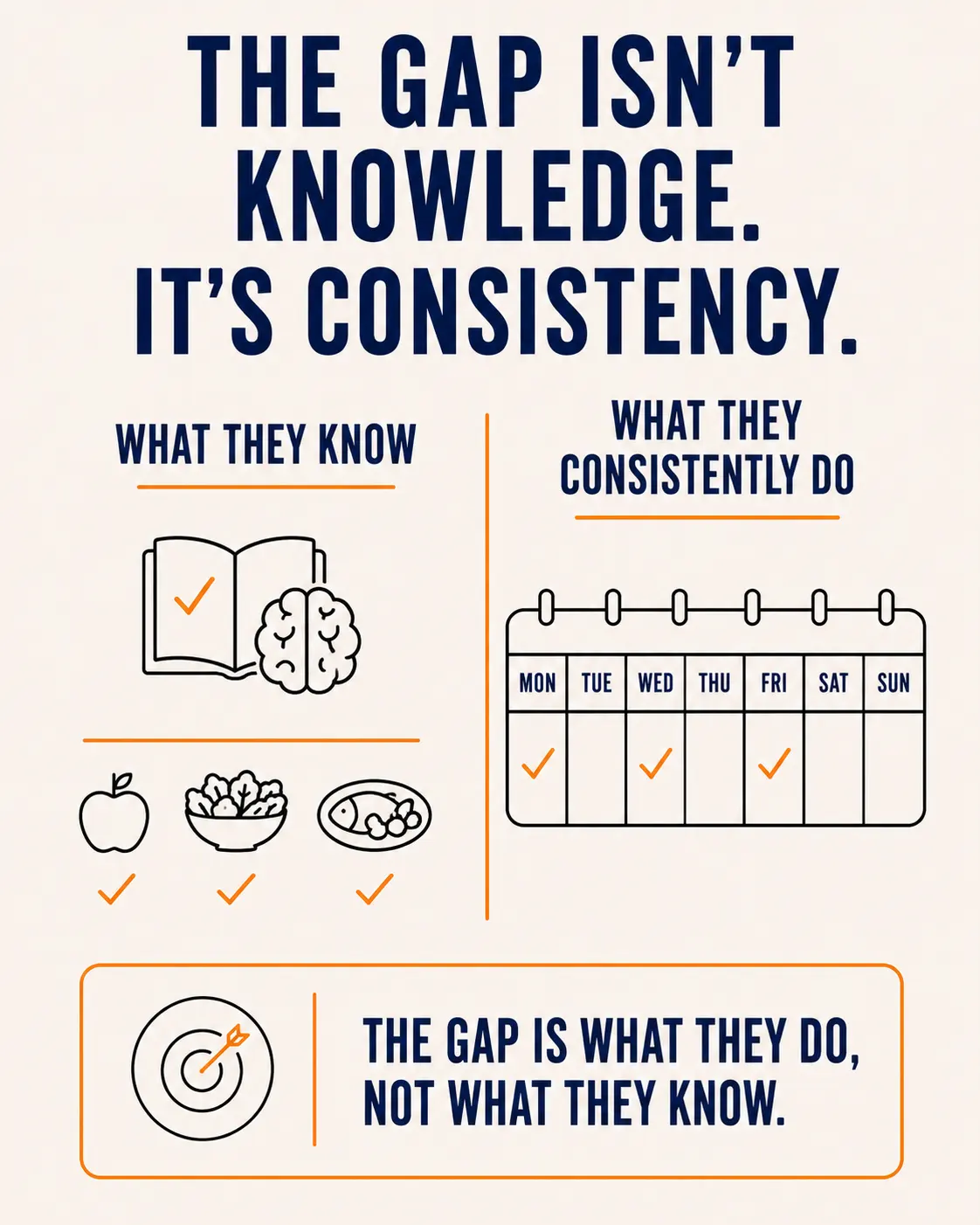
This distinction matters enormously for how a coach approaches the intake conversation from Chapter 15. A Level 1 client doesn't need a lecture on macronutrients from Chapter 11 or micronutrient cofactors from Chapter 12 — that information, however accurate, doesn't address the actual gap. What they need is a foundation: a small number of basic behaviors, practiced consistently enough to become automatic, before precision of any kind becomes useful or even possible to sustain.
Recognizing a Level 1 client early, during the intake itself, changes the entire trajectory of the coaching relationship. A coach who correctly reads inconsistency as the core issue can set expectations appropriately from day one, rather than building a detailed plan the client was never going to be positioned to follow.
It's worth being explicit about why the inconsistency exists in the first place, because it's rarely a simple lack of effort. A client juggling a demanding job, a long commute, and caregiving responsibilities may have every intention of eating well but genuinely lack the time, energy, or bandwidth Chapter 15's constraints discussion pointed to. Others arrive having tried and abandoned several restrictive diets already, associating "eating well" with deprivation and failure rather than something sustainable. Understanding which of these (or some combination) is driving the inconsistency shapes which foundational habit is likely to land — a time-starved client needs different first steps than one recovering from diet burnout, even though both are Level 1 by this chapter's definition.
Foundational Habits Before Precision
The habits that serve a Level 1 client well are deliberately unglamorous. They're not about optimizing anything — they're about establishing a baseline of consistency that everything else in Unit 3 eventually builds on.
- Regular meal timingEating at roughly consistent times rather than skipping meals or eating erratically — a structural habit, not a precision one.
- Protein and vegetables at mealsA simple, repeatable pattern rather than a macro target — applying Chapter 11's protein priority and Chapter 12's nutrient density without the numbers.
- Eating slowly, stopping before overly fullA portion-awareness habit that doesn't require tracking anything, building the same body-awareness that precision work later depends on.
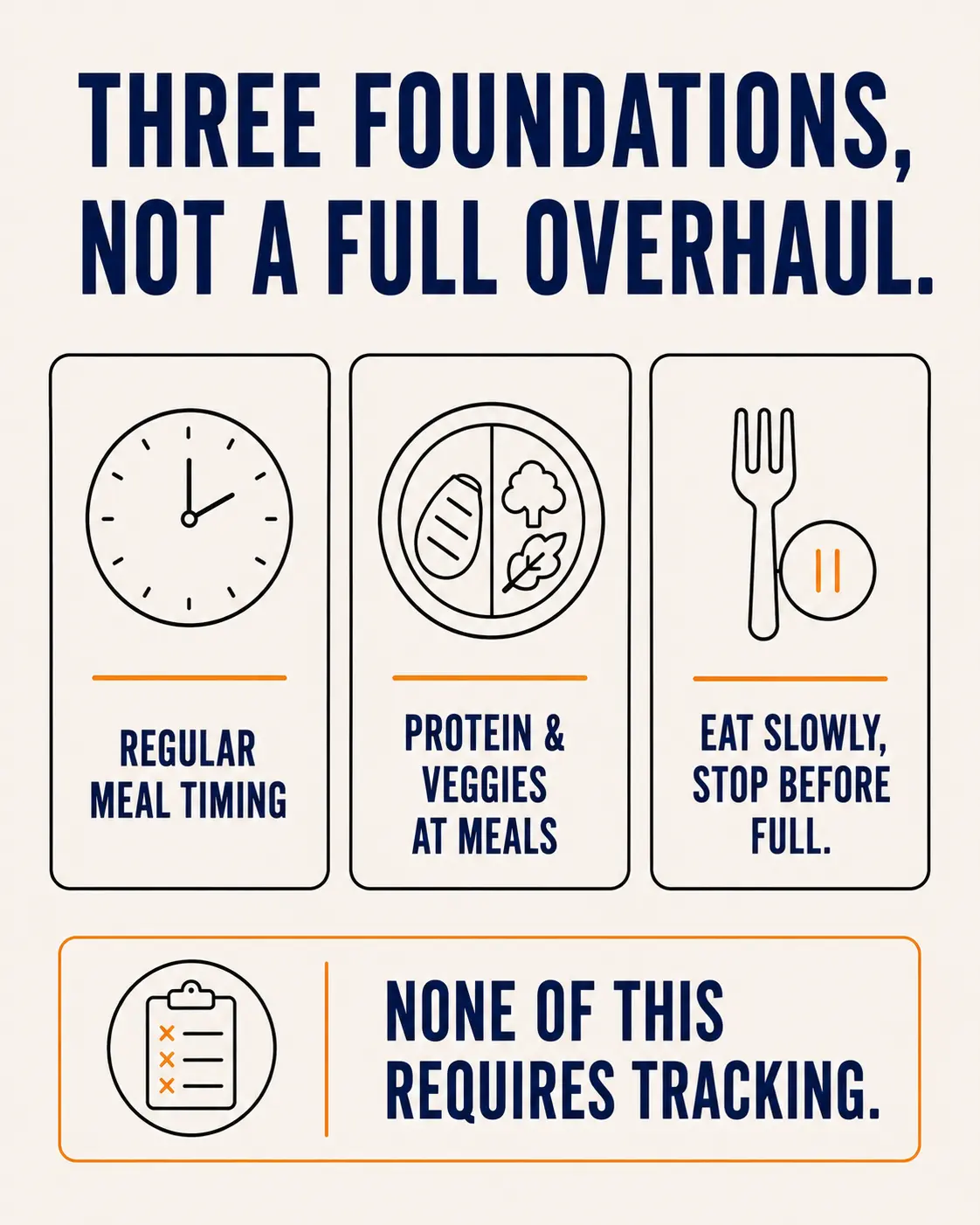
None of these habits require a client to understand Chapter 9's metabolic pathways or Chapter 10's energy-balance math to execute successfully. That's the point — a Level 1 client can succeed at all three without any of Unit 2's deeper science, because success here is measured in consistency, not sophistication.
Sequencing matters as much as selection. A coach might spend the first two or three weeks purely on regular meal timing, saying nothing yet about protein, vegetables, or eating speed — resisting the urge to add a second habit before the first has genuinely become automatic. Once that first habit is holding steady even on a stressful week, a second habit gets layered on, echoing Chapter 15's habit-stacking approach applied specifically to this population. Rushing this sequence to "cover more ground" faster is one of the more common ways a coach quietly turns a Level 1 client back into someone who feels overwhelmed and inconsistent all over again.
A new coach, fresh off finishing Unit 2, is eager to explain everything to a first client: macronutrient ratios, micronutrient cofactors, the mechanics of energy balance. The client nods politely through the first session, then misses the next two and stops responding to messages. A coach applying this chapter recognizes what happened: the science wasn't wrong, but it wasn't what this client needed. One consistent habit, chosen together and genuinely small, would have done more good than an accurate but overwhelming lecture.
Why This Matters for Coaching
The practical risk this chapter guards against is over-teaching — a mistake new coaches make disproportionately often, precisely because they've just spent Unit 2 building real expertise and naturally want to use it. Enthusiasm for the material is a good instinct pointed at the wrong moment. A Level 1 client benefits far more from a coach who can hold back most of what they know and deploy only the small, relevant piece the client is actually ready to use.
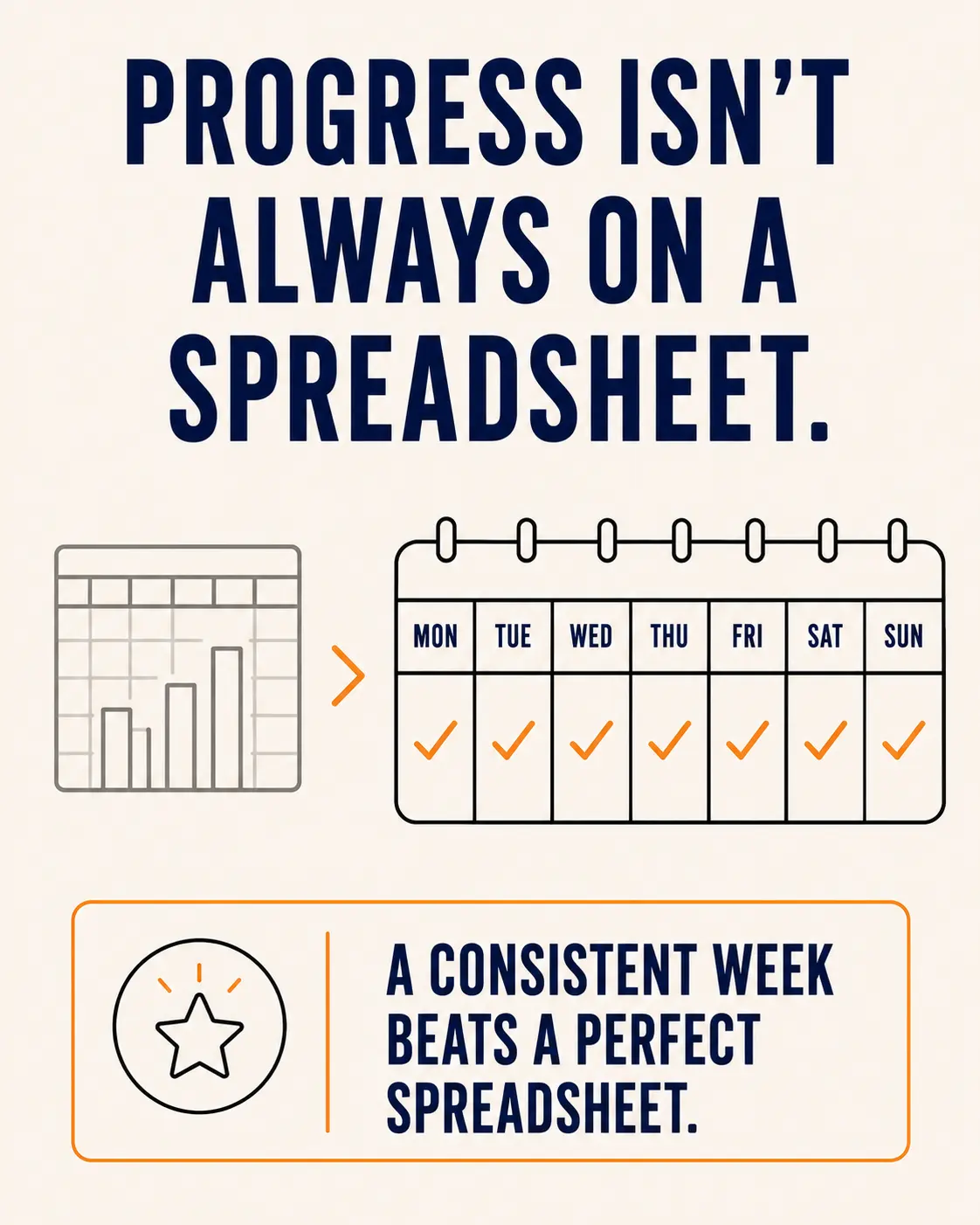
This also means progress with a Level 1 client looks different than it might with a more advanced one. Success isn't hitting a specific macro target or optimizing meal timing around a training schedule — it's a client who now eats on a regular schedule for the first time in years, or who's stopped skipping meals and then overeating later in the day. These wins are genuinely significant, even though they'd look unremarkable on a spreadsheet.
There's a quieter risk worth naming directly: a coach can unintentionally shame a Level 1 client, even with the best intentions, by treating basic consistency as something that should already be easy. Comments that compare a client's current habits unfavorably to some imagined "normal" person, or visible impatience when progress is slower than a coach would like, tend to reinforce exactly the failure narrative many Level 1 clients already carry from past attempts. Chapter 4's compassionate approach to behavior change applies with particular force here — meeting a client exactly where they are, without judgment, is often what makes it safe enough for them to keep showing up.
Chapter 17 continues this same population-specific lens, moving to clients who have already built the consistent basics this chapter covers and are ready for the moderate precision that Level 2 coaching introduces.
8 questions, modeled on PN's real open-book exam style. Score 75%+ to mark this lesson complete.
- A Level 1 client is defined by inconsistency, not lack of knowledge — the gap is what they consistently do, not what they know.
- Foundational habits (regular meal timing, protein and vegetables at meals, eating slowly) build consistency without requiring precision or tracking.
- Over-teaching Unit 2's deeper science to a Level 1 client usually overwhelms rather than helps.
- Progress with a Level 1 client is measured in consistency, not precision — a genuinely significant win even if it looks unremarkable on paper.
- Recognizing a Level 1 client during the intake changes the coaching approach from day one.
Before moving to Lesson 17:
- Write, in one sentence, what actually defines a Level 1 client according to this lesson.
- List two foundational habits you'd suggest to a client who is skipping meals and eating erratically.
- Think of a time you (or a coach) over-explained something to someone who wasn't ready for it — what happened?
- Complete the knowledge check above and review any question you missed.