Chapter 16 covered clients who are still building consistency. This chapter picks up exactly where that one leaves off: clients who've already done that work, and are ready for something more. The core skill here isn't choosing between "basics" and "precision" — it's judging, client by client, how much precision has actually become useful without undoing the consistency that took real effort to build in the first place.
Chapter 16 closed by pointing toward Level 2 clients as the next population in this same practical, population-specific lens. Those clients have already built the consistent basics Chapter 16 covered, and this chapter picks up their coaching from there.
What Defines a Level 2 Client
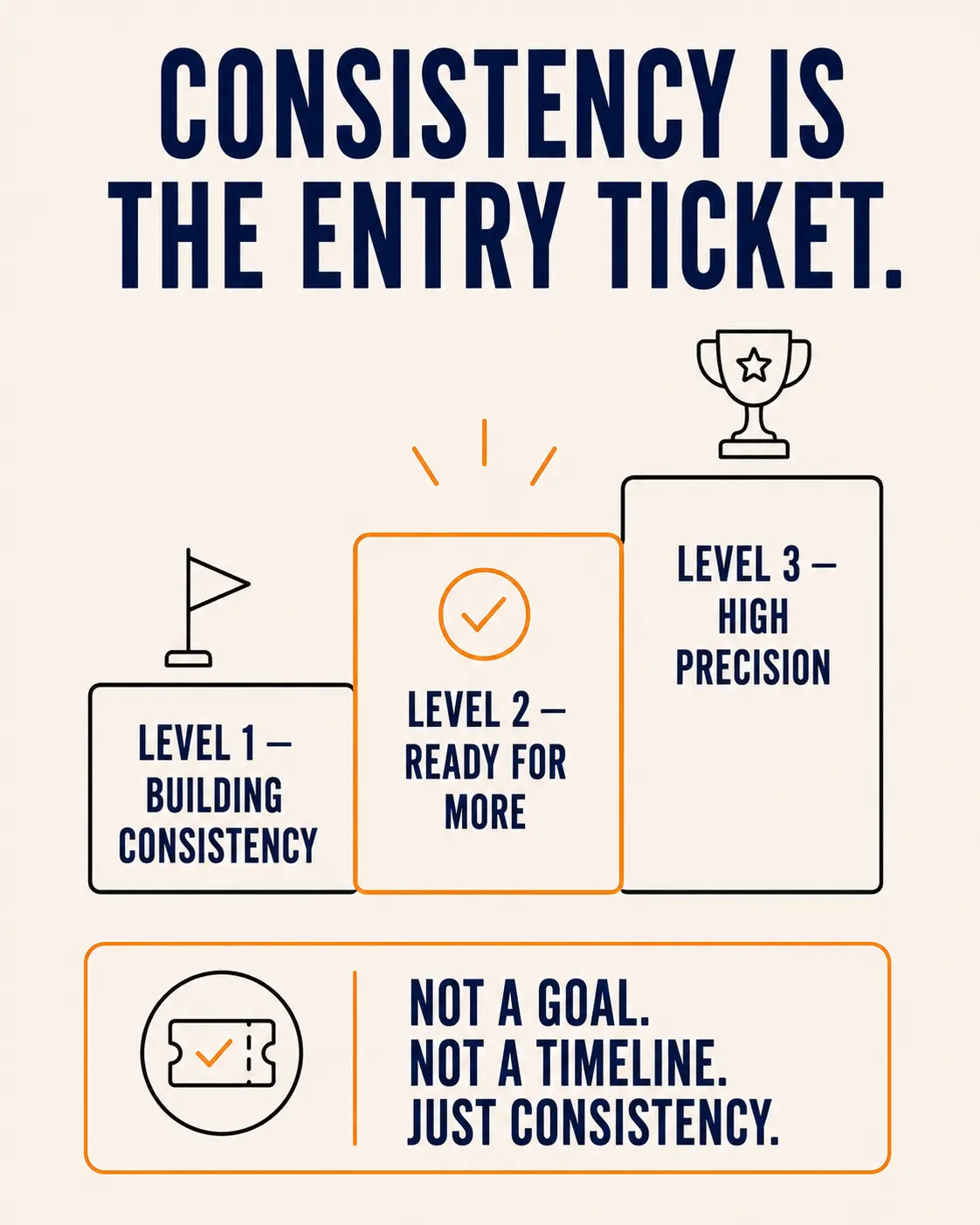
A Level 2 client is defined by what a Level 1 client is still working toward: consistency. Regular meals, protein and vegetables showing up reliably, portion awareness that's become close to automatic — the foundational habits from Chapter 16 are no longer a daily struggle. That consistency is the entry ticket to Level 2, not a specific goal, training history, or amount of time spent working with a coach.
The signal that a client is ready to move from Level 1 to Level 2 coaching is usually behavioral before it's ever verbal: the original habit has become close to boring, sessions that used to focus on troubleshooting inconsistency now focus on other things, and a client starts asking questions that go beyond "how do I stick with this" toward "how do I get more specific results." That shift in the kind of question being asked is often the clearest signal a coach gets.
It's worth being explicit that Level 2 isn't defined by a training background, an aesthetic goal, or any external marker — a complete beginner in the gym can be a Level 2 nutrition client if their eating consistency is solid, and a longtime athlete can still be Level 1 nutritionally if their eating habits are erratic. The two domains don't automatically move together.
A concrete picture helps make this less abstract. A typical Level 2 client eats three or four meals a day at roughly the same times without having to think about it, includes some form of protein and vegetables at most meals without a coach reminding them, and has stopped the pattern of skipping meals and overeating later that often characterizes Level 1. What they haven't yet done is connect any of that to a specific number, a specific goal, or a specific training context — the consistency exists, but it's not yet aimed at anything in particular beyond "eating better than before."
Introducing Precision Without Losing Consistency
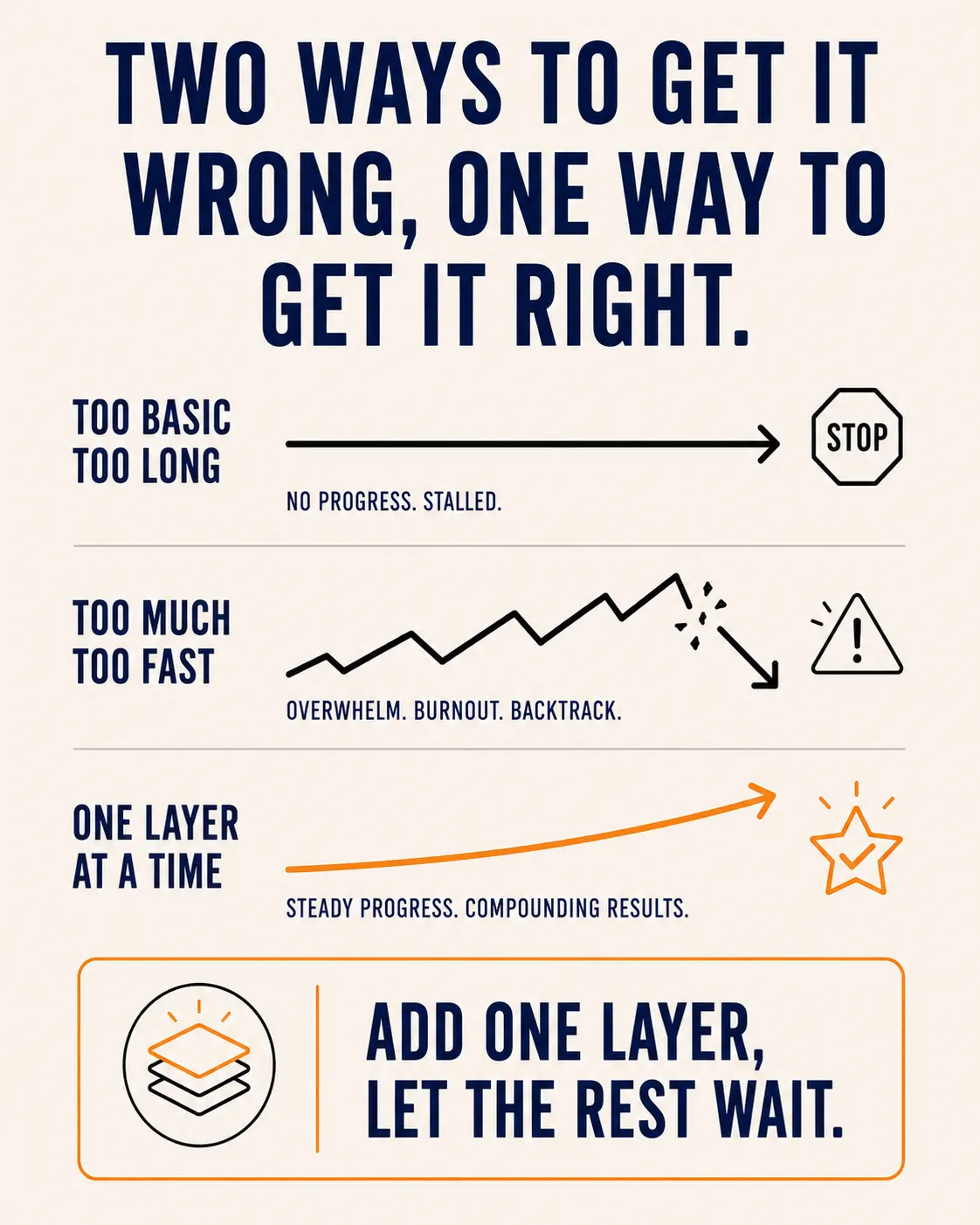
The core risk at this stage runs in both directions, and good coaching means avoiding both failure modes rather than just one. Keep a Level 2 client on Level 1 habits too long, and progress stalls — the client has outgrown the training wheels and starts to disengage from a coaching relationship that no longer feels useful. Jump straight to Level 3-style precision, and the same overwhelm that hurts a Level 1 client resurfaces here in a different form — a client who was thriving on simple consistency suddenly facing gram-level tracking or advanced periodization can regress right back into the inconsistency Chapter 16 worked so hard to resolve.
- Simple, approachable trackingHand-portion guides or similar low-friction methods — a step up from no tracking, well short of precise macro counting.
- More specific goalsMoving from "eat consistently" to a defined target, now that the underlying behavior can actually support pursuing one.
- Selectively reintroducing Unit 2's scienceConcepts like Chapter 11's protein priority or Chapter 10's energy balance, taught only as they become relevant to a specific question the client is now asking.
Choosing which single precision layer to add first follows the same logic Chapter 15 established for choosing a first habit: specific, genuinely manageable, and selected with the client rather than assigned. A client whose main goal is body composition might be ready for a simple hand-portion guide for protein; a client training for a specific event might be more interested in a rough sense of energy needs around long training sessions, connecting back to Chapter 10. The point isn't to add every available tool at once — it's to add the one tool that answers the specific question the client is currently asking, and let the next layer wait until it's actually needed.
A client who was struggling to eat breakfast six months ago now does it without thinking, and recently asked why their progress toward a specific goal seems to have stalled. A coach applying this chapter recognizes this as a Level 2 signal, not a Level 1 relapse — the answer isn't reinforcing the original habit harder, it's introducing one new layer of precision, like a simple hand-portion guide for protein, while keeping everything that already works fully intact.
Why This Matters for Coaching
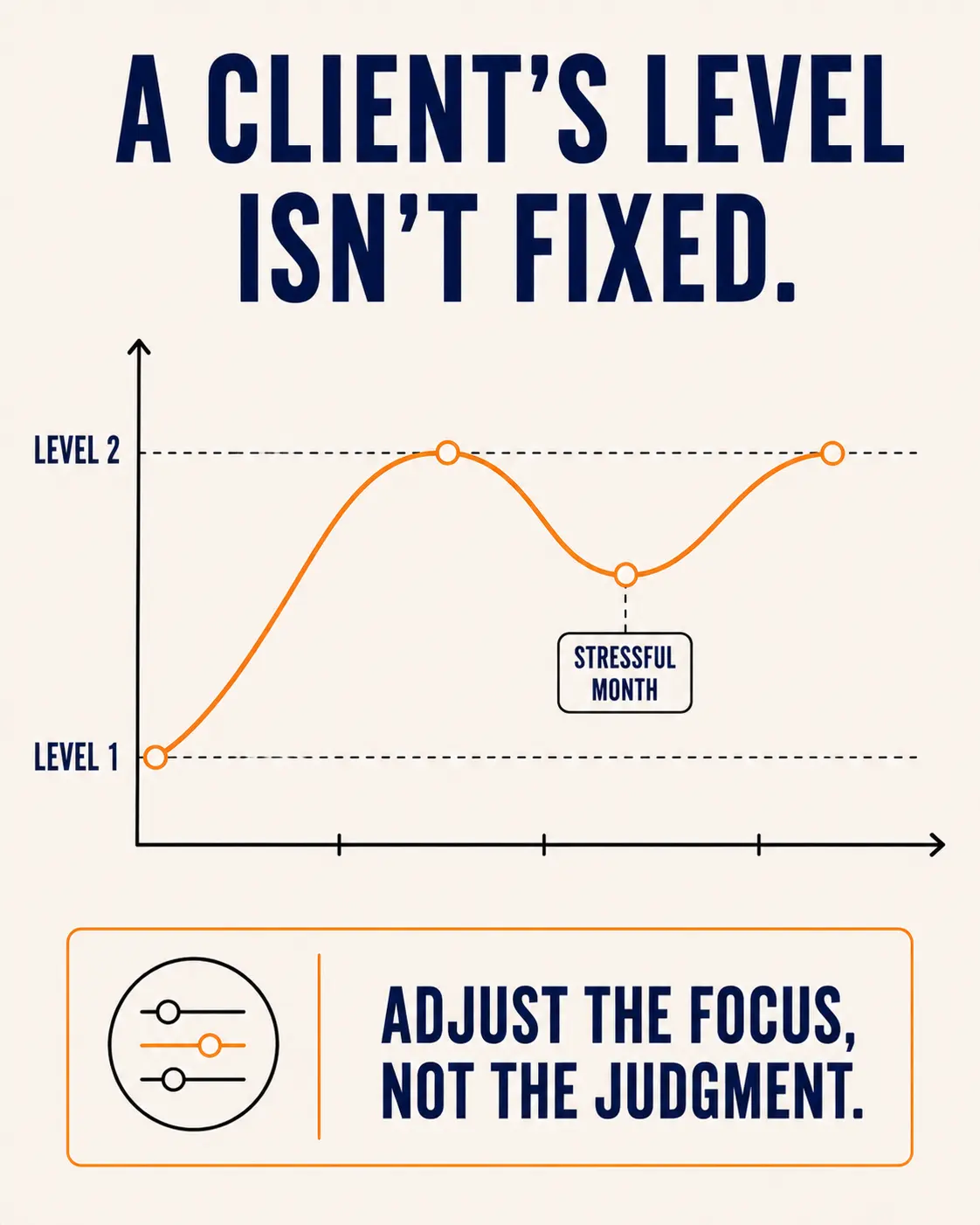
The practical coaching skill this chapter asks for is a kind of ongoing reassessment: a client's level isn't fixed at intake and doesn't need to be reassessed only at planned milestones. A stressful month, a change in schedule, or a new life circumstance can temporarily push a Level 2 client's consistency back toward Level 1 territory, and a good coach adjusts the current focus accordingly rather than assuming progress only moves in one direction.
This chapter also reinforces something Chapter 15 established generally: precision should follow readiness, not the calendar. There's no fixed number of weeks or sessions that automatically graduates a client from Level 1 to Level 2 — the actual behavior is the only reliable signal, and a coach who tracks time instead of behavior risks moving a client along a rigid schedule that doesn't match their real progress.
Naming the shift out loud is worth doing explicitly rather than assuming a client will simply notice. A short, direct explanation — something like "you've gotten really consistent with meals, so now let's add one more layer" — gives the client a clear sense of why the coaching conversation is changing, rather than leaving them to wonder whether they did something wrong or whether the previous approach stopped working. That small bit of transparency does a lot to keep the coaching relationship feeling collaborative rather than mysterious.
Chapter 18 continues this same lens at the far end of the spectrum, looking at Level 3 clients who need the kind of high precision and advanced strategies that would have overwhelmed them at either earlier stage.
8 questions, modeled on PN's real open-book exam style. Score 75%+ to mark this lesson complete.
- A Level 2 client has already built the consistent foundational habits from Chapter 16 — consistency is the entry ticket to this stage, not a specific goal or training background.
- The clearest signal a client is ready for Level 2 is behavioral: the original habit feels boring, and questions shift from "how do I stick with this" to "how do I get more specific."
- Two failure modes to avoid: keeping a client on Level 1 habits too long (stalling progress) and jumping to Level 3 precision too fast (overwhelming them again).
- Appropriate Level 2 tools include simple tracking (hand-portion guides), more specific goals, and selectively reintroducing Unit 2's science as it becomes relevant.
- A client's level isn't fixed — life circumstances can temporarily shift someone back toward Level 1, and a good coach adjusts accordingly.
Before moving to Lesson 18:
- Write, in one sentence, the behavioral signal that suggests a client is ready to move from Level 1 to Level 2.
- List one simple tracking tool appropriate for a Level 2 client, and explain why it's different from Level 3 precision.
- Think of a time your own consistency slipped due to a life change — how would a coach applying this chapter have responded?
- Complete the knowledge check above and review any question you missed.