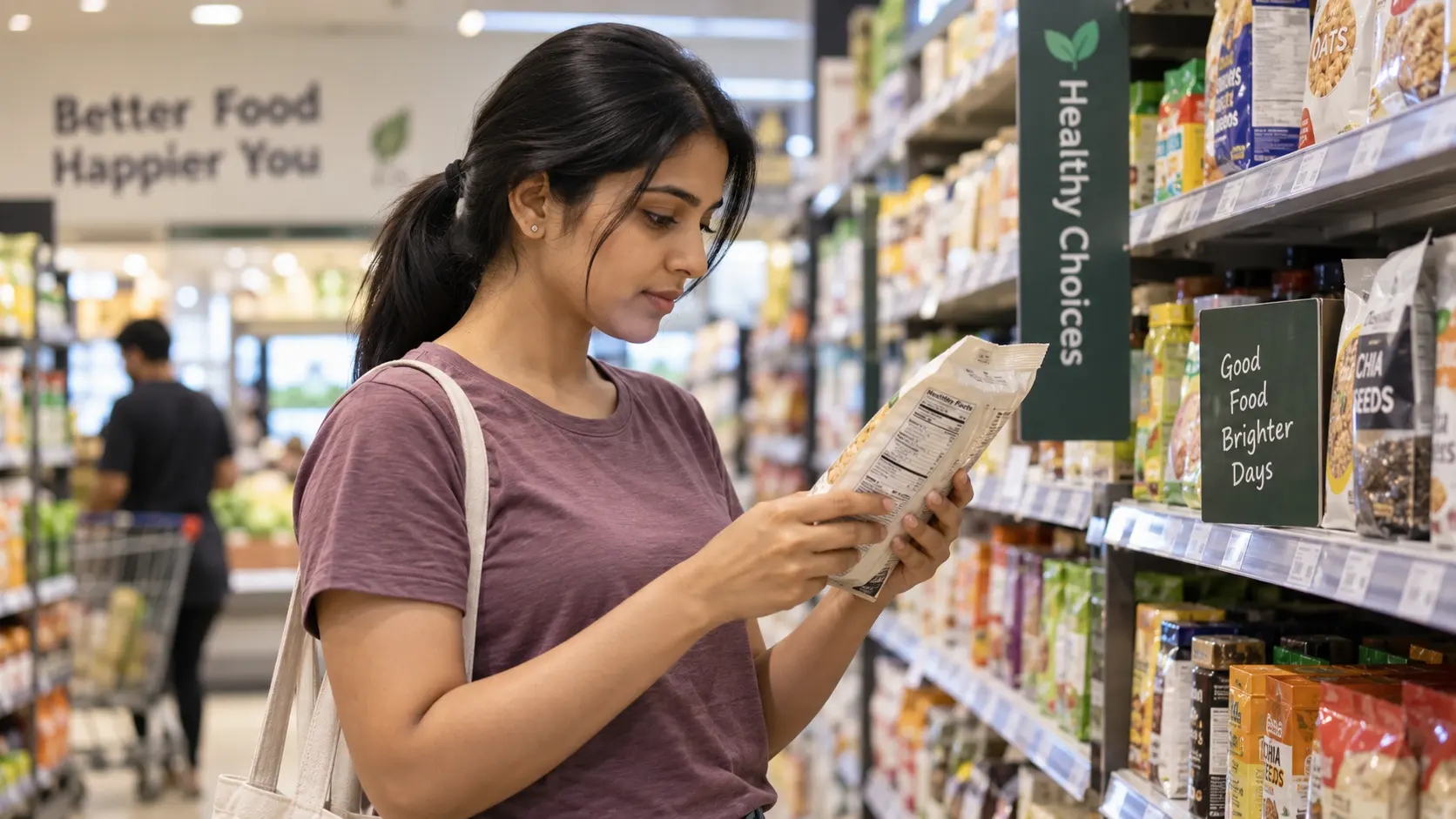
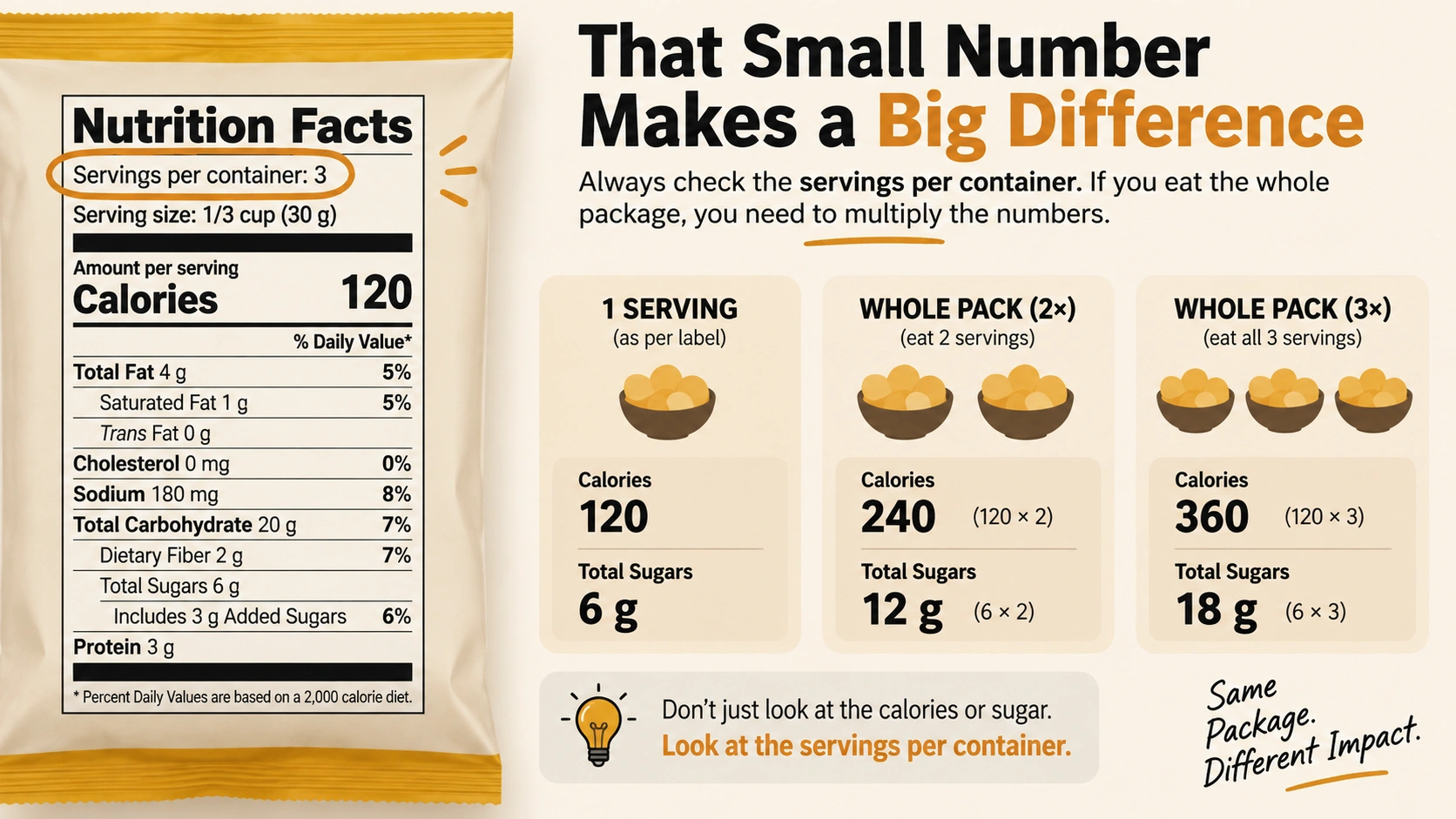
- Every number on a nutrition label is calculated per serving, not per package — checking servings per container first changes how every other number should be read.
- Added sugar is listed separately from total sugar on most modern label formats and is the more relevant figure for health guidelines.
- A %DV of 5% or less per serving is generally considered low for a nutrient; 20% or more is generally considered high.
- Ingredients are listed by descending weight — the first three ingredients tell you what a product is mostly made of.
- The World Health Organization recommends limiting added sugar to under 10% of total daily energy intake, ideally under 5%.[1]
You don't need a nutrition degree to read a food label well — you need to know which four or five numbers actually matter and ignore the rest. Most nutrition panels contain 15-20 data points, and trying to evaluate all of them in a grocery aisle is exactly why most people give up and just don't look. This is the fast version: what to check, in what order, and why each check matters.
The 30-Second Method: What to Actually Look At
In order of priority, four checks cover almost everything that matters for a typical packaged food decision. This isn't a comprehensive nutritional analysis — it's a fast, practical filter for deciding whether something is a reasonable everyday choice, an occasional one, or worth skipping.
- Serving size and servings per container. This determines what every other number on the label actually represents — check it first, always.
- Added sugar. Look specifically for "added sugar," separate from total sugar, and check it against the %DV.
- Sodium. Scan the sodium line and its %DV to catch products that are disproportionately salty for their serving size.
- The first three ingredients. Listed by descending weight — these three words tell you what the product is actually built from.
Step 1: Serving Size Is the Trap Most People Miss
Every number on a nutrition label — calories, sugar, sodium, fat, protein — is calculated per serving, not per package. A bag of chips that looks like a single snack might legally be listed as 2.5 servings, which means the calorie and sodium numbers you see need to be multiplied by 2.5 to reflect what you'd actually consume if you finished the bag. This is the single most common reason people underestimate what they've eaten — not because the label lied, but because the serving size wasn't checked first.
A quick habit that fixes this: before reading any other number, glance at "servings per container." If it's more than 1 and you're likely to eat the whole package, do the multiplication mentally before evaluating anything else on the label.
Step 2: Added Sugar vs. Total Sugar
Total sugar includes both sugar that occurs naturally in the food and sugar added during processing — added sugar is listed separately and is the figure most relevant to health guidelines. The lactose in plain yogurt or the fructose in whole fruit counts toward total sugar but isn't linked to the same health concerns as sugar added during manufacturing, like high-fructose corn syrup, cane sugar, or honey added to a packaged product.
The World Health Organization recommends keeping added sugar under 10% of total daily energy intake, with additional benefit from staying under 5% — for a roughly 2,000-calorie diet, that's about 50 grams as the upper limit, and closer to 25 grams for the stricter guideline.[1] Checking a single serving's added sugar against that daily figure, rather than against the %DV in isolation, makes the number much more meaningful in context.
This distinction gets murkier with 100% fruit juice, since its sugar is technically "natural" rather than "added" — but it behaves like added sugar once you've removed the fruit's fiber. Fruit juice vs. whole fruit breaks down why that label technicality doesn't tell the full nutritional story.
Step 3: Sodium — The Quick Check
Sodium is easy to underestimate because it doesn't register on taste the way sugar does — a product can taste only mildly salty while still containing a large share of a day's recommended sodium limit. The %DV makes this fast to check: 5% or less per serving is considered low, 20% or more is considered high. Packaged soups, sauces, cured meats, and many "healthy" snack bars are common places where sodium runs unexpectedly high relative to serving size.
| %DV on label | What it generally means | Applies to |
|---|---|---|
| 5% or less | Low — a small contribution to your daily total | Added sugar, sodium, saturated fat (nutrients to limit) |
| 20% or more | High — a large share of a day's limit from one serving | Added sugar, sodium, saturated fat (nutrients to limit) |
| 20% or more | Good — a large contribution toward a nutrient you want more of | Fiber, protein, calcium, iron, vitamin D (nutrients to get enough of) |
Step 4: The Ingredient List — Read Only the First Three
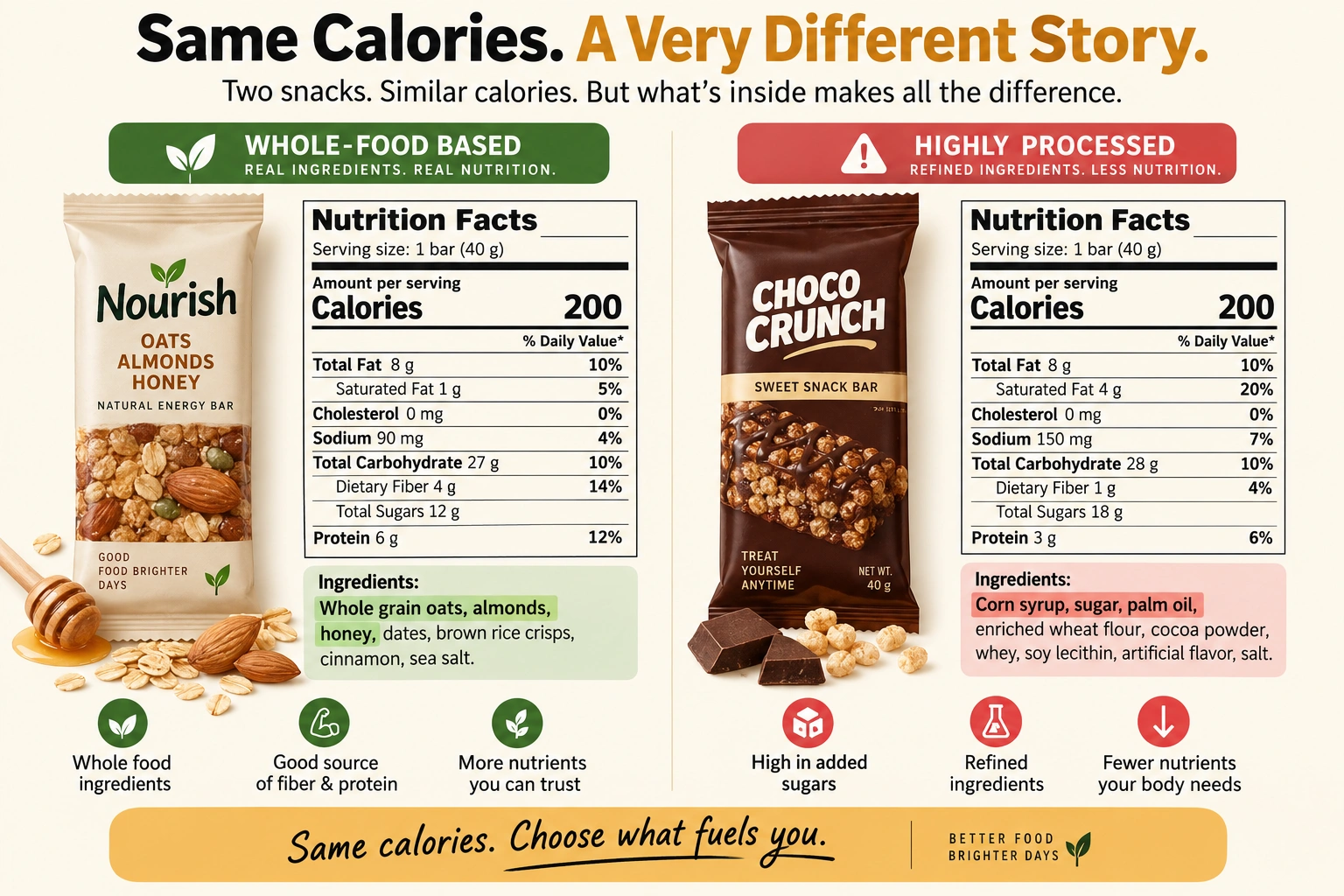
Ingredients are legally required to be listed in descending order by weight, which means the first three ingredients tell you what a product is mostly made of. If the first ingredient is a whole food — oats, chicken, tomatoes — that's meaningfully different from a product where the first ingredient is sugar, refined flour, or an oil blend, even if the calorie counts look similar.
This is also where terms like "natural flavours" tend to show up — worth knowing that the term describes the source of a flavouring compound, not the overall healthfulness of the product, so its presence in the ingredient list isn't itself a red or green flag on its own.
Putting It Together: A Worked Example
Two granola bars, both marketed as a healthy snack, both around 150 calories per bar. Bar A: serving size is one full bar, added sugar is 6g (12% DV), first ingredients are oats, almonds, honey. Bar B: serving size is half a bar (meaning the whole bar is 300 calories), added sugar is 11g per serving — 22g if you eat the whole bar (44% DV), first ingredients are corn syrup, sugar, palm oil. Both bars could sit next to each other on a shelf with nearly identical front-of-package marketing. The 30-second check is what actually tells them apart.
Common Label Tricks to Watch For
- Unrealistically small serving sizes. A serving size set deliberately small keeps the per-serving numbers looking modest, even though nobody actually eats that little.
- "No added sugar" on products already high in natural sugar. Technically accurate, but not the same as low-sugar — check the total sugar figure too if this matters for your specific goals.
- Front-of-package health claims that don't match the ingredient list. "Made with real fruit" can describe a product where fruit is the fourth or fifth ingredient, well behind sugar and water.
- Multiple names for sugar to avoid it appearing first. Cane sugar, corn syrup, and honey listed as three separate ingredients can collectively outweigh the first-listed ingredient, even though none of them individually rank first.
- "Ultra-processed" hiding behind clean-sounding branding. A long, industrial ingredient list can sit under minimalist, natural-looking packaging — see what actually defines ultra-processed food for how to spot this pattern specifically.
Common Mistakes
- Skipping the serving size check. This single step changes the interpretation of every other number on the label.
- Judging a product only by calories. Two products with identical calories can have very different sugar, sodium, and ingredient quality.
- Trusting front-of-package marketing over the panel. Terms like "natural," "healthy," and "wholesome" aren't regulated definitions — the panel and ingredient list are the actual source of truth.
- Treating %DV the same for every nutrient. A high %DV is a warning for sugar and sodium but a good sign for fiber and protein — direction matters as much as the number.
- Reading the whole label every time. This defeats the purpose — the four-check method is designed to be fast enough to actually use consistently.
Final Thoughts
Reading a nutrition label well isn't about analyzing every line — it's about knowing which few numbers actually change a decision and checking those consistently. Serving size first, then added sugar, sodium, and the first three ingredients: four checks, under 30 seconds, and you'll catch almost everything that matters for an everyday food choice.
The goal isn't perfect nutrition literacy — it's a fast enough habit that you'll actually keep doing it in a grocery aisle, not just the one time you read this article.
For a deeper look at what "processed" actually means on a label, the NOVA classification guide covers how to spot ultra-processed ingredients specifically, and the Eat With Intent course builds this kind of everyday food literacy into a complete framework.
This article is for general nutritional education and isn't personalized dietary advice. Consult a registered dietitian or doctor for guidance specific to any medical condition.
Sources
[1] World Health Organization guideline on sugars intake for adults and children. Available at: who.int
[2] FSSAI Food Safety and Standards (Labelling and Display) Regulations, nutrition facts panel requirements. Available at: fssai.gov.in