Chapter 13 closed by noting that some of the biggest factors behind how a client actually feels rarely show up in a macro count. This chapter, the last of Unit 2, makes that point as directly as possible: chronic stress and poor sleep can quietly undo the results of an otherwise well-built nutrition plan, by shifting appetite, hunger hormones, recovery capacity, and food choices in ways no amount of macro tracking will catch. A coach who only looks at the plate is missing a genuinely large piece of the picture.
Chapter 13 ended by promising this chapter would continue into factors that shape how a client feels without ever appearing on a food log. Stress, recovery, and sleep are the biggest of those factors — and closing out Unit 2 with them sets up a natural bridge into Unit 3's focus on the actual coaching process.
How Sleep Shapes Appetite and Food Choices
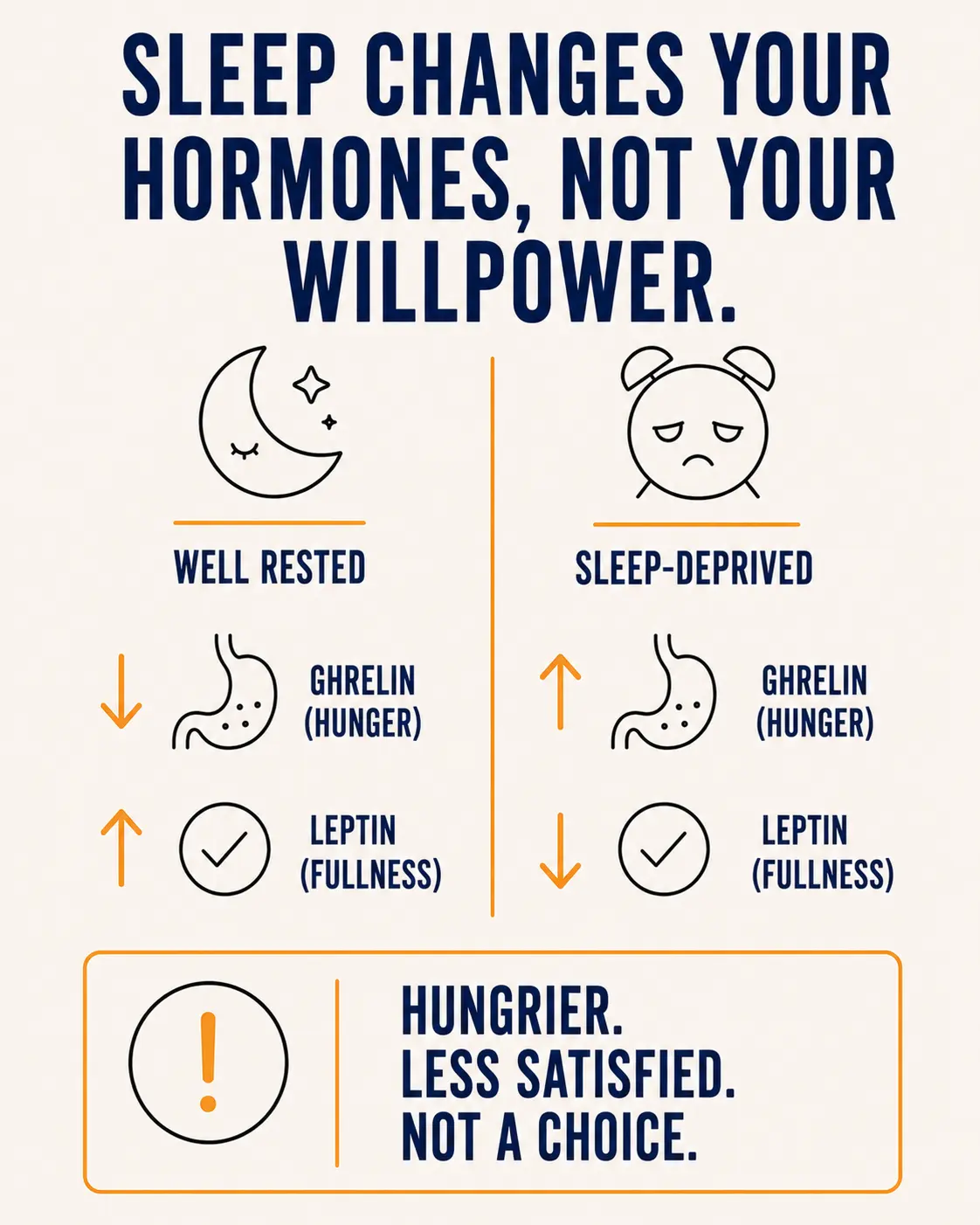
Sleep isn't simply downtime between days — it's an active period where the body repairs tissue, consolidates memory, and resets the hormonal systems that regulate hunger and energy use. When sleep is cut short or consistently poor, two key appetite hormones shift in a direction that works against a client's goals: ghrelin, which signals hunger, tends to rise, while leptin, which signals fullness, tends to fall. The practical result is a person who is both hungrier and less satisfied by the same amount of food — not a willpower failure, but a predictable hormonal response to insufficient rest.
Poor sleep is also associated with reduced insulin sensitivity, meaning the body doesn't manage blood sugar as efficiently after a bad night's sleep as it would after a good one — a metabolic ripple effect from a single missed night, layered on top of the appetite changes above. On top of the hormonal shifts, sleep-deprived people also tend to gravitate toward higher-calorie, less nutrient-dense foods, likely a mix of the hunger-hormone changes above and simple fatigue making effortful, well-planned choices harder to sustain.
None of this means one rough night ruins progress — the body is resilient, and Chapter 10's energy-balance principles still apply over time. But a client who is chronically under-slept is fighting their own biology in a way that no amount of meal planning fully offsets, which is exactly why this chapter matters for a coach working the numbers from Chapters 9 through 13. General sleep guidance for most adults lands somewhere around seven to nine hours a night, though the right number varies by individual — the more useful marker for a coach is usually consistency (a stable sleep and wake time) rather than chasing an exact hour count, similar to how Chapter 13 favored a practical hydration check over an exact ounce target.
A concrete pattern shows up often enough to be worth naming directly: a client who is quietly under-slept for weeks at a time, snacking heavily at night without quite registering why, and blaming themselves for "poor willpower" the next morning. Reframing that pattern as a predictable hormonal response to insufficient sleep — not a character flaw — is often the more useful coaching move than adjusting the meal plan yet again.
Stress and Recovery: Where Adaptation Actually Happens
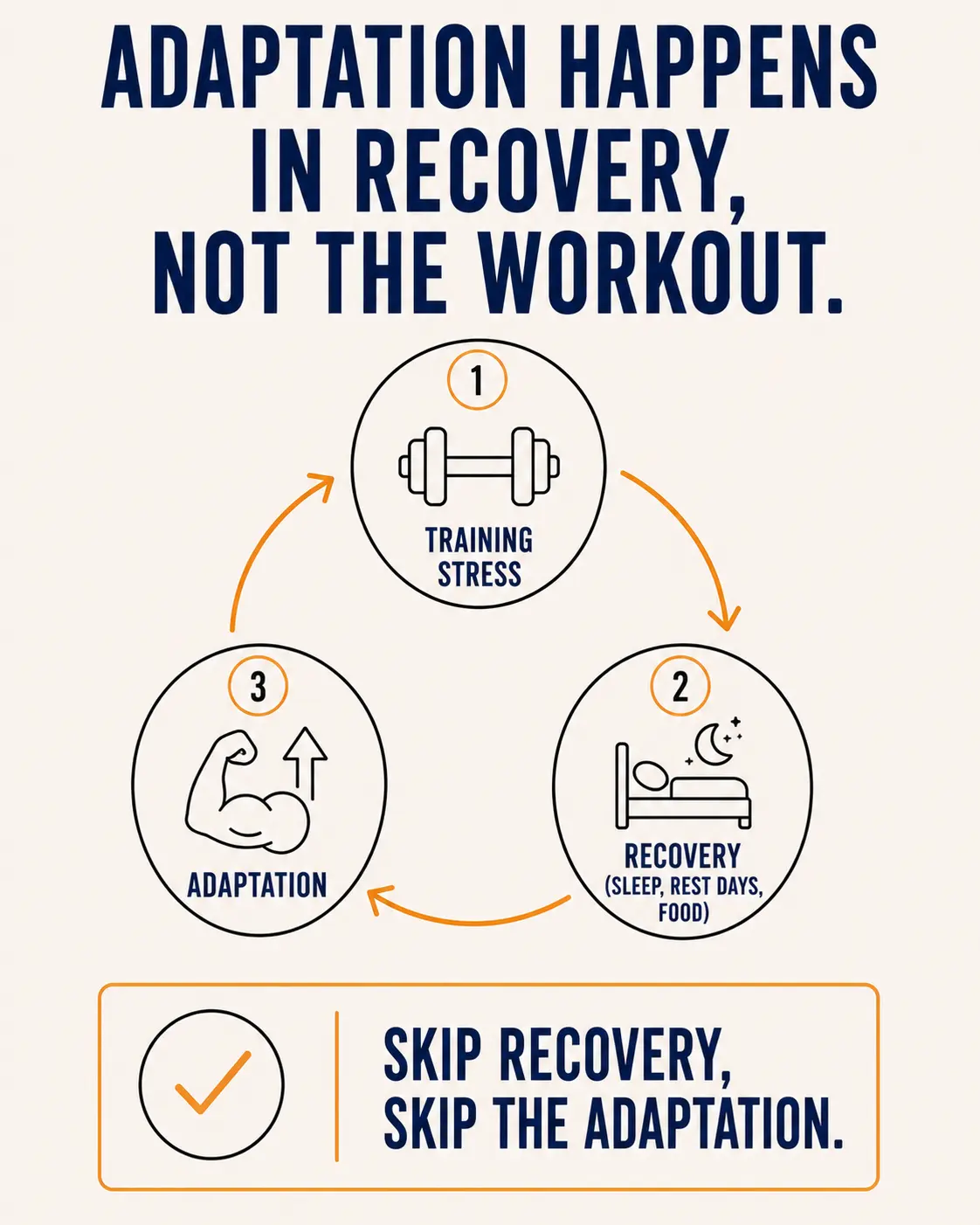
Acute stress — a hard workout, a tight work deadline, a stressful conversation — is a completely normal, even useful part of life. In training specifically, the stress of a workout is the actual trigger for adaptation: muscles don't get stronger during the set itself, they get stronger during the recovery that follows it, when the body repairs and rebuilds slightly beyond its previous capacity. Without adequate recovery, that adaptation simply doesn't happen as well, no matter how hard or how often the training stress is applied.
Chronic stress is a different story. When stress is constant and unresolved — a demanding job, financial pressure, relationship strain — cortisol, the body's primary stress hormone, stays elevated for longer than it's designed to. Persistently elevated cortisol is linked to disrupted sleep, changes in appetite (often toward more comfort-driven eating), and a reduced capacity to recover from training, creating a cycle where each piece makes the others worse.
Sleep is the single biggest lever here, but it isn't the only one. Adequate protein and total calories, the subject of Chapters 10 and 11, supply the raw material recovery actually runs on — a client under-eating protein while training hard is working against their own recovery on a second front, independent of sleep. Planned rest days and periodic lighter training weeks (often called deloads) matter for the same reason: without them, the accumulated stress of training keeps stacking up with nowhere to resolve, regardless of how well sleep and nutrition are otherwise dialed in.
- Acute stressShort-term and resolves quickly — a hard training session or a one-off deadline. Normal, and often a useful adaptive signal.
- Chronic stressOngoing and unresolved — keeps cortisol elevated over time, disrupting sleep, appetite, and recovery capacity in ways that compound on each other.
A client trains hard, eats according to plan, and still reports feeling constantly run-down and making slower strength progress than expected. Before assuming the training program or macros need adjusting, a coach applying this chapter asks about sleep quality and current life stress. A demanding new job, a newborn at home, or a stretch of poor sleep can fully explain stalled recovery even when every number on the nutrition side looks correct — because recovery, not just food and training, is what allows adaptation to actually happen.
Why This Matters for Coaching
The practical coaching takeaway from this chapter closes out Unit 2 the same way it opened: good coaching means looking past the numbers a client can easily track. A coach doesn't need to become a sleep specialist or therapist to make use of this chapter — the goal is simply recognizing when stress or sleep, not food, is the more relevant lever, and asking a few honest questions about both as a normal part of checking in with a client.
A short list of practical, non-clinical questions goes a long way: How many hours of sleep is the client actually getting, and how consistent is their sleep schedule? What does their current stress load look like, and has anything changed recently? Are they giving their body real rest days, or training through fatigue that never resolves? None of these require special credentials to ask, and the answers often explain results — good or bad — that macro adherence alone can't.
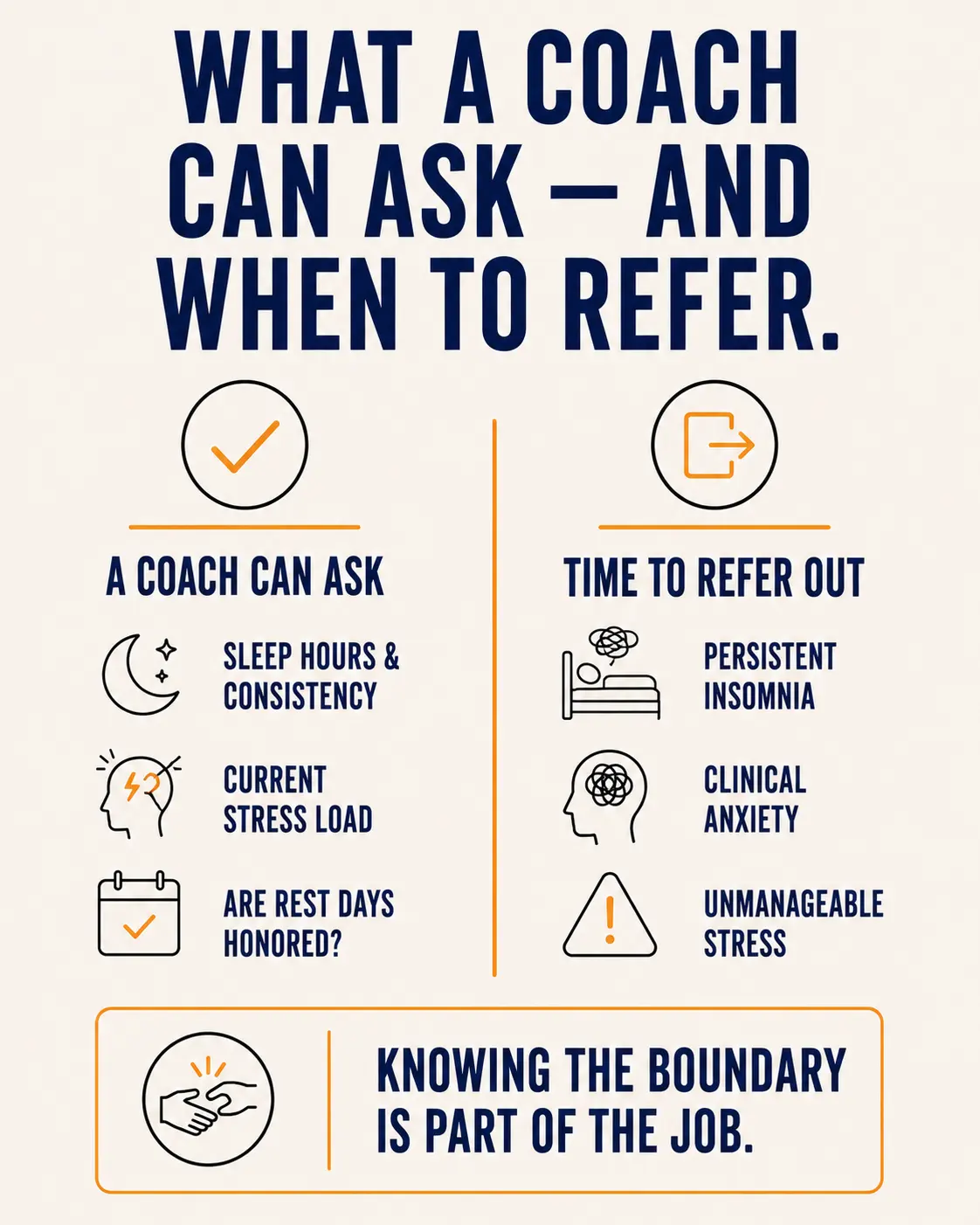
That said, this is genuinely a boundary-of-scope area. A coach can recognize the signs of chronic stress or poor sleep and make simple, practical suggestions — a consistent bedtime, winding down before sleep, honoring rest days — but persistent insomnia, clinical anxiety, or a stress load a client can't manage on their own calls for a referral to a doctor, therapist, or sleep specialist, not coaching advice stretched past what it can actually fix. With Unit 2 now complete, Chapter 15 turns from the nutrition science itself toward the actual coaching process — how to take everything from Chapters 6 through 14 and turn it into a real conversation with a real client.
8 questions, modeled on PN's real open-book exam style. Score 75%+ to mark this lesson complete.
- Poor sleep raises ghrelin (hunger) and lowers leptin (fullness), and is linked to reduced insulin sensitivity and a preference for less nutrient-dense foods.
- Acute stress (a hard workout, a one-off deadline) is normal and often useful; chronic, unresolved stress keeps cortisol elevated in ways that disrupt sleep, appetite, and recovery.
- Training adaptation happens during recovery, not during the workout itself — without adequate recovery, training stress doesn't translate into progress.
- A client who trains and eats well but still feels run-down may have a sleep or stress problem, not a nutrition or training problem.
- Coaches can ask practical questions about sleep and stress, but persistent insomnia or unmanageable stress calls for a referral, not coaching advice alone.
Before moving to Lesson 15:
- Write, in one sentence, how poor sleep affects the two hormones this lesson names for hunger and fullness.
- Think of a time you or a client trained and ate well but still felt run-down — could sleep or stress explain it?
- List two non-clinical questions you could ask a client about their sleep and stress as part of a regular check-in.
- Complete the knowledge check above and review any question you missed.