Chapter 12 covered the micronutrients your body needs in tiny amounts — vitamins and minerals. This chapter covers the one nutrient your body needs in the largest amount of all, by a wide margin, and the one most people think about the least: water. It's a bigger share of body weight than any single macronutrient, involved in nearly every process covered so far in Unit 2, and yet most hydration advice a client has heard reduces to a single made-up number. This chapter replaces that number with an actual understanding of what fluid balance is and why it varies so much person to person.
Chapter 12 closed by noting that some of the most common client complaints trace back to factors sitting quietly outside the calorie-and-macro conversation. Water is arguably the biggest of those factors — invisible on a macro breakdown, yet directly tied to energy, focus, and how "on track" a client actually feels.
What Water Actually Does in the Body
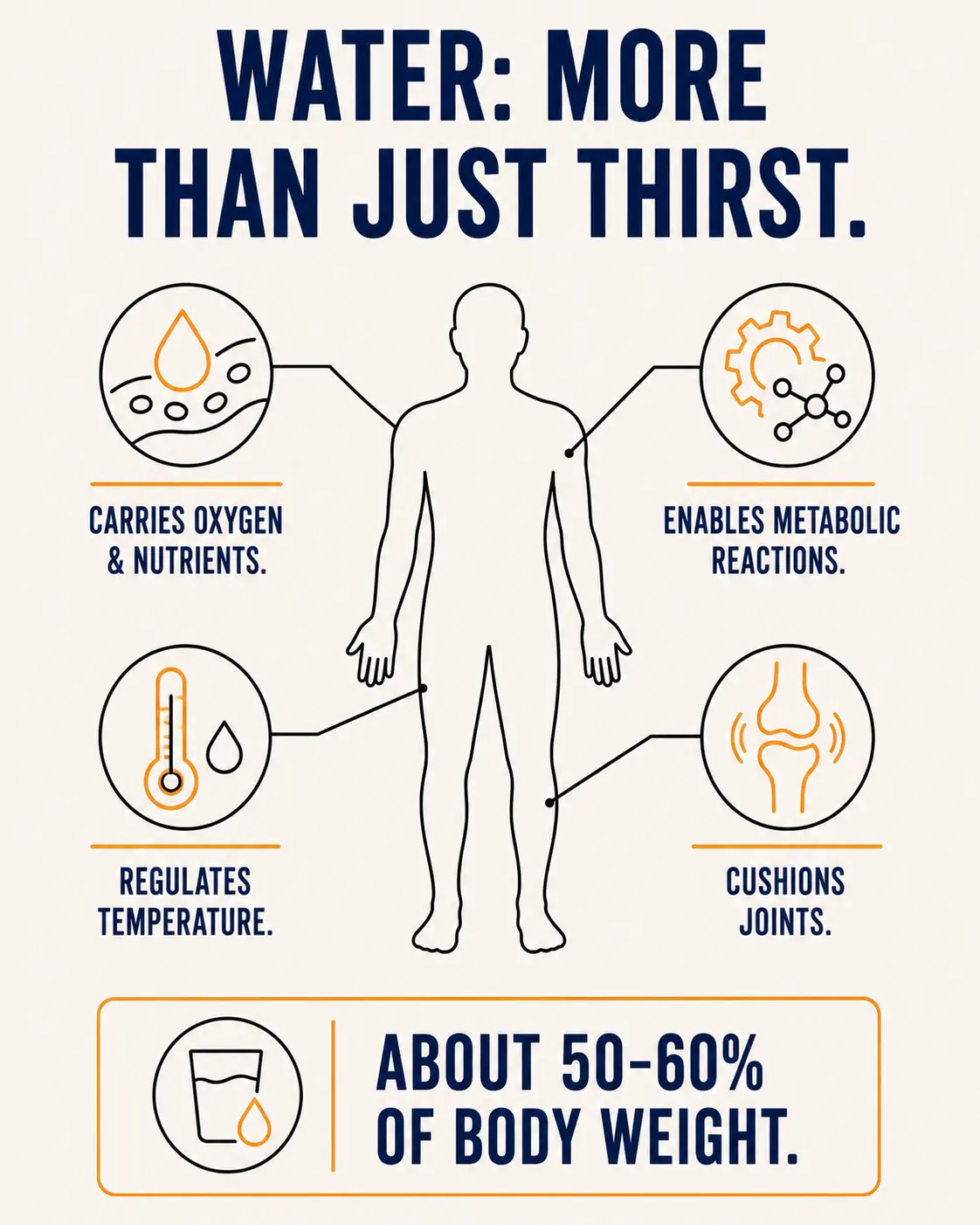
Water makes up somewhere around 50 to 60 percent of total body weight in adults, more than any other single component — more than fat, more than protein, more than every mineral covered in Chapter 12 combined. That share isn't just a passive filler; water is directly involved in nearly every function this course has covered so far. It's the medium blood plasma uses to carry oxygen and nutrients from Chapter 8's digestive absorption to every tissue that needs them. It's required for the metabolic reactions Chapter 9 described in ATP production — many of those reactions literally cannot proceed without water as a participant, not just a backdrop. It cushions joints, regulates body temperature through sweat, and is the solvent every one of Chapter 12's minerals dissolves in to do its job as a cofactor.
Temperature regulation is one of the clearest, most immediate ways fluid status shows up in daily life. Sweating is the body's primary cooling mechanism during exercise or heat exposure, and sweat is mostly water carrying dissolved electrolytes — chiefly sodium, one of Chapter 12's minerals. Lose enough fluid through sweat without replacing it, and the body's ability to cool itself efficiently starts to break down, alongside blood volume dropping enough to make the heart work harder to circulate the same amount of oxygen and nutrients.
Even mild fluid deficits, well before the point of feeling obviously "thirsty," are associated with reduced exercise performance and noticeably worse concentration and mood. This is part of why hydration status matters for coaching even outside of athletic performance — a client who feels foggy, unmotivated, or low-energy for no clear reason may simply be running a persistent, mild fluid deficit that never gets identified because it doesn't show up anywhere on a food log.
Why Fluid Needs Are More Individual Than a Fixed Number
The "eight glasses a day" rule is one of the most widely repeated pieces of nutrition advice in existence, and it doesn't hold up well under scrutiny. There's no strong evidence tying that specific number to any meaningful health outcome — it appears to have originated as a rough, memorable guideline rather than a figure derived from actual fluid-balance research. Total fluid needs, in reality, vary enormously based on body size, activity level, climate, altitude, and how much water a person's diet already provides through food.
- Body size and compositionLarger bodies generally need more total fluid, similar to how larger bodies generally need more total calories and protein, as Chapter 11 discussed.
- Activity level and sweat rateSomeone training hard in heat loses far more fluid through sweat than someone with a sedentary day in a cool office, and sweat rate itself varies a great deal between individuals doing the identical workout.
- Diet compositionFruits and vegetables are often 80 to 95 percent water by weight, so a diet built around whole foods — the same nutrient-dense pattern Chapter 12 recommended — quietly supplies a meaningful share of daily fluid needs before a person drinks anything at all.
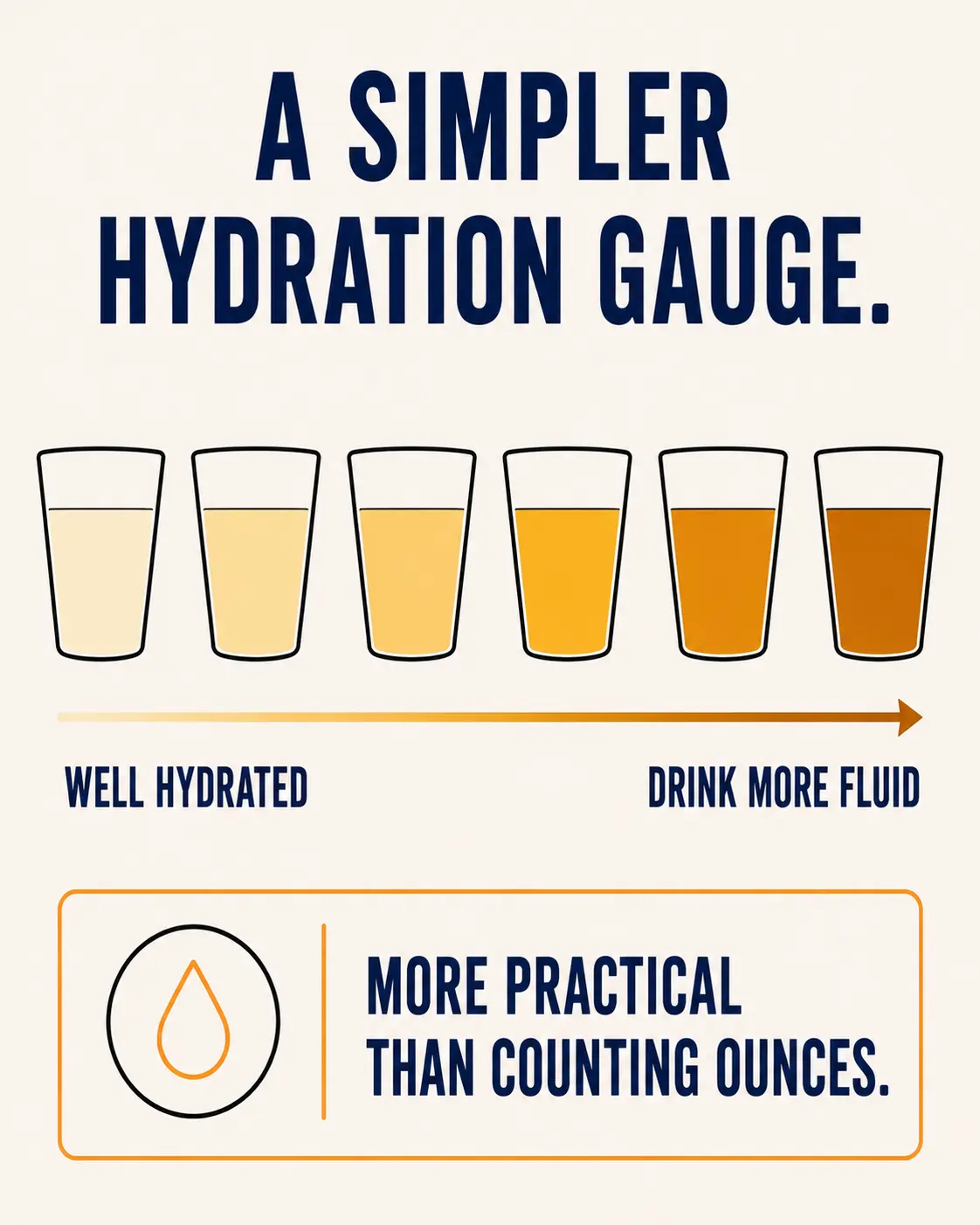
Because of this variability, urine color is a far more practical day-to-day gauge for most clients than chasing a specific ounce target. Pale, straw-colored urine generally indicates adequate hydration; noticeably dark yellow suggests a need for more fluid. It's an imperfect proxy — certain supplements and foods can temporarily change urine color without reflecting hydration status — but it's simple, free, and available to check multiple times a day without any tracking at all.
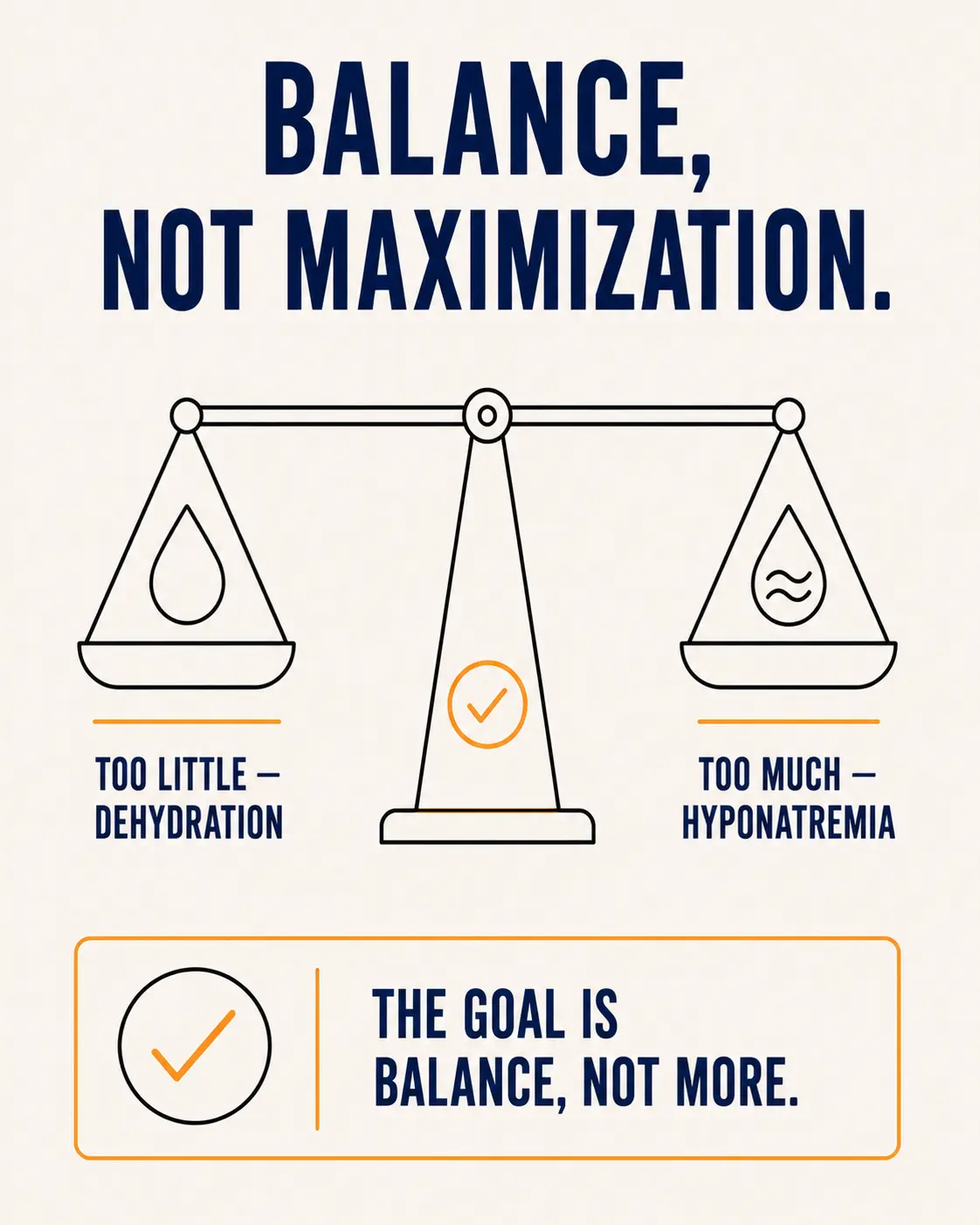
A client training for an endurance event proudly reports drinking far more water than usual to "stay ahead of dehydration," well beyond what thirst or urine color would suggest they need. A coach applying this chapter recognizes a real, if uncommon, risk here: overhydration can dilute blood sodium to dangerously low levels, a condition called hyponatremia, which has caused serious medical emergencies in endurance athletes who drank far more than they lost in sweat. The lesson isn't that water is dangerous — it's that "more is better" doesn't apply to fluid any more than it applies to the calories Chapter 10 discussed. Balance, not maximization, is the actual goal.
Why This Matters for Coaching
The practical coaching takeaway from this chapter is almost deliberately unglamorous: there is no single daily water target worth handing every client, and chasing one can distract from more useful hydration habits. A far more workable approach combines a rough baseline (roughly half the body weight in pounds, converted to ounces, is one commonly used starting estimate, adjusted upward for heat, altitude, and exercise) with the simple, ongoing urine-color check described above, rather than either extreme of ignoring hydration entirely or obsessively tracking every ounce.
Sodium and other electrolytes deserve a specific mention here, tying back directly to Chapter 12's mineral discussion. For most people going about ordinary daily life, sodium intake from food is more than sufficient to replace what's lost in sweat. But for anyone sweating heavily and consistently — a person training outdoors in heat, for example — plain water alone can, in rare cases, actually contribute to the same hyponatremia risk described above if electrolytes aren't also being replaced somehow, whether through food, drinks, or electrolyte-specific products. This is a genuinely narrow, high-sweat-volume scenario, not a reason for the average gym-goer to worry about their sodium intake.
Chapter 14 continues into stress, recovery, and sleep — three factors, like hydration, that rarely appear anywhere in a macro count but shape how well a client actually performs and feels day to day. Between Chapters 13 and 14, the pattern from Chapter 12 keeps building: good coaching increasingly means looking past the numbers a client can easily track and toward the quieter factors, like fluid balance and sleep, that determine whether those numbers translate into how someone actually feels.
8 questions, modeled on PN's real open-book exam style. Score 75%+ to mark this lesson complete.
- Water makes up roughly 50-60% of body weight and is directly involved in nutrient transport, metabolic reactions, temperature regulation, and joint cushioning.
- Even mild fluid deficits, before obvious thirst, are linked to reduced performance and worse concentration and mood.
- The "8 glasses a day" rule has no strong evidence behind the specific number — actual needs vary with body size, activity, climate, and diet.
- Urine color is a simple, practical (if imperfect) day-to-day hydration gauge — pale yellow generally indicates adequate hydration.
- Overhydration can cause hyponatremia (diluted blood sodium), a real risk in endurance settings — more water is not automatically better.
Before moving to Lesson 14:
- Write, in one sentence, why a fixed daily water target doesn't fit everyone equally well.
- Check your own urine color today and note whether it suggests you're adequately hydrated.
- List two factors that would increase a client's fluid needs beyond an average baseline.
- Complete the knowledge check above and review any question you missed.