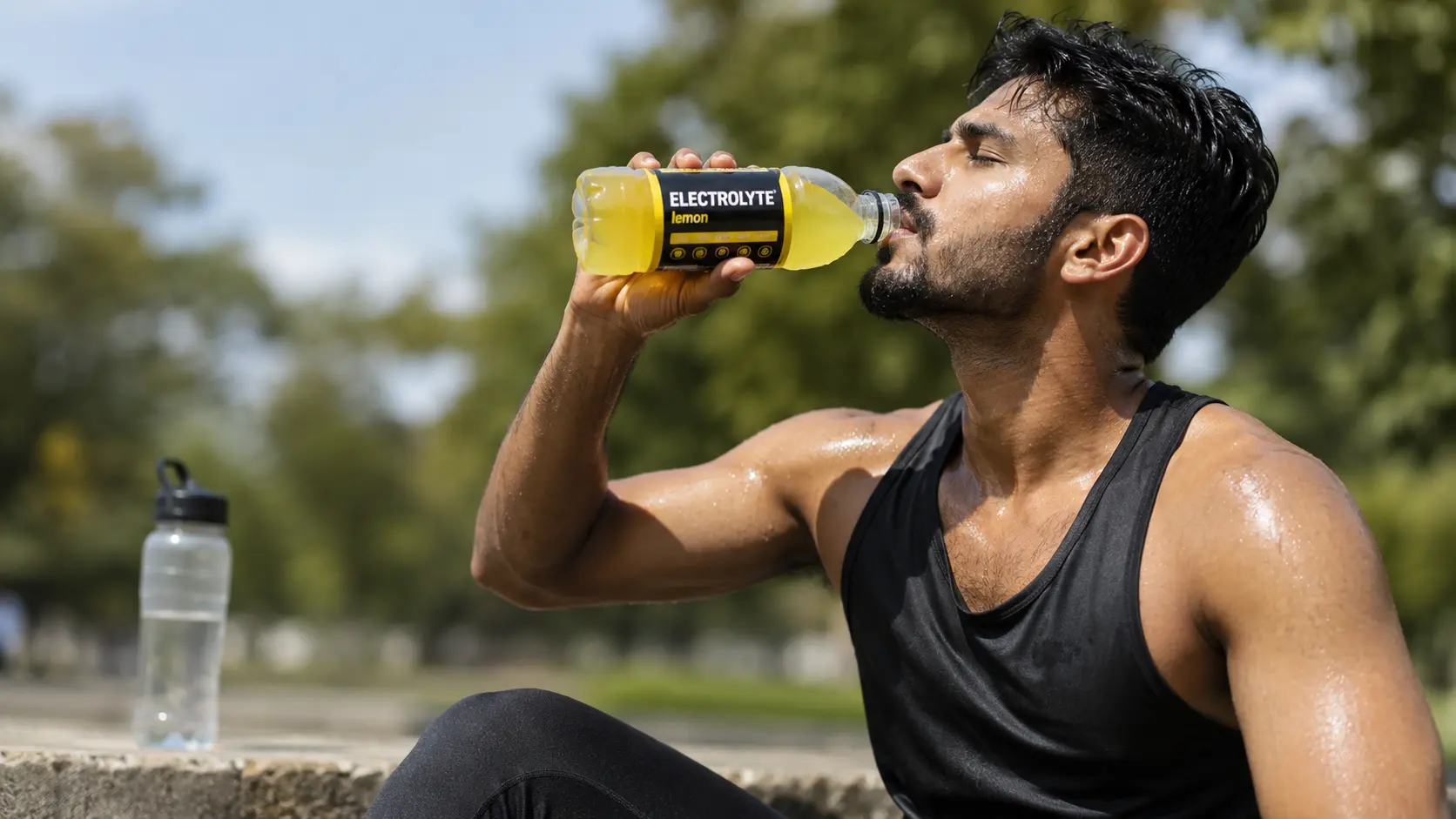
- Electrolytes — sodium, potassium, magnesium, calcium, chloride — control where water goes in your body; without them, water alone can't fully hydrate your cells.
- A landmark Boston Marathon study found 13% of runners had hyponatremia (low blood sodium) and 0.6% had critical hyponatremia, largely from over-drinking plain water.
- A liter of sweat contains roughly 800mg of sodium on average, ranging from about 460-1,840mg depending on the individual.
- For exercise under an hour, plain water performs as well as an electrolyte drink for most people — the difference matters mainly beyond an hour or in heat.
- Most people get enough sodium and calcium from food but fall short on potassium and magnesium specifically.
Water alone isn't enough for real hydration because electrolytes — not water itself — control where fluid actually goes in your body, and without adequate sodium in particular, drinking more water can dilute your blood sodium and make you feel worse, not better. This isn't a marketing claim from sports drink companies; it's documented in serious medical literature, including cases of hospitalization and death among endurance athletes who over-hydrated with plain water alone.
Most people don't need to worry about this during ordinary daily hydration. But understanding when electrolytes actually matter — and when they're just an upsell — makes the difference between hydrating effectively and either wasting money on unnecessary supplements or, in rarer cases, doing real harm.
What Electrolytes Actually Are
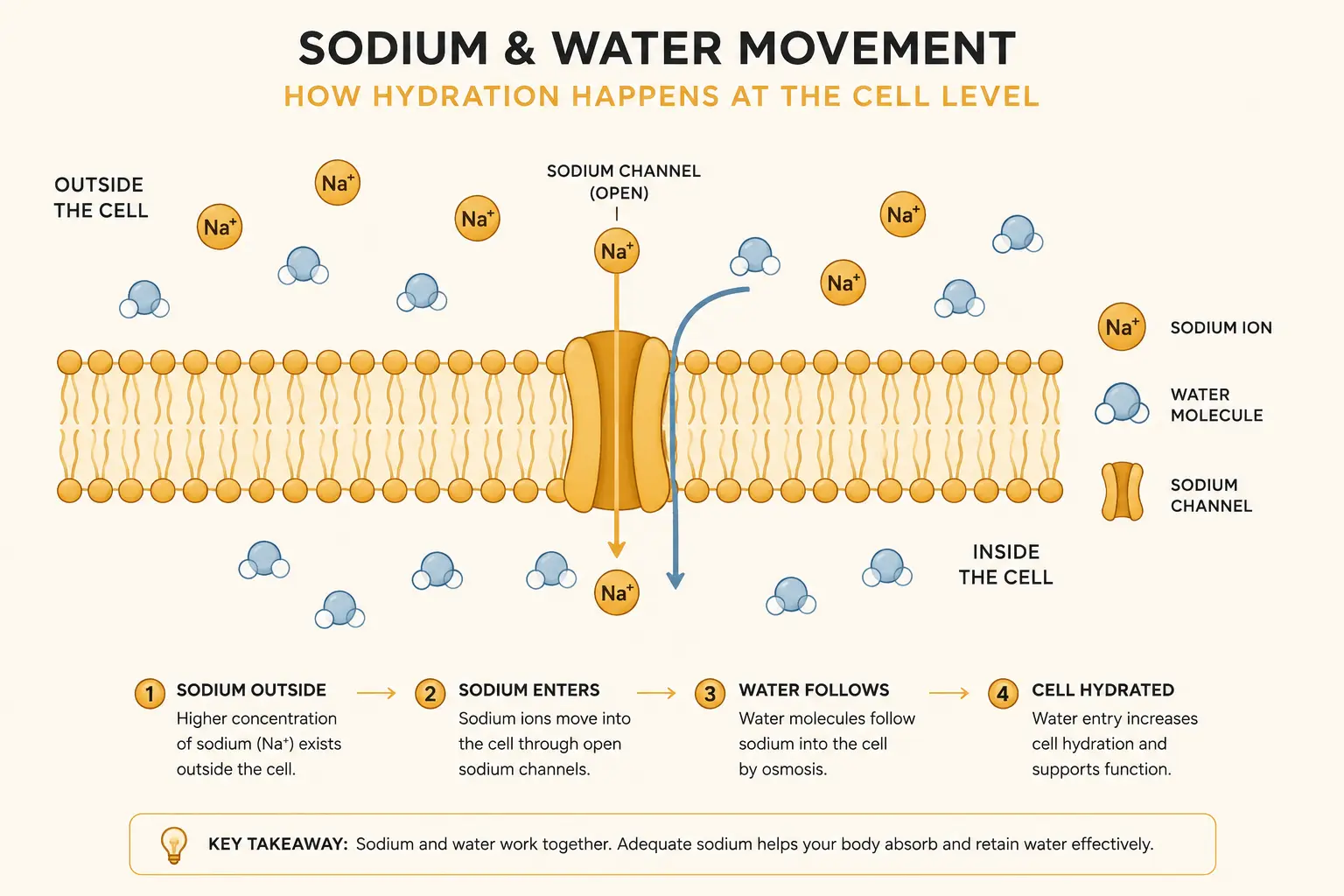
Electrolytes are minerals that carry an electric charge and regulate fluid balance, nerve signaling, and muscle contraction — including your heartbeat — and the main ones your body relies on are sodium, potassium, magnesium, calcium, and chloride. Water moves across your cell membranes based on the concentration of these minerals on either side; this is why electrolyte balance, not water volume alone, determines whether your cells are actually hydrated.
| Electrolyte | Main role | Typical daily need |
|---|---|---|
| Sodium | Fluid balance; nerve and muscle signaling | 1,500-2,300mg |
| Potassium | Muscle contraction; heart rhythm | 3,500-4,700mg |
| Magnesium | Muscle relaxation; energy production | 310-420mg |
| Calcium | Muscle contraction; bone structure | 1,000-1,200mg |
Why Water Alone Isn't Enough
Drinking large volumes of plain water without replacing sodium can dilute the sodium concentration in your blood — a condition called hyponatremia — which is the direct, documented mechanism behind why "just drink more water" isn't universally safe advice. Hyponatremia isn't rare or theoretical: a landmark study of Boston Marathon runners found that 13% had hyponatremia and 0.6% had critical hyponatremia, driven largely by over-hydrating with hypotonic fluids like plain water over several hours.[1]
This isn't an argument against water — it's an argument for understanding that water and electrolytes work as a system, and pushing one variable (water volume) without the other (sodium) can backfire specifically during prolonged sweating.
How Much You Actually Lose in Sweat
Sodium loss through sweat varies significantly by person and intensity, averaging around 800mg per liter of sweat, with a documented range of roughly 460 to 1,840mg per liter. Losses climb further with exercise intensity — an athlete training hard with a high sweat rate can lose over 2,000mg of sodium in a single hour.[2]
| Exercise intensity | Approx. sodium loss | Approx. potassium loss |
|---|---|---|
| Low intensity | ~700mg per liter of sweat | ~160-320mg per liter of sweat |
| Moderate intensity | ~940mg per liter of sweat | ~160-320mg per liter of sweat |
| High intensity | ~1,130mg+ per liter of sweat | ~160-320mg per liter of sweat |
Magnesium losses through sweat are comparatively small — roughly 4-15mg per liter — which is why sodium and, to a lesser degree, potassium are the electrolytes most relevant to sweat replacement specifically, even though magnesium matters for overall daily intake.
When You Actually Need Electrolytes vs. Just Water
For exercise under about an hour, the American College of Sports Medicine's position is that plain water performs just as well as an electrolyte drink for most people — the real difference shows up beyond an hour, especially in heat. For exercise longer than an hour, adding roughly 0.5-0.7g of sodium per liter of fluid is recommended, since it improves fluid retention, supports performance, and may help prevent hyponatremia in people prone to over-drinking plain water.[3]
Use the Water Intake Calculator to get a personalised daily fluid target by weight and activity level first — electrolyte needs scale on top of that baseline, not instead of it.
Food Sources: You Probably Don't Need a Supplement
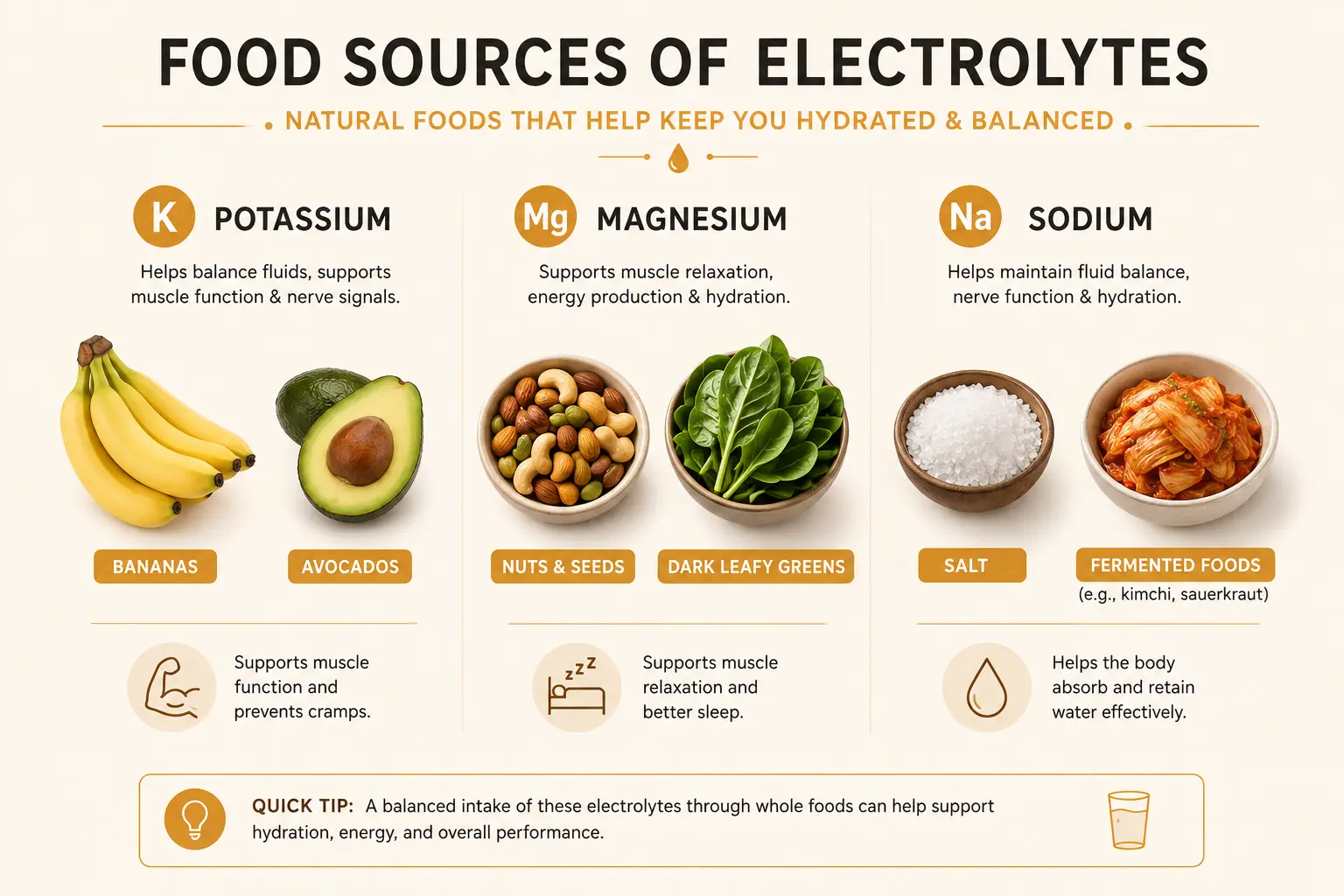
Most people meet their sodium and calcium needs easily through a normal diet but consistently fall short on potassium and magnesium specifically, which is worth more deliberate attention than reaching for an electrolyte supplement by default.[4]
- Potassium: potatoes (~900mg per medium potato), spinach (~840mg per cooked cup), bananas (~420mg per medium fruit), avocados (~700mg per fruit)
- Magnesium: nuts, seeds, whole grains, dark leafy greens, dark chocolate
- Sodium: table salt, salted foods, naturally fermented foods — most people don't need to actively seek this out
- Calcium: dairy and fortified foods cover most people's needs without extra effort
For most non-endurance situations, closing the potassium and magnesium gap through fiber-rich whole foods and a generally balanced diet does more than an electrolyte supplement — the supplement's real value shows up specifically around prolonged sweating or illness. Vitamin D is a similar case of a genuine, common nutrient gap that food alone often can't fully close.
Common Mistakes
- Drinking large amounts of plain water during long exercise "to be safe." This is precisely the pattern behind exercise-associated hyponatremia — more water without sodium doesn't add safety margin, it removes it.
- Using electrolyte drinks for every gym session. For workouts under an hour, plain water performs equivalently for most people — added sugar and cost in a daily electrolyte drink often outweighs any real benefit.
- Ignoring potassium and magnesium while focusing only on sodium. Sports drinks are often sodium-heavy but light on potassium and magnesium, which are the two minerals most people actually under-consume day to day.
- Treating thirst as the only signal that matters. Thirst is a reasonable guide for casual daily hydration, but during prolonged heavy sweating it can lag behind actual electrolyte loss.
- Assuming supplement need scales with how much you sweat visually. Sweat sodium concentration varies enormously between individuals — someone who sweats less can still lose more sodium per liter than someone who visibly sweats more.
Final Thoughts
Electrolytes aren't a wellness add-on — they're the mechanism that makes water actually usable by your body. For most daily hydration and workouts under an hour, plain water plus a normal diet covers the need completely. The electrolyte conversation becomes genuinely important beyond an hour of sweating, in heat, or during illness — situations where sodium loss is significant enough that water alone can dilute it faster than you can replace it.
More water isn't automatically better hydration. Better hydration is water and electrolytes moving together — which is exactly what your cells were designed to run on.
If sugar cravings tend to spike after workouts, it's worth checking whether that's partly an electrolyte and blood sugar issue rather than pure appetite — see what's actually driving sugar cravings for the fuller picture, and the Eat With Intent course for building sustainable nutrition habits around all of this, not just hydration in isolation.
This article is for informational purposes only and does not constitute medical advice. Individual electrolyte needs vary by health status, medications, and climate. If you experience symptoms of hyponatremia (confusion, severe headache, seizures) during or after exercise, seek medical attention immediately rather than self-treating with more water or electrolytes.
Sources
[1] Almond, C.S.D. et al. Hyponatremia among Runners in the Boston Marathon. New England Journal of Medicine. Available at: nejm.org
[2] Sweat sodium and potassium loss rates by exercise intensity. Available at: mysportscience.com
[3] American College of Sports Medicine. Position Stand: Exercise and Fluid Replacement. Available at: khsaa.org
[4] Daily electrolyte intake requirements and food sources. Available at: bubsnaturals.com