Chapter 11 covered protein, carbohydrate, and fat — the macronutrients that provide energy. This chapter covers the nutrients that don't provide energy at all, yet make every reaction in Chapters 7 through 11 actually possible. Two diets can hit identical calorie and macro targets while delivering very different amounts of vitamins and minerals, depending on whether the food they're built from is whole and minimally processed or heavily refined. A coach who only checks macros is missing half of what "good nutrition" — Chapter 5's own definition — actually requires.
Chapter 11 closed by promising that this chapter moves past the calorie and macro totals into what makes a diet genuinely nourishing. That's micronutrients and food quality — two ideas that don't show up anywhere in a macro breakdown, but shape how well a client actually feels and functions.
What Micronutrients Actually Do
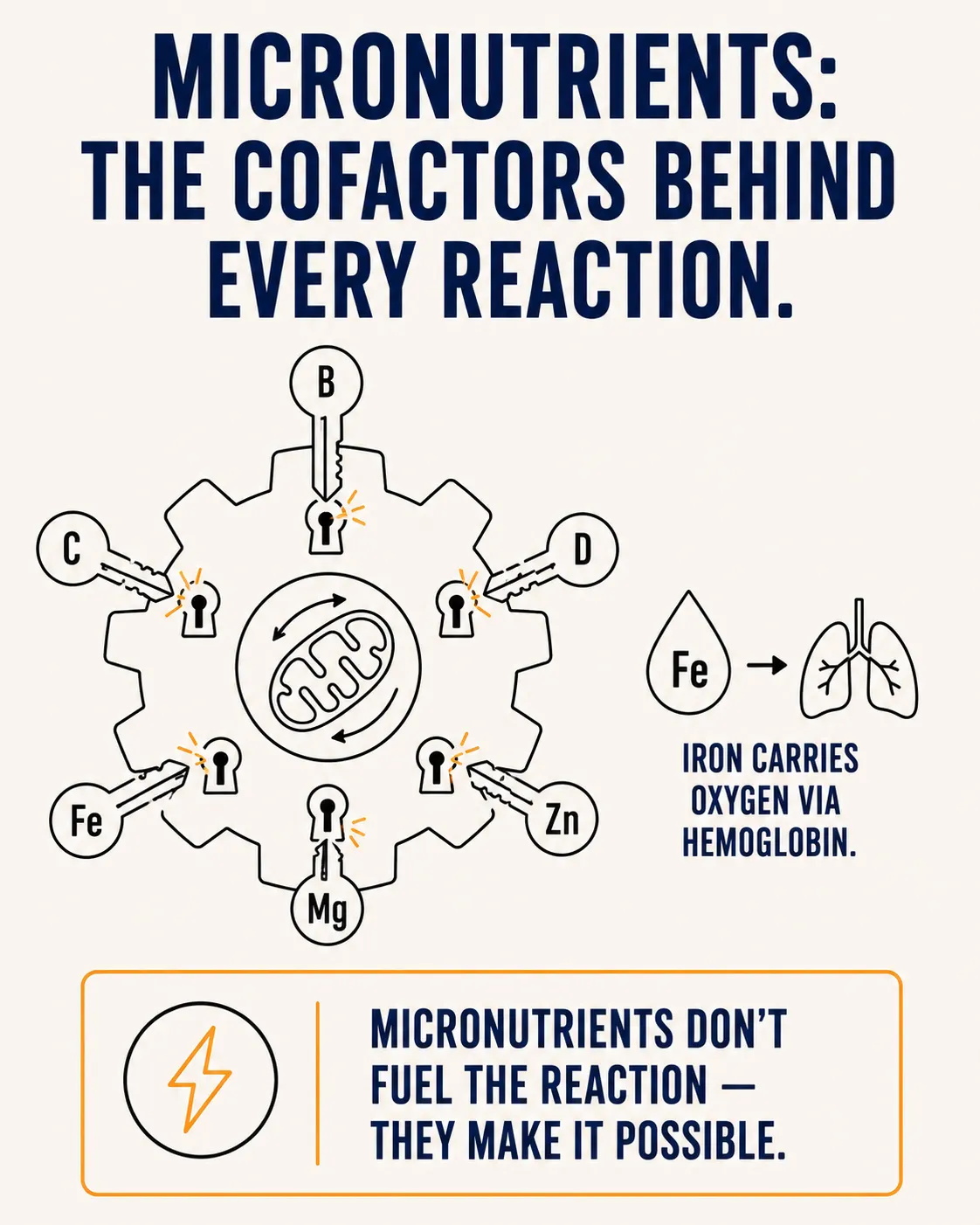
Vitamins and minerals are needed in far smaller amounts than protein, carbohydrate, or fat, and unlike those three, they don't provide any usable energy of their own. What they do instead is enable the reactions that macronutrients depend on. Many vitamins and minerals act as cofactors — helper molecules required for a specific reaction to proceed at all — including several of the exact reactions covered in Chapter 9's discussion of converting nutrients into ATP inside the mitochondria. Without adequate micronutrient status, the metabolic machinery from earlier chapters simply doesn't run as efficiently, regardless of how well-dialed the calories and macros are.
Vitamins split into two broad categories: fat-soluble (A, D, E, K), which are absorbed alongside dietary fat using the same process Chapter 11 described, and water-soluble (the B vitamins and vitamin C), which the body doesn't store in large amounts and needs replenished more consistently through food. Minerals cover a wide range of essential elements — calcium and magnesium for bone and muscle function, iron for oxygen transport in the blood, zinc for immune function, among many others — each with its own specific role that no other nutrient fully substitutes for.
Iron is a useful concrete example of what happens when a micronutrient runs short. It's a core component of hemoglobin, the molecule red blood cells use to carry oxygen from the lungs to every other tissue in the body. Without enough iron, that oxygen-delivery system runs less efficiently, which is part of why low iron status commonly shows up as fatigue and reduced exercise capacity — symptoms that have nothing to do with calories or macros, and everything to do with a single mineral most people never think about until it's already low. Certain groups are more commonly affected, including menstruating women and people eating largely plant-based diets, simply because of how much iron they lose or how readily the iron in their food gets absorbed.
Why Whole Foods Matter Beyond the Macro Numbers
Two meals can share nearly identical calorie and macro totals while delivering very different amounts of everything covered above. This is the idea of nutrient density: how much vitamin, mineral, and fiber content a food delivers relative to its calories.
- Whole, minimally processed foodsVegetables, fruits, whole grains, lean meats, and similar foods generally deliver more vitamins, minerals, and fiber per calorie, plus the higher satiety Chapter 11 discussed for protein-rich whole foods specifically.
- Heavily processed foodsOften refined during processing in ways that strip out fiber and micronutrients, even when the calorie and macro profile looks identical to a whole-food alternative on paper.
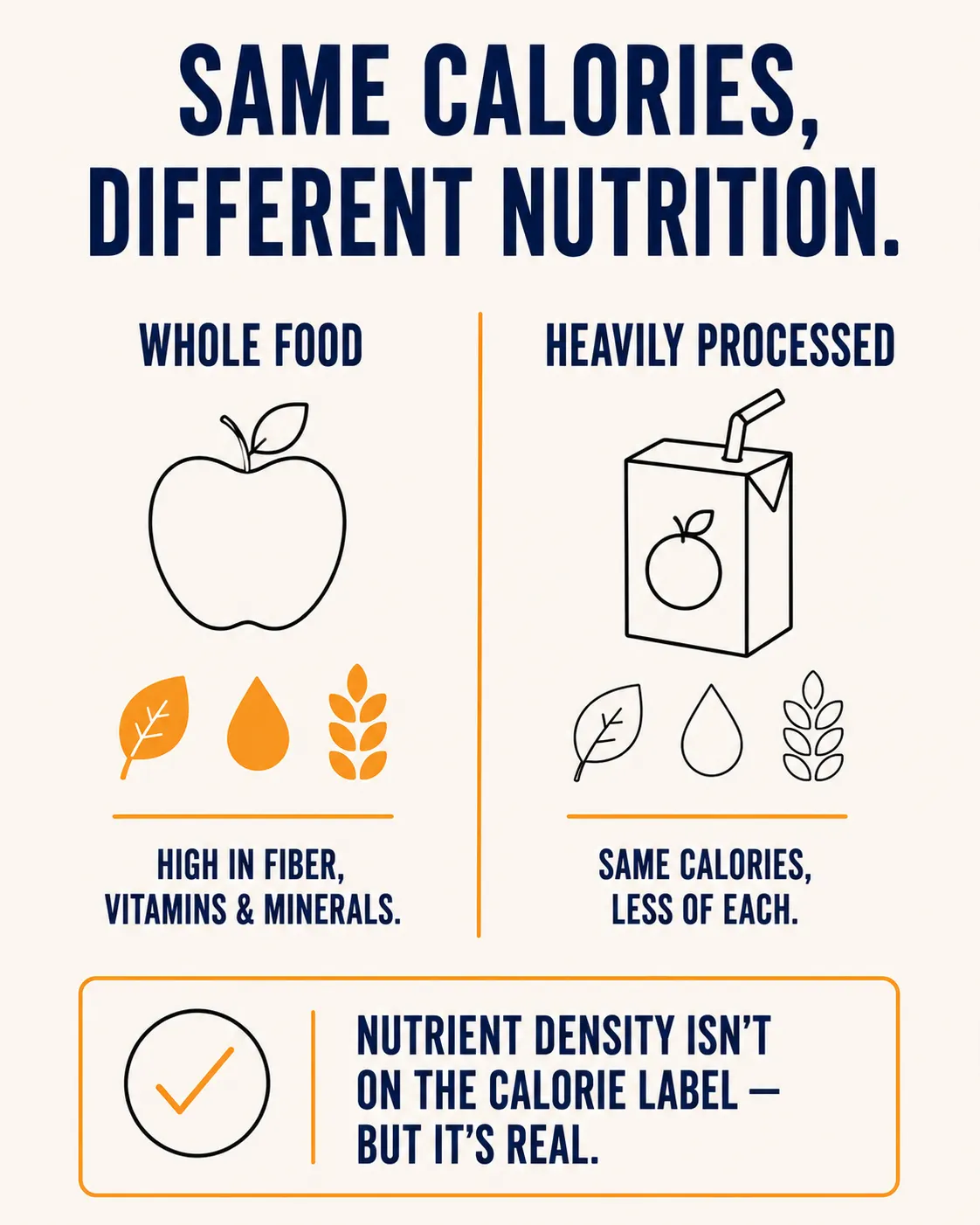
This isn't a case for treating processed food as forbidden — Chapter 5 already rejected that kind of moralizing, and plenty of processed foods (canned beans, frozen vegetables, fortified cereals) are perfectly nutrient-dense. The point is that nutrient density is a genuinely separate lens from macros, not an automatic byproduct of hitting a calorie target. A diet built mostly around refined, minimally-whole ingredients can technically satisfy someone's calorie and protein goals while still running short on the vitamins and minerals those very metabolic processes depend on.
A client hits their calorie and protein targets with impressive consistency but reports feeling run-down, foggy, and slow to recover from workouts. Rather than assuming the energy-balance math is wrong, a coach who understands this chapter asks a different question: what does the rest of the plate actually look like? If most meals lean on refined grains, low-fiber snack foods, and little produce, the client may be technically "on plan" by the numbers from Chapter 11 while running short on iron, magnesium, or B vitamins that Chapter 9's energy-production pathways depend on. Adjusting food quality — not calories — is often the more relevant fix.
Why This Matters for Coaching
Chapter 5 defined good nutrition using several criteria, one of which was "nutrient-dense" — a word that meant little in isolation back in Unit 1 but now has real substance behind it. Macros determine whether a diet is structurally sound; nutrient density determines whether it's actually nourishing. Both matter, and neither substitutes for the other.
The practical coaching move rarely involves tracking every vitamin and mineral individually — that's neither realistic nor necessary for most clients. Instead, a simple pattern (built mostly around whole foods, a variety of colors and food groups, adequate protein) tends to cover most micronutrient needs without turning every meal into a spreadsheet. This mirrors Chapter 6's practical-fluency goal: understanding the science well enough to translate it into one plain, actionable habit rather than a complicated tracking system.
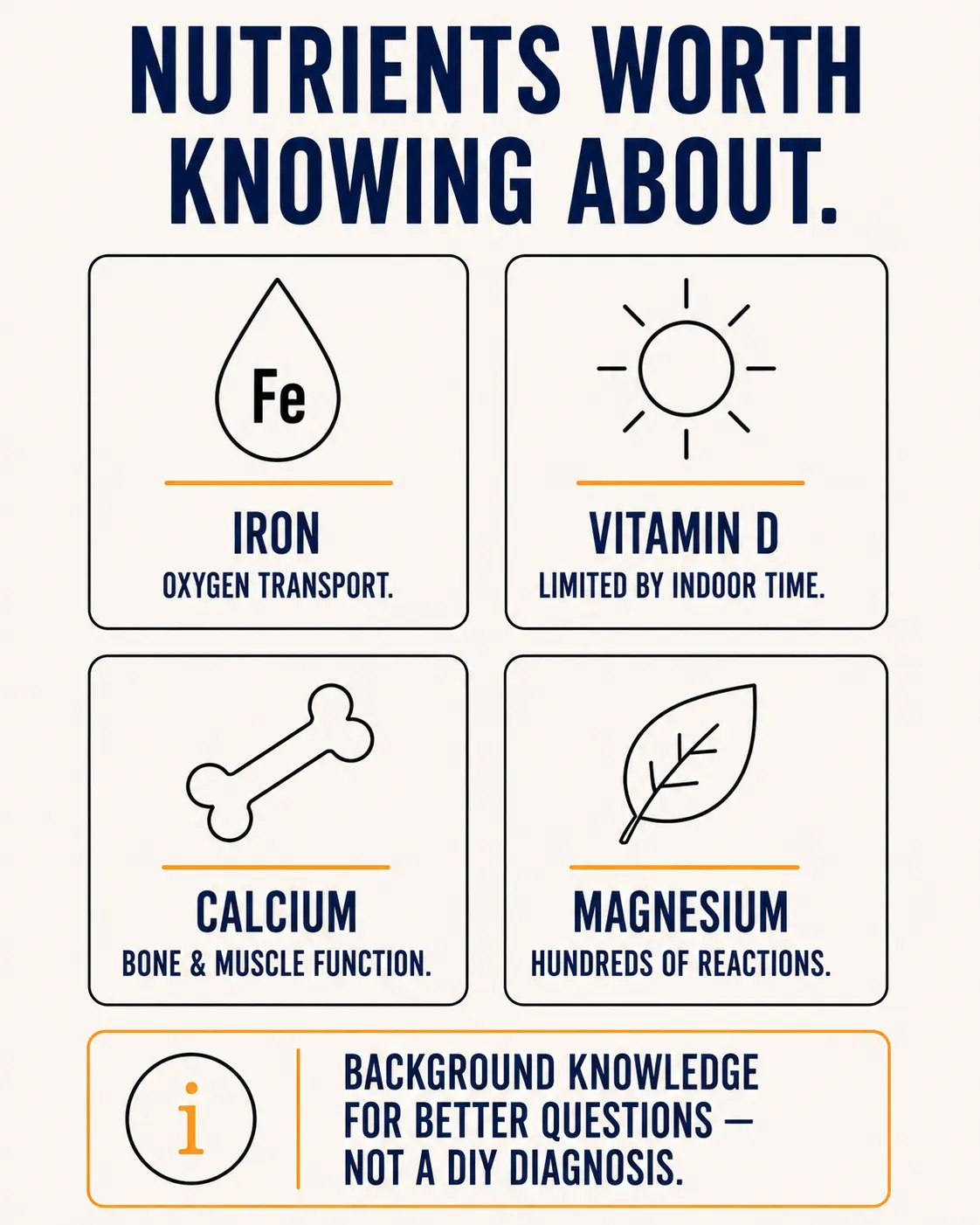
That said, being aware of commonly under-consumed nutrients is still useful background knowledge, not something to diagnose or treat yourself. Iron, vitamin D, calcium, and magnesium show up repeatedly in population-level nutrition surveys as nutrients many people fall short on, often for reasons tied to modern eating patterns — less sun exposure, more time indoors, and diets built more around refined foods than whole ones. Recognizing that pattern helps a coach ask better questions and know when to suggest a client loop in a doctor or registered dietitian for bloodwork, rather than guessing or recommending supplements outside a coach's scope of practice.
Chapter 13 continues down this same practical path, looking at water and fluid balance — another nutrition factor, like micronutrients, that rarely shows up in a macro count but affects how a client actually feels day to day. Between the two chapters, a pattern starts to emerge: some of the most common client complaints — low energy, poor recovery, feeling "off" despite doing everything right on paper — trace back to factors sitting quietly outside the calorie-and-macro conversation entirely.
8 questions, modeled on PN's real open-book exam style. Score 75%+ to mark this lesson complete.
- Micronutrients don't provide energy directly — they act as cofactors that enable the metabolic reactions macronutrients depend on, including ATP production from Chapter 9.
- Vitamins split into fat-soluble (A, D, E, K) and water-soluble (B vitamins, C); minerals like calcium, iron, magnesium, and zinc each serve distinct, non-substitutable roles.
- Nutrient density — vitamin, mineral, and fiber content relative to calories — is a separate lens from macros, not an automatic byproduct of hitting a calorie target.
- Whole, minimally processed foods generally deliver more nutrient density; this isn't a case for treating processed food as forbidden.
- A client can hit their macros perfectly and still feel run-down if food quality is consistently low — the fix is often about food quality, not calories.
Before moving to Lesson 13:
- Write, in one sentence, the difference between what macronutrients and micronutrients each do in the body.
- List two whole-food sources you'd suggest to a client trying to increase nutrient density without changing their calorie target.
- Think of a client (or yourself) who hit their macros but still felt run-down — could food quality have been part of the explanation?
- Complete the knowledge check above and review any question you missed.