- The EPA's food waste hierarchy ranks source reduction — buying and cooking only what you'll eat — above composting, donation, and every other option.
- The average family of four wastes an estimated $1,500-3,000 worth of food per year.
- Roughly 60% of global food waste happens at the household level, not in farms, stores, or restaurants.
- Wasted food is responsible for the majority of landfill methane emissions in the US — a gas roughly 80 times more potent than CO2.
- The highest-impact zero-waste kitchen changes cost nothing: meal planning and proper storage, not new products.
A zero-waste kitchen starts with reducing food waste before you buy a single reusable product — the EPA's own food waste hierarchy places source reduction above composting, donation, and every other option, because preventing waste is more effective than managing it after the fact. Most "zero-waste kitchen" guides lead with product swaps: beeswax wraps, glass jars, bamboo utensils. Those help, but they're a secondary step, and starting there is why a lot of zero-waste attempts stall out expensive and half-finished.
This guide follows the actual priority order: what to fix first (food waste, which is free), what to fix second (packaging, through smarter buying), and where composting and reusable products genuinely fit in.
The Food Waste Hierarchy: What to Prioritize First
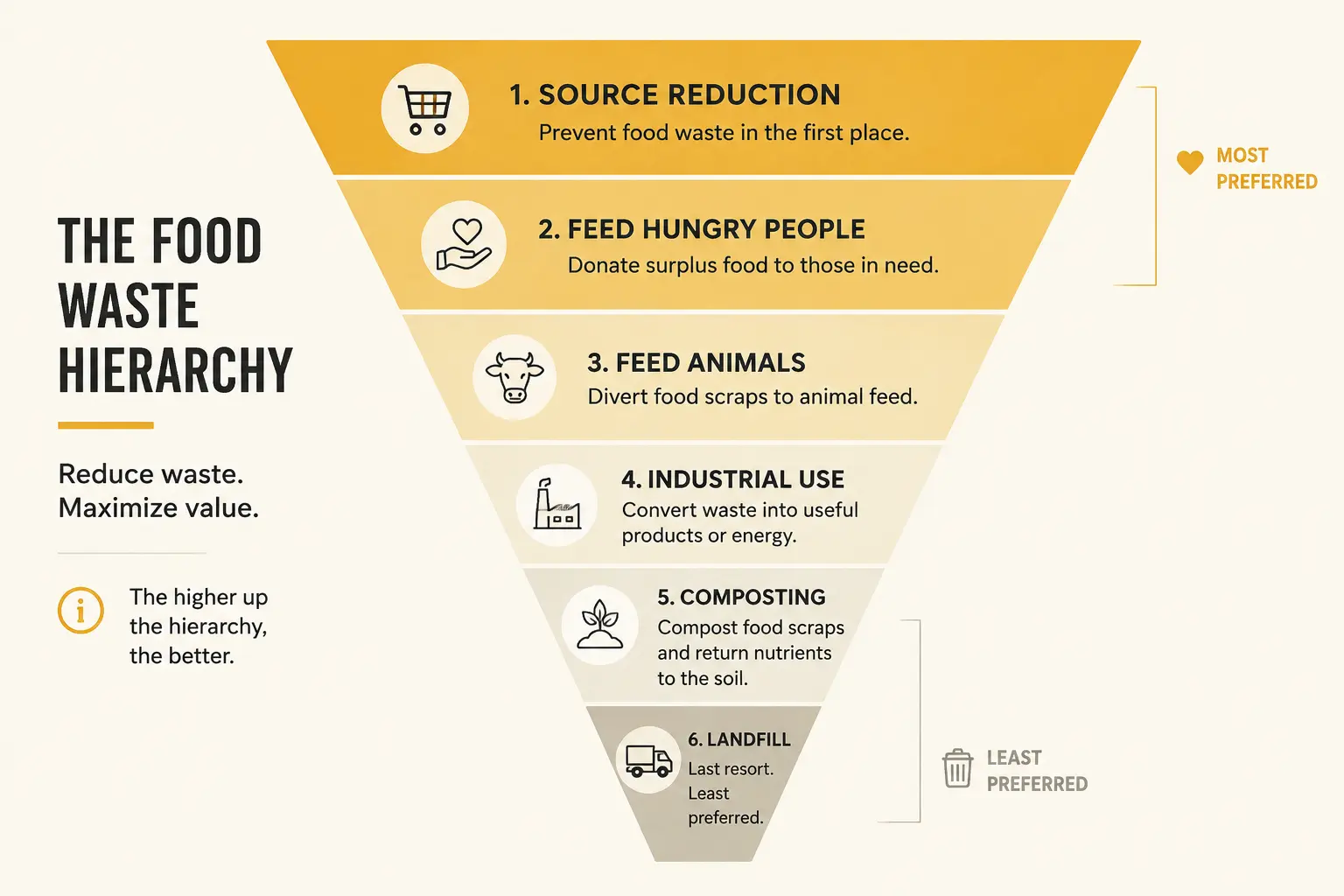
The EPA's food waste hierarchy ranks actions from most to least preferred, and composting — the step most people start with — sits near the bottom, not the top. The order exists because each step further down the list requires the waste to have already happened; the top of the list prevents it from happening at all.[1]
| Priority | Action | What it looks like in a home kitchen |
|---|---|---|
| 1 (highest) | Source reduction | Buy, cook, and serve only what you'll actually eat |
| 2 | Feed hungry people | Share or donate surplus edible food before it spoils |
| 3 | Feed animals | Scraps unsuitable for people, where applicable |
| 4 | Industrial use | Not typically relevant at the household level |
| 5 | Composting | Scraps that couldn't be avoided or used another way |
| 6 (lowest) | Landfill / incineration | The default outcome the entire hierarchy exists to avoid |
The practical takeaway: a kitchen that composts diligently but still overbuys and forgets food in the back of the fridge is optimizing the wrong end of the list. Fixing the buying and storage habits at the top removes far more waste than composting what's left over at the bottom ever will.
Why the Kitchen Is Where This Matters Most
Food waste, not packaging, is the biggest source of household environmental impact in most kitchens, and it's also the most expensive. An estimated 25-30% of all food produced globally is wasted, and roughly 60% of that waste — about 631 million tonnes a year — happens specifically at the household level, ahead of farms, retailers, and restaurants combined.[2]
The financial cost lands directly on individual households: estimates put the average family of four's annual food waste at somewhere between $1,500 and $3,000, depending on family size and how much of the grocery budget goes toward fresh, perishable food.[3] That is a bigger, faster win than almost any product swap available.
10 Starter Steps, in the Order They Actually Matter
These are ordered by impact, not by how satisfying they feel — the first five cost nothing and address source reduction; the last five are the product and composting layer most guides start with.
- Meal plan before you shop. Buying only what a specific plan calls for is the single biggest lever against overbuying. The 2-hour Sunday reset framework builds this into a repeatable weekly habit.
- Do a "use it up" shelf and fridge check before every shop. Five minutes looking at what's already there prevents duplicate purchases and catches food about to turn.
- Store produce correctly. Most vegetables last meaningfully longer stored properly — potatoes and onions kept separate in cool, dark conditions; leafy greens wrapped instead of left loose.
- Practice first-in, first-out. Move older items to the front of the fridge and pantry every time you put new groceries away.
- Cook or freeze food before it turns, not after. A standing "use by Sunday" habit for anything approaching its limit prevents most last-minute waste.
- Switch high-frequency single-use items first. A reusable water bottle and a set of glass or steel containers replace the items you'd otherwise buy or use weekly — the highest-frequency swaps pay off fastest.
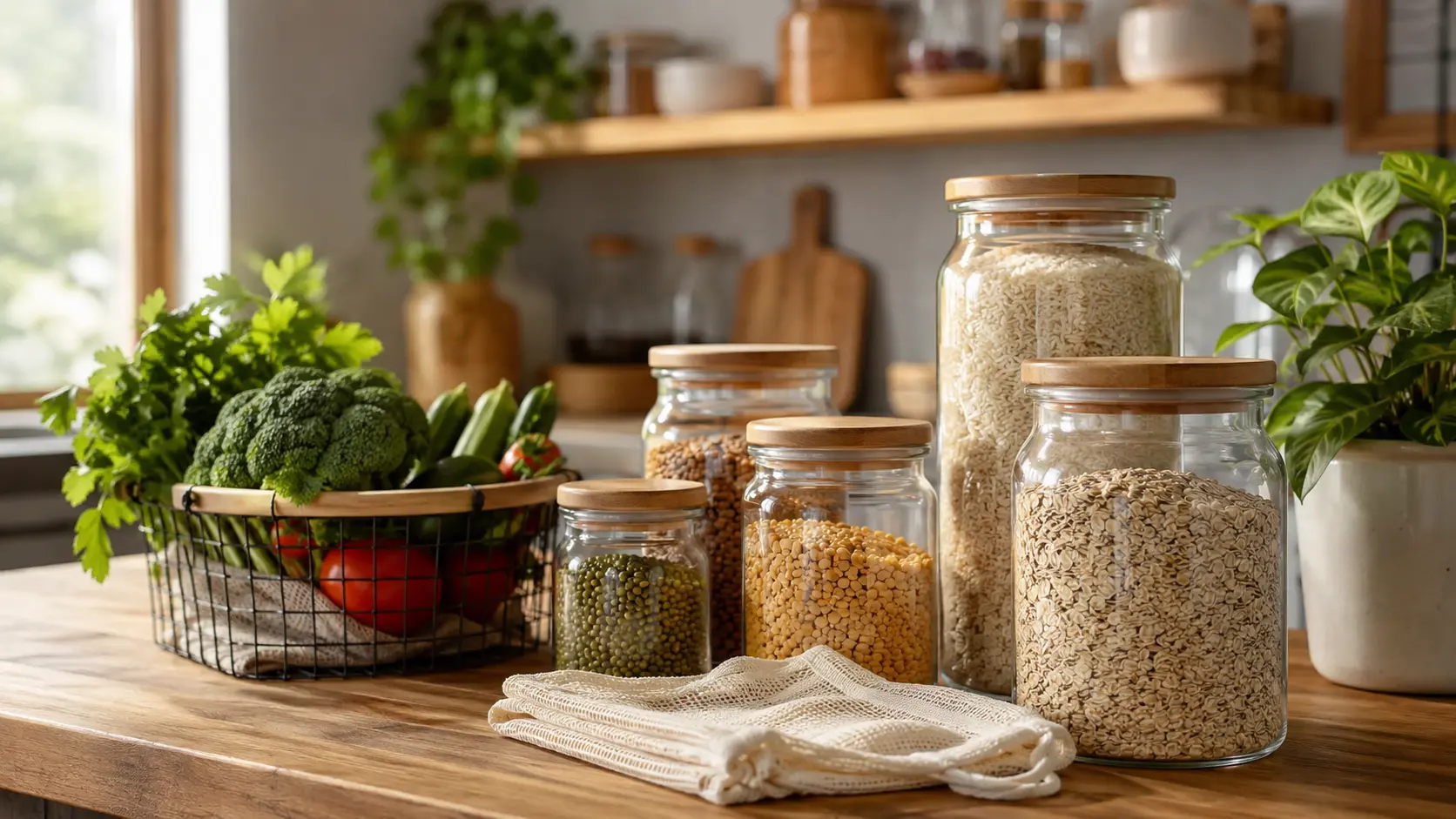
- Buy pantry staples in bulk where available. Grains, dals, oats, and spices bought in bulk or from a kirana with your own containers cut packaging waste and usually cost less per kilogram than pre-packaged equivalents.
- Cook from scraps before discarding them. Vegetable peels, stems, and dal water can go into stock; many "waste" parts are simply underused ingredients.
- Set up composting for what's genuinely left over. Once source reduction is in place, composting handles the unavoidable remainder — see below for why this step matters even though it's last.
- Round out with lower-frequency reusable swaps. Beeswax wraps, cloth produce bags, and reusable straws are worth having, but they address a smaller share of total waste than steps 1-9.
Where Composting Actually Fits — and Why It Still Matters
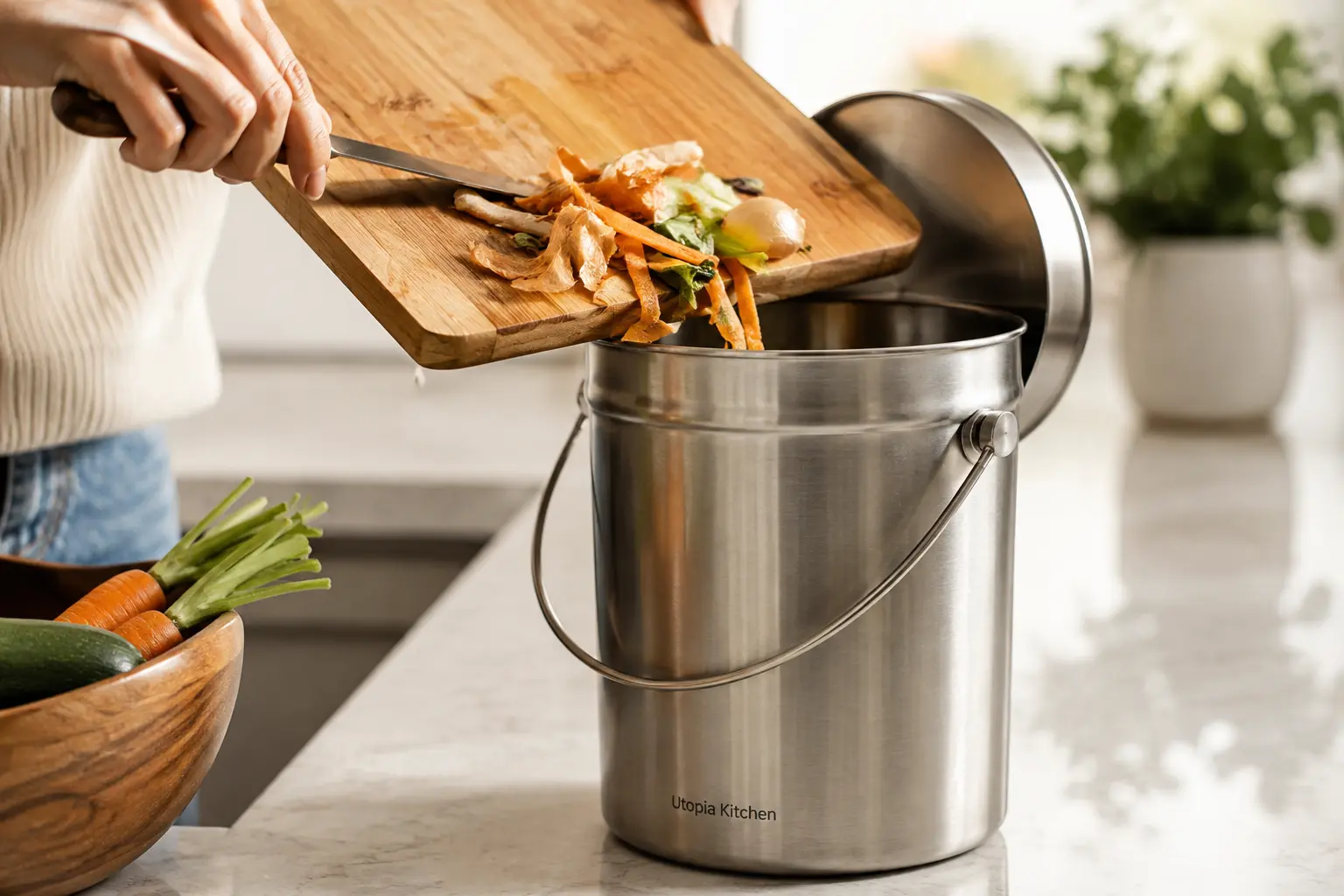
Composting belongs after source reduction, not instead of it, but it's still one of the most effective single actions available for the food waste you couldn't avoid. Food waste sent to landfill decomposes without oxygen and produces methane — a greenhouse gas roughly 80 times more potent than CO2 over a 20-year period — and wasted food is responsible for the majority of landfill methane emissions in the US.[4]
Composting a household's food scraps instead of landfilling them can offset a meaningful amount of CO2-equivalent emissions annually, and composting emissions themselves are dramatically lower than the methane produced by the same scraps rotting in a landfill. The distinction worth remembering: composting scraps you couldn't avoid producing is genuinely valuable; composting scraps you could have used or never bought in the first place is a consolation prize, not a win.
Common Mistakes
- Buying a full set of "zero-waste" products before fixing buying habits. A cupboard full of unused glass jars and beeswax wraps doesn't reduce waste if the food waste behind it hasn't changed — this is the most expensive and least effective way to start.
- Treating composting as the finish line. Composting handles what's left after prevention, not a replacement for prevention itself.
- Meal planning without checking what's already on hand. A plan built without a fridge and pantry check just adds new food on top of food that's about to expire.
- Bulk-buying perishables. Bulk buying works well for shelf-stable staples; bulk-buying fresh produce you won't use in time just moves the waste earlier in the process.
- Giving up after one wasted batch. A spoiled bag of spinach doesn't undo the habit — it's data for adjusting portion sizes or storage, not a reason to abandon the system.
Final Thoughts
A zero-waste kitchen isn't built by buying the right products — it's built by fixing the order operations happen in. Source reduction (buying and using only what you need) does more than composting; composting does more than sending scraps to landfill; and reusable products are a useful but secondary layer on top of both. Starting with the free habits — meal planning, proper storage, using what's already there — produces faster, cheaper, and more durable results than starting with a shopping list of eco-products.
The most effective zero-waste kitchen tool isn't a glass jar. It's checking the fridge before you go shopping.
If this kitchen-specific approach resonates, it fits naturally into a broader sustainable living on a budget practice, and the mindset behind prioritizing what you actually need over what's marketed as essential connects directly to what slow living actually means.
Sources
[1] US EPA. Food waste hierarchy / wasted food scale. Available at: epa.gov
[2] Global and household-level food waste statistics. Available at: earth.org
[3] Average annual household food waste cost estimates. Available at: waste360.com
[4] Landfill methane emissions from food waste and the impact of composting. Available at: epa.gov