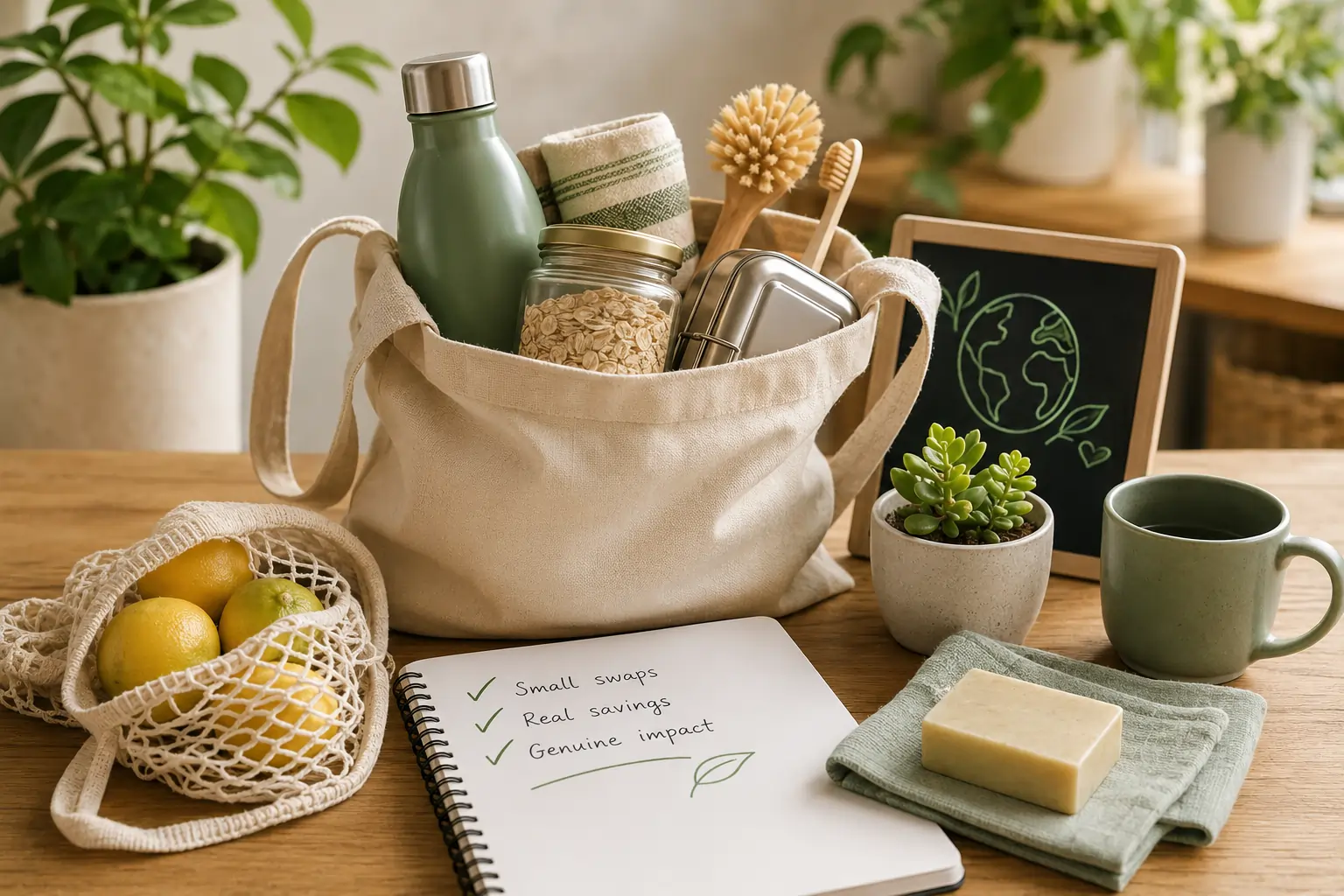
There is a frustrating misconception about sustainable living: that it is expensive, inconvenient, or only accessible to people with a certain kind of lifestyle.
Walk into any store and you will find organic products with premium price tags, bamboo toothbrushes that cost three times as much as regular ones, and reusable bags sold in designer packaging. It can feel like the entire movement has been turned into a marketing category.
But the actual core of sustainable living — consuming less, wasting less, choosing things that last — is almost always cheaper than the alternative. The expensive version of sustainability is a product. The practical version is a habit.
This guide is about the practical version: real changes that reduce your environmental footprint and, in most cases, reduce your spending at the same time.
Why Sustainable Living and Budget Living Point in the Same Direction
Most environmentally harmful consumption patterns are also financially wasteful ones. Single-use products cost more per use than reusable alternatives. Fast fashion costs less upfront but degrades quickly, creating a cycle of repeated spending. Food waste is money thrown directly into a bin. Overconsumption of energy is a monthly bill you pay indefinitely.
When you reduce waste, extend the life of things you own, and buy less overall, you spend less money and generate less environmental harm simultaneously. The interests happen to be identical.
If you want to put that principle into a structured practice, the 30-Day No-Spend Challenge is a 30-day spending freeze — essentials only — with a daily tracker to log every urge you skip. Beyond the money saved, it tends to surface exactly which spending habits were habitual rather than intentional. For a deeper look at what the month actually reveals about your financial psychology — spending triggers, subscription creep, and the real cost of convenience — see what a no-spend month actually teaches you.
The Swaps That Actually Matter: Ranked by Impact
Not all sustainable choices have equal impact. Some changes are genuinely significant. Others are feel-good gestures that make very little practical difference. This table ranks the most common swaps by their real-world impact on both waste and cost.
| Swap | Environmental impact | Financial impact | Difficulty |
|---|---|---|---|
| Reduce meat consumption (even partially) | Very high — livestock is a major emissions source | Saves significantly on grocery bills | Medium — requires meal planning |
| Buy less, buy better quality | Very high — less manufacturing waste overall | Saves money long-term despite higher upfront cost | Medium — mindset shift required |
| Reduce food waste through meal planning | High — food waste is a significant emissions source | Saves 15–25% on grocery bills | Medium |
| Switch to a reusable water bottle | High — eliminates plastic bottle waste | Saves ₹3,000–6,000+ per year | Very easy |
| Buy second-hand clothing | High — textile industry is very polluting | Saves 50–90% on clothing costs | Easy once you know where to look |
| Switch to reusable cloth bags for shopping | Medium-High — replaces thousands of plastic bags | Near-zero cost after initial purchase | Very easy |
| Stop buying single-use plastic bags | High — plastic waste reduction | Saves small amounts consistently | Easy |
| Use a menstrual cup or reusable pads (if applicable) | High — eliminates years of disposable waste | Saves ₹2,000–5,000+ per year | Medium — adjustment period |
| Line-dry clothes instead of using a dryer | Medium — significant energy reduction | Reduces electricity bill | Very easy |
| Fix leaking taps and use water mindfully | Medium — water conservation | Reduces water bill | Easy |
The Kitchen: Where Most Household Waste Actually Comes From
The kitchen is responsible for the largest share of household waste — both food waste and packaging waste. It is also where the most impactful and affordable changes are possible.
Reduce food waste — this is the big one
Roughly one-third of all food produced globally is lost or wasted, according to the Food and Agriculture Organisation of the United Nations. In homes, this usually happens because of overbuying, poor storage, and forgetting what is in the fridge.
- Meal plan before grocery shopping — buy what you will actually use that week. The 2-hour Sunday reset framework is a practical system for building this habit without it feeling like homework.
- First in, first out — move older items to the front of the fridge and use them first
- Store vegetables properly — most last significantly longer when stored correctly: onions and potatoes stored separately in cool, dark places; leafy greens wrapped in a damp cloth
- Cook from scraps — cauliflower and broccoli stems, carrot peels, onion skins, and dal water all have uses; vegetable scraps can make excellent stock
- Freeze before it goes bad — bread, cooked dal, and most proteins freeze well
Switch from single-use to reusable in the kitchen
| Single-use item | Reusable alternative | Approx. annual saving |
|---|---|---|
| Plastic bags for shopping | Cotton tote bags or jute bags | ₹300–500 |
| Plastic wrap / cling film | Beeswax wraps or simply use a plate as a lid | ₹400–700 |
| Disposable paper towels | Old cotton cloths or cut-up old t-shirts | ₹800–1,500 |
| Plastic water bottles (purchased) | Stainless steel or glass reusable bottle | ₹3,000–6,000+ |
| Plastic zip-lock bags | Glass or steel containers with lids | ₹500–1,000 |
| Disposable straws | Steel or bamboo reusable straws | Minimal cost, minimal saving |
The reusable bottle alone is worth prioritising immediately. If you currently buy packaged water or bottled drinks regularly, a good stainless steel bottle pays for itself within weeks.
Buy in bulk where it makes sense
Buying staples in bulk — rice, dal, oats, flour, sugar, spices — reduces packaging waste significantly and almost always costs less per kilogram. In India, buying from local kiranas, weekly sabzi mandis, or cooperative stores rather than packaged supermarket brands reduces both cost and plastic packaging simultaneously.
For a more complete, step-by-step breakdown of exactly where to start — including why composting belongs near the end of the process rather than the beginning — see the zero-waste kitchen starter guide.

The Wardrobe: Fast Fashion Is Both Expensive and Wasteful
The fashion industry is one of the most polluting industries in the world. Fast fashion — cheap clothing designed to be worn a few times and discarded — drives enormous amounts of waste while also costing people more money overall than a better-quality, less-frequent buying approach would.
Buy less, wear what you have
The most sustainable wardrobe is the one you already own. Before buying anything new, ask: do I already own something that serves this purpose? Most people, on reflection, find they own more than they think, and much of it is underused.
Buy second-hand
Second-hand clothing platforms, local thrift stores, and neighbourhood exchange groups are genuinely excellent sources for good quality clothing at a fraction of the original price. In many Indian cities, weekend flea markets and community exchange groups (often on WhatsApp or Facebook) are active and easy to access. The stigma around second-hand clothing is largely a marketing construct designed to keep people buying new.
When you do buy new, buy quality
A pair of jeans that costs ₹2,000 and lasts eight years is dramatically cheaper and more sustainable than a ₹600 pair that falls apart in six months and has to be replaced multiple times. The cost-per-wear calculation almost always favours quality over cheapness. The capsule wardrobe budget guide covers exactly how to apply this thinking to a full wardrobe — including how to audit what you already own, identify genuine gaps, and buy deliberately rather than reactively.
Care for your clothes properly
Most garment damage comes from washing — hot water, aggressive detergent, and tumble drying degrade fabric rapidly. Wash clothes in cold water, hang-dry whenever possible, and wash less frequently (most clothes do not need washing after every single wear). This extends garment life significantly and reduces energy use and water consumption simultaneously.
Energy and Water: The Bills That Show Up Every Month
Unlike one-time purchases, energy and water waste costs you money every single month. Small reductions compound into meaningful annual savings.
Quick energy wins
- Switch off appliances at the wall — devices on standby still draw power; a power strip with a switch makes this easy
- Use LED bulbs throughout your home — they use 75–80% less energy than traditional bulbs and last years longer
- Wash clothes in cold water — modern detergents work just as well, and heating water accounts for the majority of a washing machine's energy use
- Run the washing machine and dishwasher only on full loads — half-loads use nearly the same energy as full ones
- Reduce AC dependence by even one or two degrees — a small adjustment in thermostat setting translates into meaningful electricity savings over hot months
Water conservation
- Fix leaking taps immediately — a dripping tap wastes thousands of litres of water per year
- Take shorter showers — a four-minute shower uses significantly less water than a ten-minute one
- Reuse water where possible — water used for washing vegetables can water plants
- Water plants in the evening rather than midday — evaporation is much lower and plants absorb more
| Habit change | Est. monthly saving | Annual impact |
|---|---|---|
| Switching to LED bulbs (full home) | ₹150–400 on electricity | ₹1,800–4,800 |
| Standby appliance elimination | ₹100–250 on electricity | ₹1,200–3,000 |
| Cold water washing | ₹80–200 on electricity | ₹960–2,400 |
| Fixing one leaking tap | Saves 10,000–15,000 litres of water | Meaningful water bill reduction |
| Reducing AC temp by 2°C | ₹200–500 on electricity (seasonal) | ₹1,000–2,500 (seasonal months) |
Cleaning Products: The Most Over-Marketed Category in Sustainable Living
The cleaning products industry has successfully convinced most households that they need a different specialised product for every surface in their home. This is one of the most effective marketing myths of the last fifty years.
The reality is that almost every cleaning need in a home can be addressed with three or four basic ingredients:
| Ingredient | What it cleans | Approx. cost |
|---|---|---|
| White vinegar (diluted) | Glass, countertops, mould, limescale, general surfaces | ₹30–50 per litre |
| Baking soda | Scrubbing, deodorising, drain cleaning, mild abrasive | ₹20–40 per 200g |
| Liquid dish soap (basic) | Dishes, general grease, surfaces | ₹40–80 per 500ml |
| Lemon juice | Stains, deodorising, limescale on taps | ₹10–20 per lemon |
A spray bottle filled with one part white vinegar and one part water cleans most kitchen and bathroom surfaces effectively. Baking soda handles most scrubbing needs. A drain cleaned monthly with baking soda and hot water avoids most blockages without needing chemical drain cleaners.
Making your own basic cleaning products costs a fraction of branded alternatives, produces far less plastic waste, and involves no harsh chemicals that require special disposal.

The Myth of "Green" Products: When Eco-Marketing Costs You More
Many products marketed as sustainable — bamboo cutlery kits, compostable packaging, premium organic cotton tote bags, "eco-friendly" cleaning sprays in colourful bottles — involve significant manufacturing, packaging, and shipping footprints of their own. A cotton tote bag, for instance, needs to be used hundreds of times before its production footprint is offset compared to simply reusing plastic bags.
The questions worth asking before any "eco" purchase:
- Do I already own something that serves this purpose?
- Is this replacing something I genuinely use and discard regularly, or is this an add-on purchase?
- Does buying this reduce my overall consumption or just change the brand of consumption?
- Will I actually use this enough to justify the energy and materials that went into making it?
The most sustainable product is often the one not purchased at all.
Sustainable Living in the Indian Context: What Already Works in Our Favour
India has a longstanding cultural infrastructure of sustainability that predates the global eco-movement by generations. Understanding this is both reassuring and practically useful.
The kirana store and local market system
Buying from your local sabzi mandi, kirana store, or weekly bazaar rather than large packaged supermarket chains typically means less plastic packaging, fresher produce with a shorter supply chain, support for local livelihoods, and lower prices. The most sustainable grocery shopping in India is often the most traditional kind.
The repair economy
Cobblers, tailors, mobile phone repair shops, pressure cooker gasket sellers, utensil tinners — India has a thriving repair ecosystem that most developed countries have lost entirely. Using these services rather than discarding and replacing is both the most sustainable and the most economical choice. A repaired pressure cooker, mended shoes, or a patched piece of clothing costs far less than a replacement and generates a fraction of the waste.
Traditional practices that are genuinely eco-friendly
- Steel and brass utensils instead of plastic — more durable, healthier, and often available second-hand
- Cloth bags (jhola) for shopping — a generations-old practice that predates the reusable bag trend
- Pressure cooking — dramatically more energy-efficient than open-pot cooking
- Air-drying laundry — standard practice in most Indian households, eliminates dryer energy entirely
- Growing herbs or vegetables at home — even a windowsill coriander plant reduces packaging waste from store-bought produce
In many ways, the most sustainable lifestyle choices in India involve returning to or maintaining practices that older generations already had — rather than purchasing new products to replace them.
A Realistic 30-Day Sustainable Living Starter Plan
Rather than trying to change everything at once, here is a structured approach that builds sustainable habits over four weeks without overwhelming yourself or your budget. Once these habits are in place, a seasonal home reset every few months keeps them from quietly slipping — a much smaller commitment than repeating this full 30-day plan from scratch.
- Start meal planning before shopping
- Set up proper vegetable storage
- Move older fridge items to the front
- Get one reusable water bottle
- Replace remaining incandescent bulbs with LEDs
- Fix any dripping taps
- Set a timer for showers
- Switch appliances off at the wall
- Do one grocery run at a local market or kirana
- Audit your wardrobe before buying new clothing
- Carry a cloth bag consistently
- Make your first batch of DIY cleaning spray (vinegar + water)
- Replace one disposable product with a reusable alternative
- Assess what single-use items you can permanently switch out
By the end of four weeks, most of these changes will feel normal rather than effortful. Habits that once required thought become automatic, and the savings start to compound. Use the Sustainable Swaps Tracker to follow the plan and watch your estimated annual savings add up as you tick each one off.
What Sustainable Living Actually Costs to Start
One of the most common objections to sustainable living is upfront cost. Here is a realistic look at what getting started actually requires:
| Item | Approx. cost | Pays back in |
|---|---|---|
| Stainless steel water bottle (good quality) | ₹400–800 | 2–4 weeks if you currently buy water |
| Set of cloth shopping bags (5–6) | ₹150–300 | Immediately — saves on plastic bag charges |
| Glass or steel food containers (4–6 pieces) | ₹500–1,200 | 3–6 months vs. disposables |
| LED bulbs (replace full home) | ₹600–1,500 | 4–8 months through electricity savings |
| White vinegar + baking soda (cleaning kit) | ₹100–150 | Immediately — replaces multiple products |
| One quality garment instead of three cheap ones | Variable | Long-term — cost-per-wear calculation |
The total starting investment for the most impactful changes is roughly ₹1,500 to ₹4,000 — most of which pays back within a few months through savings on products you would otherwise buy repeatedly.
The Bigger Picture: Why Individual Actions Still Matter
A fair objection to individual sustainable living choices is that they are small relative to industrial-scale environmental problems. This is true. No number of reusable bags offsets a single large industrial polluter.
But this framing is incomplete for a few reasons. First, individual consumption choices in aggregate drive industrial production. Markets respond to what people actually buy. A shift in consumer behaviour at scale does influence what gets manufactured and how. Second, the financial benefits of sustainable habits are real and personal regardless of macroeconomic impact. Spending less, wasting less, and owning things that last longer is genuinely better for your household finances — whether or not it shifts global emissions curves. Third, the habits themselves compound. Someone who learns to repair rather than replace, to buy less and choose better, and to reduce household waste in their twenties will spend significantly less money over a lifetime than someone who does not.
Final Thoughts
Sustainable living does not require a particular income level, a specific type of neighbourhood, or access to premium eco-branded products. It requires a shift in what you pay attention to: how much you waste, how long your things last, and how often you buy things you do not need.
Start with the kitchen. Fix the leaking tap. Get the water bottle. Shop at the local market once a week. Repair the thing before buying a replacement.
If you want a structured way to clear what you no longer need before building better habits around what remains, the 7-Day Home Declutter Sprint is a 7-day room-by-room sequence that creates the physical space for a more intentional home. For a faster version of the same system, how to declutter your home room by room covers the same zones compressed into a single weekend.
These are not grand gestures. They are small, consistent choices that add up — in your wallet, in your home, and in aggregate, in the world around you. The same intentional thinking that applies to what you eat, how you dress, and how you manage money all points in the same direction: less, better, longer. That's essentially what slow living actually means, applied specifically to spending and consumption.
The most sustainable version of your life is also, in most cases, the most financially sensible one. That is a rare alignment worth taking advantage of.
The clothing and fashion dimension of sustainable living has its own economics worth understanding in full. For a data-driven look at what consumers globally actually spend on fast fashion, why cost per wear consistently favours less-is-more wardrobes, and the environmental case against high-volume clothing consumption, see The True Cost of Fast Fashion: What You're Actually Spending.