Knowing what to eat is the easy part. The hard part is doing it on a busy Tuesday, at a work dinner, in an airport, or on a tight budget. Good coaching makes the healthy choice the easy choice: shape the home environment, plan and shop with a list, use unit prices and budget staples, prep simple components, and have a few go-to strategies for eating out, travel and social events. Flexible guidelines beat rigid rules — no single meal makes or breaks progress.
Lesson 19 covered labels and portions. This lesson takes those skills out of the kitchen and into everyday life — the supermarket, the restaurant, the road and the party — where most eating decisions actually happen.
Free on YouTube Subscribe to get every lesson video in this course SubscribeShaping the Food Environment
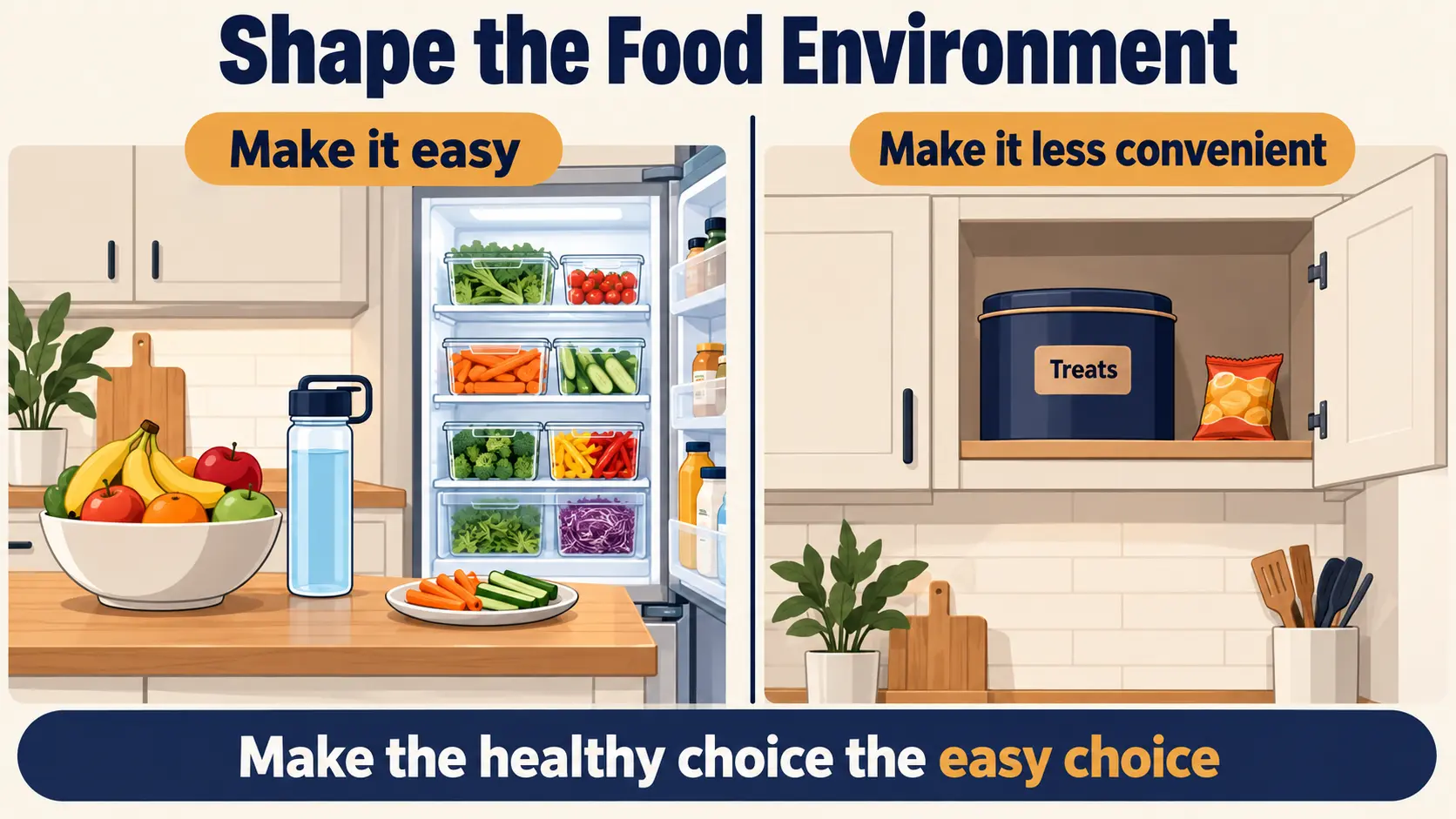
The food environment — what's visible, convenient and available — has a big influence on what people eat, often more than willpower. Small changes at home make healthier choices the default.
- Make helpful foods visibleA fruit bowl on the counter; washed, cut vegetables at eye level in the fridge; water within reach.
- Make less helpful foods less convenientStore treats out of sight, in opaque containers, or buy them in single portions rather than family packs.
- Set up the spaceSmaller plates and bowls (Lesson 19), serving food in the kitchen rather than at the table, and eating away from screens.
- Plan the defaultKeep a few quick, balanced "emergency meals" in the pantry and freezer for nights when there's no time or energy.
Grocery Shopping
| Stage | Strategies |
|---|---|
| Before | Plan a few meals for the week, check what's already at home, write a list grouped by section, and avoid shopping when very hungry |
| In the store | Stick mostly to the list; fill the trolley with vegetables, fruit, proteins and whole grains first; compare products with labels and unit prices (Lesson 19); notice end-of-aisle and checkout displays designed for impulse buys |
| Online or delivery | Saved lists and "regulars" make healthy staples automatic and reduce impulse buys |
| After | Wash and chop some produce straight away, portion bulk packs, and put helpful foods where they'll be seen |
Eating well on a budget
- Frozen fruit and vegetablesFrozen soon after harvest, so they're generally as nutritious as fresh — with less waste.
- Canned and dried legumesBeans, lentils and chickpeas are cheap sources of protein and fibre. Rinsing canned beans reduces their sodium; choose "no added salt" where possible.
- Budget proteinsEggs, canned fish, milk and yogurt, tofu, and cheaper cuts of meat cooked slowly.
- Whole-grain staplesOats, rice, whole-wheat flour and pasta, bought in larger packs.
- Seasonal and store-brand productsSeasonal produce is often cheaper; store brands are usually similar in nutrition — check the labels.
Using unit prices
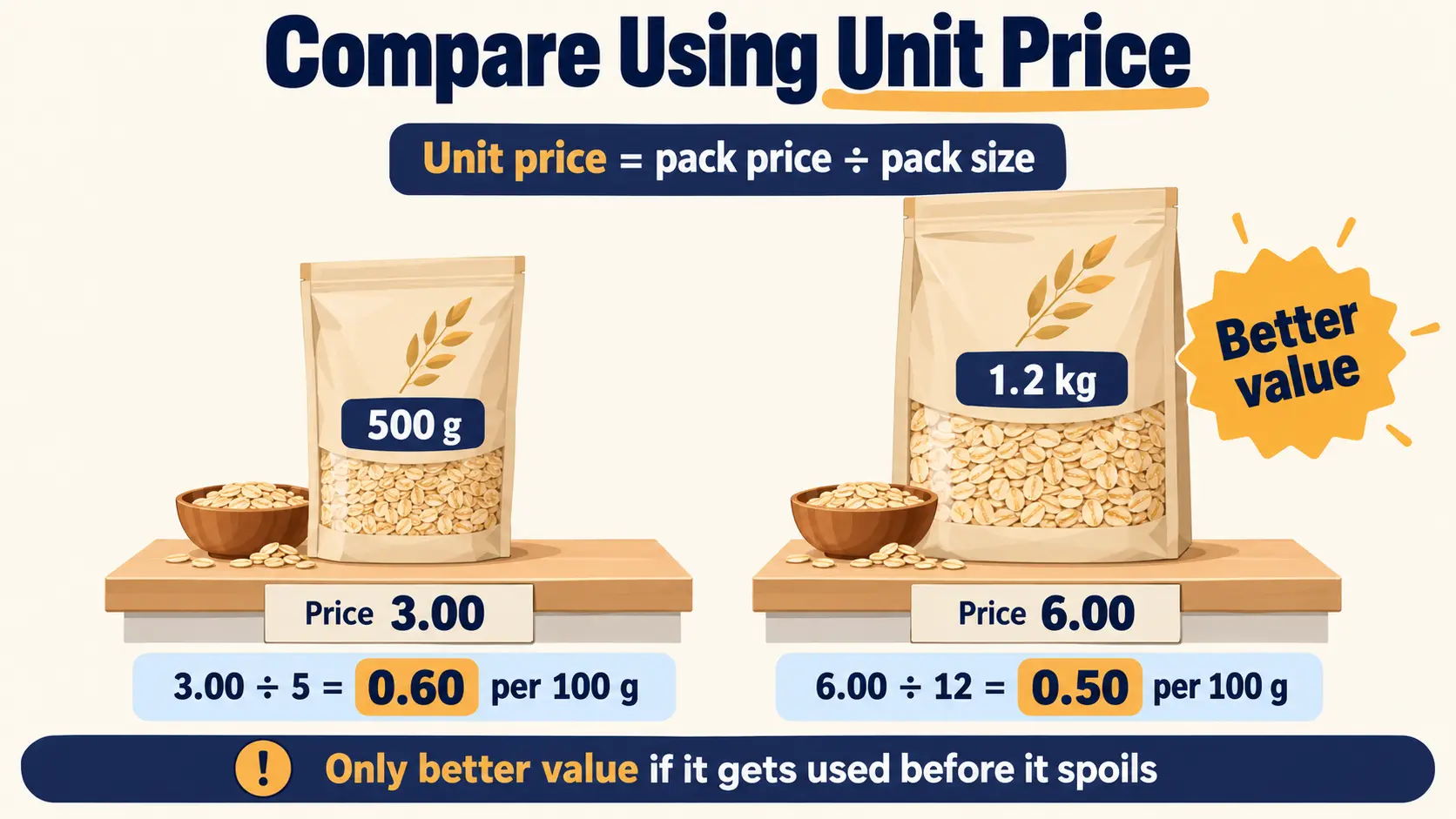
The unit price is the cost per standard amount — per 100 g, per kg or per litre. It's the fairest way to compare packs of different sizes:
Unit price = pack price ÷ pack size
For example, oats: a 500 g pack costs 3.00, which is 3.00 ÷ 5 = 0.60 per 100 g. A 1.2 kg pack costs 6.00, which is 6.00 ÷ 12 = 0.50 per 100 g. The larger pack is better value — as long as it gets used before it spoils. (The same maths works in any currency.)
Meal Planning and Prep
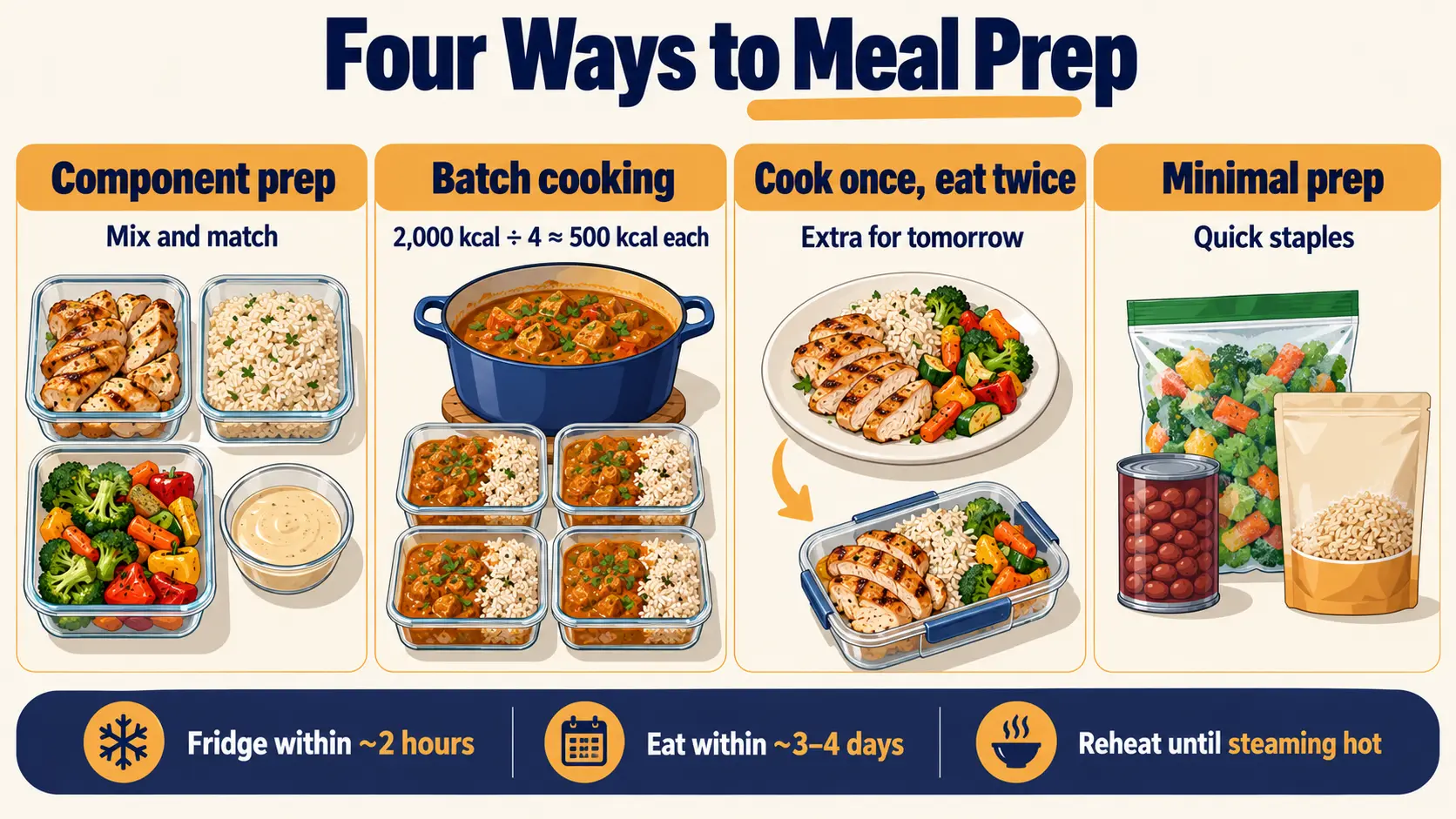
Meal prep doesn't have to mean identical boxed lunches. It can be as simple as preparing a few components that mix and match through the week.
| Approach | How it works | Best for |
|---|---|---|
| Component prep | Cook a protein, a grain, roasted vegetables and a sauce; combine differently each day | People who dislike eating the same meal repeatedly |
| Batch cooking | Make a large pot of soup, curry, stew or chilli and portion it for the fridge and freezer | Busy weeks and families |
| "Cook once, eat twice" | Make extra at dinner for tomorrow's lunch | Beginners — almost no extra effort |
| Minimal prep | Washed salad, frozen vegetables, canned beans, rotisserie or pre-cooked proteins, quick grains | Low time, energy or cooking confidence |
Batch cooking also makes portions easy: a pot that provides 2,000 kcal in total, split into 4 equal servings, gives about 500 kcal per serving.
Food safety for leftovers
- Cool and refrigerate promptlyWithin about 2 hours of cooking (sooner in hot weather). Shallow containers cool food faster.
- Eat within about 3–4 daysOr freeze portions for longer storage, labelled with the date.
- Reheat thoroughlyUntil steaming hot all the way through.
- Keep raw and cooked separateSeparate boards and containers for raw meat; wash hands and surfaces.
Food safety rules vary slightly between countries, so encourage clients to follow their local guidance.
Eating Out
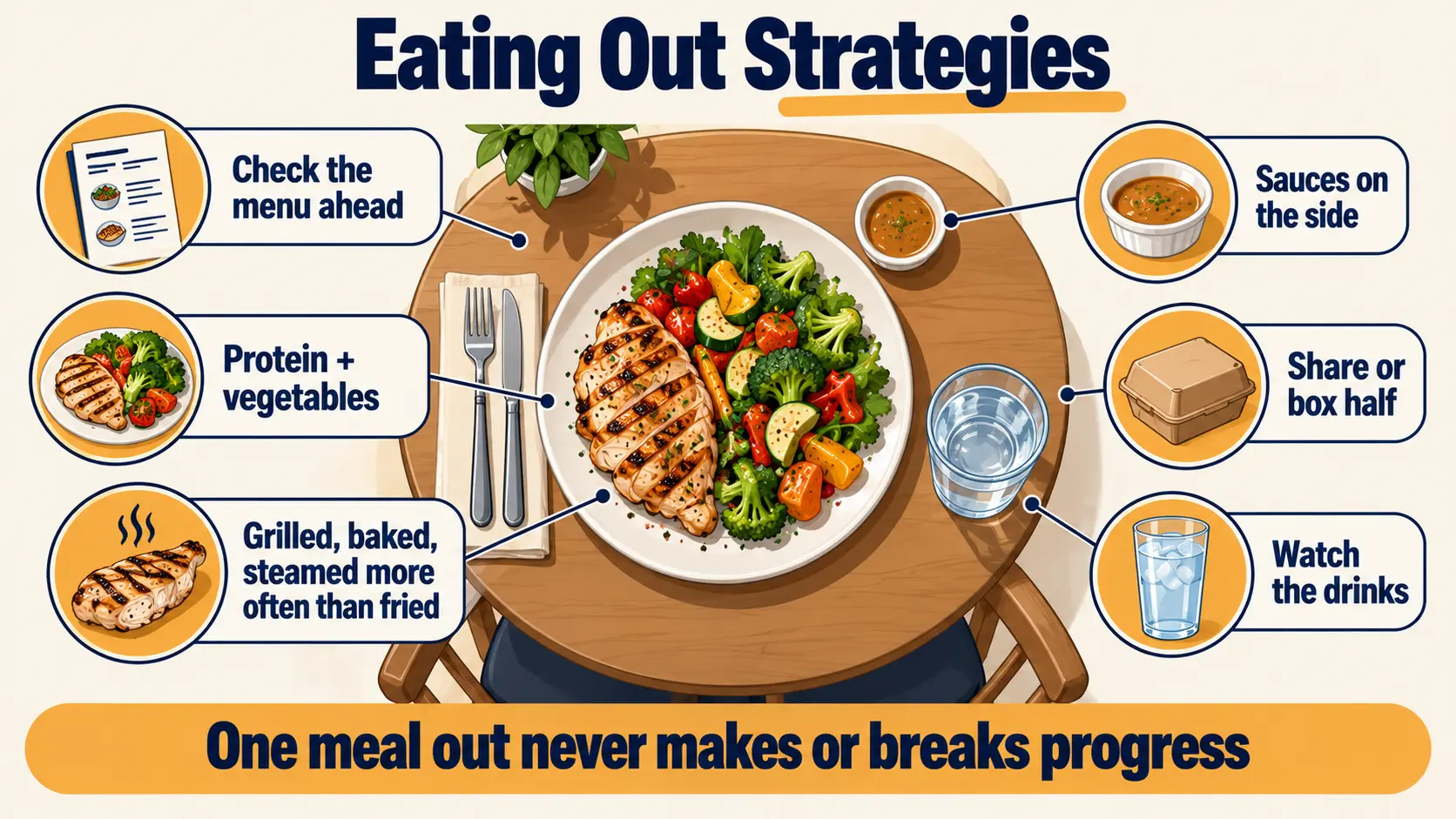
Restaurant and takeaway meals tend to be larger and higher in energy, fat and salt than home-cooked ones. But eating out is part of normal life — the goal is a few reliable strategies, not avoidance.
| Strategy | In practice |
|---|---|
| Plan ahead | Look at the menu online; decide before arriving hungry |
| Build around protein and vegetables | Choose a protein-based main and add a salad or vegetable side |
| Notice cooking methods | Grilled, baked, roasted, steamed or tandoor-style more often than fried, battered, creamy or "crispy" |
| Sauces and dressings on the side | Lets the client choose how much to add |
| Manage portions | Share a dish or starter, order a smaller size, or box part of the meal to take home |
| Watch drinks | Sugary drinks and alcohol add energy quickly; water alongside helps |
| Eat slowly and enjoy it | Notice hunger and fullness (Lesson 14); stop when comfortably satisfied |
Travel and Busy Schedules
- Pack portable snacksNuts, fruit, roasted chickpeas, protein bars, whole-grain crackers, single-serve nut butter.
- HydrateCarry a refillable bottle — flights and long drives are dehydrating (Lesson 11).
- Use what's availableHotel breakfasts (eggs, yogurt, fruit, oats), supermarkets for ready salads and fruit, a room fridge for basics.
- Keep a few anchorsPick one or two habits to keep — such as protein at breakfast and a daily walk — rather than trying to keep everything.
Social Events, Holidays and Alcohol
Food is part of culture, family and celebration. Coaching should help clients enjoy these moments — not fear them.
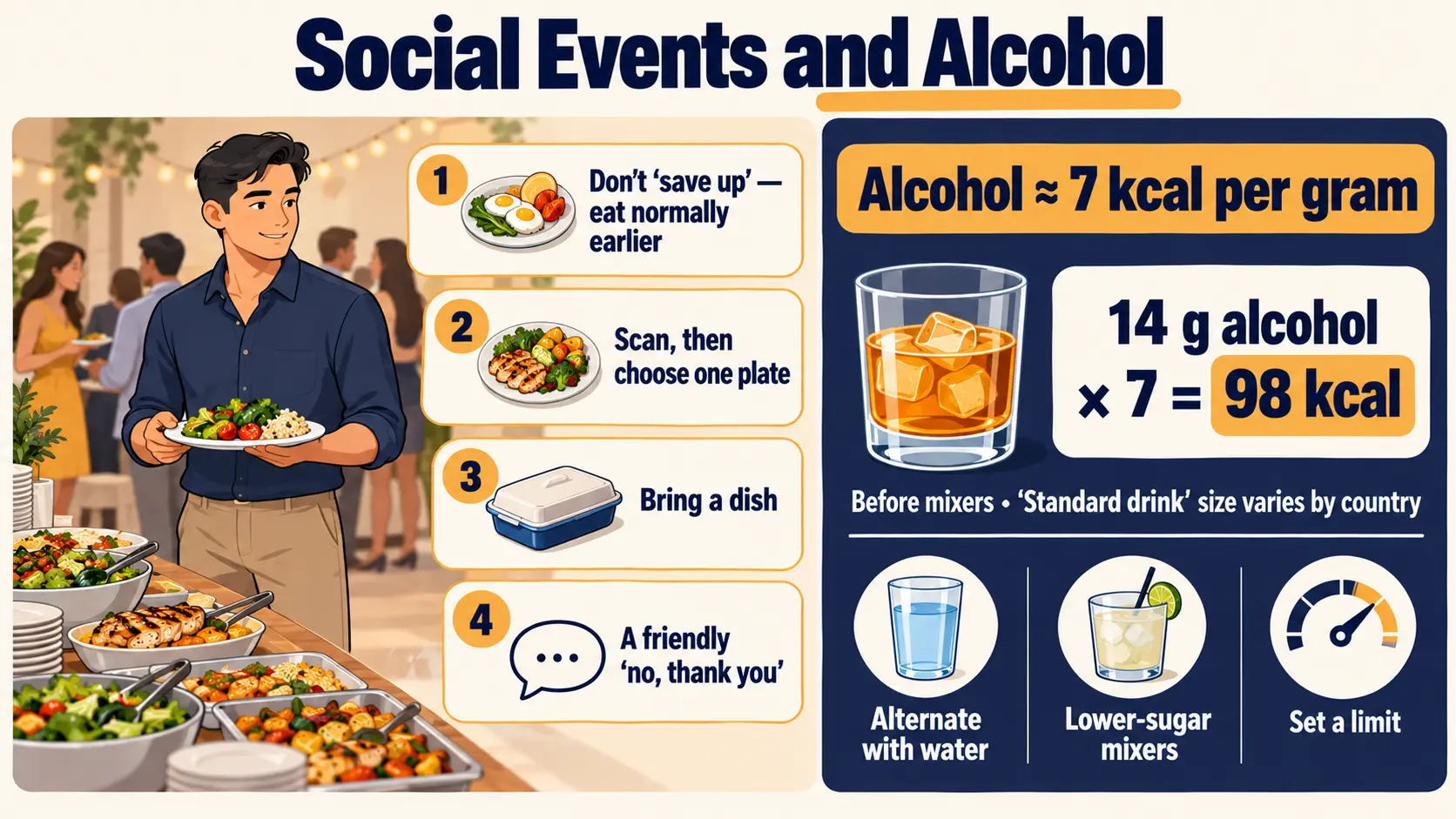
- Don't "save up"Skipping meals before an event usually leads to arriving very hungry and overeating. Eat normally earlier in the day.
- Scan, then chooseLook at the whole buffet first, then fill one plate with the foods you most want — and stand or sit away from the food table.
- Bring a dishOffering a balanced dish guarantees at least one option that fits the client's goals.
- Practise a polite "no, thank you"A friendly, prepared phrase makes it easier to handle food pushing without offence.
Alcohol
Alcohol provides about 7 kcal per gram (Lesson 9) with no essential nutrients, can lower inhibitions around food, and may affect sleep and recovery. What counts as a "standard drink" varies between countries — for example, about 10 g of alcohol in some countries and 14 g in others. One drink containing 14 g of alcohol provides about 14 × 7 = 98 kcal from the alcohol alone, before any mixers. Strategies include alternating each drink with water, choosing lower-sugar mixers, and deciding on a limit in advance. Health authorities generally advise that less alcohol is better for health.
Flexible, Not Perfect
| Rigid restraint | Flexible restraint | |
|---|---|---|
| Approach | Strict, all-or-nothing rules ("I never eat dessert") | General guidelines with room for all foods |
| After a slip | "I've blown it" — often leads to giving up for the day or week | "That's fine" — back to the usual pattern at the next meal |
| Long-term | Linked with more overeating and weight cycling | Linked with better long-term weight management and a healthier relationship with food |
The all-or-nothing reaction to a slip is sometimes called the "what-the-hell effect". Helping clients see that one meal, day or event doesn't undo their progress (Lesson 14) is one of the most useful things a coach can do.
The situation: Leila works long shifts, has two young children, and buys takeaway four nights a week because "there's never time".
Environment: she keeps frozen vegetables, eggs, canned lentils, wraps and quick-cook rice at home for 10-minute "emergency meals".
Planning and prep: on her day off she spends 60 minutes cooking a big pot of chicken and vegetable curry and a tray of roasted vegetables — 2,000 kcal of curry split into 4 portions of about 500 kcal each.
Eating out: takeaway stays on Friday as a family treat; she chooses a grilled or tandoor-style dish with a vegetable side.
Result: takeaway drops from four nights to one, and her grocery spending falls — without any foods being banned.
For a practical prep routine, see The 2-Hour Sunday Reset: A Flexible Meal Prep Framework.
12 questions in the style of the CNC exam. Score 70%+ to mark this lesson complete.
- Shape the environment: make helpful foods visible and easy, less helpful foods less convenient.
- Plan, shop with a list, and compare with unit prices; frozen produce, legumes, eggs and oats are budget-friendly staples.
- Prep components, batch cook, or "cook once, eat twice"; refrigerate leftovers within ~2 hours and eat within ~3–4 days.
- Eating out: protein and vegetables, lighter cooking methods, sauces on the side, manage portions and drinks.
- For travel and events, pack snacks, keep a few anchors, and don't "save up"; alcohol is ~7 kcal/g.
- Flexible restraint beats rigid rules — one meal never makes or breaks progress.
Before moving to Lesson 21:
- Make one change to your kitchen so a helpful food is the easiest choice.
- Compare the unit prices of two pack sizes of a staple you buy.
- Plan three "emergency meals" you could make in 10 minutes.
- Complete the knowledge check above and review any question you missed.