Every cardio session in Lesson 8 works because of a system underneath it: the heart, lungs, and blood vessels delivering oxygen to working muscles. This lesson covers how that system functions, and how it changes both immediately (acutely) and over months of training (chronically).
Understanding this system explains why the talk test from Lesson 8 works as a proxy for intensity, and why a well-trained client's resting heart rate tends to be lower than an untrained client's. It's tempting to treat this chapter as background reading you can skim, but the terms introduced here — cardiac output, stroke volume, VO2 max — are the actual vocabulary Lesson 8's intensity-monitoring methods are built out of.
How the Heart and Lungs Support Exercise
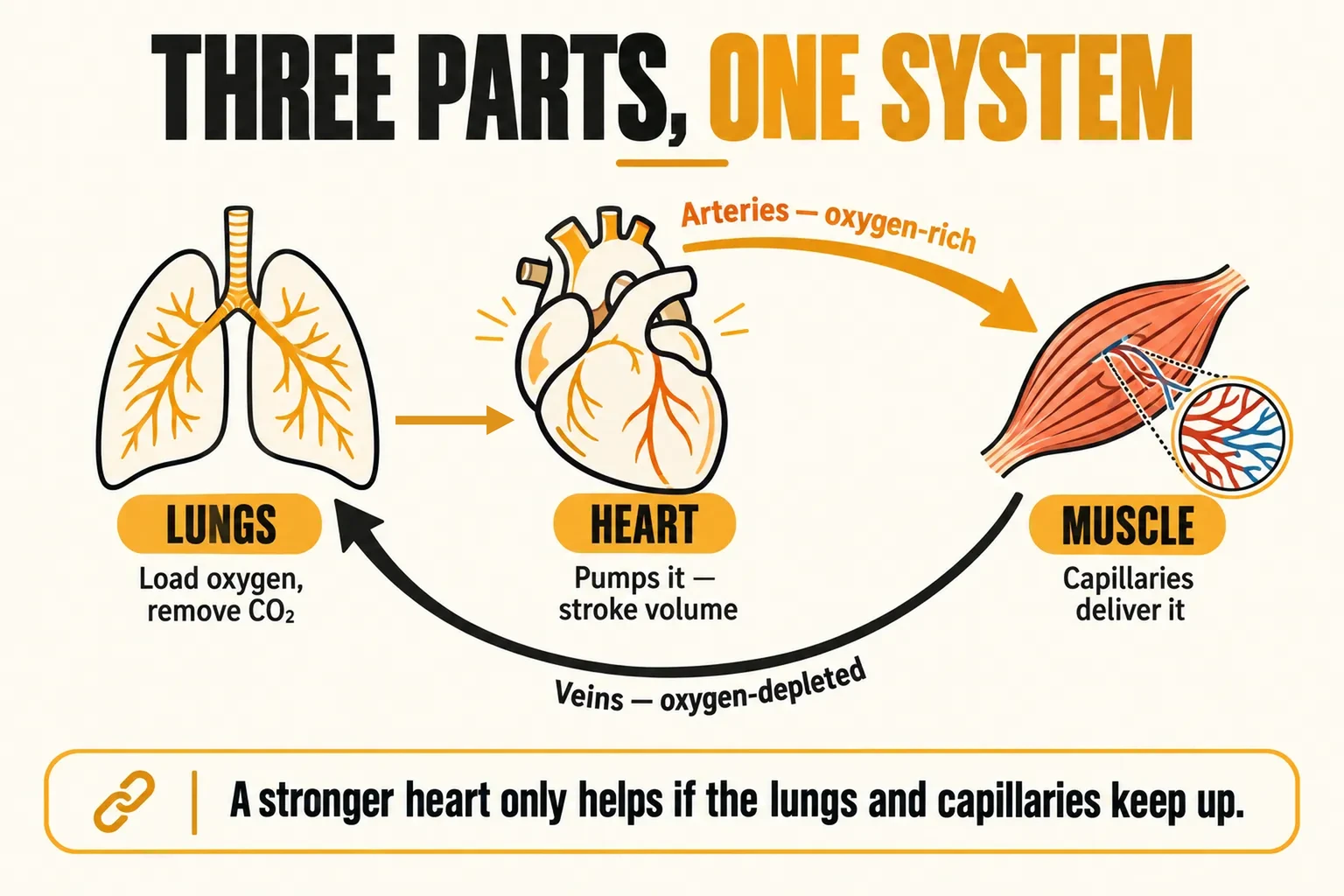
- HeartA four-chambered pump that circulates oxygen-rich blood to working muscles and returns oxygen-depleted blood to the lungs.
- LungsThe site of gas exchange — oxygen enters the bloodstream and carbon dioxide, a waste product of metabolism, is removed.
- Blood vesselsArteries carry oxygen-rich blood away from the heart, veins return oxygen-depleted blood to it, and capillaries are where the actual oxygen/nutrient exchange with tissue happens.
None of these three work independently. A stronger heart (more stroke volume) is only useful if the lungs can actually load enough oxygen into the blood it's pumping, and neither matters to a working muscle unless enough capillaries have developed to actually deliver that blood where it's needed — which is exactly why chronic cardiorespiratory training improves all three together, not just one in isolation.
Oxygen Transport and VO2
How much oxygen a client's body can deliver and use during exercise is a core measure of cardiorespiratory fitness:
| Term | What it means |
|---|---|
| Cardiac output | The amount of blood the heart pumps per minute — calculated as heart rate × stroke volume |
| Stroke volume | The amount of blood pumped by the heart with each single beat |
| VO2 max | The maximum rate at which the body can consume and use oxygen during intense exercise — a widely used marker of cardiorespiratory fitness |
A higher stroke volume means the heart can deliver more oxygen-rich blood per beat, which is part of why trained clients often have a lower resting heart rate than untrained clients — the same heart is doing more work per beat.
Acute vs. Chronic Cardiorespiratory Adaptations
| Type | Timeframe | Examples |
|---|---|---|
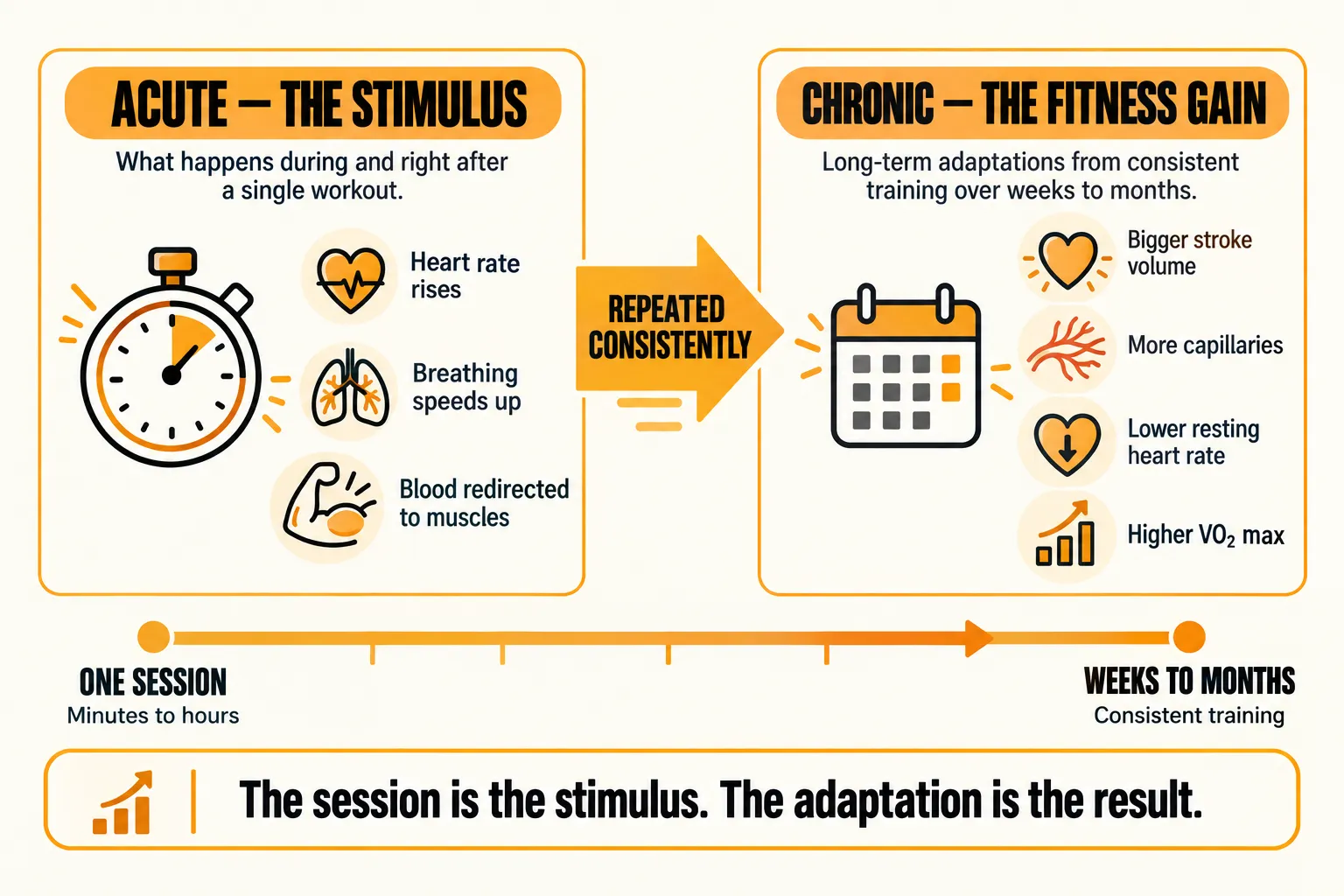
| Acute adaptations | Immediate, during a single session | Elevated heart rate, increased breathing rate, redirected blood flow toward working muscles |
| Chronic adaptations | Develop over weeks to months of consistent training | Increased stroke volume, increased capillary density, lower resting heart rate, higher VO2 max |
This is the same acute-vs-chronic distinction that runs through the whole course: what happens in a single session (acute) is the stimulus; what happens over time with consistent training (chronic) is the actual fitness gain — the same logic behind Lesson 1's General Adaptation Syndrome.
Putting the Numbers Together: A Worked Example
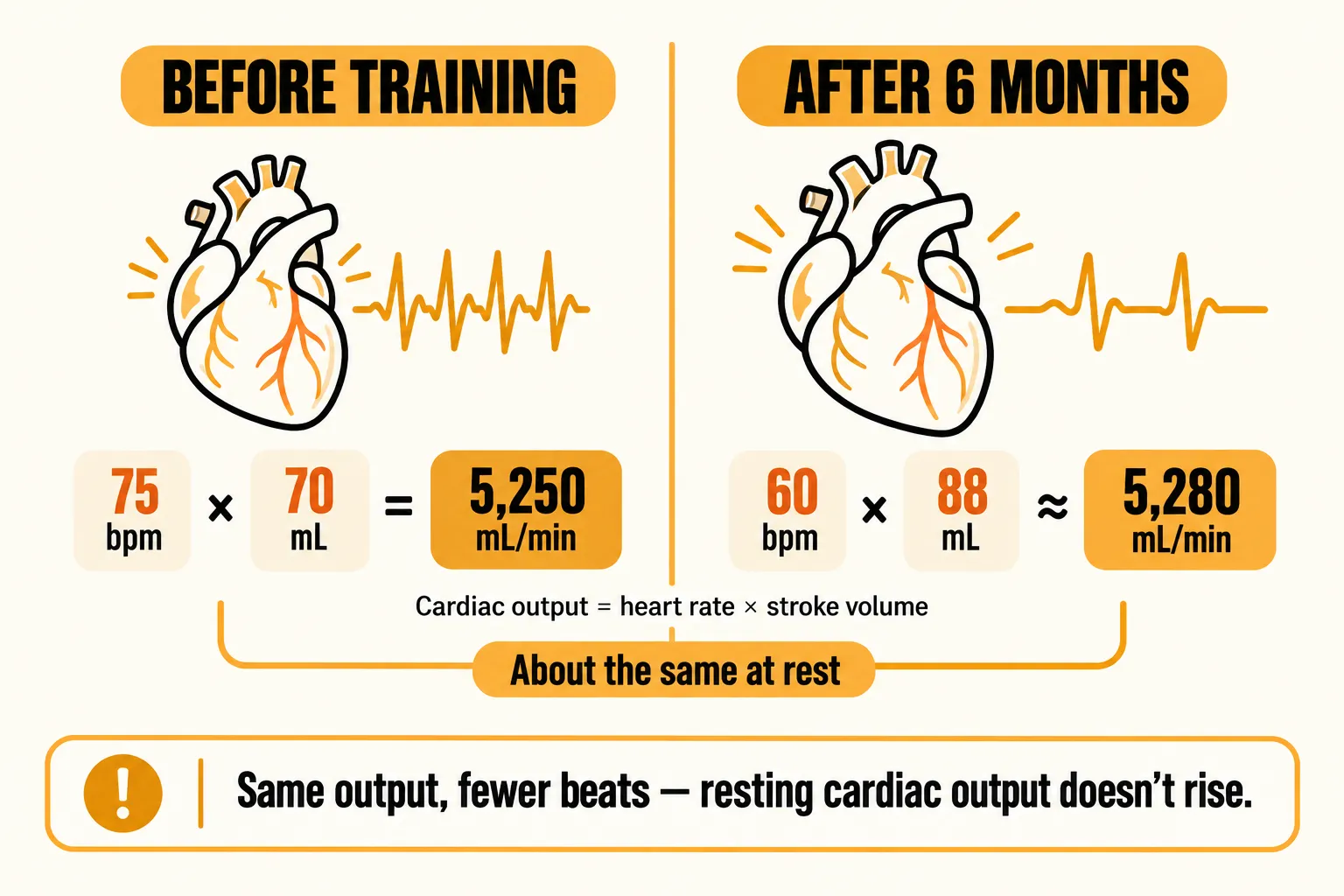
Consider a client's resting cardiac output before and after six months of consistent cardio training. Before training: resting heart rate of 75 beats per minute, stroke volume of about 70 mL per beat, giving a resting cardiac output around 5,250 mL/min. After six months: resting heart rate drops to 60 beats per minute, but stroke volume has risen to roughly 88 mL per beat — cardiac output stays close to the same 5,250 mL/min the body needs at rest, just achieved with a more efficient heart doing less work per minute to deliver it.
That's the whole chronic-adaptation story in one number: the body doesn't need a higher resting cardiac output than it started with — it needs the same output produced more efficiently, freeing up reserve capacity for the much higher cardiac output that intense exercise actually demands.
8 questions, modeled on NASM's real exam style. Score 70%+ to mark this lesson complete.
- The heart pumps blood, the lungs handle gas exchange, and blood vessels transport oxygen to and waste from working tissue.
- Cardiac output = heart rate × stroke volume; VO2 max measures maximum oxygen consumption during intense exercise.
- Acute adaptations happen immediately during a session (elevated heart rate); chronic adaptations build over weeks/months (increased stroke volume, lower resting heart rate).
- A low resting heart rate in a trained client reflects fitness — but context and screening always matter more than a number alone.
- Resting cardiac output generally stays about the same after training — what improves is the heart rate/stroke volume combination that produces it, freeing up reserve capacity for intense exercise.
Before moving to Lesson 4:
- Write the cardiac output formula from memory.
- List two acute and two chronic cardiorespiratory adaptations.
- Using the worked example's numbers, explain in one sentence why resting cardiac output stayed roughly the same even though fitness clearly improved.
- Complete the knowledge check above and review any question you missed before moving on.