This lesson continues Domain 5 with two more sub-competencies: the ten components of proactive health and wellbeing NBHWC's outline names, and how coaching supports prevention and self-management of common chronic conditions. The core distinction to hold onto throughout: a coach supports the daily habits and follow-through behind a health plan — a coach never diagnoses, treats, or adjusts one.
Lesson 14 opened Domain 5 with the models coaching is built on — health, wellness, wellbeing, and the eight dimensions of wellness. This lesson moves from those models to something more concrete: the specific, actionable components a coach actually works on with a client, and the specific conditions NBHWC expects a coach to recognize well enough to support — without ever stepping into a medical provider's role.
The Ten Components of Proactive Health and Wellbeing
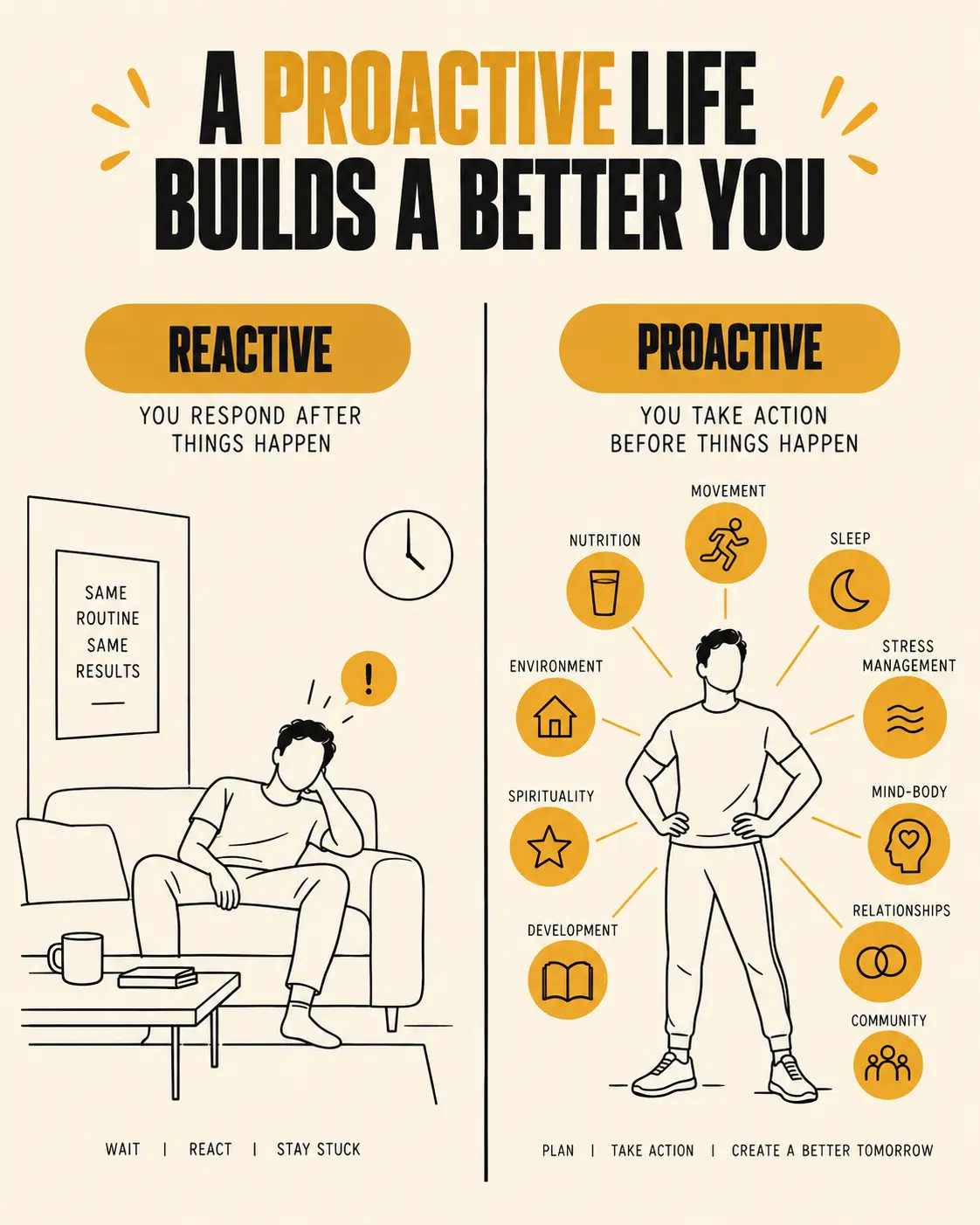
NBHWC's outline moves from the eight dimensions of wellness (Lesson 14) to a more specific, action-oriented list: ten components of proactive health and wellbeing. Where the dimensions describe broad areas of a client's life, these components describe the day-to-day building blocks a coach actually works on with a client, session to session.
- Physical activity, exercise & movementRegular movement suited to a client's ability, preferences, and goals.
- Food and waterNutrition and hydration habits that support daily functioning.
- Surroundings and environmentThe physical spaces a client lives and works in, and how they support or undermine daily habits.
- Spirituality, meaning & purposeA sense of direction and significance beyond day-to-day tasks.
- Personal & professional developmentOngoing growth in skills, knowledge, and career or life direction.
- Sleep and restSufficient, quality sleep and dedicated recovery time.
- Stress management, recovery & rechargeHow a client notices, processes, and recovers from stress.
- Mind-body connectionAwareness of how mental and emotional states show up physically, and vice versa.
- Relationships and communicationThe quality and health of a client's connections with the people around them.
- Community and belongingFeeling part of something larger than oneself, beyond one-on-one relationships.
Some overlap with Lesson 14's eight dimensions is intentional — sleep, relationships, and stress management show up in both lists, because NBHWC's outline names them at two different levels of specificity: dimensions as broad areas of life, and components as the practical, coachable targets within those areas. A coach doesn't need to keep the two lists rigidly separate in practice; what matters is recognizing both when they appear in a client's goals.
Why Proactive Habits Matter for Chronic Disease
These ten components aren't just a wellness checklist — NBHWC's outline pairs them directly with the next sub-competency because the same daily habits that build proactive wellbeing are very often the habits that prevent, or help manage, chronic disease. Regular movement, food and water habits, sleep, and stress management aren't separate from chronic-disease prevention; for most of the conditions below, they're a first-line part of it.
Supporting Prevention and Self-Management of Chronic Disease
NBHWC's outline names specific conditions a coach should be able to recognize and support a client around — not to diagnose or treat, but to understand well enough to coach effectively alongside a client's medical team.
- Cardiovascular diseaseConditions affecting the heart and blood vessels.
- HypertensionHigh blood pressure, often managed alongside lifestyle change.
- Lipid abnormalitiesCholesterol and other blood-fat levels outside a healthy range.
- Diabetes and prediabetesBlood-sugar regulation conditions, often highly responsive to daily habits.
- Metabolic syndromeA cluster of risk factors — including blood pressure, blood sugar, and waist size — that raise cardiovascular risk together.
- ObesityA chronic condition involving excess body fat, with its own daily-habit dimension.
- Dementia and Alzheimer's diseaseProgressive conditions affecting memory and cognitive function.
- Mental health conditionsIncluding depression and anxiety, which frequently coexist with physical chronic disease.
- Substance usePatterns of use that affect a client's health and daily functioning.
- Sleep disordersConditions like insomnia or sleep apnea that disrupt restorative sleep.
Notice what this list is, and isn't. It's a set of conditions a coach should recognize by name, understand in plain terms, and know enough about to ask good questions and set realistic goals around. It is not a diagnostic checklist, and a coach is never the one determining whether a client actually has one of these conditions.
What "Self-Management Support" Actually Means
NBHWC's own term for a coach's role here is self-management support — a specific, bounded idea worth being precise about, because it's easy to blur the line between supporting a treatment plan and practicing medicine.
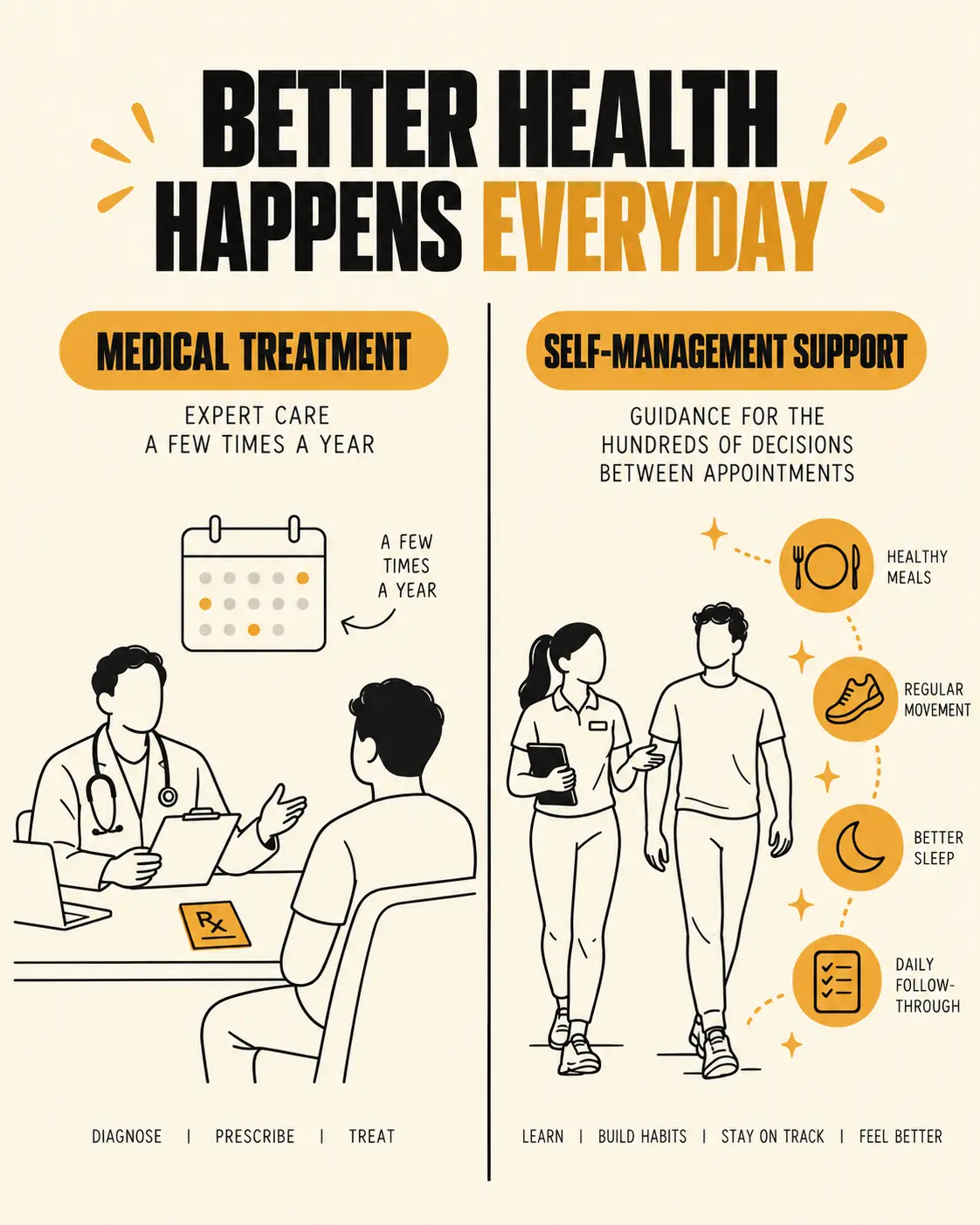
| Medical Treatment | Coaching's Self-Management Support |
|---|---|
| Diagnosing a condition and ordering or interpreting lab tests. | Helping a client understand and follow through on habits tied to their plan. |
| Prescribing, adjusting, or discontinuing medication. | Supporting daily routines — movement, meals, sleep, stress — that reinforce that plan. |
| Clinical monitoring of disease progression or lab values. | Day-to-day accountability, motivation, and problem-solving around real-world barriers. |
The right side of that table is real, valuable work — a medical provider sets a treatment plan in a fifteen-minute appointment a few times a year; a coach is often the person helping a client actually live that plan out across the hundreds of decisions between those appointments.
Staying Inside a Coach's Real Scope
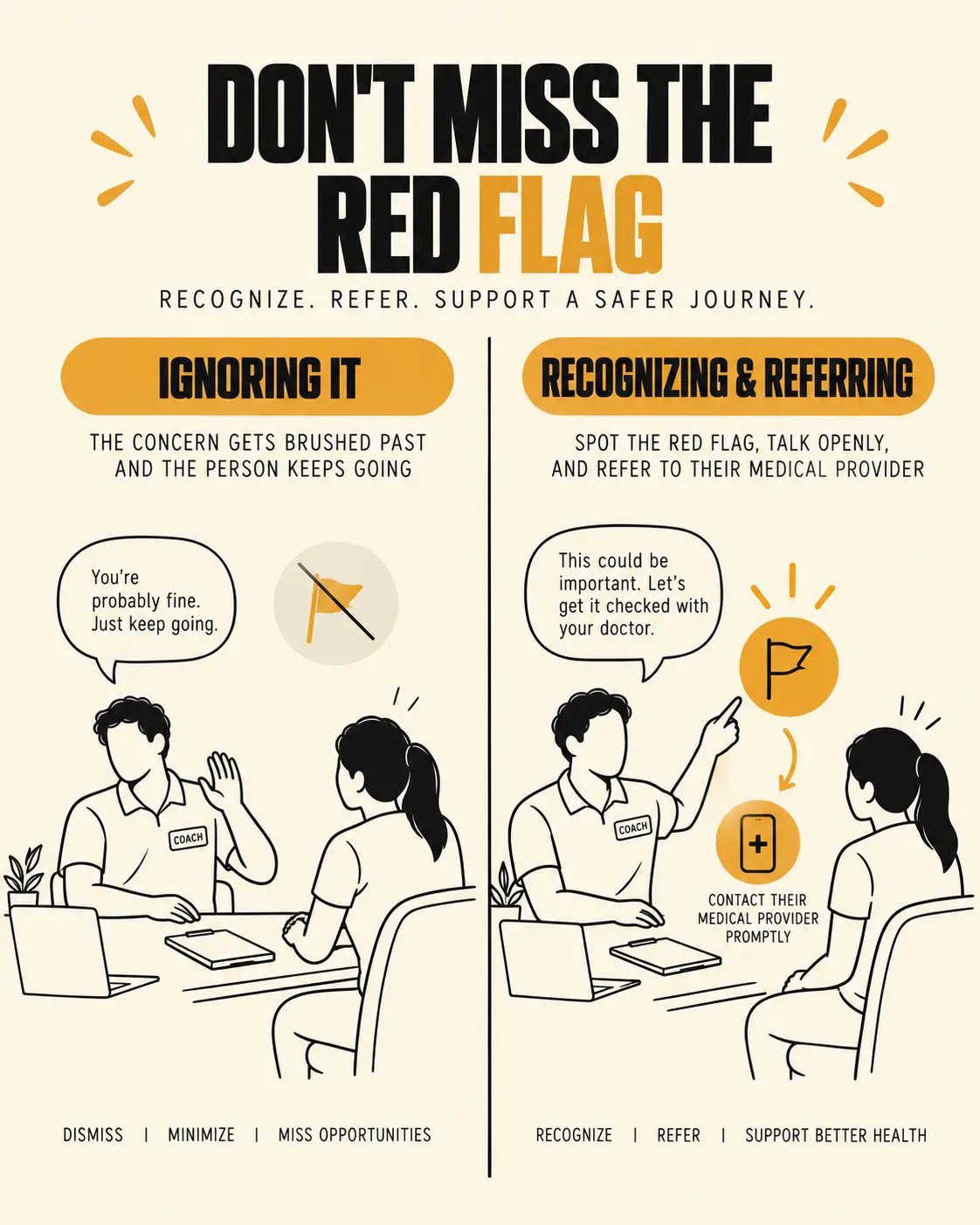
Lesson 12 covered scope of practice in general terms. Chronic disease is where that boundary gets tested most often in real sessions — a client with a diagnosis will naturally bring up symptoms, test results, and medication questions, because those things are part of their life. The skill isn't refusing to engage; it's engaging with the habit and motivation side while routing anything clinical back to the client's medical team.
Midway through a session, a client managing hypertension mentions they've been having occasional chest tightness and shortness of breath climbing stairs — new, over the past week. The coach doesn't guess at a cause or wait to see if it's worth mentioning next session. They name it as a red flag, encourage the client to contact their medical provider promptly (or seek urgent care if it worsens), and note the conversation. Once that's addressed, the coaching relationship continues as normal — this single moment doesn't end the coaching relationship, it just gets routed to the right person first.
What Comes Next in Domain 5
This lesson covered the ten components of proactive health and wellbeing, the chronic conditions NBHWC's outline names, and what self-management support means in contrast to medical treatment. Lesson 16 closes out Domain 5 — and the domain-specific content of this course — with health and healthcare disparities, the structural and social determinants of health, and health literacy: the wider context a coach needs to understand around every client they work with.
8 questions on the ten components of proactive health and wellbeing, the chronic conditions NBHWC's outline names, self-management support, and staying inside a coach's scope. NBHWC doesn't publish a fixed pass/fail line for its own exam, so this knowledge check doesn't invent one either — you'll get a raw score and a rationale for every question instead.
- NBHWC's outline names ten components of proactive health and wellbeing — the practical, day-to-day building blocks a coach works on with clients.
- The same proactive habits that build wellbeing are often the first-line habits behind preventing and managing chronic disease.
- NBHWC names specific conditions a coach should understand — cardiovascular disease, hypertension, lipid abnormalities, diabetes/prediabetes, metabolic syndrome, obesity, dementia/Alzheimer's, mental health conditions, substance use, and sleep disorders.
- Self-management support means helping a client build habits and follow-through around a plan their medical provider has already set — never diagnosing, prescribing, or adjusting treatment.
- A concerning new symptom is always a red flag to refer, not a puzzle for the coach to diagnose.
- This lesson continues Domain 5. Lesson 16 closes the domain with health equity, social determinants, and health literacy.
Before moving to Lesson 16:
- Memorize the ten components of proactive health and wellbeing, and notice which ones overlap with Lesson 14's eight dimensions of wellness.
- Review the list of chronic conditions NBHWC names, and practice describing each one in one plain sentence.
- Practice explaining the difference between medical treatment and self-management support out loud, in your own words.
- Think through how you'd respond if a client mentioned a concerning new symptom mid-session, and complete the knowledge check above.