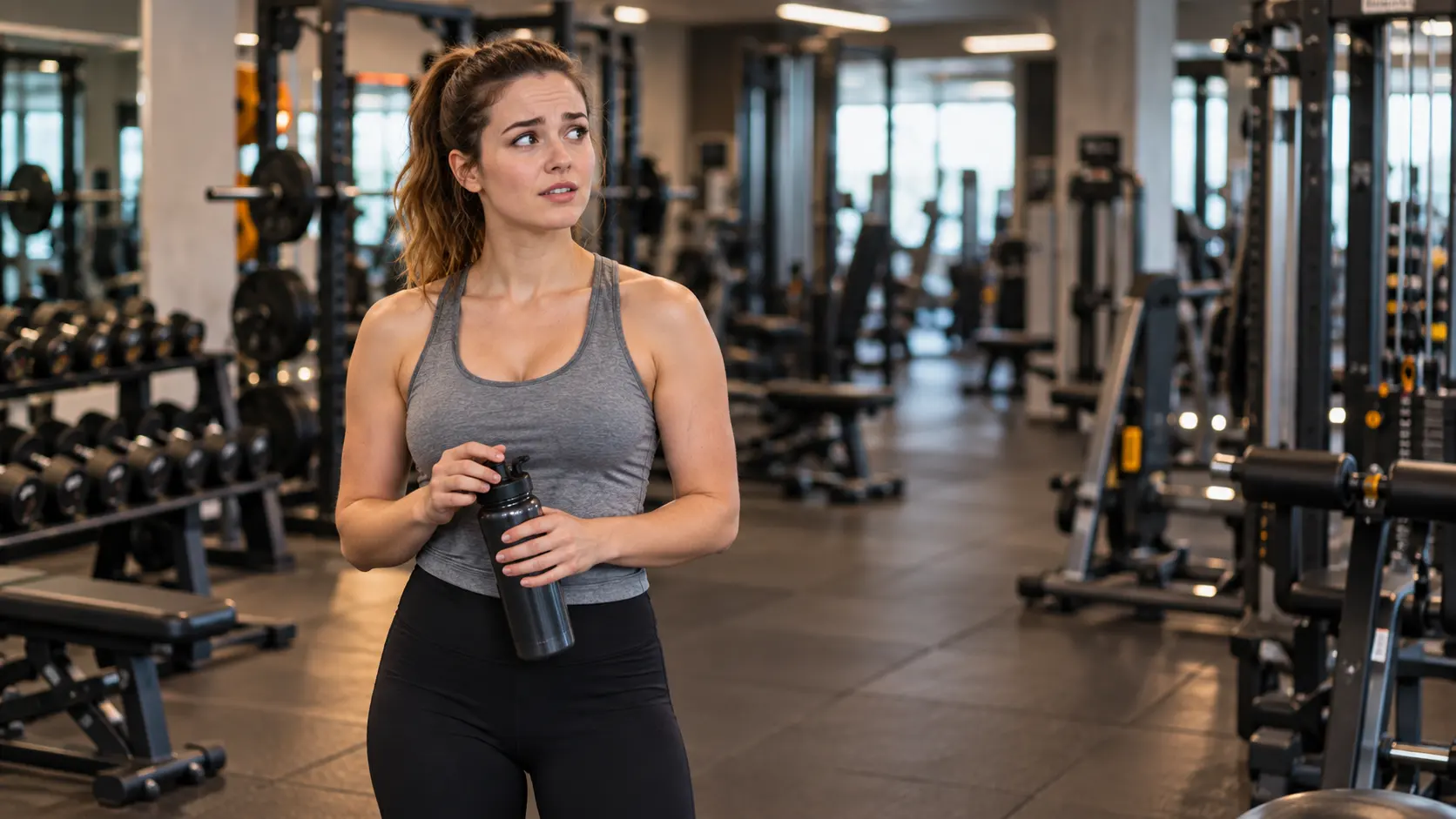
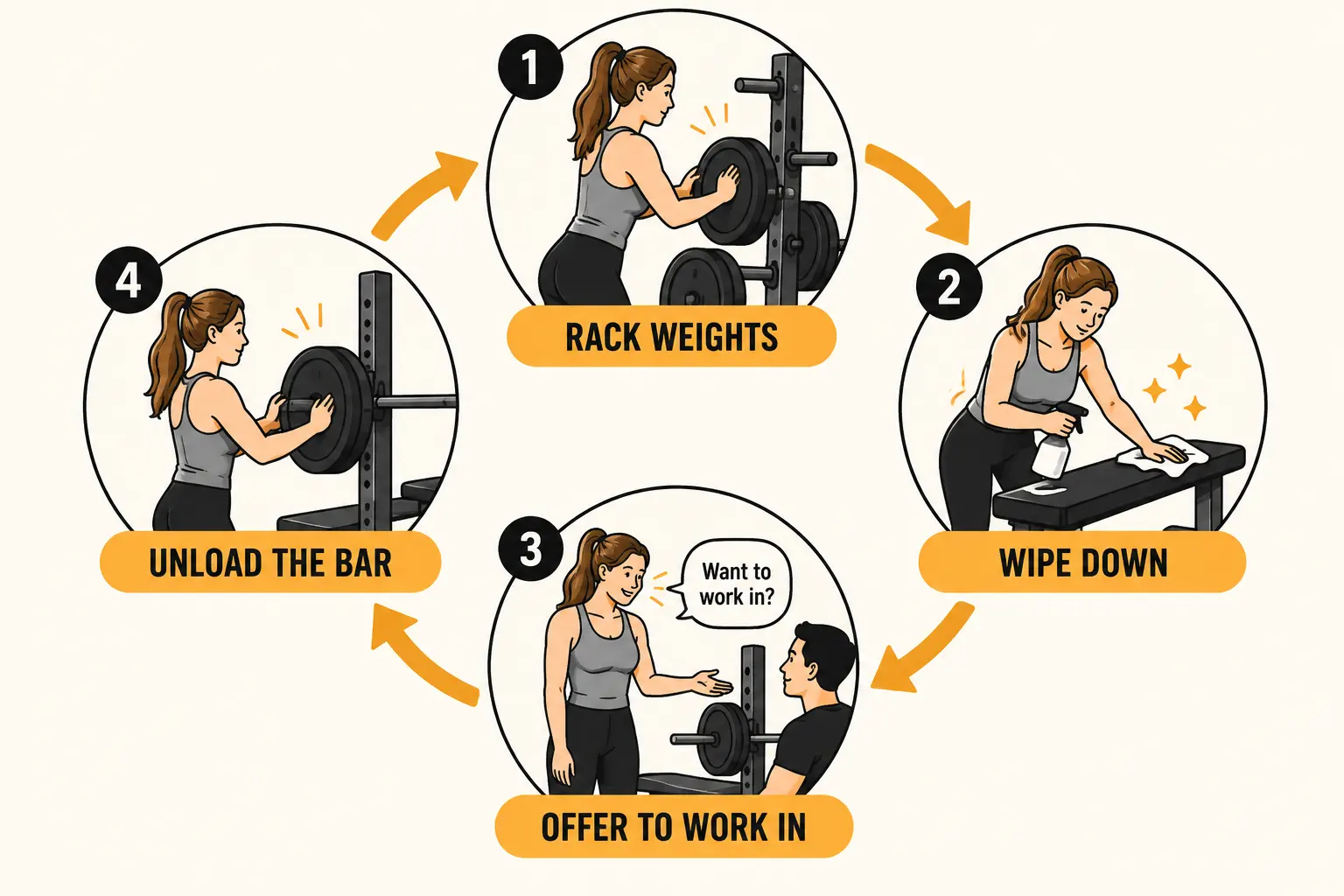
- Re-racking weights after use is close to universal gym etiquette and the single most-cited beginner mistake by gym regulars.
- "Working in" — alternating sets with someone else on the same equipment — is standard, expected practice during busy hours, not an imposition.
- A quick wipe-down of equipment after use takes seconds and is expected at nearly every gym that provides sanitizing supplies on the floor.
- Most etiquette breaches by beginners are unintentional — the result of nobody explaining the unwritten rules, not carelessness.
- Unsolicited form advice is generally considered poor etiquette, even when well-intentioned, unless there's a genuine safety concern.
Nobody hands you a rulebook when you sign up for a gym membership, but everyone already on the floor is quietly following one. That gap — between rules that are real and expected, and rules nobody actually explains — is where most beginner anxiety about gyms comes from. This is the explainer that should exist on day one: every unwritten rule, organized by category, so you can walk onto a gym floor without wondering if you're about to annoy someone.
Why Gym Etiquette Actually Matters
Gym etiquette isn't about strict formality — it's about the practical reality of a shared, often crowded space where people are trying to train efficiently around each other. Most of what reads as "etiquette" is really just a shared agreement that keeps a gym floor functional: equipment gets used and released at a reasonable pace, hygiene stays manageable across dozens of daily users, and people can focus on their own workout without unnecessary interruption. Beginners aren't disliked for not knowing these things — they're just not told, because for anyone who's been going regularly, the rules have become invisible habit.
Equipment Rules Everyone Follows (And Assumes You Know)
How "Working In" Actually Works
"Working in" is the single most useful piece of gym etiquette nobody explains upfront, and it solves the equipment-hogging problem for both sides. It means alternating turns with someone else on the same piece of equipment — you do a set, they do a set, back and forth — rather than one person occupying a machine or rack for their entire workout while others wait.
- If you want to work in: wait for a natural pause between their sets, then ask directly and briefly — "Mind if I work in between sets?" A clear no-pressure ask is always well received.
- If someone asks to work in with you: saying yes is the norm, especially during busy hours. It's rarely seen as an imposition — most regulars expect and welcome it.
- Keep the alternating pace reasonable. Don't stretch your rest periods out just because someone else is using the "gap" — that defeats the purpose for both of you.
- If your working weights are very different, it's fine to say so upfront — "I'm doing heavier singles, might take me a bit longer between sets" sets expectations without anyone needing to guess.
Personal Space and Hygiene Rules
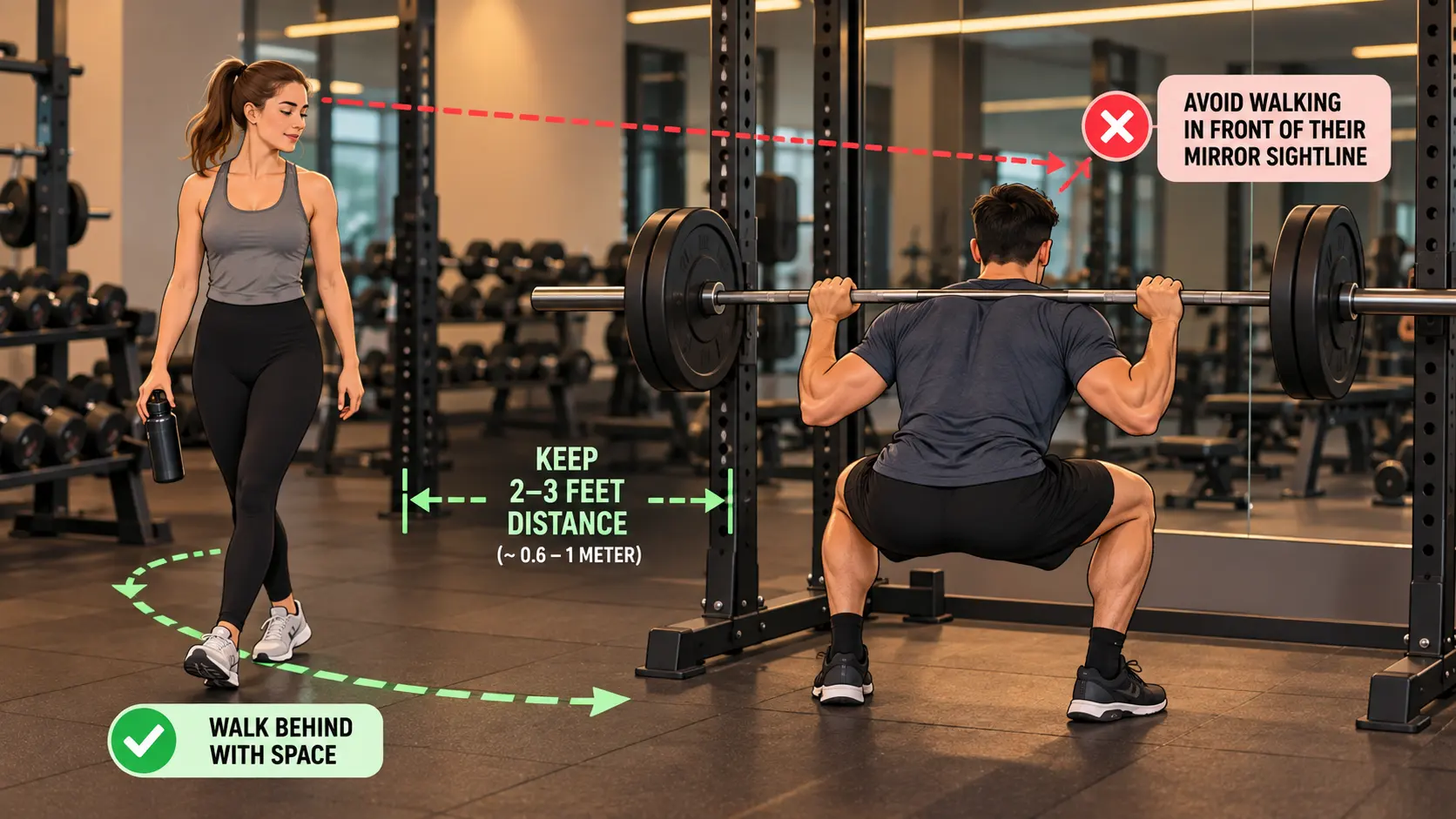
- Stay out of the mirror line. Free-weight areas with mirrors are often used by lifters checking their form mid-set — walking directly in front of someone is a common, easily avoidable annoyance.
- Keep a reasonable distance during a working set. Standing directly behind or beside someone mid-lift, especially on a barbell movement, can be distracting and occasionally unsafe.
- Bring a towel and use it. Even a small hand towel for wiping your own sweat, separate from equipment wipe-downs, is a low-effort courtesy that's noticed when it's missing.
- Wear gym-appropriate, reasonably clean clothing. This isn't about looking a certain way — it's a practical hygiene expectation in a shared, high-contact space.
- Keep headphone volume to yourself. Music or a call loud enough for neighboring equipment to hear is one of the more common low-grade irritations on a gym floor.
Social and Communication Etiquette
- Don't offer unsolicited form corrections or advice. Even well-intentioned feedback can come across as condescending — most gyms have staff or trainers whose job is exactly this. The exception is a genuine safety issue, like an unstable bar setup, where a brief, polite heads-up is appropriate regardless of whether it was asked for.
- Phones are fine between sets, not as a seat-holding device. Checking a workout app or timer is normal; sitting on shared equipment for several minutes scrolling while others wait is the actual problem — not phone use itself.
- Ask before photographing or filming near others. Content creation is common in gyms now, but background strangers generally haven't consented to being filmed — frame tightly or ask first.
- A nod or brief "how's it going" is enough. Most gym regulars aren't looking for conversation mid-workout — friendly but brief is the default social register.
Group Class and Locker Room Etiquette
- Arrive a few minutes early to group classes. Walking in after the warm-up has started disrupts the instructor's flow and can be a genuine safety issue if you skip the mobility prep everyone else did.
- Take a spot at the back for your first few sessions. This isn't about hiding — it gives you room to modify or pause without blocking anyone else's sightline to the instructor.
- Don't linger on locker room benches with your full bag spread out during busy hours — a quick, efficient changeover is the shared expectation.
- Shower before, not just after, if you're coming from a long day. A quick pre-workout rinse when reasonable is appreciated in shared, close-contact training environments like group classes.
Safety-Related Etiquette
A few etiquette norms exist specifically because they prevent injury, not just annoyance, and are worth treating as non-negotiable rather than optional courtesy:
- Use clips/collars on barbells when loading plates — an unclipped bar can slide and tip, which is a real hazard to you and anyone nearby.
- Ask for a spot rather than assuming on heavy bench or squat attempts — most experienced lifters are glad to help but shouldn't be expected to notice and step in unprompted.
- Don't walk behind someone mid-squat or deadlift — the risk of a collision during a heavy lift is genuinely dangerous, not just distracting.
- Rack weights fully before walking away — a plate left balanced or a bar left loaded unattended is a tripping and dropping hazard for the next person.
The Etiquette Mistakes That Annoy Regulars Most
If you only take five things away from this guide, these are the ones gym regulars mention most often when asked what actually bothers them:
- Not re-racking weights — by a wide margin, the most consistently cited frustration.
- Sitting on a machine scrolling a phone while others visibly wait to use it.
- Skipping the wipe-down, especially on shared cardio equipment.
- Walking through someone's mirror sightline mid-set.
- Giving unsolicited form advice to a stranger who didn't ask for it.
Final Thoughts
None of gym etiquette is complicated once it's spelled out — the difficulty is entirely that nobody spells it out. Every rule in this guide exists for a practical reason: keeping shared equipment usable, keeping a crowded space hygienic, and keeping people safe around heavy weights. Get the handful of high-frequency ones right — re-racking, wiping down, working in, staying out of sightlines — and you'll clear the vast majority of what actually causes friction on a gym floor.
Nobody expects a beginner to already know this. What they notice is whether you make an effort to learn it — and re-racking your weights is usually the first sign that you have.
If gym etiquette was the last piece standing between you and actually going, why people quit before building the habit covers the other common reasons beginners stall out, and how to avoid the same pattern.
This article reflects common, widely observed gym norms rather than official rules — individual gyms may have their own posted policies, which always take precedence.