- A 2025 meta-analysis found a pooled global SAD prevalence of about 5%, with another 9% experiencing a milder subsyndromal form.
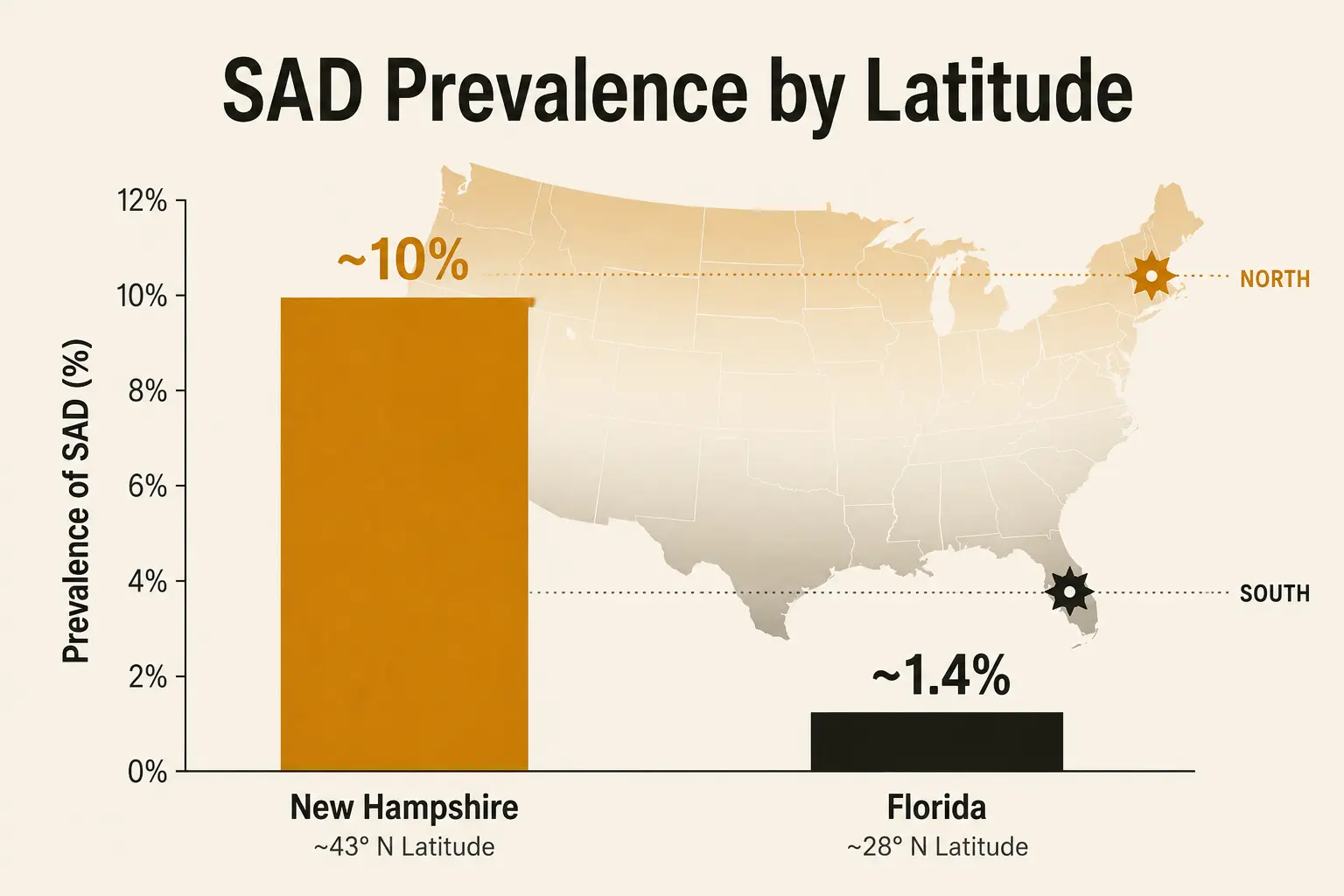
- Prevalence tracks latitude closely — one frequently cited figure is nearly 10% in New Hampshire versus 1.4% in Florida.
- Women are affected roughly three times more often than men, and prevalence decreases with age.
- Light therapy (10,000 lux, ~30 min/day, morning) produces response rates around 70%, comparable to antidepressant medication in some trials.
- SAD is a DSM-5 subtype of major depression, not a separate diagnosis — it requires a recurring seasonal pattern for at least two consecutive years.
Seasonal affective disorder isn't a softer way of describing feeling a bit gloomy in winter — it's a measurable disruption to circadian rhythm, serotonin activity, and melatonin timing, triggered specifically by reduced daylight, and it affects an estimated 5% of people worldwide.[1] Where you live changes the odds dramatically: rates run close to 10% in the darkest winters of the northern United States and under 2% in consistently sunny regions — the same underlying disorder, responding to a very different amount of available light.
Why Winter Actually Hits Harder
Reduced sunlight in fall and winter disrupts the body's internal circadian clock, lowers serotonin activity — a brain chemical directly linked to mood regulation — and shifts melatonin timing, which governs sleep and energy.[2] These aren't three separate issues; they're interconnected systems that all take their timing cues from daylight, and when that daylight signal weakens for months at a time, the systems drift out of sync together.
Recent research has also found that light exposure — particularly blue light — helps normalize disrupted circadian activity and improves serotonin levels in brain regions tied to mood regulation, which is part of why light-based treatment specifically, rather than just "trying to feel better," has become the primary evidence-based intervention.[2]
How Common It Actually Is
| Population | Estimated SAD prevalence |
|---|---|
| Global pooled average (2025 meta-analysis) | ~5.0% |
| Subsyndromal SAD (milder form) | ~9.4% |
| Northern latitude example (New Hampshire) | ~10% |
| Southern latitude example (Florida) | ~1.4% |
| Summer-pattern SAD (less common variant) | ~0.6% |
Women are affected roughly three times as often as men, and prevalence tends to decrease with age.[1] The latitude effect is the single clearest pattern in the data — it's essentially a dose-response relationship between available winter daylight and disorder frequency, which is strong evidence for light exposure as the central mechanism rather than a coincidental seasonal trend.
Symptoms — and Is It SAD or Just the Winter Blues?
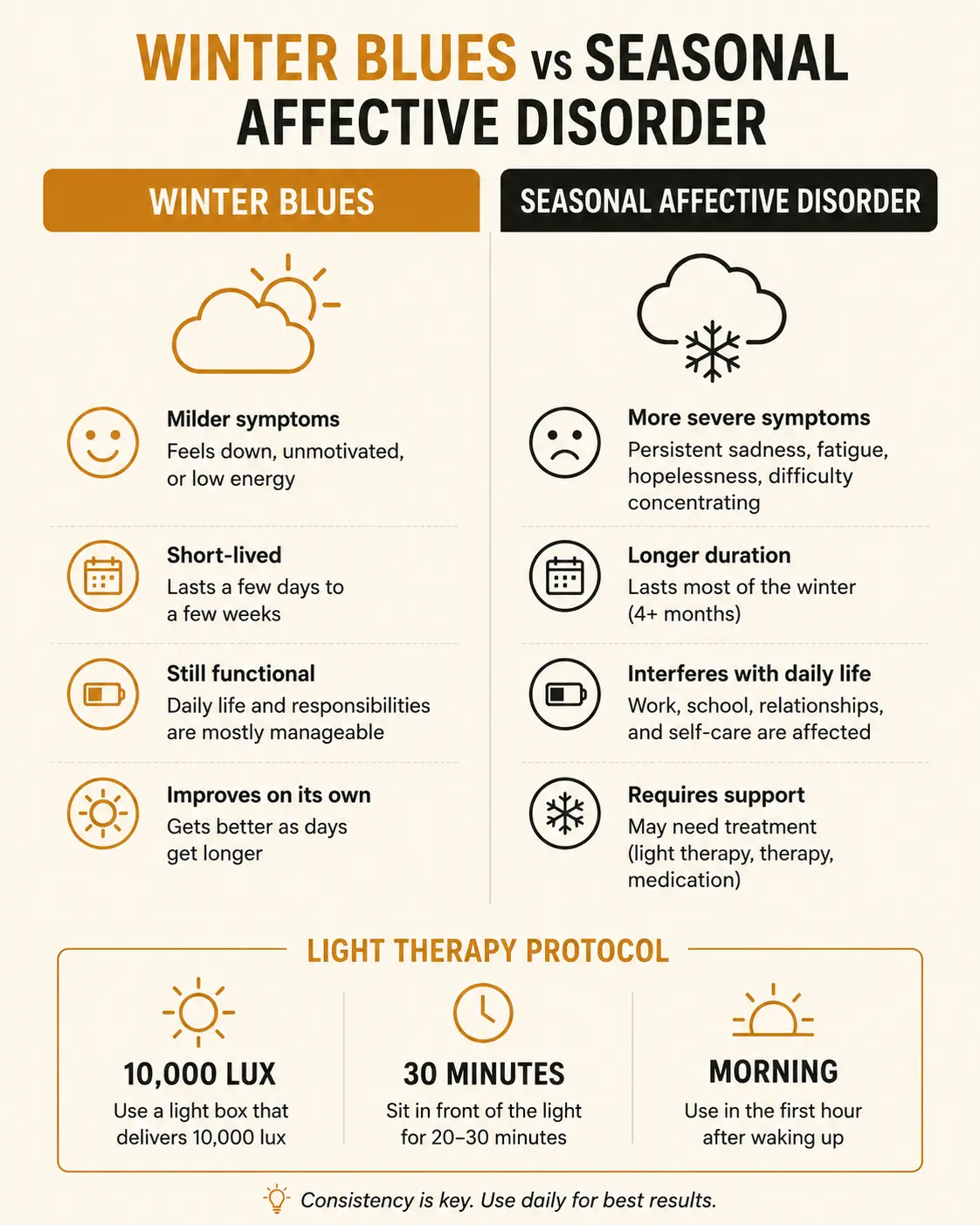
Common symptoms include persistent low mood, loss of interest in normally enjoyable activities, low energy despite adequate or excessive sleep, oversleeping, carbohydrate cravings and weight gain, difficulty concentrating, irritability, and feelings of hopelessness.[3]
Light Therapy: The Best-Evidenced Treatment
Light therapy has some of the strongest evidence of any SAD treatment — meta-analyses show response rates around 70%, comparable to antidepressant medication in head-to-head trials.[4]
| Light intensity | Daily duration | Timing |
|---|---|---|
| 10,000 lux (standard light box) | ~30 minutes | Morning, ideally soon after waking |
| 5,000 lux | ~1 hour | Morning |
| 2,500 lux | ~2 hours | Morning |
Timing matters more than most people assume: early morning light exposure produces significantly better remission rates than the same light used at midday or in the evening.[5] Effects typically take 2-3 weeks to become noticeable, and benefits generally don't persist once therapy stops — it's used consistently through the season, not as a single fix.
Beyond the Light Box
- Cognitive behavioral therapy adapted for SAD has evidence comparable to light therapy, and appears particularly effective at reducing relapse in subsequent winters — a benefit light therapy alone doesn't carry once the season ends.
- Regular morning outdoor time, even on overcast days, provides meaningfully more light exposure than most indoor environments — outdoor daylight on a cloudy day is still typically far brighter than indoor lighting.
- Vitamin D supplementation is commonly recommended alongside other treatments, since deficiency is common in winter and shares overlapping risk factors with SAD — see vitamin D deficiency symptoms and causes for the fuller picture on dosing and testing. It works best as a complement to light therapy, not a substitute.
- Antidepressant medication, particularly SSRIs, remains a first-line option and is sometimes combined with light therapy for more severe presentations.
A Practical Winter Routine
- Get outside within the first hour of waking, even for 10-15 minutes on overcast days — outdoor light, even filtered through clouds, outperforms typical indoor lighting.
- If using a light box, use it in the morning, not the evening. Consistency and timing matter more than pushing the intensity higher.
- Keep sleep and wake times consistent through the darker months — irregular timing compounds circadian disruption rather than helping you catch up on rest.
- Track your mood and energy across a full season rather than judging by any single bad week — a genuine seasonal pattern shows up over months, not days.
- Talk to a doctor if symptoms are disrupting daily functioning, rather than waiting to see if it passes on its own — effective treatment exists and doesn't require enduring a full season first.
Common Mistakes
- Using a light box in the evening instead of the morning. Timing has a measurable effect on remission rates — evening use is meaningfully less effective.
- Assuming any winter mood dip is "just SAD" without a clinical picture. A recurring, functionally disruptive seasonal pattern is different from ordinary winter tiredness, and mislabeling can delay getting appropriate help either way.
- Stopping light therapy once mood improves. Benefits generally don't persist after discontinuation — it's used consistently through the season, similar to how a maintenance medication is used.
- Relying on vitamin D supplements alone as a replacement for light therapy. Vitamin D helps address a common overlapping deficiency, but it isn't a substitute for the light-exposure mechanism light therapy specifically targets.
- Waiting until symptoms are severe before seeking help. Light therapy and CBT are typically most effective when started early in the season, before symptoms compound.
Final Thoughts
Seasonal affective disorder is a real, mechanistically understood disruption to circadian rhythm and mood regulation — not a character flaw or something to simply push through. The latitude data alone makes the case: prevalence tracks available winter daylight closely enough that geography, not personality, is doing most of the explaining. Light therapy, used consistently and in the morning, remains the best-evidenced starting point, with CBT and vitamin D support rounding out a fuller approach for people who need it.
The honest version of this topic: winter doesn't make everyone's mood worse by the same amount. For a meaningful share of people, it's a measurable biological event — and one of the more treatable forms of depression once it's correctly identified.
If low mood and disrupted sleep are showing up together, it's worth reading alongside insomnia vs. trouble falling asleep and how chronic stress affects the body, since sleep disruption and mood are tightly linked and often need to be addressed together.
This article is for general information and isn't a substitute for medical advice. If symptoms are disrupting daily functioning, please speak with a doctor or mental health professional.
Sources
[1] Global prevalence of seasonal affective disorder by latitude — systematic review and meta-analysis. Available at: sciencedirect.com
[2] Circadian rhythms and mood disorders — mechanisms of light and serotonin regulation. Available at: pmc.ncbi.nlm.nih.gov
[3] Seasonal affective disorder — overview, StatPearls. Available at: ncbi.nlm.nih.gov
[4] Efficacy of light therapy in the treatment of mood disorders — meta-analysis. Available at: psychiatryonline.org
[5] Morning vs. evening light exposure timing and remission rates. Available at: ncbi.nlm.nih.gov