People rarely choose food on nutrition alone. What we eat is shaped by biology (hunger, fullness and inborn taste preferences), psychology (mood, stress, habits and beliefs), social life (family and friends), culture and religion, money and time, and the food environment around us. Most preferences are learned and can change, often through repeated, pressure-free exposure. Coaches who understand these influences can help clients make changes that fit their real lives — adapting familiar foods rather than replacing them.
Section 1 covered the coach's role, scope and use of evidence. Section 2 moves into nutrition science — and it starts not with nutrients, but with people. A plan that ignores why someone eats the way they do is unlikely to last. This chapter gives you a framework for understanding food choice, which you'll use again in assessment (Lesson 18) and real-world coaching (Lesson 20).
Free on YouTube Subscribe to get every lesson video in this course SubscribeWhat Influences Food Choice?
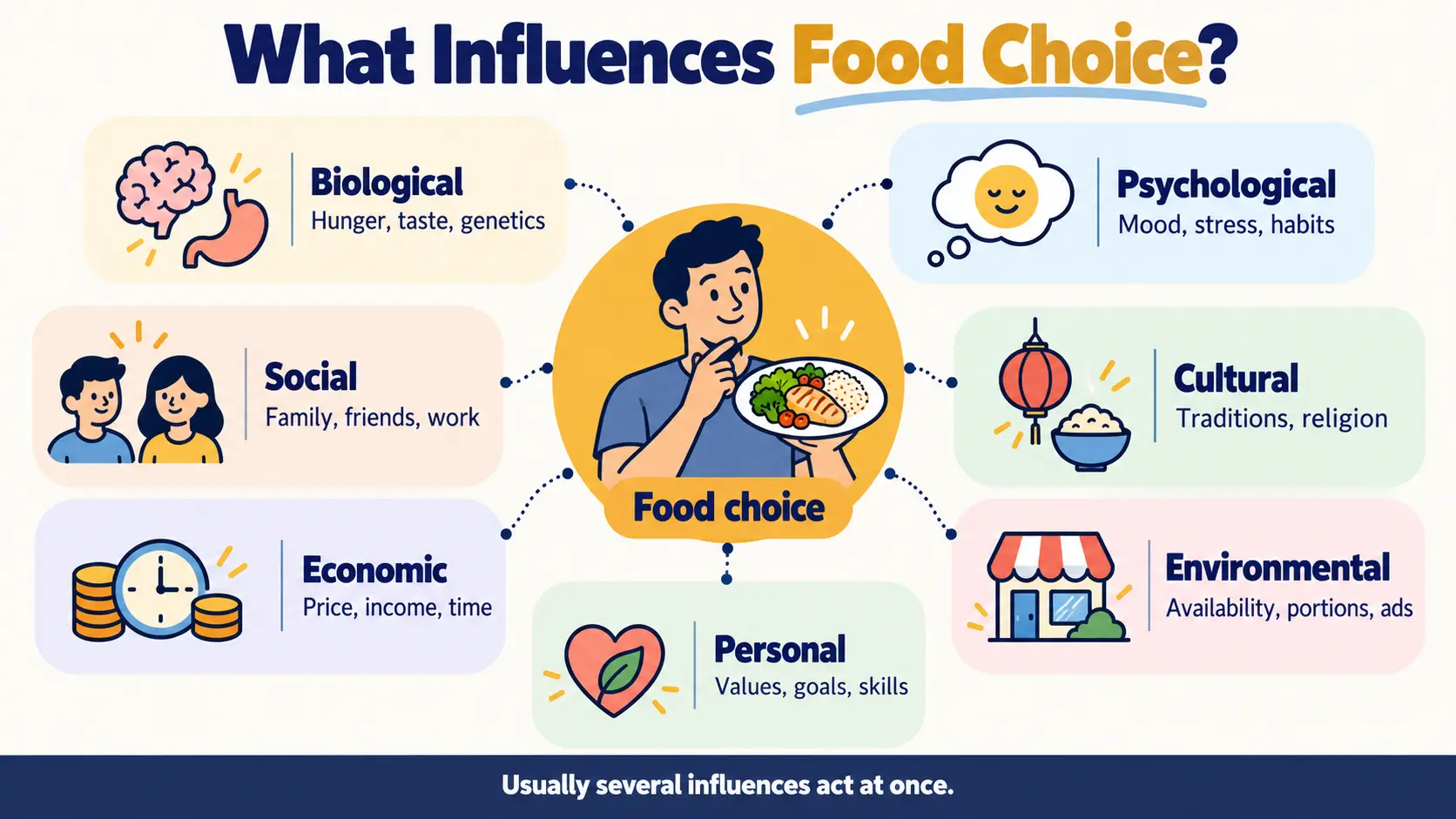
Food choices sit at the meeting point of many influences. Grouping them helps a coach ask better questions and spot where change is most realistic.
| Influence | Examples |
|---|---|
| Biological | Hunger and fullness signals, inborn taste preferences, genetics, age, pregnancy, illness, medications |
| Psychological | Mood, stress, boredom, habits, beliefs about food, past experiences, body image |
| Social | Family meals, friends, workmates, eating out, social media, partners' habits |
| Cultural and religious | Traditional dishes, festivals, religious food practices and fasting, meal patterns |
| Economic | Food prices, income, time available to shop and cook, cooking equipment |
| Environmental | What's nearby and available, portion and package sizes, food marketing, workplace and home food |
| Personal values and knowledge | Ethical and environmental values, health goals, nutrition knowledge, cooking skills |
No single influence explains anyone's eating. A client who snacks late at night may be tired (biological), stressed (psychological), alone after the family is in bed (social) and surrounded by easy snacks (environmental) — all at once.
Hunger, Appetite and Fullness
| Term | Meaning |
|---|---|
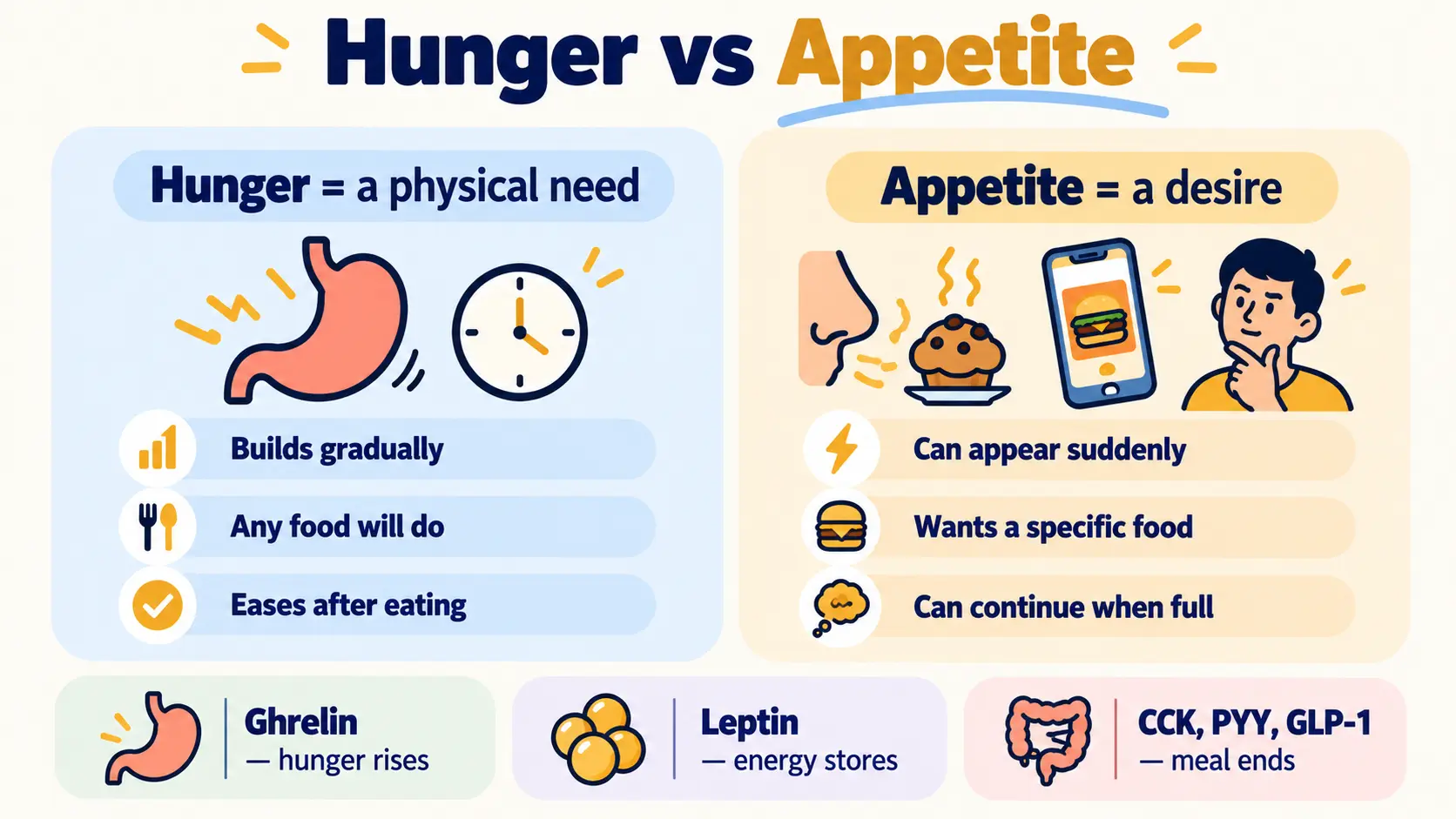
| Hunger | The physical need for food — the body's drive to eat |
| Appetite | The desire to eat — shaped by sight, smell, taste, emotions, habits and surroundings |
| Satiation | The feeling of fullness that builds during a meal and brings it to an end |
| Satiety | The feeling of fullness after a meal that delays the next one |
Hunger and fullness are regulated by signals between the gut, fat tissue and brain. Two hormones are worth knowing for the exam:
- Ghrelin — "the hunger hormone"Released mainly by the stomach; tends to rise before meals and fall after eating.
- Leptin — a long-term fullness signalReleased by fat tissue; tells the brain about the body's energy stores.
- Gut fullness signalsHormones such as CCK, PYY and GLP-1, released as food moves through the gut, help bring meals to an end.
Because appetite responds to more than hunger, people can want food when they aren't physically hungry — the smell of baking, a stressful email or a plate of snacks at a meeting. That's normal, not a lack of willpower.
How Taste Preferences Develop
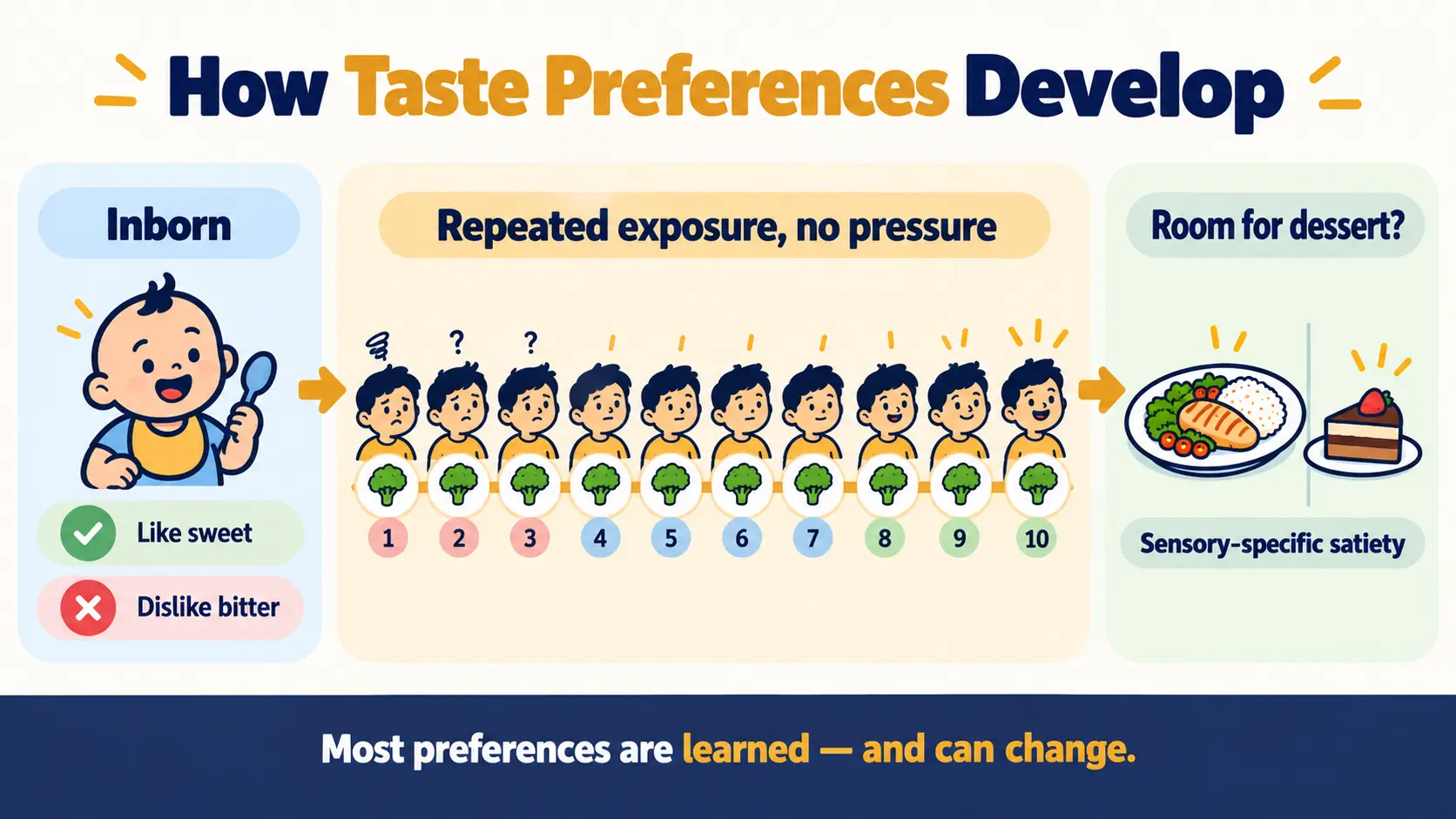
Only a few preferences are present from birth. Most are learned — which is good news for coaching, because learned preferences can change.
- Inborn tendenciesA liking for sweet (and later salty and savoury/umami) tastes, and a dislike of bitter and very sour tastes. These may once have helped people find energy and avoid toxins.
- GeneticsSome people are more sensitive to bitter tastes, so vegetables such as Brussels sprouts or bitter greens may taste stronger to them.
- Repeated exposureTrying a food again and again, without pressure, often makes it more liked. Research in children suggests it can take many tries — often cited as around 8–15.
- Learned associationsFoods linked with good feelings (celebrations, comfort) tend to become favourites; a food linked with feeling ill can be avoided for years.
- Food neophobiaReluctance to try new foods — common in young children and usually easing with age and exposure.
- Sensory-specific satietyA food becomes less pleasant as you eat more of it, while different foods stay appealing — which is why there's often "room for dessert". Very varied buffets can encourage people to eat more.
Psychological and Social Influences
Emotions, stress and habits
Many people eat in response to emotions — stress, boredom, sadness or celebration. Occasional emotional eating is normal. It becomes a coaching focus when it's frequent and works against the client's goals. Much eating is also habitual: a cue (arriving home, the evening TV) triggers a routine (snacking) that brings a reward (relaxation). Habits are covered in more depth in Lessons 14 and 17.
Other people
People tend to eat more in groups than alone — known as social facilitation — and to match what others around them are eating. Family meals, partners' habits, workplace food and social media all shape what feels normal to eat.
Culture, Religion and Economics
Culture shapes which foods count as a "proper meal", when people eat, and what's served at celebrations. Many religions include food practices such as avoiding certain foods, preparing food in specific ways, or fasting at certain times. Food carries identity, family history and belonging — so asking a client to give up traditional dishes rarely works and can feel disrespectful.
Money and time matter just as much. Fresh produce, specialty products and meal kits can be expensive; long working hours or caring duties leave little time to cook. Budget-friendly options such as beans, lentils, eggs, oats, frozen vegetables and tinned fish can make nutritious eating more affordable. If a client can't reliably afford enough food, that goes beyond coaching — share local community or social support resources where they exist.
The Food Environment
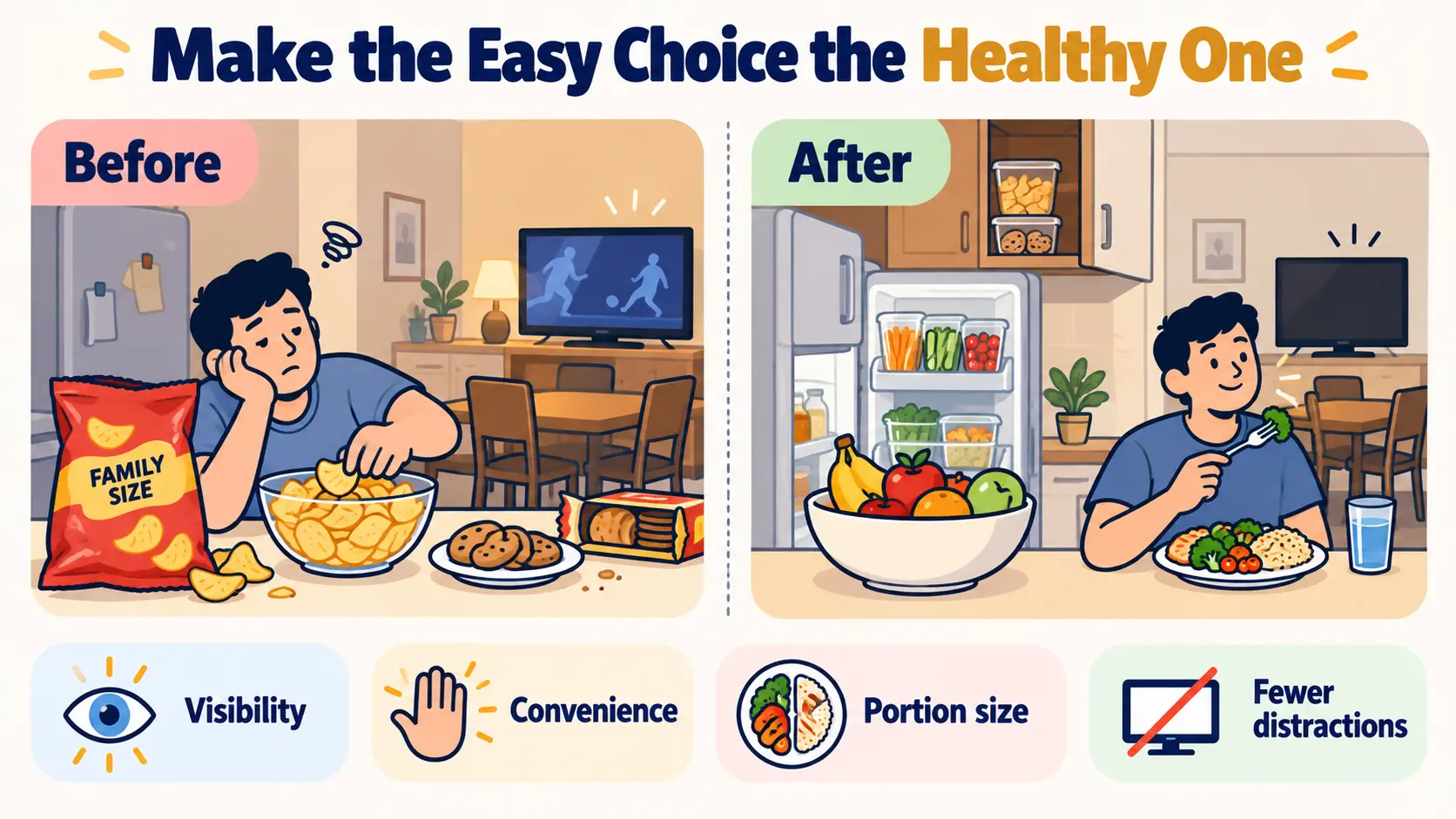
The food environment is everything around a person that affects what's easy to eat: what's in the cupboard, what's on the way to work, what the office canteen serves, and what's advertised. People tend to eat what's visible, convenient and served in front of them, often without noticing.
| Environmental cue | Typical effect | Coaching idea |
|---|---|---|
| Visibility | Food in sight gets eaten more often | Fruit bowl out; snacks in a cupboard |
| Convenience | Easy food wins when people are tired | Pre-cut vegetables; batch-cooked meals |
| Portion and package size | Bigger portions usually mean more eaten | Serve onto a plate; buy smaller packs |
| Distraction | Eating in front of screens can increase intake | Eat at the table when possible |
| Marketing | Ads and offers push highly processed foods | Plan shopping; use a list |
Changing the environment often works better than relying on willpower, because it makes the easier choice the healthier one.
Applying This in Coaching
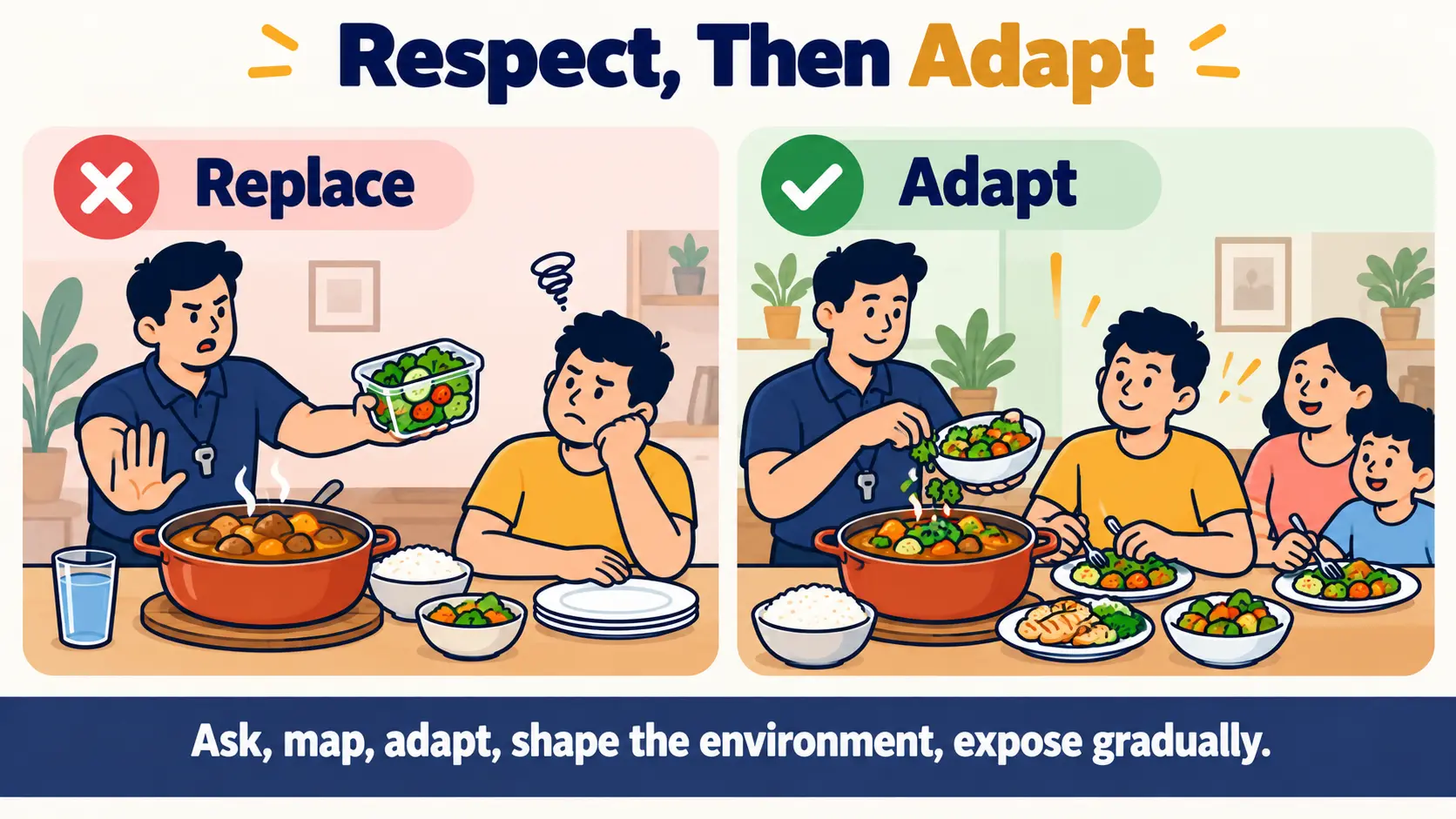
- 1. Ask, don't assume"What does a typical day of eating look like? Who do you eat with? What makes it hard?"
- 2. Map the influencesNote which are biological, psychological, social, cultural, economic or environmental.
- 3. Adapt familiar foodsBuild on dishes the client already enjoys and can afford.
- 4. Shape the environmentMake helpful foods visible and easy; make less helpful ones less convenient.
- 5. Expose gradually, without pressureTry new foods in small amounts, in familiar dishes, several times.
The situation: Amara, 29, lives with her parents and eats traditional family dinners most nights. She skips lunch at work, snacks on biscuits from the office kitchen when stressed in the afternoon, and has a tight budget. She wants more energy and to eat more vegetables, but "doesn't like most of them".
Map the influences: social and cultural (family dinners), psychological (stress snacking), environmental (biscuits on show at work), economic (budget), biological (hunger from skipped lunch) and learned taste preferences.
Adapt, don't replace: keep family dinners, and add an extra vegetable to dishes her family already cooks. Pack an affordable lunch — leftovers, or eggs and bread — so she isn't over-hungry at 4 pm.
Shape the environment: keep fruit and a handful of nuts at her desk; sit away from the biscuit tin.
Expose gradually: she tries one new vegetable, prepared in a familiar way, twice a week. Over 5 weeks that's 2 × 5 = 10 exposures — enough for many people to start liking a food more.
For more on how food traditions differ around the world, see How Different Countries Define a "Healthy Plate".
12 questions in the style of the CNC exam. Score 70%+ to mark this lesson complete.
- Food choice is shaped by biological, psychological, social, cultural, economic, environmental and personal influences — usually several at once.
- Hunger is a physical need; appetite is a desire. Ghrelin drives hunger; leptin signals energy stores.
- Liking sweet and disliking bitter are inborn; most other preferences are learned and can change.
- Repeated, pressure-free exposure often increases liking for a food.
- The food environment — visibility, convenience, portions — strongly shapes intake.
- Respect each client's culture and budget, and adapt familiar foods rather than replacing them.
Before moving to Lesson 5:
- Map your own eating: list one biological, psychological, social, cultural, economic and environmental influence.
- Pick one change to your food environment this week — and notice its effect.
- Write three open questions you could use to explore a client's food culture.
- Complete the knowledge check above and review any question you missed.