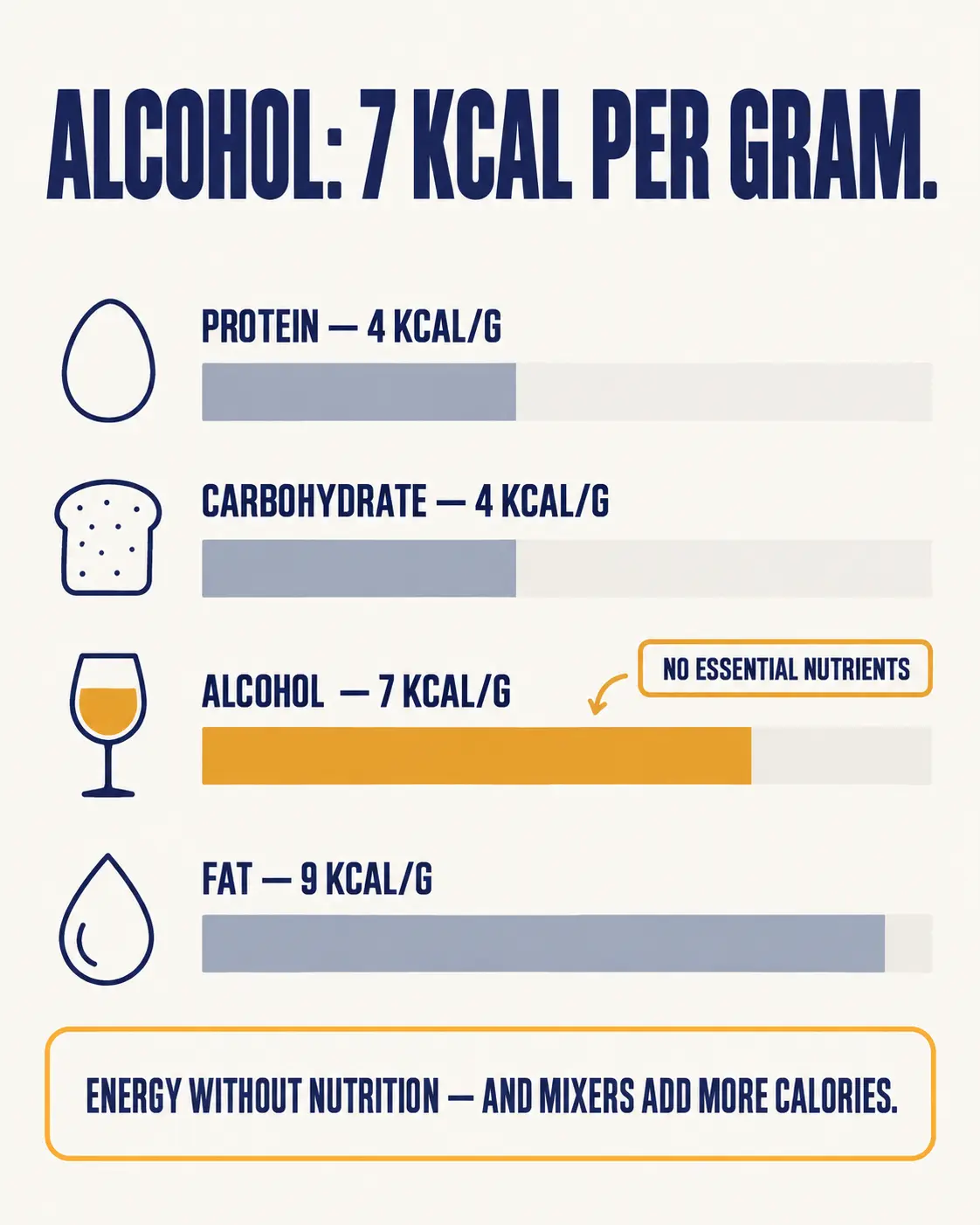
Alcohol provides about 7 kcal per gram but no essential nutrients. The liver treats it as a priority, processing it at a fixed pace while fat burning is put on hold. Alcohol can undermine body composition, sleep and recovery, and health authorities increasingly say that less is better. A coach's job is to help clients understand these effects and make informed choices — without judgement — and to refer anyone who may be dependent.
With the three macronutrients covered, this lesson looks at the other source of calories in many people's diets. Alcohol isn't a nutrient — the body doesn't need it — but it's a regular part of life for many clients, so a nutrition coach needs to understand how it's handled and how to talk about it.
Free on YouTube Subscribe to get every lesson video in this course SubscribeWhat Alcohol Is
The alcohol in drinks is ethanol, produced when yeast ferments the sugars in grains, fruit or other plants. It provides about 7 kcal per gram — nearly as much as fat — but no vitamins, minerals, protein or essential fatty acids. That's why alcohol is often described as providing "empty calories."
Many drinks also contain carbohydrate (from residual sugars, or from mixers such as juice, soft drinks and syrups), which adds further calories on top of the alcohol itself.
Standard Drinks and How to Calculate Alcohol
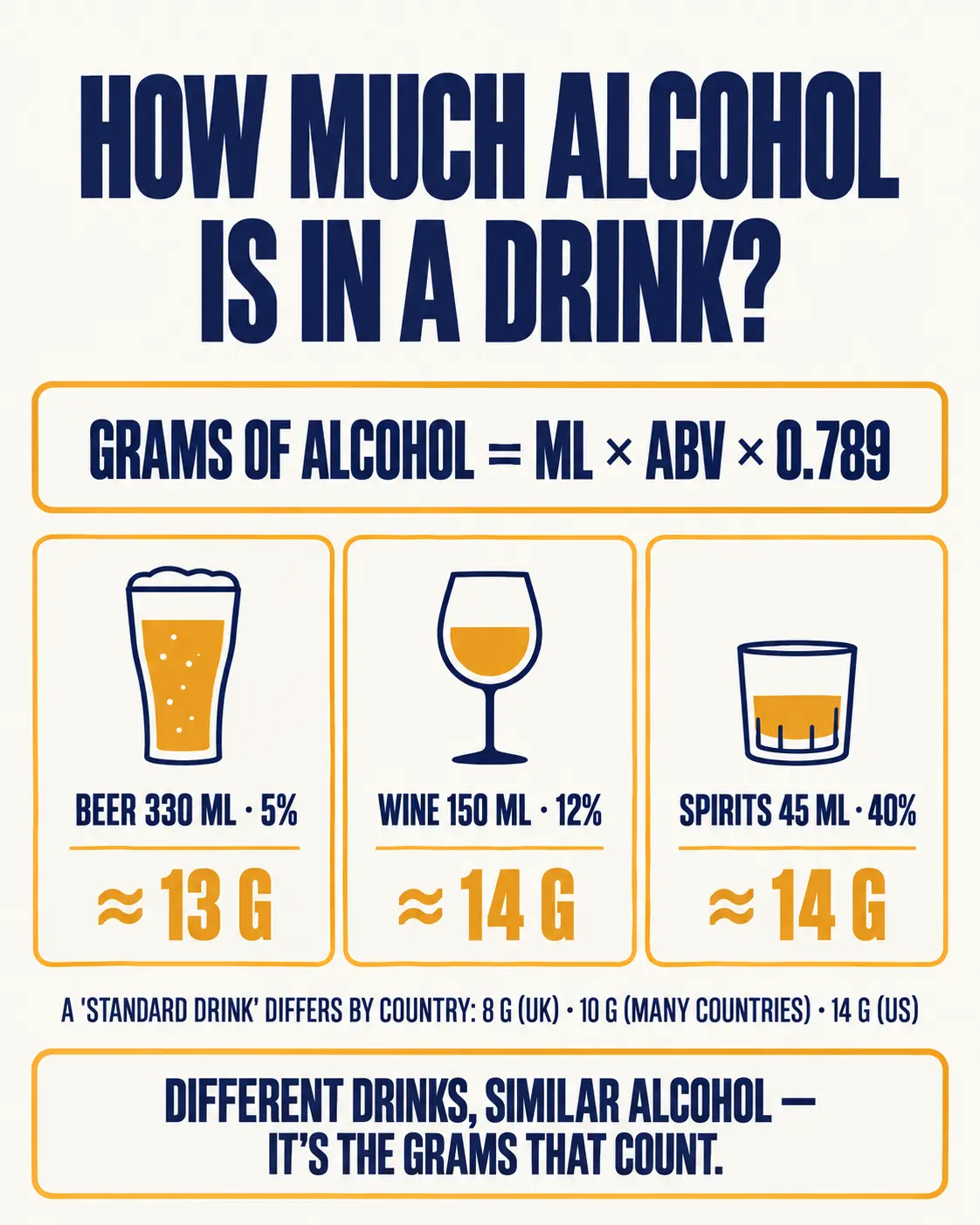
A "standard drink" is a set amount of pure alcohol used in health guidelines — but the amount differs by country:
| Where | Pure alcohol in one standard drink or unit |
|---|---|
| Many countries (and the WHO's reference) | About 10 g |
| United States | About 14 g |
| United Kingdom ("unit") | 8 g |
Because drink sizes and strengths vary so much, it's more reliable to calculate the grams of alcohol directly. Alcohol by volume (ABV) is the percentage of the drink that is alcohol, and pure alcohol weighs about 0.789 g per ml:
Grams of alcohol = volume (ml) × ABV (as a decimal) × 0.789
| Drink | Grams of alcohol | Calories from the alcohol alone |
|---|---|---|
| Beer, 330 ml at 5% ABV | 330 × 0.05 × 0.789 ≈ 13 g | ≈ 91 kcal (plus carbohydrate calories) |
| Wine, 150 ml at 12% ABV | 150 × 0.12 × 0.789 ≈ 14 g | ≈ 99 kcal |
| Spirits, 45 ml at 40% ABV | 45 × 0.40 × 0.789 ≈ 14 g | ≈ 99 kcal (plus any mixer) |
Leo drinks four 330 ml beers at 5% ABV every Saturday.
Alcohol per beer ≈ 13 g → 13 × 7 ≈ 91 kcal from alcohol, plus roughly 50 kcal from carbohydrate ≈ 140 kcal per beer
Saturday total ≈ 4 × 140 = about 560 kcal — often before counting the food eaten alongside.
Over a week, that's roughly a quarter of a typical day's energy needs coming from one evening's drinks. Carbohydrate content varies by beer, so treat this as an estimate.
How Alcohol Is Absorbed
Alcohol doesn't need to be digested. Roughly 20% is absorbed in the stomach and about 80% in the small intestine, and it quickly spreads through body water. Several things affect how fast blood alcohol rises:
- Food in the stomach slows absorption; drinking on an empty stomach speeds it up.
- Carbonated drinks (and mixers) can speed absorption.
- Body size and composition: people with less body water — often smaller people, and on average women — reach a higher blood alcohol level from the same amount.
- Drinking speed: drinking faster than the liver can process leads to a steep rise.
How Alcohol Is Metabolised
The body can't store alcohol, and acetaldehyde — its first breakdown product — is toxic. So the body treats clearing alcohol as a priority. More than 90% is processed in the liver; small amounts leave in breath, urine and sweat.
- Step 1 — Alcohol dehydrogenase (ADH)Converts alcohol (ethanol) into acetaldehyde, a toxic compound linked to many of alcohol's harmful effects.
- Step 2 — Aldehyde dehydrogenase (ALDH)Converts acetaldehyde into acetate, which is much less harmful.
- Step 3 — Acetate is used or storedAcetate is broken down for energy (to carbon dioxide and water) or used to make fatty acids.
- Back-up system — MEOSThe microsomal ethanol-oxidising system helps when intake is high, and becomes more active with regular heavy drinking.
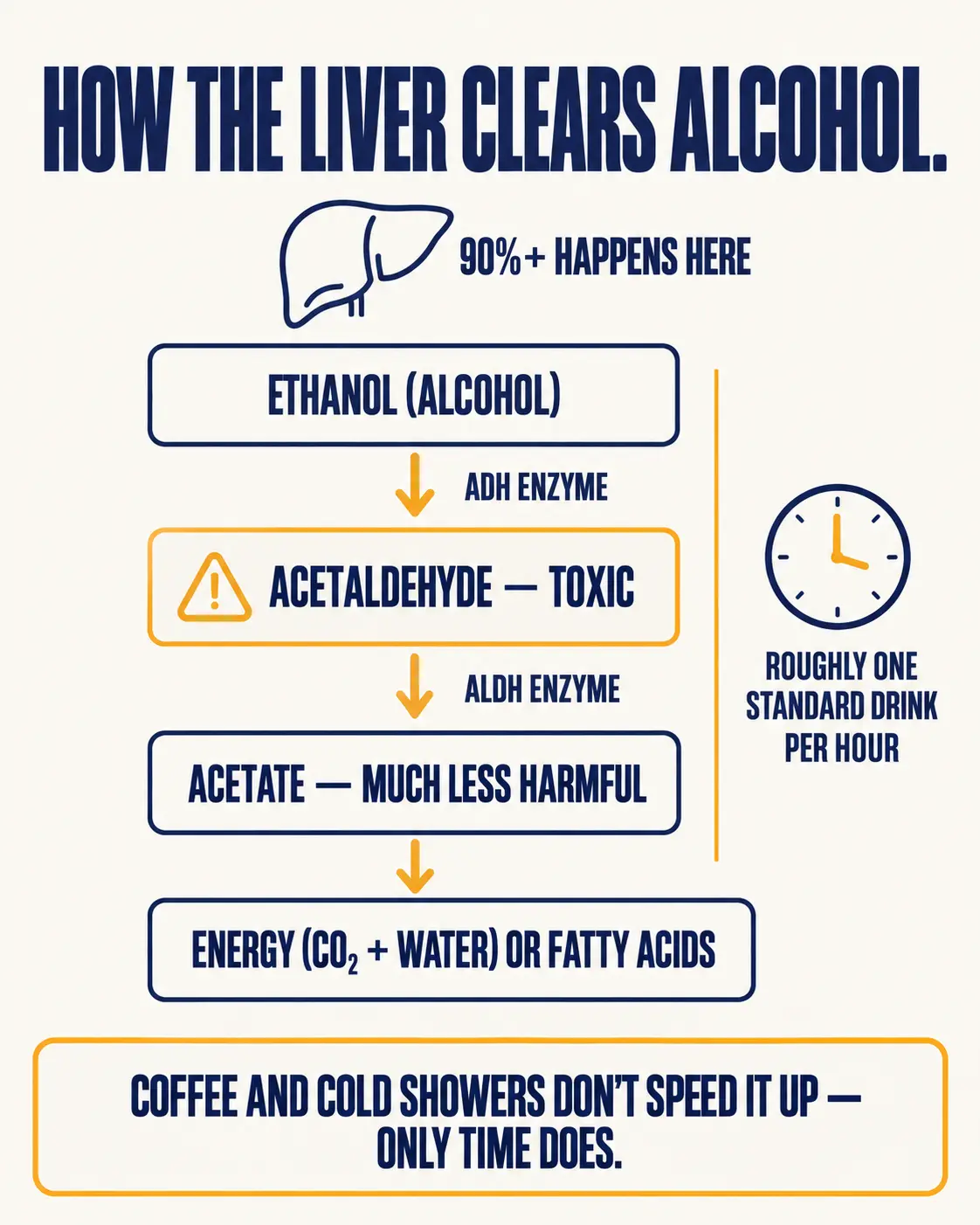
The liver clears alcohol at a fairly steady pace, commonly cited as roughly one standard drink per hour. Coffee, water, exercise or a cold shower don't speed this up — only time does.
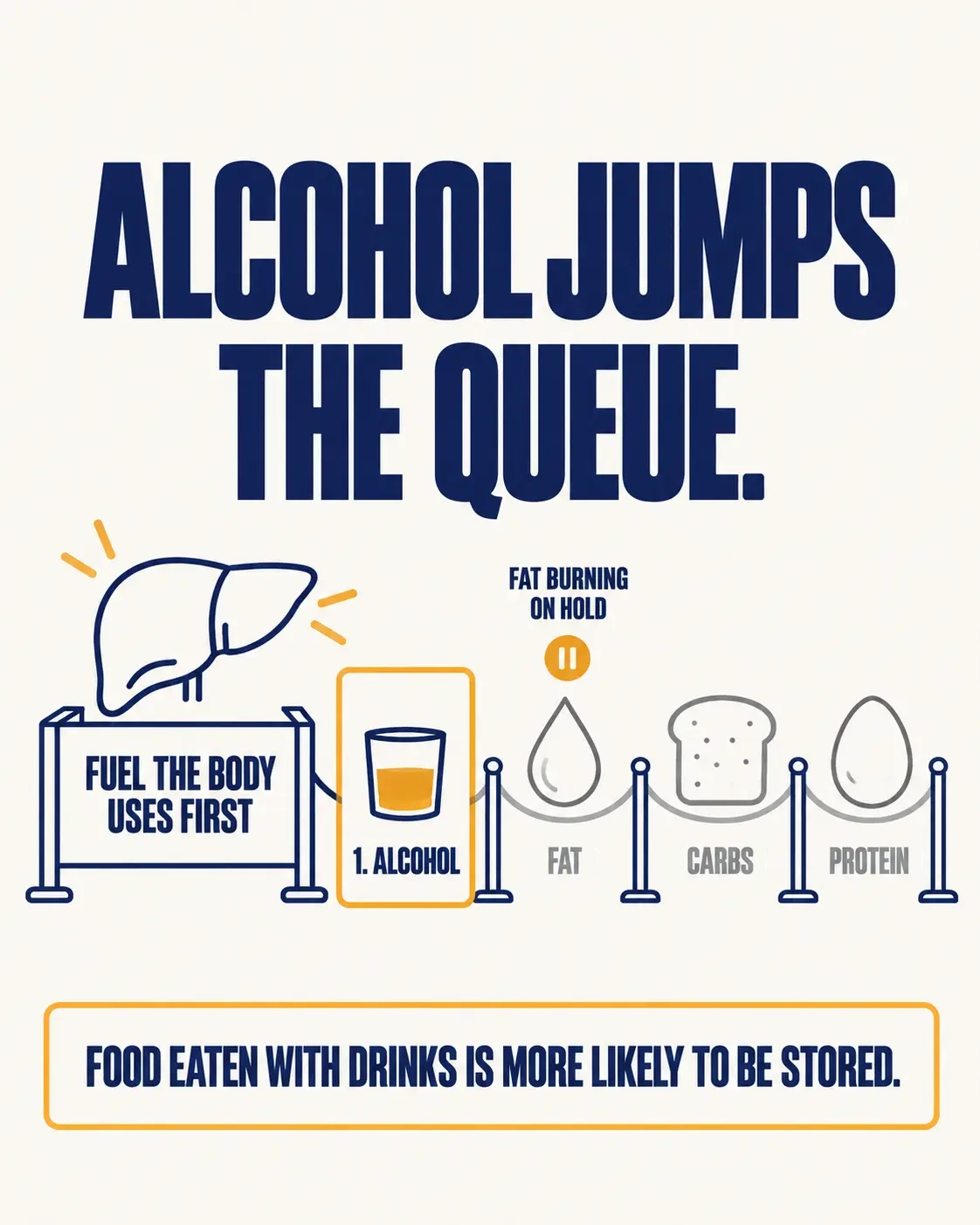
While the liver is busy processing alcohol, the body burns less fat: using alcohol for fuel takes priority, so fat oxidation is put on hold. Alcohol itself isn't stored as fat in large amounts, but the fat and carbohydrate eaten alongside drinking are more likely to be stored.
Effects on Nutrition, Body Composition and Training
- Extra energy intakeCalories from drinks add up quickly, and lowered inhibition often leads to eating more — especially energy-dense foods.
- Displaced nutritionDrinks can replace nutrient-dense food, and heavier drinking interferes with the absorption and use of nutrients such as thiamin (vitamin B1), folate and other B vitamins, zinc and magnesium.
- Fluid lossAlcohol suppresses antidiuretic hormone (ADH, also called vasopressin), so the kidneys release more water — which is why drinking can leave people dehydrated (see Lesson 11).
- Poorer sleepAlcohol may help people fall asleep, but it disrupts sleep quality later in the night.
- Slower recoveryHeavy drinking after exercise can reduce muscle protein synthesis and slow recovery — a real cost for clients trying to build muscle.
Health Guidance
Views on alcohol and health have shifted. The World Health Organization classifies alcohol as a cause of cancer and states that no level of drinking is completely without risk; risks to the liver, heart and brain, and of certain cancers and injuries, rise with the amount consumed. Binge drinking — a lot of alcohol in a short time — carries extra risks.
Official drinking guidelines vary by country, and several have become stricter in recent years. Rather than quoting one country's limits, point clients to their own national guidance, and keep the general message simple: if someone drinks, less is better. Anyone who is pregnant or trying to conceive is generally advised not to drink, and alcohol can interact with many medications — questions about either should go to a doctor.
Coaching Clients Who Drink
Most clients who drink don't need a lecture — they need clear information and practical strategies. Keep the conversation non-judgemental and goal-focused.
- Make it visible: have clients log drinks for a week or two so they can see the true amount and calories.
- Plan ahead: decide on a limit before a social event, and eat a meal beforehand.
- Pace and swap: alternate alcoholic drinks with water, choose lower-ABV options or smaller servings, and skip sugary mixers.
- Protect training and sleep: avoid drinking right after hard sessions and close to bedtime.
- Build alcohol-free days into the week.
11 questions in the style of the CNC exam. Score 70%+ to mark this lesson complete.
- Alcohol (ethanol) provides ~7 kcal per gram but no essential nutrients; mixers add more calories.
- Standard drinks differ by country (~8–14 g); grams of alcohol = ml × ABV × 0.789.
- ~20% is absorbed in the stomach and ~80% in the small intestine; food slows absorption.
- The liver clears alcohol via ADH → acetaldehyde → ALDH → acetate, at roughly one standard drink per hour.
- While alcohol is processed, fat burning pauses; drinking also affects hydration, sleep, recovery and some B vitamins and minerals.
- Guidelines vary by country — less is better. Possible dependence, pregnancy or medication questions → doctor or support service.
Before moving to Lesson 10:
- Calculate the grams of alcohol and calories in a drink you or a client commonly have, using the formula.
- Look up the standard drink size and drinking guideline used in your own country.
- Write three practical, non-judgemental strategies you could suggest to a client who drinks at weekends.
- Complete the knowledge check above and review any question you missed.