Vitamins and minerals are needed in tiny amounts but do essential work — releasing energy from food, building bones and blood, and supporting immunity. Fat-soluble vitamins (A, D, E, K) are stored and can build up if over-supplemented; water-soluble vitamins (B and C) mostly aren't stored and are needed regularly. A varied, colourful, food-first diet covers most people's needs; suspected deficiencies and high-dose supplements are for a doctor.
The previous lessons covered the nutrients that provide energy. Micronutrients provide no calories at all — but without them, the body can't use that energy, build tissue or stay healthy. This is one of the most fact-heavy chapters in the course, so the tables in this lesson are worth knowing exactly where to find on exam day.
Free on YouTube Subscribe to get every lesson video in this course SubscribeWhat Micronutrients Are
Vitamins are organic compounds (made by living things); minerals are inorganic elements that come from soil and water. Both are needed in small amounts — milligrams (mg) or micrograms (µg) — and neither provides energy. Their jobs include acting as cofactors that help enzymes work, protecting cells as antioxidants, building structures such as bone, and helping control fluid balance and nerve signals.
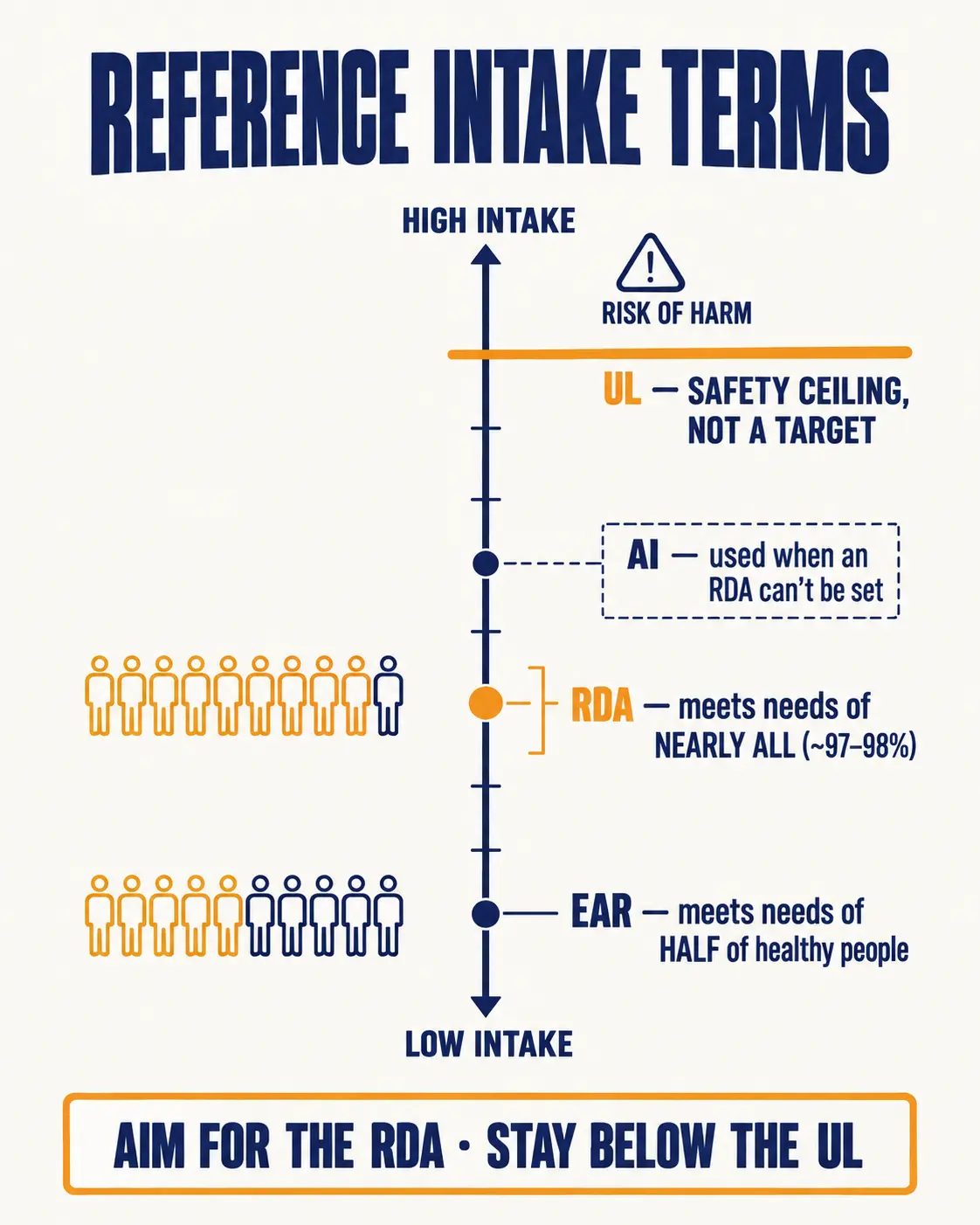
Reference intake terms
The terms below come from the Dietary Reference Intakes used in the United States and Canada, which the CNC exam uses. Other countries and regions publish their own reference values, which may differ slightly.
- EAR — Estimated Average RequirementThe intake that meets the needs of half of healthy people in a group. Used mainly for research and planning.
- RDA — Recommended Dietary AllowanceThe intake that meets the needs of nearly all (about 97–98%) healthy people. The main target for individuals.
- AI — Adequate IntakeUsed when there isn't enough evidence to set an RDA; an intake assumed to be adequate.
- UL — Tolerable Upper Intake LevelThe highest daily intake unlikely to cause harm. A safety ceiling, not a target — most relevant with supplements and fortified foods.
Fat-Soluble Vitamins: A, D, E and K
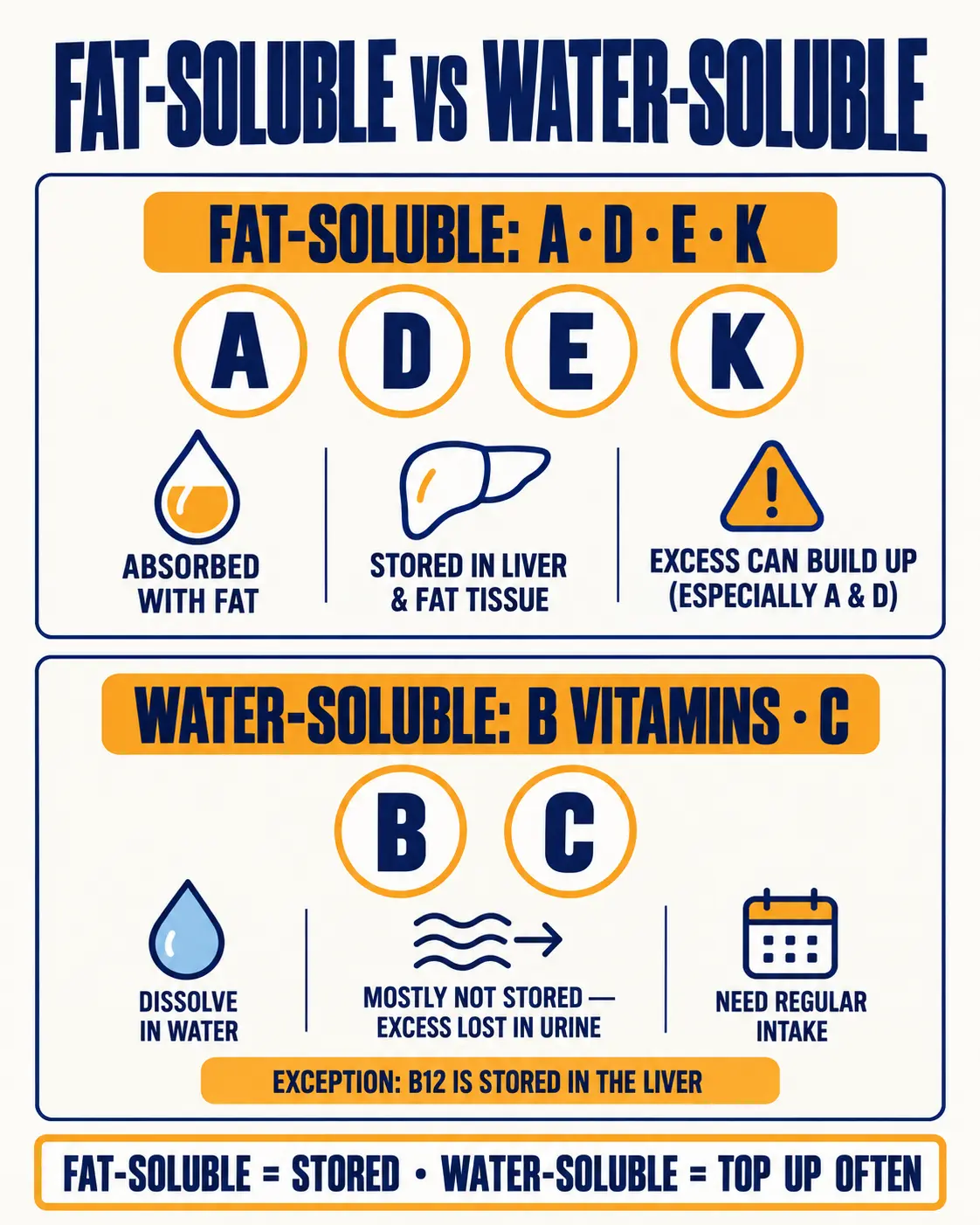
Fat-soluble vitamins are absorbed along with dietary fat (Lesson 8) and stored in the liver and fat tissue. Because they're stored, day-to-day intake can vary — but taking too much from supplements can build up to harmful levels, especially vitamins A and D.
| Vitamin | Main functions | Food sources | Shortfall / notes |
|---|---|---|---|
| A (retinol; beta-carotene is a plant precursor) | Vision (especially in low light), immune function, skin and cell growth | Liver, eggs, dairy; orange and dark-green vegetables and fruit (carrots, sweet potato, spinach, mango) | Deficiency causes night blindness. Excess from supplements can be toxic. |
| D | Helps absorb calcium; bone health; muscle and immune function | Made in skin with sunlight; oily fish, egg yolks, fortified foods | Deficiency causes rickets (children) or osteomalacia (adults). Common with little sun exposure. |
| E | Antioxidant that protects cell membranes | Nuts, seeds, vegetable oils, leafy greens | Deficiency is rare. |
| K | Blood clotting; bone health | Leafy greens (K1); fermented foods and gut bacteria (K2) | Interacts with some blood-thinning medications — changes in intake should be discussed with a doctor. |
Units to know: vitamin D is listed in micrograms or International Units (IU). 1 µg of vitamin D = 40 IU, so 10 µg = 400 IU. More in our post on vitamin D deficiency.
Water-Soluble Vitamins: B Vitamins and Vitamin C
Water-soluble vitamins dissolve in water, are mostly not stored, and extra amounts are usually lost in urine — so they need to be eaten regularly. The exception is vitamin B12, which the liver stores. Very high supplement doses of some (such as vitamin B6 and niacin) can still cause harm, which is why ULs exist for them too. Water-soluble vitamins are also more easily lost in cooking water and with long cooking times.
| Vitamin | Main functions | Food sources | Shortfall / notes |
|---|---|---|---|
| B1 — thiamin | Releasing energy from carbohydrate; nerve function | Whole grains, legumes, pork, seeds | Deficiency: beriberi. Heavy drinking lowers status (Lesson 9). |
| B2 — riboflavin | Energy metabolism | Dairy, eggs, meat, fortified cereals | — |
| B3 — niacin | Energy metabolism | Meat, fish, poultry, peanuts, whole grains | Deficiency: pellagra. High supplement doses can cause flushing. |
| B5 — pantothenic acid | Energy metabolism (part of coenzyme A) | Found widely in foods | Deficiency is rare. |
| B6 — pyridoxine | Protein and amino acid metabolism | Poultry, fish, potatoes, bananas, chickpeas | Very high supplement doses can damage nerves. |
| B7 — biotin | Energy metabolism | Eggs, nuts, seeds | Deficiency is rare. |
| B9 — folate (folic acid in supplements) | DNA synthesis and cell division; red blood cells | Leafy greens, legumes, citrus, fortified grains | Low intake before and in early pregnancy raises the risk of neural tube defects — guidance comes from a doctor. |
| B12 — cobalamin | Red blood cells; nerve function | Animal foods only (meat, fish, eggs, dairy) plus fortified foods | Vegans need fortified foods or a supplement. Absorption needs intrinsic factor from the stomach and often declines with age. |
| C — ascorbic acid | Collagen formation, antioxidant, immune function, boosts non-heme iron absorption | Citrus, guava, amla, peppers, berries, tomatoes, broccoli | Deficiency: scurvy. Easily lost with heat. |
Minerals: Major and Trace
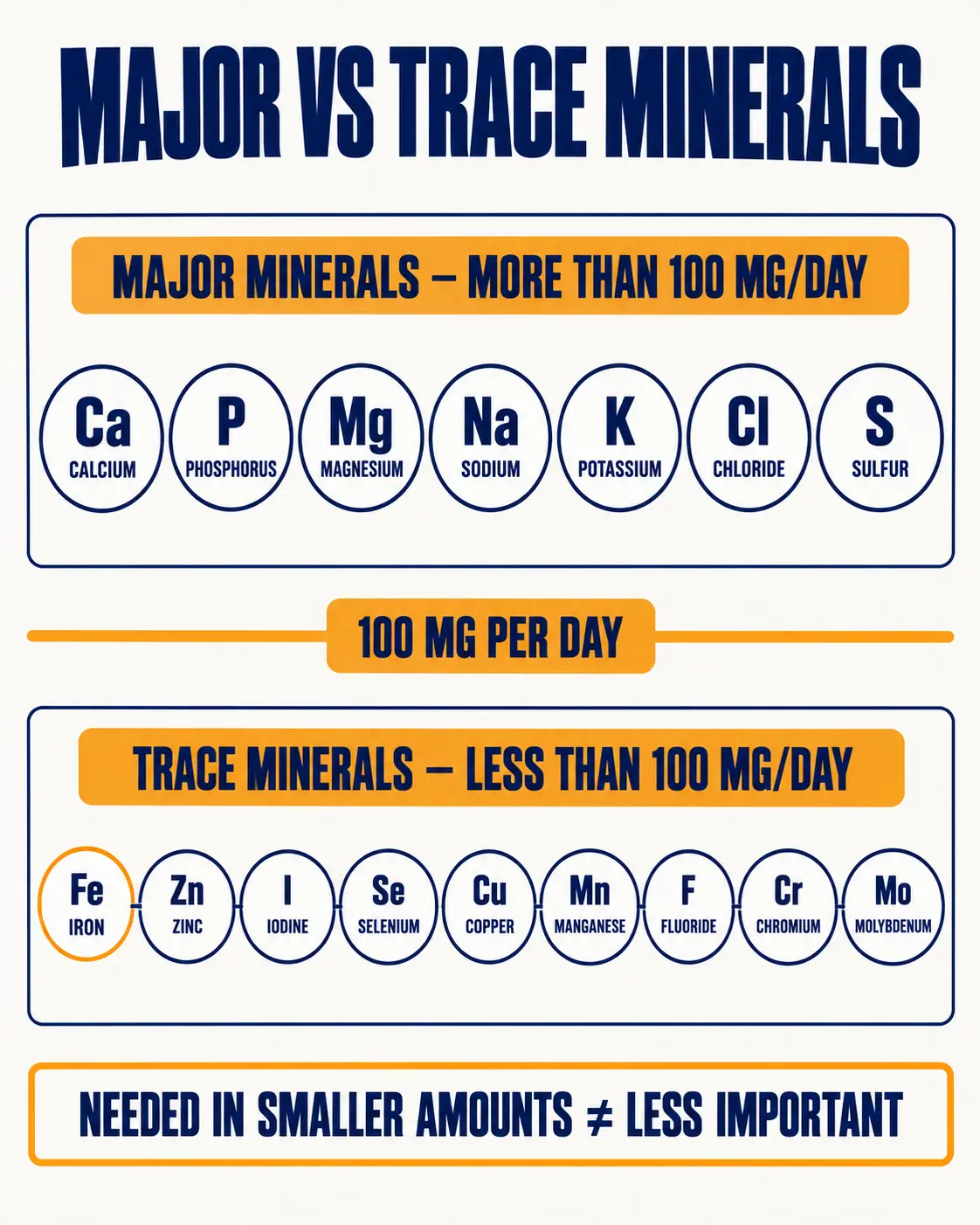
Minerals are grouped by how much the body needs:
- Major minerals (more than 100 mg/day)Calcium, phosphorus, magnesium, sodium, potassium, chloride and sulfur.
- Trace minerals (less than 100 mg/day)Iron, zinc, iodine, selenium, copper, manganese, fluoride, chromium and molybdenum.
| Mineral | Main functions | Food sources | Notes |
|---|---|---|---|
| Calcium | Bones and teeth; muscle contraction; nerve signals | Dairy, fortified plant milks, calcium-set tofu, leafy greens, sesame seeds | About 99% is stored in bones and teeth. Needs vitamin D for absorption. |
| Iron | Carries oxygen in haemoglobin (blood) and myoglobin (muscle) | Heme iron: meat, fish, poultry. Non-heme iron: legumes, leafy greens, fortified cereals, seeds | Iron deficiency is the most common nutrient deficiency worldwide. Too much is harmful — supplements only on medical advice. |
| Magnesium | Involved in over 300 enzyme reactions; muscle and nerve function; bone | Nuts, seeds, whole grains, legumes, leafy greens | Intakes are often below recommendations. |
| Zinc | Immune function, wound healing, growth, taste | Meat, shellfish, legumes, seeds, nuts | Absorbed less well from plant foods. |
| Iodine | Making thyroid hormones, which regulate metabolism | Iodised salt, seafood, dairy, eggs | Deficiency can cause goitre; iodised salt is a major source in many countries. |
| Selenium | Part of antioxidant enzymes; thyroid function | Brazil nuts, seafood, meat, eggs | A few Brazil nuts can exceed needs — easy to overdo. |
| Sodium and potassium | Fluid balance, nerve and muscle function | Sodium: salt and processed foods. Potassium: fruit, vegetables, legumes | Covered in detail in Lesson 11 (Hydration). |
For a closer look at one mineral clients often ask about, see our post on magnesium for sleep and stress.
Absorption and Bioavailability
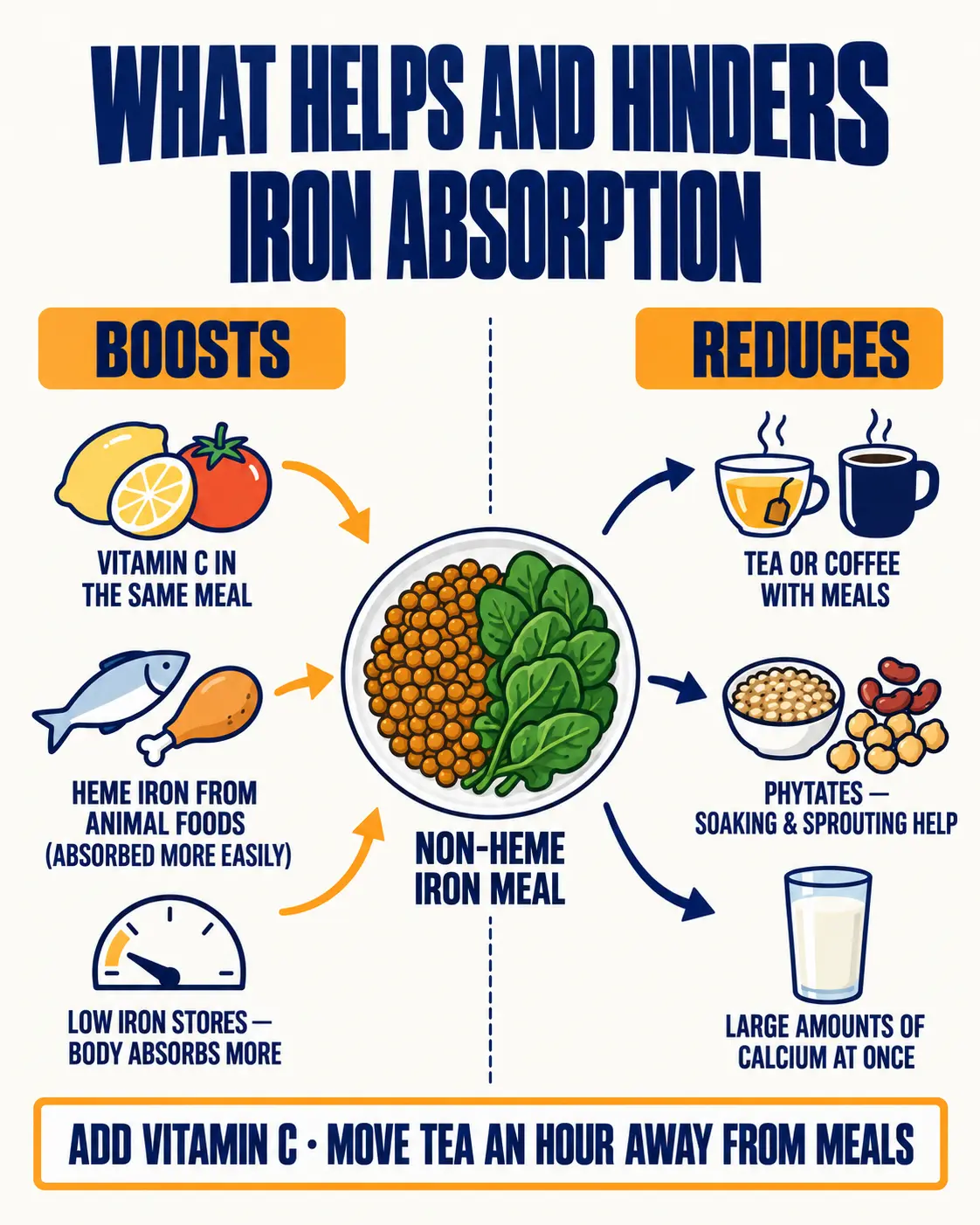
Bioavailability is how much of a nutrient the body can actually absorb and use. It depends on the food, what it's eaten with and the person's needs. Iron is the classic example:
| Boosts absorption | Reduces absorption |
|---|---|
| Heme iron from animal foods (absorbed more easily than non-heme) | Tea and coffee drunk with meals (polyphenols) |
| Vitamin C eaten in the same meal as non-heme iron | Phytates in whole grains and legumes (soaking, sprouting and fermenting help) |
| The body's own need — absorption rises when stores are low | Large amounts of calcium taken at the same time |
Meena is vegetarian and relies on lentils and spinach for iron, usually with a cup of tea at lunch.
Food-first tweaks: add a vitamin C source to the meal (lemon juice, tomatoes or peppers), and move her tea to at least an hour before or after eating.
Scope check: if Meena mentions ongoing tiredness, the coach doesn't guess at a deficiency or suggest iron tablets — she's encouraged to see her doctor, who can test her iron status.
Who Is Most at Risk of Shortfalls?
| Group | Nutrients to watch |
|---|---|
| Vegans and some vegetarians | B12, iron, zinc, calcium, iodine, vitamin D, omega-3 (Lesson 8) |
| Older adults | B12 (lower absorption), vitamin D, calcium |
| People with little sun exposure | Vitamin D |
| People who menstruate, especially with heavy periods | Iron |
| Pregnancy and planning pregnancy | Folate, iron, iodine — guided by a doctor |
| People who drink heavily | Thiamin and other B vitamins, folate, magnesium, zinc |
| People on very restrictive or low-calorie diets | Many micronutrients at once |
A Food-First Approach
Whole foods provide micronutrients alongside fibre and phytonutrients — plant compounds such as carotenoids and polyphenols that aren't essential nutrients but are linked with health benefits. That's why a varied, colourful diet — plenty of vegetables, fruit, whole grains, legumes, nuts, seeds, and protein foods — is the foundation. A simple coaching cue: "eat the rainbow."
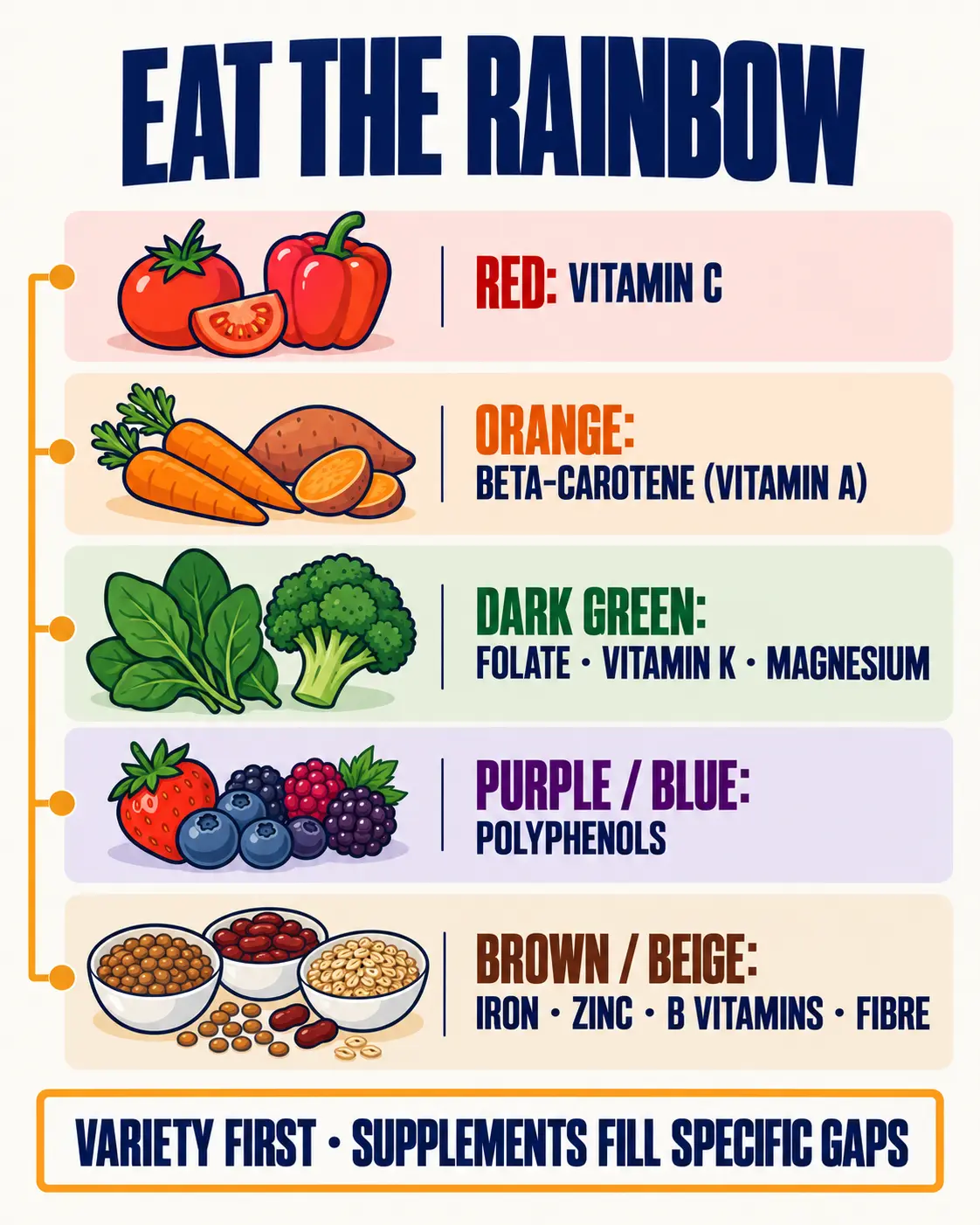
Supplements can fill specific gaps (Lesson 13), but more isn't better: high doses can exceed the UL and some interact with medication. Diagnosing a deficiency needs a doctor and usually a blood test — a coach's role is to support a nutrient-rich diet and refer when a client describes possible symptoms.
This chapter overlaps with PN Level 1's micronutrients chapter — useful extra practice.
12 questions in the style of the CNC exam. Score 70%+ to mark this lesson complete.
- Vitamins are organic, minerals inorganic; both are needed in mg or µg and provide no energy.
- RDA covers nearly all healthy people; AI is used when an RDA can't be set; UL is a safety ceiling, not a target.
- Fat-soluble vitamins A, D, E, K are stored — excess from supplements (especially A and D) can be harmful.
- Water-soluble B vitamins and C are mostly not stored (except B12) and need regular intake.
- Major minerals are needed at >100 mg/day, trace minerals at <100 mg/day; iron deficiency is the most common deficiency worldwide.
- Food first and variety; vitamin C boosts non-heme iron absorption. Suspected deficiencies and high-dose supplements → doctor.
Before moving to Lesson 11:
- Write the four fat-soluble vitamins and one food source for each, from memory.
- Name the B vitamin that comes only from animal and fortified foods, and who is most at risk of low intake.
- Plan one vegetarian meal that pairs a non-heme iron source with a vitamin C source.
- Complete the knowledge check above and review any question you missed.