Supplements are meant to supplement a good diet, not replace it. Only a handful — such as creatine, caffeine and protein powder — have strong evidence for active adults; others help mainly when someone has a specific shortfall. In many countries supplements don't have to prove they work before they're sold, so quality varies and some products contain hidden or banned ingredients. Ask five questions before any supplement: Is there a need? Is there evidence? Is it safe for this person? Is it good quality? Is it worth the cost? Medical conditions, medications and pregnancy go to a doctor or pharmacist.
Clients ask about supplements constantly — often because of an advert, an influencer or a friend at the gym. A good coach can separate the few products with solid evidence from the many with clever marketing, and knows where general information ends and medical advice begins.
Free on YouTube Subscribe to get every lesson video in this course SubscribeWhat Counts as a Supplement?
A dietary supplement is a product taken by mouth that adds to the diet. It comes as tablets, capsules, powders, gummies, drinks or bars. Common categories include:
- Vitamins and minerals — single nutrients (vitamin D, iron) or multivitamins.
- Protein and amino acids — whey, casein, soy or pea protein; BCAAs.
- Sports supplements — creatine, caffeine, beta-alanine, sports drinks and gels.
- Fatty acids — fish oil and algae oil (omega-3).
- Herbal and botanical products — for example ashwagandha, turmeric or St John's wort.
- Other products — probiotics, fibre supplements, collagen.
How supplements are regulated
Rules differ from country to country, but in many places supplements are regulated more like foods than medicines. That usually means:
- They don't have to prove they work before going on sale.
- They often aren't checked for quality or purity before sale — the manufacturer is responsible.
- Claims are limited — products generally can't claim to diagnose, treat, cure or prevent a disease — but marketing often pushes right up to the line.
The result: what's on the label and what's in the tub don't always match. Some countries require registration or pre-market checks, so clients should follow the rules and guidance where they live.
Evidence vs Marketing
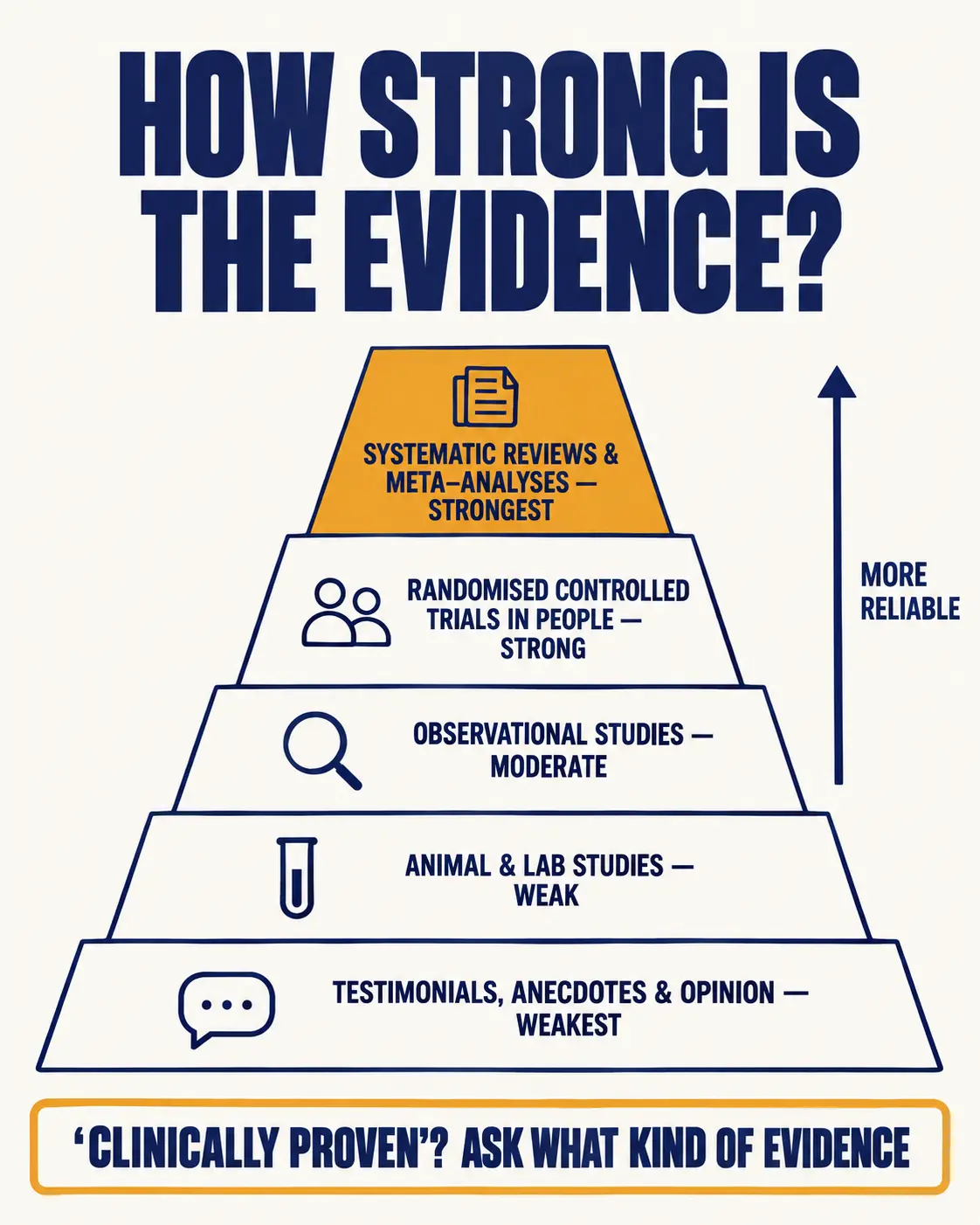
Not all "research" is equal. When a product claims to be "scientifically proven", ask what kind of evidence is behind it.
| Strength of evidence | Type | What it tells you |
|---|---|---|
| Strongest | Systematic reviews and meta-analyses | Combine many trials — the best overall picture |
| Strong | Randomised controlled trials (RCTs) in people | Can show cause and effect |
| Moderate | Observational studies | Show links, not cause and effect |
| Weak | Animal and lab (cell) studies | Useful early clues; often don't carry over to people |
| Weakest | Testimonials, anecdotes, expert opinion | Not evidence that a product works |
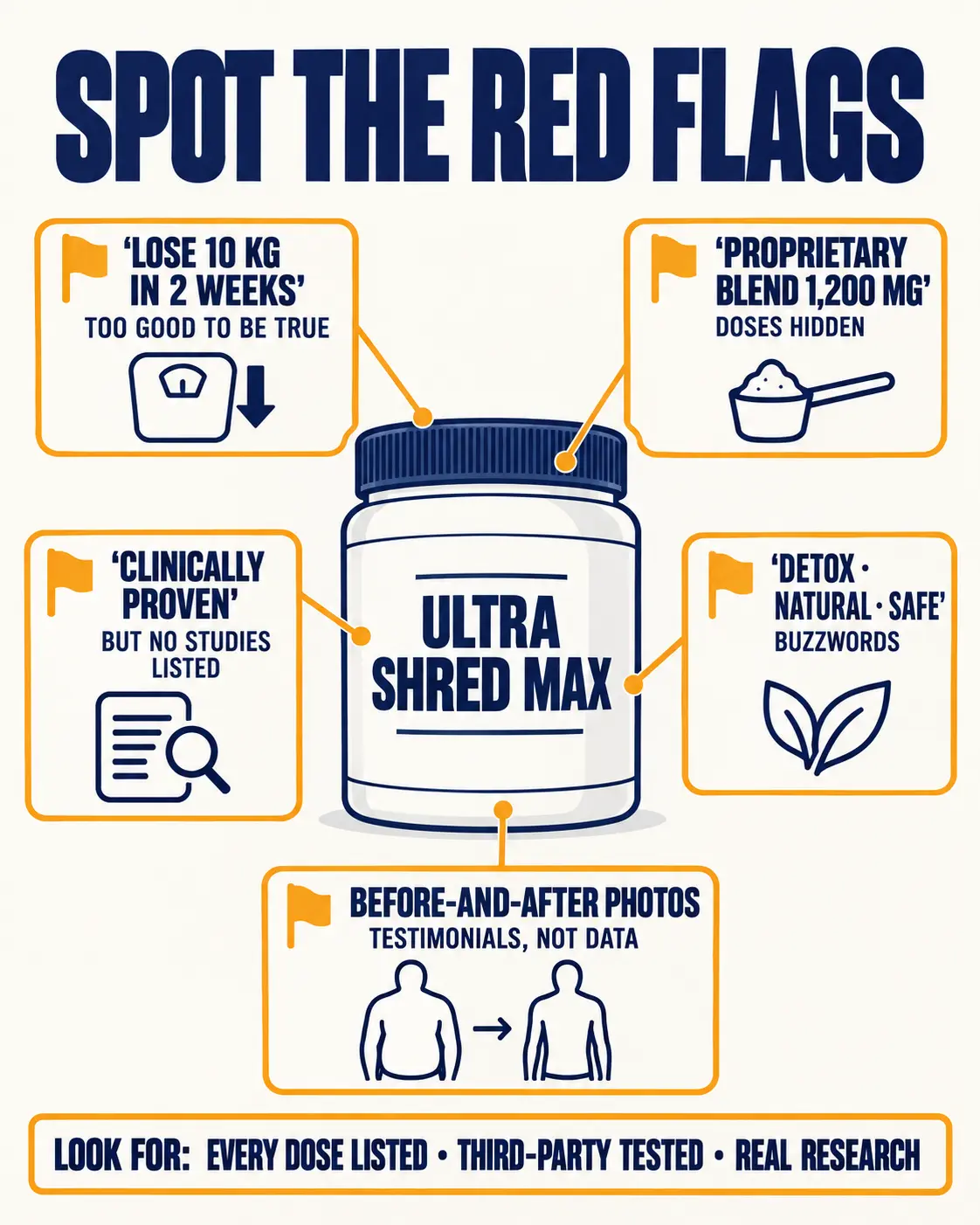
- Too good to be true"Lose 10 kg in 2 weeks", "melts fat", "works for everyone", "no diet or exercise needed".
- Proprietary blendsIngredients listed without individual doses, so you can't tell whether any is at an effective — or safe — amount.
- Vague or missing evidence"Clinically proven" with no published studies, or studies only in animals or on single ingredients.
- Buzzwords"Detox", "cleanse", "boosts metabolism", "hormone-balancing", "natural so it's safe".
- Selling through testimonialsBefore-and-after photos and celebrity or influencer endorsements instead of data.
Common Supplements and Their Evidence
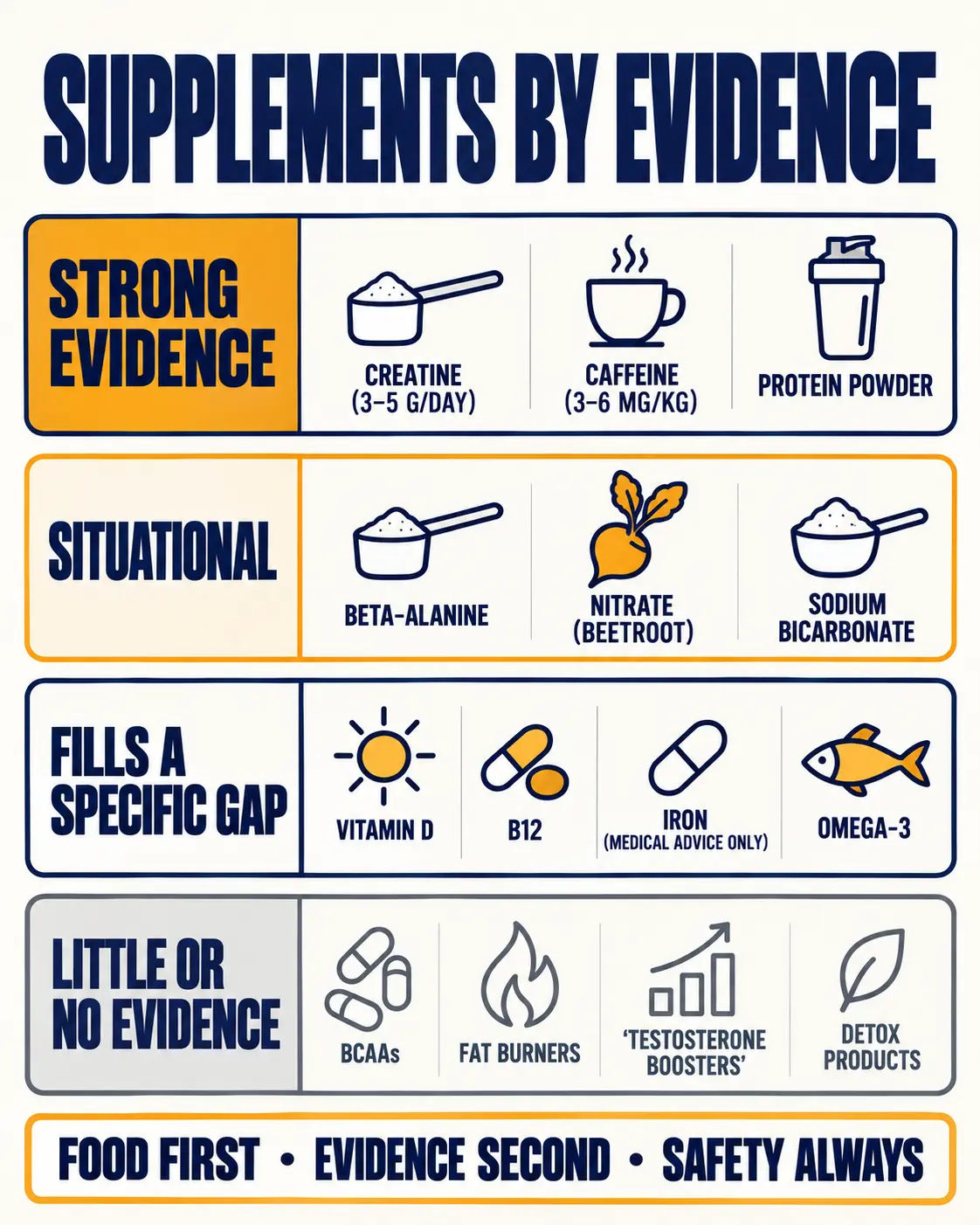
The table groups common supplements by how strong the evidence is for healthy, active adults. Doses are general figures from sports nutrition research, not individual advice.
| Supplement | Evidence and use | Typical dose in research | Notes |
|---|---|---|---|
| Strong evidence | |||
| Creatine monohydrate | Increases strength, power and lean mass with resistance training; helps repeated high-intensity efforts | 3–5 g/day; optional loading of ~20 g/day (split into 4 doses) for 5–7 days | One of the most studied supplements. Small weight gain from water in muscle. People with kidney disease → doctor. |
| Caffeine | Improves endurance, alertness and some strength and power performance | 3–6 mg/kg about 30–60 minutes before exercise | Side effects: jitters, fast heart rate, stomach upset, poor sleep. Many authorities suggest up to ~400 mg/day for healthy adults; less in pregnancy. |
| Protein powder | A convenient way to reach daily protein needs | Usually 20–40 g per serving | No better than food protein — just easier. Whey, casein, soy and pea all work. |
| Situational evidence (specific sports or conditions) | |||
| Beta-alanine | May help high-intensity efforts lasting about 1–4 minutes | ~3–6 g/day, split into smaller doses, for several weeks | Harmless tingling of the skin is common. |
| Dietary nitrate (beetroot juice) | May improve endurance performance | Taken 2–3 hours before exercise | Smaller effect in highly trained athletes. |
| Sodium bicarbonate | May help very high-intensity efforts | ~0.2–0.3 g/kg before exercise | Stomach upset is common — test in training. |
| Filling a specific gap | |||
| Vitamin D, B12, iron, calcium, omega-3 | Helpful when intake or blood levels are low (Lessons 8 and 10) | Depends on the person | Iron only on medical advice. Deficiencies are diagnosed by a doctor. |
| Multivitamin | A low-dose "safety net" for restrictive diets | Standard daily dose | Doesn't replace a varied diet. |
| Little or no good evidence | |||
| BCAAs | Little extra benefit if daily protein is already enough | — | Whole protein provides all essential amino acids. |
| "Fat burners", "testosterone boosters", "detox" products | Little good evidence; highest risk of hidden ingredients | — | Avoid, especially for tested athletes. |
For more depth, see our guides to creatine and choosing a protein powder.
Safety: Interactions, Contamination and Testing
"Natural" doesn't mean safe. Supplements can cause harm in three main ways:
- Too muchDoses above the Tolerable Upper Intake Level (UL) — especially vitamins A and D, iron and selenium (Lesson 10) — or stacking several products with the same ingredient, such as caffeine.
- Interactions with medicinesSt John's wort interacts with many medicines, including some antidepressants and hormonal contraceptives. Vitamin K affects some blood thinners, and fish oil, ginkgo and high-dose vitamin E may add to their effect. Grapefruit and some herbs change how medicines are broken down.
- ContaminationSome products contain ingredients not on the label — including prescription drugs, stimulants or substances banned in sport. The risk is highest for weight-loss, muscle-building and sexual-enhancement products.
Third-party testing
Independent testing programmes — for example NSF Certified for Sport, Informed Sport and Informed Choice — check that a product contains what its label says and screen it for substances banned in sport. Certification doesn't prove that a product works, and no test can remove all risk, but it greatly reduces the chance of contamination. Athletes who compete under anti-doping rules are generally held responsible for anything found in their bodies, whatever its source — so they should only use certified products, and check with their sport's anti-doping organisation.
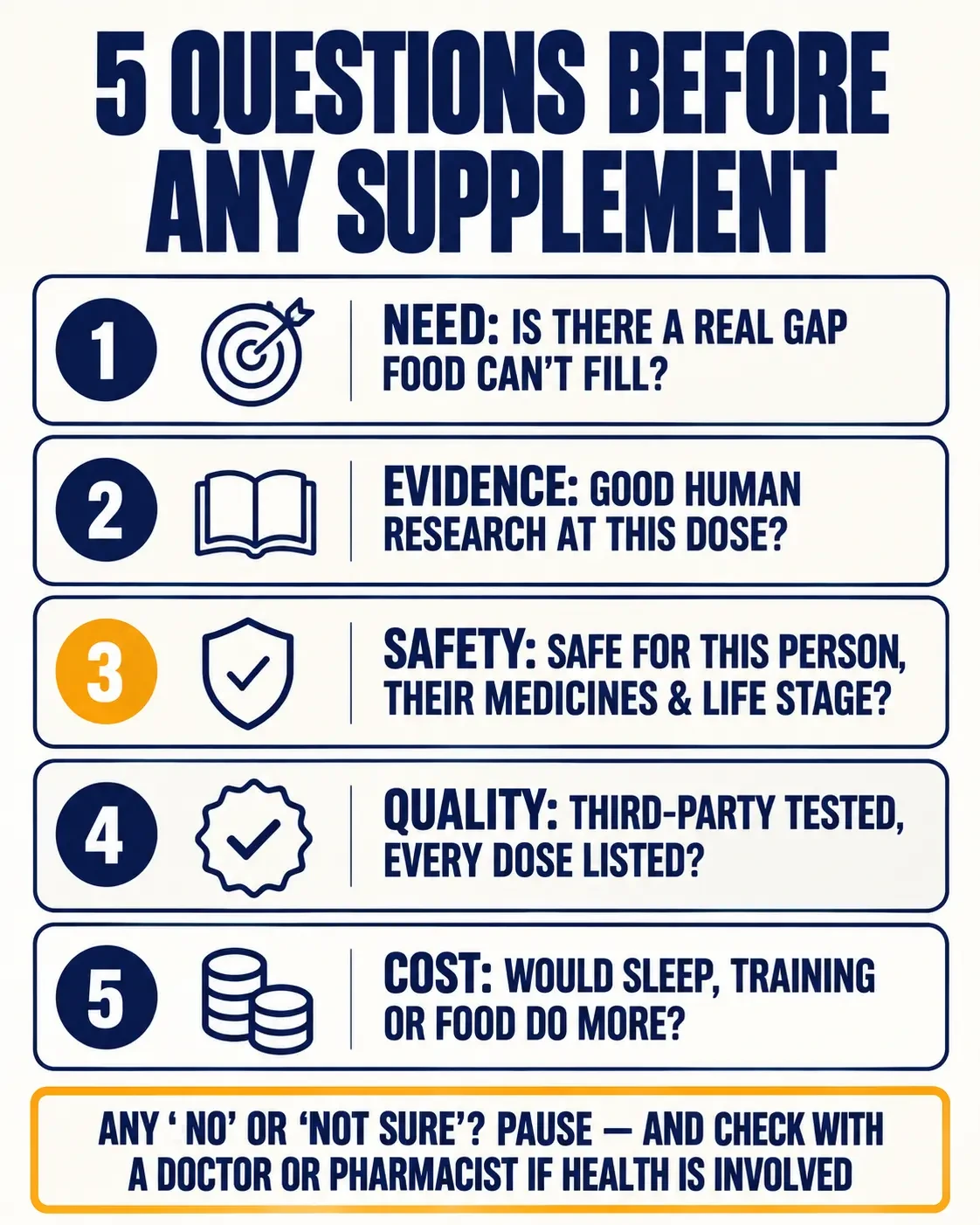
Five questions before any supplement
- Need: Is there a real gap that food can't fill?
- Evidence: Is there good human research for this goal, at this dose?
- Safety: Is it safe for this person — including their medicines, health and life stage?
- Quality: Is it third-party tested, with every ingredient and dose listed?
- Cost and priorities: Would the money and effort do more for sleep, training or food?
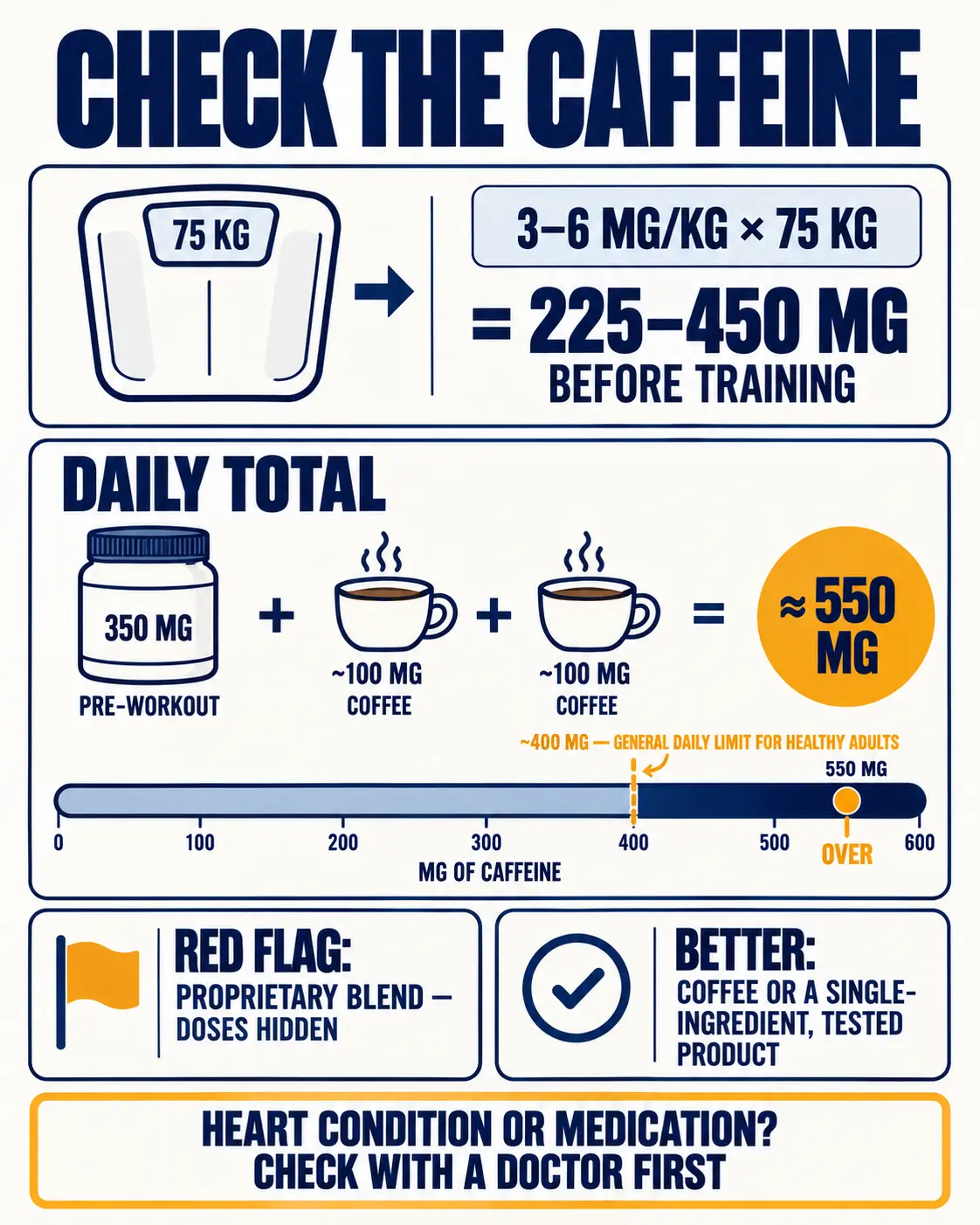
Rohan weighs 75 kg and shows his coach a pre-workout powder with 350 mg of caffeine per scoop and an "energy matrix" proprietary blend. He also drinks two cups of coffee a day, at roughly 100 mg each.
Research range: 3–6 mg/kg × 75 kg = 225–450 mg of caffeine before exercise. The low end often works well, with fewer side effects.
Daily total: 350 + 2 × 100 = ~550 mg — above the ~400 mg a day many authorities suggest for healthy adults.
Coaching: the coach shares this information, points out the proprietary blend as a red flag, and suggests that if Rohan wants caffeine before training, a cup of coffee or a single-ingredient, third-party tested product lets him control the dose. If he has a heart condition or takes medication, he checks with his doctor first.
Scope: Where the Coach's Role Ends
| Generally within a coach's role | Refer to a doctor, pharmacist or registered dietitian |
|---|---|
| Sharing general, evidence-based information about supplements | Recommending supplements to treat or prevent a medical condition |
| Explaining red flags and how to find third-party tested products | Diagnosing deficiencies or interpreting blood tests |
| Encouraging a food-first approach | Clients who are pregnant or breastfeeding, take medication, or have health conditions |
| Asking clients what they already take | Children and teenagers; suspected side effects or reactions |
Supplements were also covered in NASM-CPT Lesson 18 and in the Eat With Intent supplements lesson — useful extra practice.
12 questions in the style of the CNC exam. Score 70%+ to mark this lesson complete.
- In many countries, supplements are regulated more like foods and don't have to prove they work before sale — quality varies.
- Systematic reviews and RCTs are strong evidence; testimonials and animal studies are weak. Proprietary blends and "too good to be true" claims are red flags.
- Strong evidence: creatine (3–5 g/day), caffeine (3–6 mg/kg; ~400 mg/day general limit) and protein powder for convenience.
- Others help mainly for specific sports (beta-alanine, nitrate) or specific gaps (vitamin D, B12, iron).
- Risks: too much, interactions with medicines, and contamination — third-party testing reduces contamination risk but doesn't prove a product works.
- Ask: need, evidence, safety, quality, cost. Medical conditions, medications, pregnancy and side effects → doctor or pharmacist.
Before moving to Lesson 14:
- Pick a supplement you've seen advertised and run it through the five questions.
- Calculate a 3–6 mg/kg caffeine range for your own body weight.
- Write two examples of supplement–medicine interactions from memory.
- Complete the knowledge check above and review any question you missed.