Nutrition debates are rarely as simple as "good" or "bad". The dose, the overall diet, and the quality of the evidence all matter. Sweeteners are tested and given safe daily limits; gluten matters greatly for people with coeliac disease but has no proven benefit to avoid otherwise; organic and conventional foods differ little in nutrition; the body already "detoxes" itself; and diets high in ultra-processed foods are linked with eating more and poorer health. A coach's role is to help clients weigh the evidence calmly, respect their values, and focus on the habits that matter most.
Lesson 21 covered named diets. This lesson tackles the questions clients bring from headlines and social media — "Are sweeteners safe?", "Should I go gluten-free?", "Do I need to detox?" — and gives you a consistent way to answer them.
Free on YouTube Subscribe to get every lesson video in this course SubscribeHow to Approach a Controversy
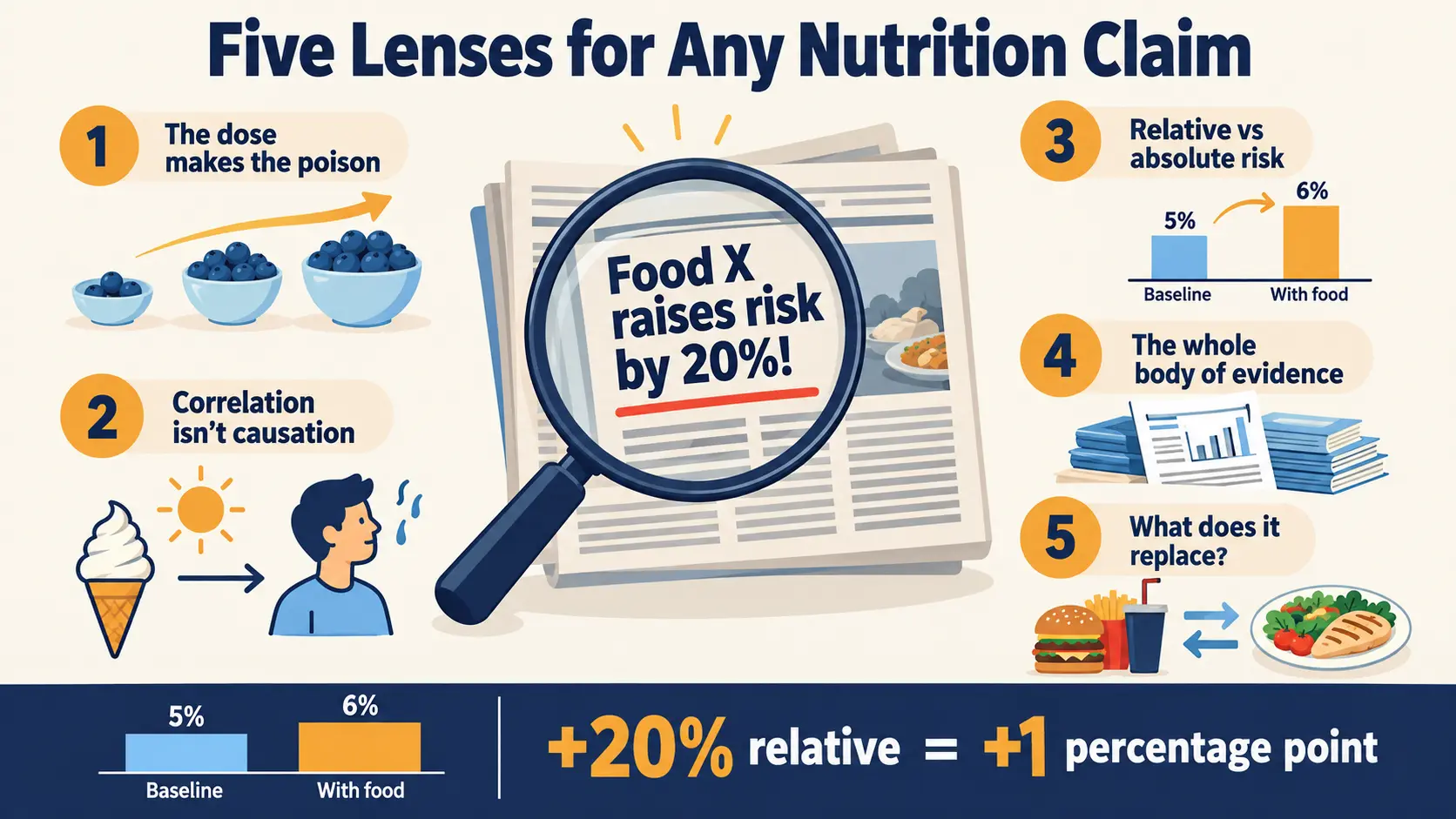
Most hot topics become clearer when you ask the same few questions (Lesson 2):
- The dose makes the poisonAlmost anything is harmful in a large enough amount — and many "scary" substances are harmless at normal intakes.
- Correlation isn't causationObservational studies show links, not proof. People who eat a certain food may differ in many other ways.
- Relative vs absolute risk"Raises risk by 20%" sounds alarming — but a 20% rise on a 5% baseline is only 1 percentage point (5% → 6%).
- Look at the whole body of evidenceSystematic reviews and expert consensus outweigh single studies, especially animal or test-tube studies.
- What would it replace?A diet drink instead of a sugary one is a different choice from a diet drink instead of water.
Non-Nutritive Sweeteners
Non-nutritive sweeteners (also called artificial, low-calorie or intense sweeteners) provide sweetness with little or no energy. Common examples include aspartame, sucralose, acesulfame potassium (acesulfame K), saccharin, and plant-derived stevia and monk fruit extracts.
| Topic | What to know |
|---|---|
| Safety testing | Food safety authorities assess sweeteners and set an acceptable daily intake (ADI) — the amount that can be eaten every day over a lifetime without appreciable risk, with a large safety margin built in |
| Aspartame | In 2023, the WHO's cancer agency (IARC) classed aspartame as "possibly carcinogenic" (the same broad category as many everyday exposures), while the WHO/FAO expert committee (JECFA) kept its ADI of 40 mg per kg of body weight. People with phenylketonuria (PKU) must avoid aspartame because it contains phenylalanine |
| Weight management | Swapping sugary drinks for sweetened ones can reduce energy intake in the short term; the WHO advises against relying on sweeteners for long-term weight control. Water remains the best default |
| Sugar alcohols | Erythritol, xylitol, sorbitol and maltitol provide fewer calories than sugar but can cause bloating or diarrhoea in large amounts. Xylitol is toxic to dogs |
Putting the ADI in perspective
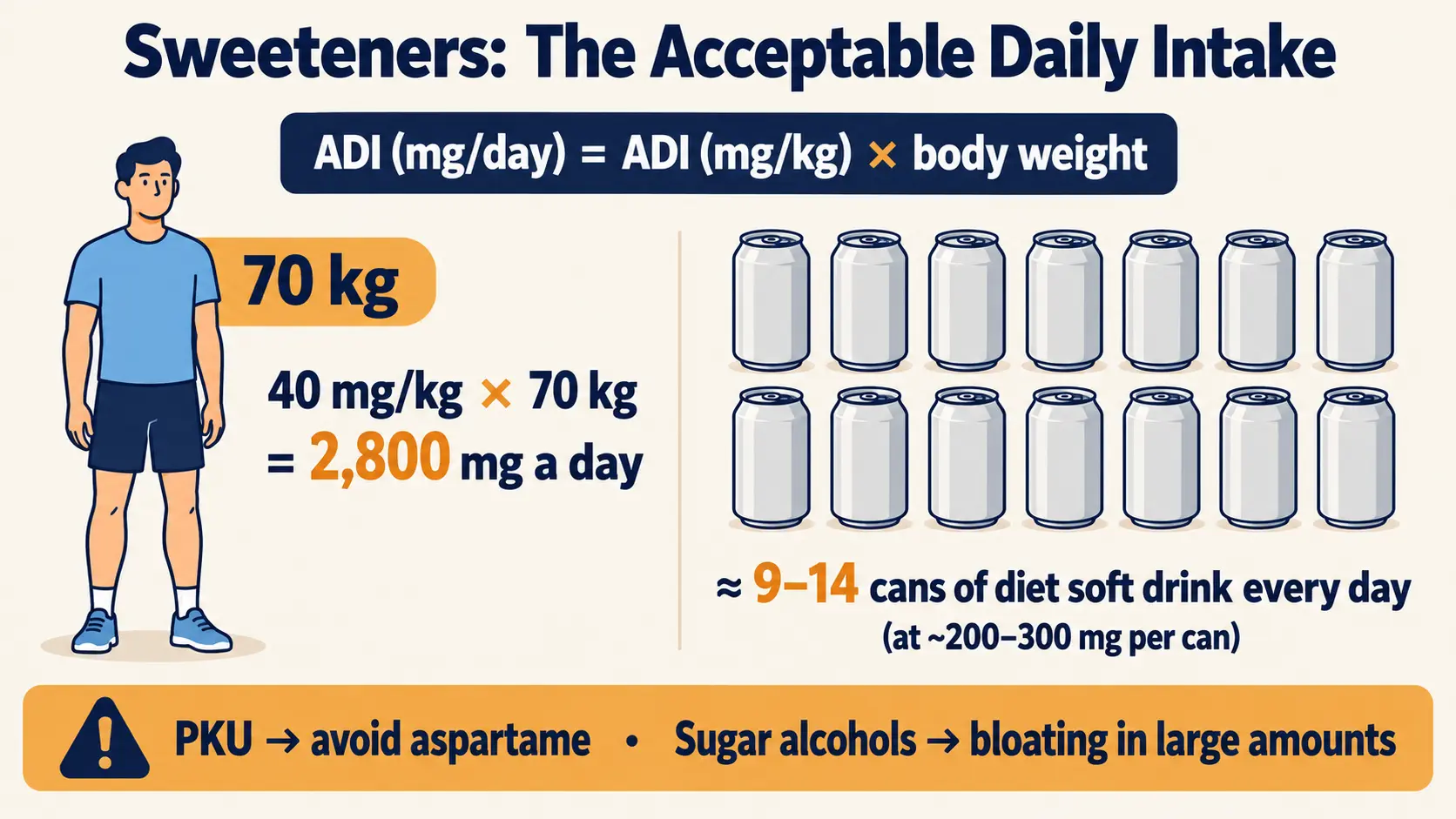
ADI (mg per day) = ADI (mg per kg) × body weight (kg)
For aspartame, a 70 kg adult's ADI is 40 × 70 = 2,800 mg a day. A can of diet soft drink commonly contains about 200–300 mg, so it would take roughly 9–14 cans every day to reach the ADI.
Gluten
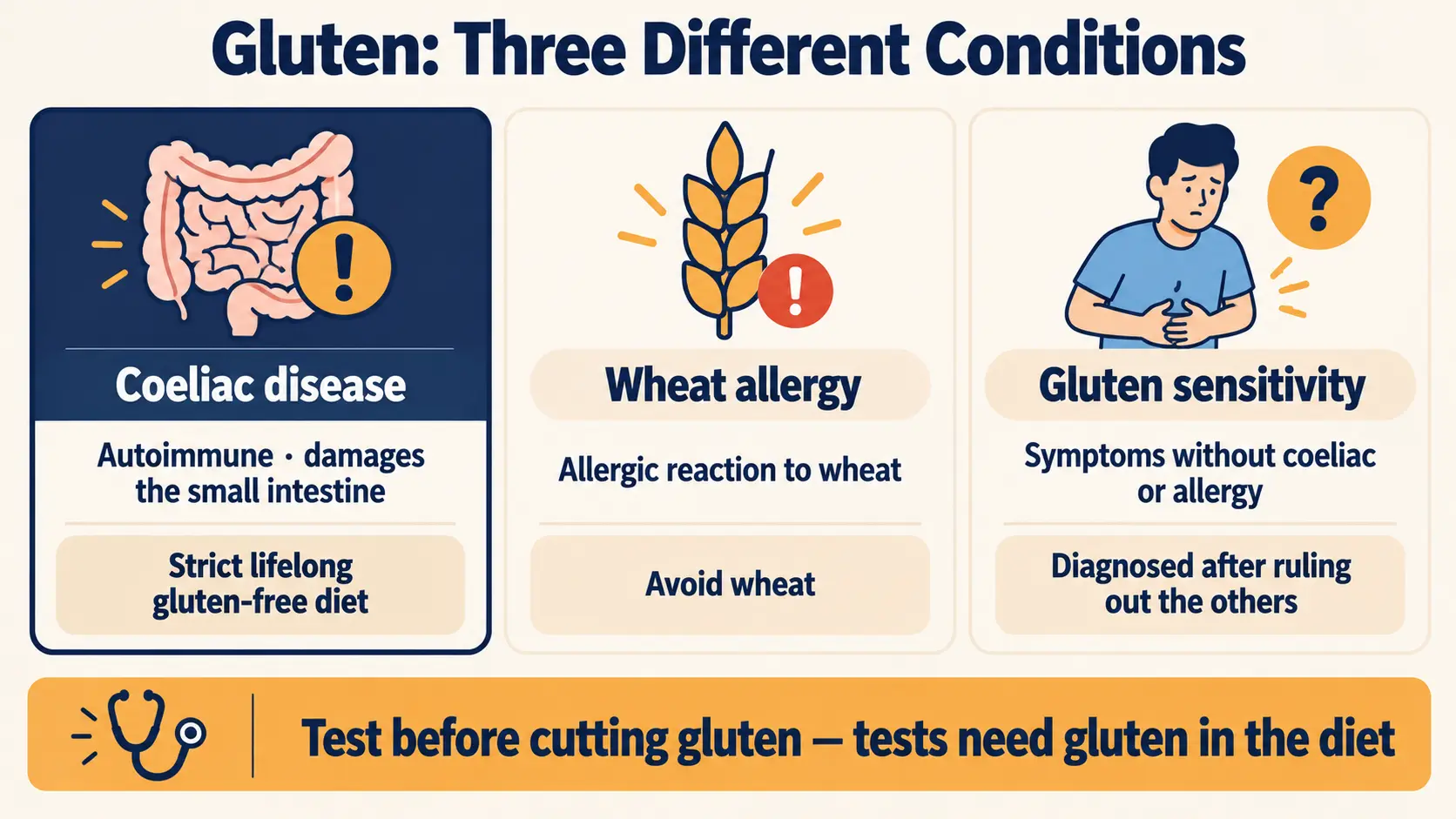
Gluten is a group of proteins found in wheat, barley and rye (and oats contaminated with them). Three different conditions are often confused:
| Condition | What it is | What it means |
|---|---|---|
| Coeliac disease | An autoimmune condition: gluten triggers damage to the lining of the small intestine. Affects around 1% of people | Strict, lifelong gluten-free diet; diagnosed by a doctor with blood tests and often a biopsy |
| Wheat allergy | An immune (allergic) reaction to wheat proteins | Avoid wheat; diagnosed and managed by a doctor or allergist |
| Non-coeliac gluten sensitivity | Symptoms after eating gluten without coeliac disease or allergy; still being researched (other wheat components may be involved) | Diagnosed after coeliac disease and allergy are ruled out |
For everyone else, there's no good evidence that a gluten-free diet improves health or weight. Gluten-free processed foods can be lower in fibre and fortified nutrients and higher in sugar or fat. Important: anyone who suspects coeliac disease should be tested before cutting out gluten — the tests need gluten to still be in the diet to be accurate.
Organic and Genetically Modified Foods
- Organic foodProduced without most synthetic pesticides and fertilisers; standards vary by country. Nutrient differences from conventional food are generally small. Organic produce tends to have lower pesticide residues, though residues on conventional produce are usually within safety limits.
- The bigger pictureEating more fruit and vegetables — organic or not — matters far more for health than the farming method. Washing produce under running water helps either way.
- Genetically modified (GM) foodsMajor scientific bodies have concluded that approved GM foods are as safe to eat as their conventional counterparts. Debates continue about environmental, economic and ethical issues, and labelling rules vary by country.
- Values matterClients may choose organic or non-GM food for environmental, ethical or taste reasons. Respect those choices — just don't let cost become a barrier to eating fruit and vegetables at all.
Detoxes and Cleanses
The body has its own detoxification system: the liver breaks down and neutralises many substances, the kidneys filter the blood, and the lungs, gut and skin also remove waste. There is no good evidence that detox teas, juice cleanses, foot pads or supplements remove "toxins" — and products rarely name which toxins they claim to remove.
| Claim | Reality |
|---|---|
| "You'll lose weight fast" | Mostly water and glycogen from eating very little — it returns when normal eating resumes |
| "It flushes out toxins" | The liver and kidneys already do this; healthy organs don't need a cleanse |
| "It's natural, so it's safe" | Laxative or diuretic teas can cause dehydration and electrolyte problems; some herbal products interact with medication |
| "You'll feel lighter and more energetic" | Often from cutting alcohol, ultra-processed food and late-night snacking — habits worth keeping without the cleanse |
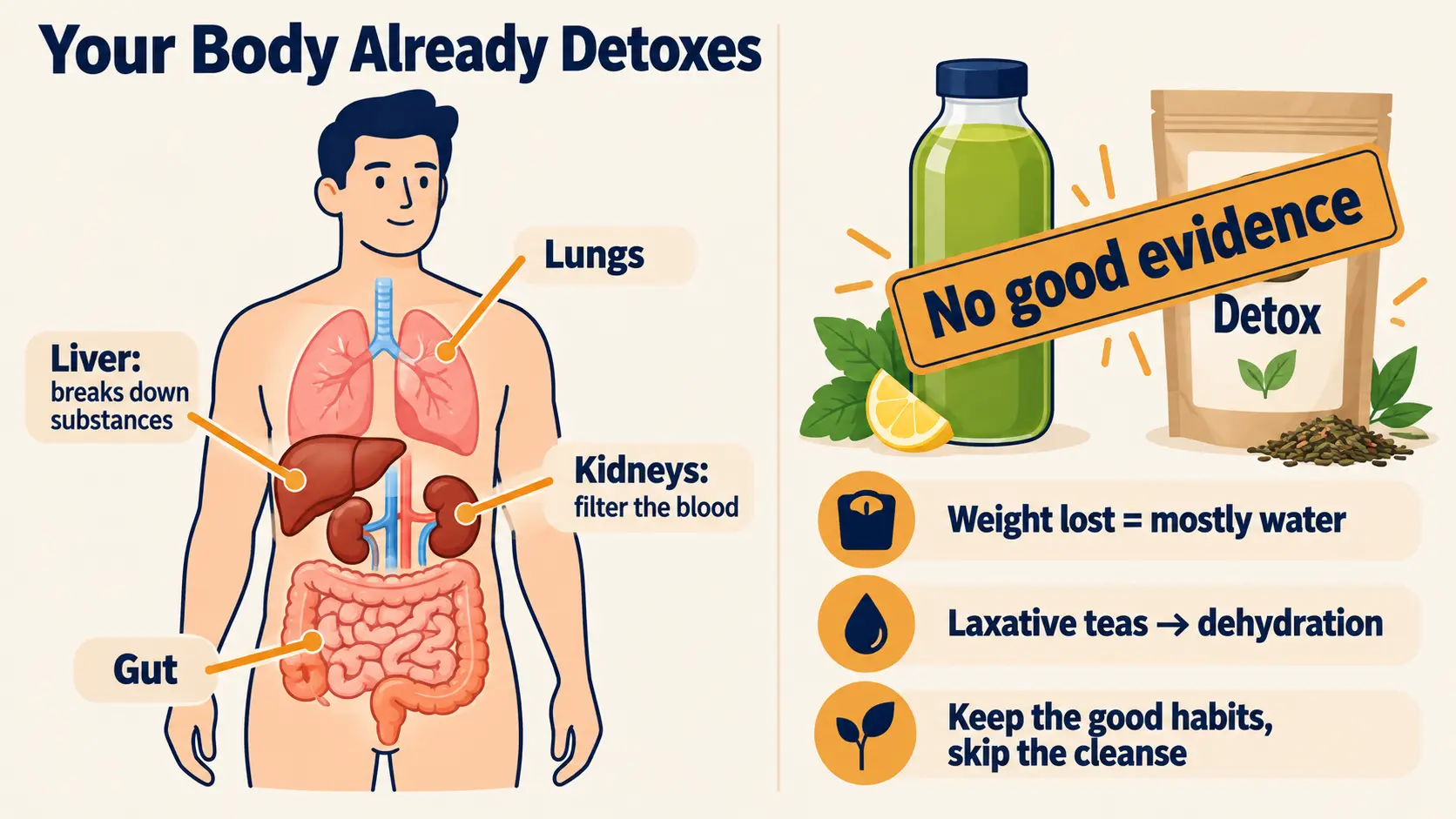
The useful part of a detox is usually the intention behind it. Coaches can redirect that motivation into habits that genuinely support the body: water, vegetables, fibre, sleep, less alcohol.
Ultra-Processed Foods
The NOVA classification groups foods by how much they've been processed:
| NOVA group | Description | Examples |
|---|---|---|
| 1. Unprocessed or minimally processed | Whole foods, or foods cleaned, frozen, dried or pasteurised | Fruit, vegetables, eggs, milk, plain rice, lentils, fresh meat |
| 2. Processed culinary ingredients | Extracted from foods and used in cooking | Oils, butter, sugar, salt, flour |
| 3. Processed foods | Group 1 foods with group 2 ingredients added | Canned beans, cheese, simple fresh bread, salted nuts |
| 4. Ultra-processed foods | Industrial formulations, often with additives not used in home cooking | Soft drinks, packaged snacks, sweetened cereals, instant noodles, many ready meals |
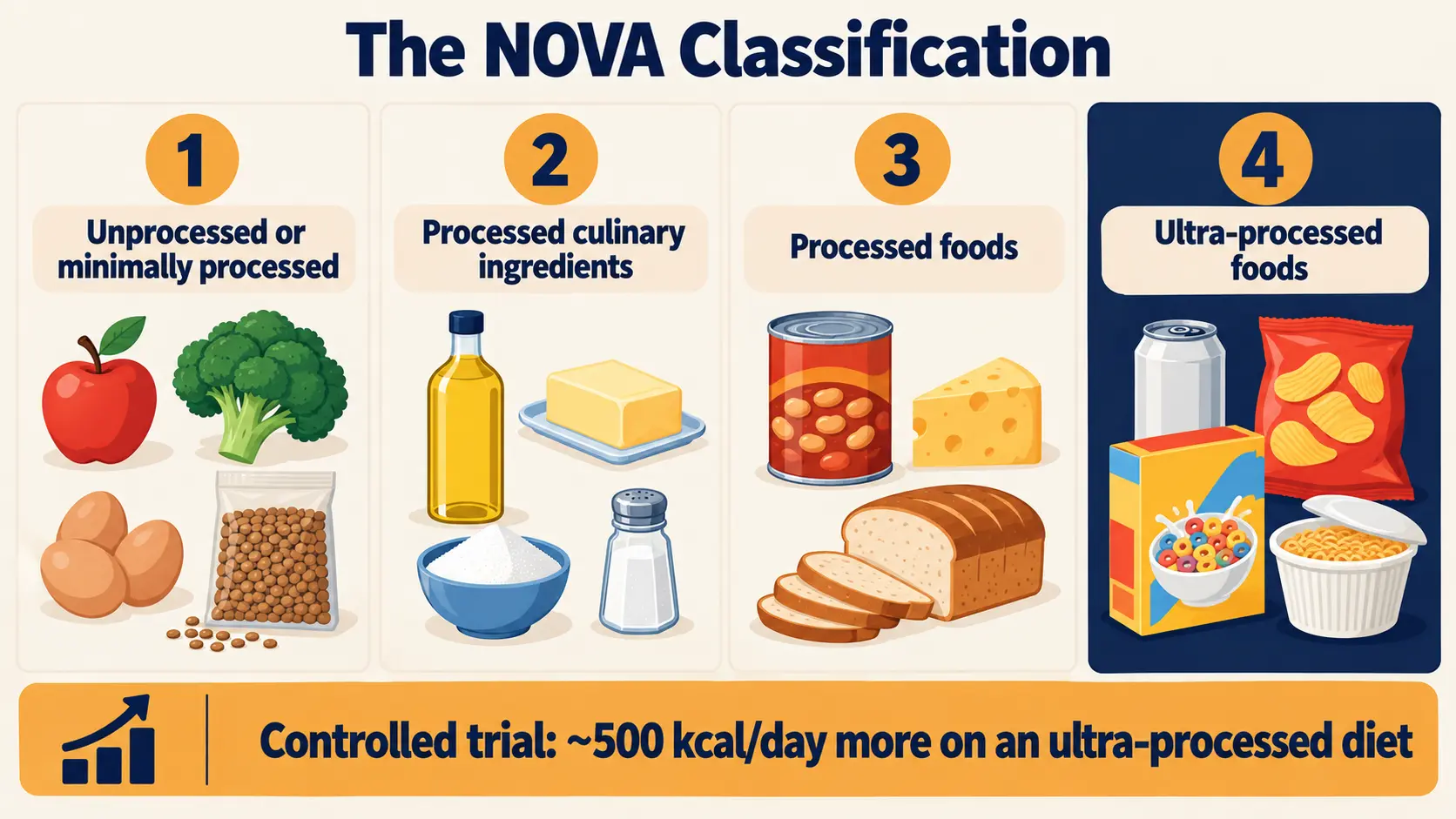
Higher intakes of ultra-processed foods are linked in observational studies with weight gain, type 2 diabetes and heart disease. In a 2019 controlled trial, people offered an ultra-processed diet ate about 500 kcal more per day than on a minimally processed diet matched for nutrients, and gained weight. The nuance: processing level isn't everything — some ultra-processed foods (such as wholegrain packaged bread or fortified plant milks) can fit well in a healthy diet. Use it as one lens alongside nutrient content (Lesson 19).
Other Common Questions
| Topic | Balanced summary |
|---|---|
| Caffeine | Up to about 400 mg a day is generally considered safe for most healthy adults; lower limits (often about 200 mg) apply in pregnancy. Sensitivity and sleep effects vary (Lesson 13) |
| Red and processed meat | The WHO's cancer agency classes processed meat as carcinogenic and red meat as probably carcinogenic (bowel cancer). Many guidelines suggest limiting processed meat and moderating red meat |
| Eggs and dietary cholesterol | For most people, dietary cholesterol has a modest effect on blood cholesterol; eggs can fit a healthy diet. Saturated fat has a bigger effect |
| Saturated fat and seed oils | Replacing saturated fat with unsaturated fats (including vegetable oils) is linked with lower heart disease risk. Claims that seed oils are "toxic" aren't supported by strong evidence (Lesson 8) |
| MSG | Food safety authorities consider it safe at normal intakes; controlled studies haven't consistently reproduced reported reactions |
Talking with clients about hot topics
Use the same client-centred skills as before (Lessons 15–16): ask what they've heard and why it matters to them, share balanced information with permission, acknowledge uncertainty honestly ("the evidence is still developing"), respect their values, and bring the conversation back to the habits that make the biggest difference.
The situation: after watching a video online, Priya wants to go gluten-free and start a 7-day juice cleanse "to reset her gut".
Explore: she mentions frequent bloating after eating bread and low energy in the afternoons.
Gluten: because of her symptoms, the coach encourages her to see her doctor before removing gluten, so coeliac disease can be tested for accurately.
Cleanse: the coach explains that the liver and kidneys already do this job, and that weight lost on a cleanse is mostly water.
The plan: Priya keeps her motivation for a "reset" and chooses two habits instead — vegetables at lunch and dinner, and a water bottle at her desk — while she waits for her appointment.
For more on processing, see What Ultra-Processed Food Actually Means (It's Not Just "Packaged").
12 questions in the style of the CNC exam. Score 70%+ to mark this lesson complete.
- Weigh claims with five lenses: dose, correlation vs causation, relative vs absolute risk, the whole evidence base, and what a food replaces.
- Sweeteners have safe daily limits (ADI = mg/kg × body weight); people with PKU avoid aspartame.
- Coeliac disease needs a strict gluten-free diet; for others there's no proven benefit — test before cutting gluten.
- Organic and conventional foods differ little in nutrition; approved GM foods are considered safe to eat.
- The liver and kidneys detoxify the body; cleanses mainly cause water loss.
- Diets high in ultra-processed foods are linked with eating more — but processing is one lens, not the only one.
Before moving to Lesson 23:
- Find one nutrition headline and test it against the five lenses.
- Calculate the aspartame ADI for your own body weight.
- Sort ten foods in your kitchen into the four NOVA groups.
- Complete the knowledge check above and review any question you missed.