Plateaus are a normal part of weight loss, not a sign of failure. As people lose weight, they need less energy, everyday movement tends to drop, appetite rises, and small habits drift — so the original deficit quietly shrinks. Coaches confirm a true plateau with weekly averages, check adherence honestly, then make one small adjustment at a time. Keeping weight off is a skill of its own: regular activity, self-monitoring within a range, protein and strength training, flexible eating, and a plan for small regains.
Lesson 17 introduced reviewing goals when "adherence is high, but the outcome isn't moving". This lesson explains why that happens, how to respond, and how to help clients keep the results they've worked for.
Free on YouTube Subscribe to get every lesson video in this course SubscribeWhat Is a Plateau?
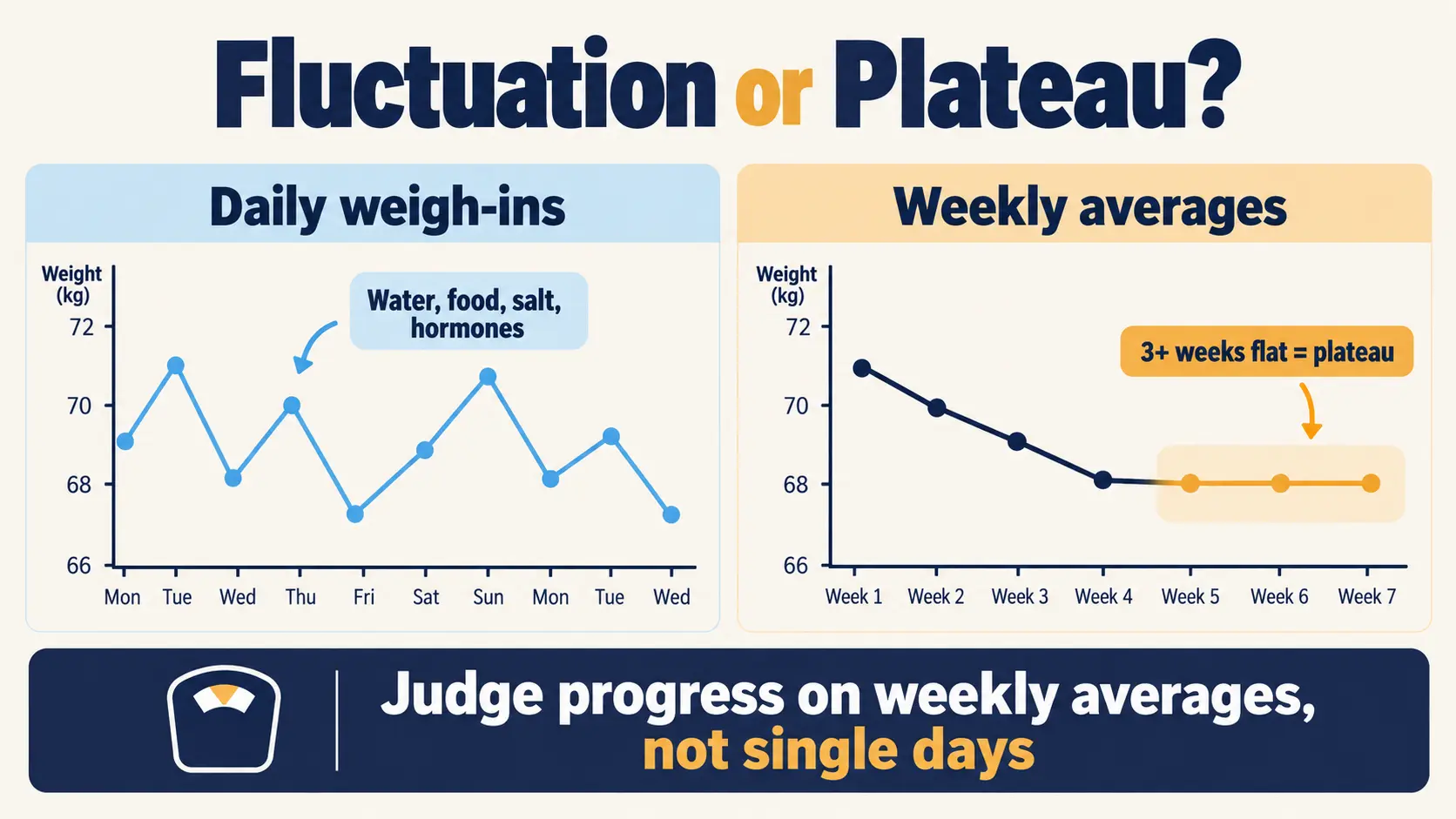
A weight loss plateau is a period — commonly about three weeks or more — when weekly average weight stays roughly the same despite consistent effort.
Day-to-day scale changes are not plateaus. Body weight can shift by a kilogram or more from one day to the next because of water, food in the gut, salt, carbohydrate intake, hormonal cycles and new exercise (Lesson 17). That's why coaches look at weekly averages and trends, alongside waist measurements and non-scale progress (Lesson 18).
It also helps to set realistic expectations. A common guide is a loss of about 0.5–1% of body weight per week — for an 80 kg person, about 0.4–0.8 kg a week — and the rate naturally slows as weight comes down.
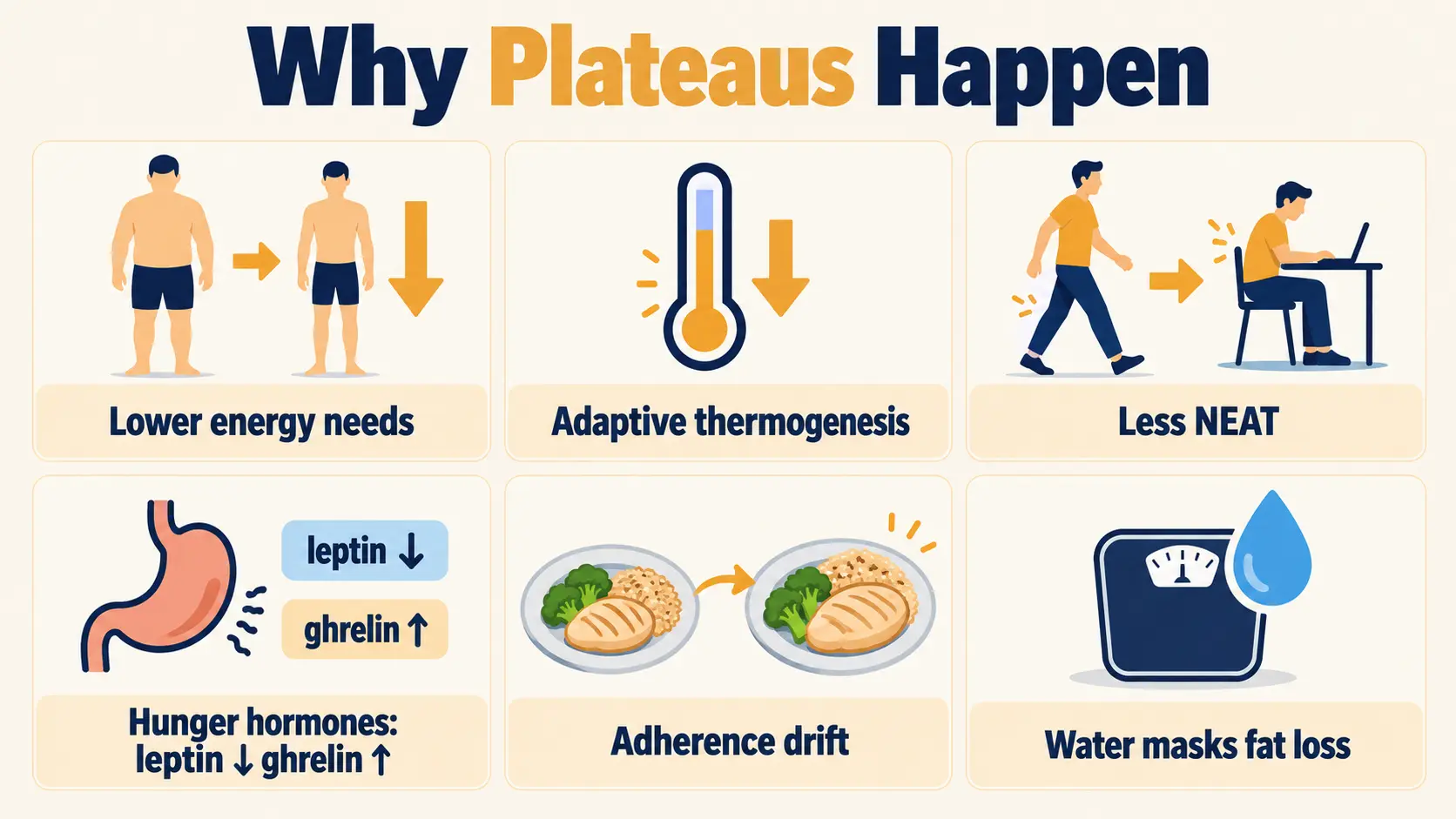
Why Plateaus Happen
| Cause | What happens |
|---|---|
| Lower energy needs | A smaller body needs less energy at rest and to move around, so total daily energy expenditure (TDEE) falls (Lesson 5) |
| Adaptive thermogenesis | Energy expenditure can drop more than expected from the weight lost alone — also called metabolic adaptation |
| Less NEAT | Non-exercise activity thermogenesis — fidgeting, standing, walking — often falls without people noticing |
| Appetite hormones | Leptin (a fullness signal from fat tissue) falls and ghrelin (a hunger hormone) rises, so hunger increases |
| Adherence drift | Portions creep up, tracking slips, weekends loosen, drinks and "small bites" add up — often unintentionally (Lesson 18) |
| Water masking fat loss | New training, stress, salt, poor sleep or the menstrual cycle can cause water retention that hides fat loss for a while |
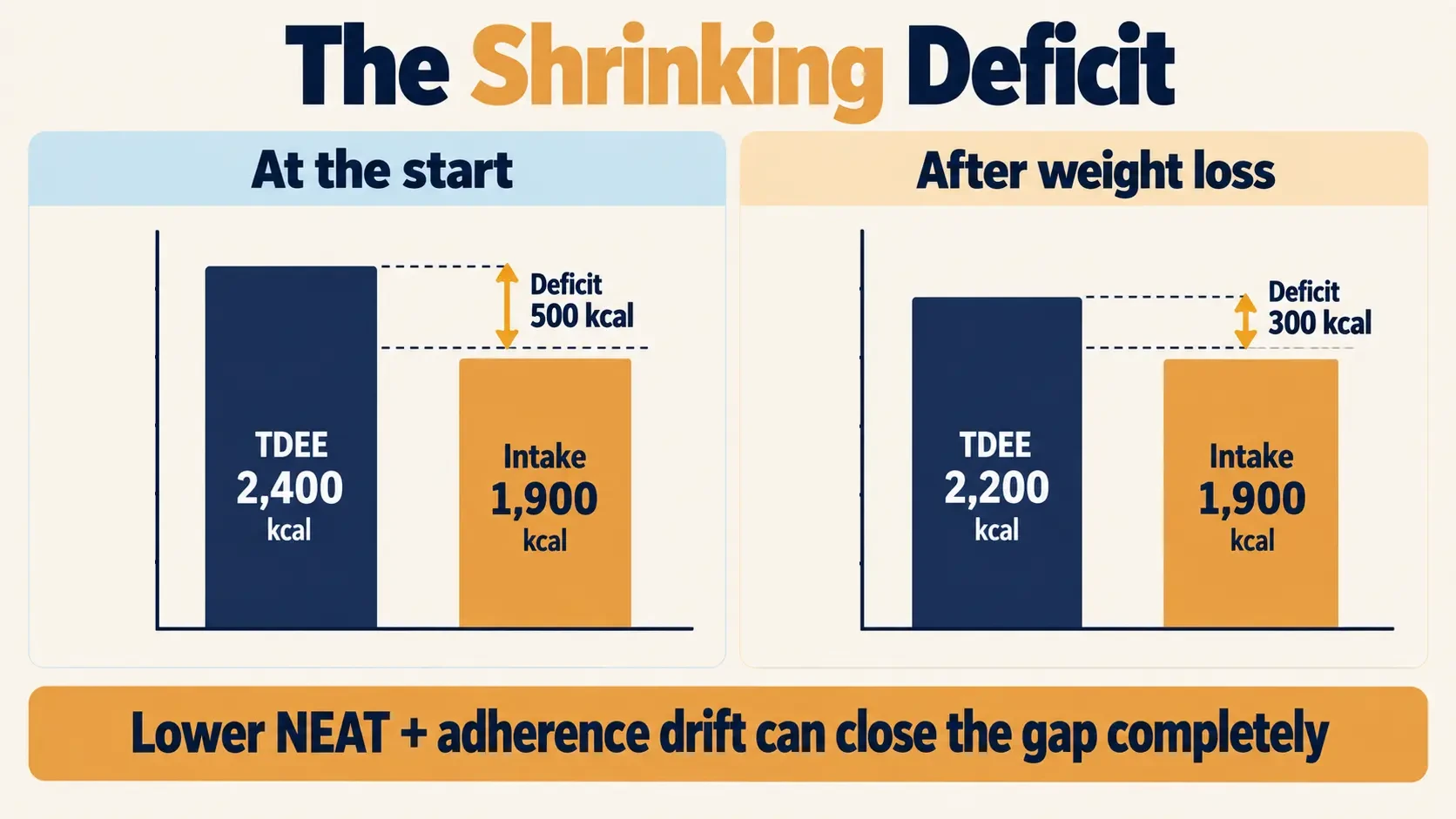
The shrinking deficit
The first cause is easy to show with numbers. Imagine a client whose TDEE was about 2,400 kcal when they started, eating 1,900 kcal a day — a deficit of 500 kcal. After losing weight, their TDEE is about 2,200 kcal. If they still eat 1,900 kcal, the deficit is now 2,200 − 1,900 = 300 kcal. Add a drop in NEAT and a little adherence drift, and the deficit can disappear altogether — even though the client feels they're "doing everything the same".
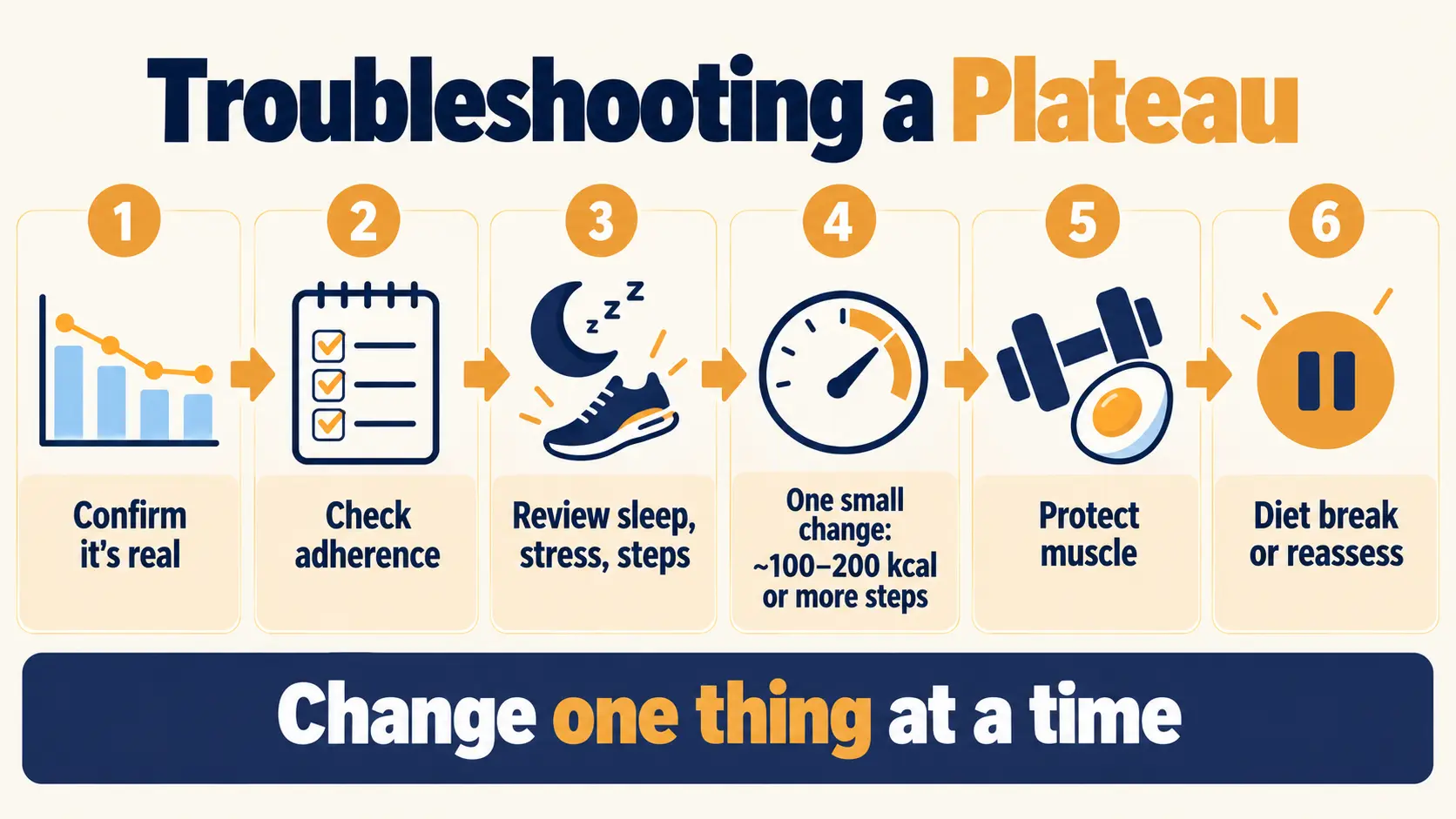
Troubleshooting a Plateau
Work through these steps in order, and change one thing at a time so you can see what works:
| Step | What the coach does |
|---|---|
| 1. Confirm it's real | Compare weekly averages over 3–4 weeks; check waist measurements, photos and how clothes fit. Fat loss may still be happening |
| 2. Check adherence honestly | A few days of detailed tracking or photos; look at portions, weekends, drinks, oils and snacks — without judgement (Lesson 15) |
| 3. Review lifestyle factors | Daily steps, sleep, stress and training — has anything changed? |
| 4. Make one small adjustment | For example, reduce intake by about 100–200 kcal a day, or add 1,500–2,000 daily steps — whichever the client prefers |
| 5. Protect muscle | Keep protein intake adequate (Lesson 6) and continue resistance training |
| 6. Consider a break or reassess | A diet break at maintenance, or a conversation about whether the current weight is a healthy, sustainable place to stop |
Diet breaks and maintenance phases
A diet break is a planned period — often 1–2 weeks — of eating at estimated maintenance during a longer weight loss phase. Evidence on metabolic benefits is mixed, but breaks can reduce diet fatigue, give practice at maintenance, and make a long weight loss phase easier to stick with. Longer maintenance phases between periods of loss serve the same purpose.
Maintaining Weight Loss
Losing weight and keeping it off are different skills. Many people regain much of the weight they lose within a few years — not from a lack of willpower, but because the biological pressures above (lower expenditure, higher appetite) continue after the diet ends, while the structure of the diet often disappears.
What successful maintainers tend to do
Studies of people who have kept weight off for years — such as the US National Weight Control Registry — point to common habits:
- High levels of physical activityMany report about an hour of activity a day, often walking.
- Regular self-monitoringWeighing regularly (often weekly or more) and noticing small changes early.
- A consistent eating patternSimilar routines on weekdays and weekends, regular meals, and familiar go-to foods.
- Protein and strength trainingHelp preserve muscle and support fullness.
- Flexible restraintGuidelines rather than rigid rules, and getting back on track quickly after a slip (Lesson 20).
Building a maintenance plan
- 1. Transition graduallyIncrease intake step by step (for example, about 100–200 kcal a day each week or two) while watching weekly averages, until weight stabilises.
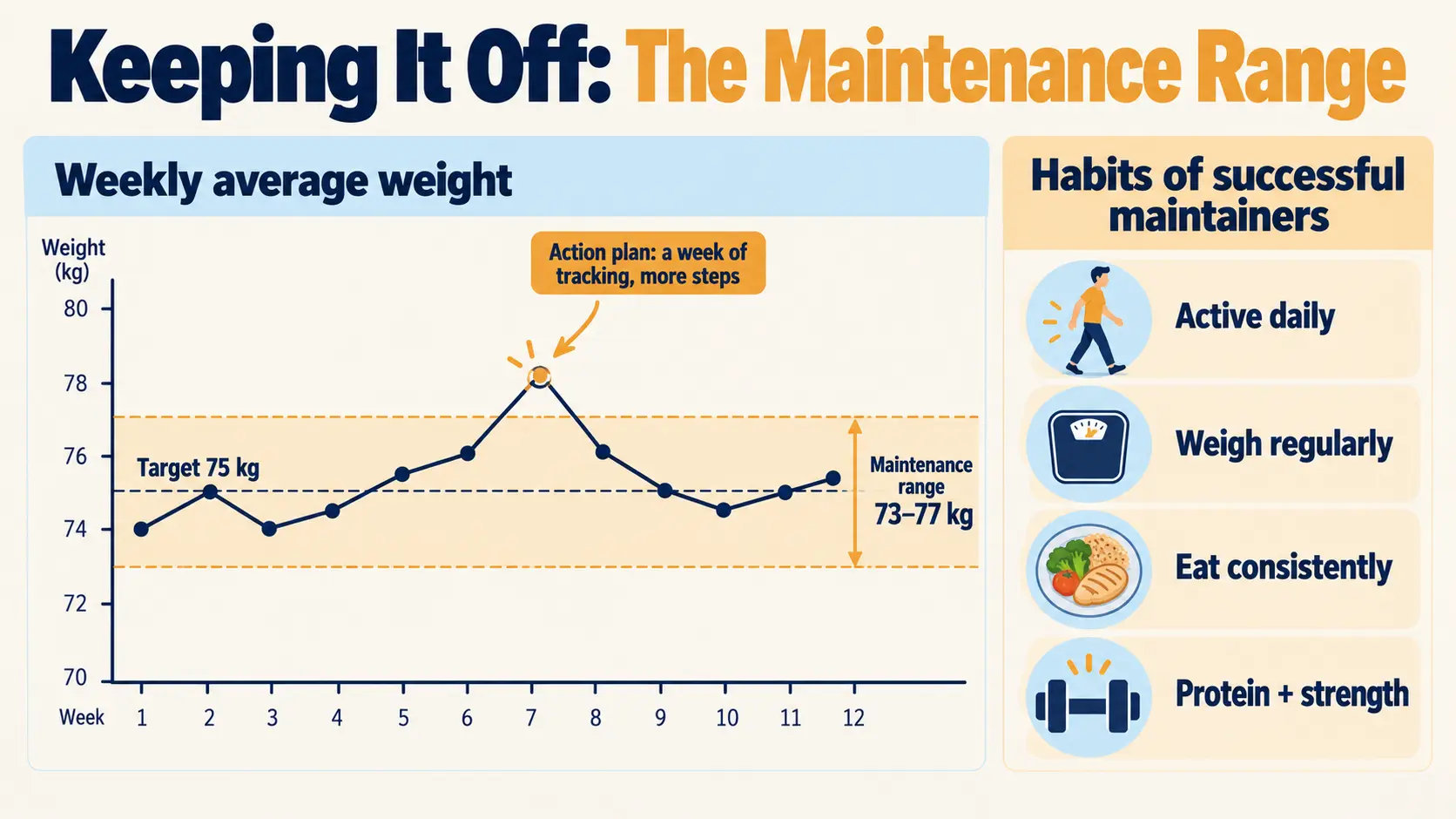
- 2. Set a maintenance rangeA range allows for normal fluctuations. For example, a target of 75 kg ± 2 kg gives a range of 73–77 kg.
- 3. Agree an action planIf the weekly average moves above the range, return to a few key habits — tracking for a week, more steps, regular meals — before regain grows.
- 4. Keep the supportsSleep, stress management, social support and a sense of identity ("I'm someone who walks daily") help habits last (Lesson 14).
The situation: Anita lost 8 kg over five months (85 kg to 77 kg). For the last four weeks her weekly averages have been 77.2, 77.0, 77.3 and 77.1 kg — a true plateau.
Adherence check: her weekday eating is consistent, but weekend portions have grown, and her daily steps have dropped from about 9,000 to 6,000 since she started working from home. She's also sleeping about 6 hours.
One change at a time: she chooses to bring her steps back up with a lunchtime walk first, keeping protein and strength training the same. Two weeks later she adds a simple plan for Saturday meals.
Result: her weekly average starts falling again, and she reaches 75 kg two months later.
Maintenance: she sets a range of 73–77 kg, weighs weekly, keeps her daily walk, and agrees an action plan if her average goes above 77 kg.
For an easy way to raise daily activity, see Walking as Exercise: What 30 Minutes a Day Actually Does to Your Body.
12 questions in the style of the CNC exam. Score 70%+ to mark this lesson complete.
- A plateau is about 3+ weeks of stable weekly averages despite consistent effort — not a day-to-day blip.
- Plateaus happen because TDEE falls, adaptive thermogenesis and lower NEAT kick in, hunger rises and habits drift.
- The deficit shrinks as weight falls: 2,400 − 1,900 = 500 kcal can become 2,200 − 1,900 = 300 kcal.
- Troubleshoot in order: confirm, check adherence, review lifestyle, then make one small change (~100–200 kcal or more steps).
- Diet breaks (1–2 weeks at maintenance) can help adherence; protein and strength training protect muscle.
- Maintainers stay active, self-monitor within a range, eat consistently and act early on small regains.
Before moving to Lesson 24:
- Work through the shrinking-deficit calculation with your own numbers.
- Write the six troubleshooting steps from memory, in order.
- Set a sample maintenance range and an action plan for a made-up client.
- Complete the knowledge check above and review any question you missed.