Choosing a personal training certification is one of the highest-leverage decisions in a fitness career, and one of the most confusing for the same reason that makes it consequential: there are dozens of certifications available, each with its own curriculum, cost structure, exam format, continuing education requirements, and reputation in the employer market. The three certifications most consistently appearing at the top of employer preference surveys and industry recognition rankings are NASM (National Academy of Sports Medicine), ACE (American Council on Exercise), and ISSA (International Sports Sciences Association).
This article compares all three across the dimensions that matter for an actual career decision: what the curriculum covers and emphasises, how difficult the exam is, what the total cost looks like, how widely employers recognise each credential, what the renewal requirements mean in practice, and which type of trainer each certification best suits. It also covers what these certifications do not tell you — the meaningful gaps between certification and actual coaching competence that no piece of paper fully addresses.
The comparison is written from the perspective of someone making this decision for the first time. If you are choosing between a second or third certification to stack on an existing one, the calculus is different, and a brief note on that appears at the end.
Accreditation First: The Foundation the Comparison Rests On
Before comparing curricula and costs, accreditation is the starting point because it determines whether a certification is recognised by employers and fitness facilities in a meaningful way. The relevant accrediting body for personal training certifications globally is NCCA — the National Commission for Certifying Agencies, a US-based standard-setter whose accreditation is recognised by the fitness industry internationally as the benchmark for certification quality.
| Certification | Full Name | NCCA Accredited? | Founded | Est. Certified Trainers |
|---|---|---|---|---|
| NASM-CPT | National Academy of Sports Medicine CPT | Yes | 1987 | ~200,000+ |
| ACE-CPT | American Council on Exercise CPT | Yes | 1985 | ~90,000+ |
| ISSA-CPT | International Sports Sciences Association CPT | Yes (since 2023) | 1988 | ~300,000+ (all ISSA credentials) |
NCCA accreditation matters practically because many commercial gym chains — LA Fitness, Planet Fitness, Anytime Fitness, Equinox, and similar global operators — require or strongly prefer NCCA-accredited certifications when hiring. ISSA achieved NCCA accreditation in 2023, which resolved a long-standing competitive disadvantage. Before that point, ISSA-certified trainers sometimes encountered employer resistance at facilities with strict NCCA-only hiring policies.
NASM-CPT: The Science-Heavy Standard
Curriculum and methodology
NASM's curriculum is built around its OPT™ model — Optimum Performance Training — a periodised, corrective-exercise-integrated approach to programme design that organises training into five phases from stabilisation endurance through to power development. The OPT model is NASM's most distinctive intellectual contribution to personal training education and the element that most clearly sets it apart from ACE and ISSA.
NASM's corrective exercise integration is specifically strong: the curriculum dedicates significant time to movement assessment, identifying muscle imbalances and compensations, and designing programmes that address these alongside performance goals. This makes NASM particularly well-suited to trainers working with general population clients — desk workers with postural issues, sedentary individuals returning to exercise, people managing chronic pain or injury history — where movement quality and injury prevention are as important as fitness outcomes.
The curriculum covers anatomy and physiology, biomechanics, exercise science, nutrition basics, client communication and behaviour change, programming across populations, and business fundamentals, delivered through NASM's online learning platform with reading materials, video instruction, and practice assessments.
Exam difficulty and format
NASM's exam consists of 120 questions (100 scored, 20 unscored pretest items) with a two-hour time limit and a passing scaled score of 70, delivered at a PSI testing centre or via remote proctoring. NASM publishes its own candidate statistics: a 79% pass rate across 33,496 candidates for Nov 2022–Nov 2023, and roughly 85% passing on the first attempt in its 2025 data — our breakdown of whether the NASM CPT exam is hard covers what those numbers mean and what trips people up. The difficulty comes primarily from the science depth: questions require applying the OPT model to client scenarios, not just memorising definitions. Candidates who study passively tend to underperform on NASM's application-style questions.
Cost breakdown
| NASM-CPT Cost Component | Approximate Cost (USD) |
|---|---|
| Self-study package (textbook + online materials) | $699–$799 |
| Premium package (study guide, flashcards, practice exams) | $899–$999 |
| Guided study bundle (adds live online sessions) | $1,099–$1,299 |
| Exam retake fee (if first attempt fails) | $199 |
| CPR/AED certification (required before exam) | $30–$80 |
| Recertification (every 2 years) | $99 + 2.0 CEUs required |
Employer recognition and career fit
NASM is the certification most consistently cited by major commercial gym operators as their preferred or primary accepted credential. Among the three certifications in this comparison, NASM carries the strongest employer recognition in the US, UK, Australia, and across most global markets where commercial fitness chains operate. NASM is also the most natural foundation for trainers interested in specialising via its CES (Corrective Exercise Specialist), PES (Performance Enhancement Specialist), and other advanced credentials — all of which build directly on the OPT model.
- Trainers targeting commercial gym employment where employer recognition is the primary concern
- Those who want a science-heavy credential with strong movement assessment content
- Trainers planning to specialise in corrective exercise or sports performance
- Candidates comfortable with a more demanding study commitment
ACE-CPT: The Behaviour-Change Approach
Curriculum and methodology
ACE's curriculum is organised around its Integrated Fitness Training (IFT) model, a client-centred framework that emphasises building the trainer-client relationship, behaviour change, and progressive fitness development across four phases. Compared to NASM, ACE places proportionally more emphasis on the psychological and behavioural dimensions of coaching: motivational interviewing, habit formation, the transtheoretical model of behaviour change, and client communication receive substantial coverage.
ACE's content also has a strong health coaching angle. Nutrition, stress management, sleep, and lifestyle behaviour are integrated more fully than in NASM or ISSA — making ACE particularly well-suited for trainers whose clients' primary barrier to fitness is motivation and adherence rather than movement dysfunction. ACE-certified trainers are well-prepared for the reality that a significant proportion of personal training involves coaching psychology as much as exercise science.
Exam difficulty and format
ACE's exam consists of 150 questions with a three-hour time limit, delivered at a Pearson VUE testing centre or via remote proctoring. First-time pass rates are estimated at 65 to 75 percent. The exam is considered comparable in difficulty to NASM, with the science content slightly less intense and the behaviour change and client interaction content proportionally higher. Scenario-based questions represent a significant portion of the exam.
Cost breakdown
| ACE-CPT Cost Component | Approximate Cost (USD) |
|---|---|
| Self-study package | $649–$749 |
| Premium self-study (adds practice exams, study tools) | $849–$949 |
| Comprehensive package (adds live sessions, coaching support) | $1,099–$1,199 |
| Exam retake fee | $199 |
| CPR/AED certification (required) | $30–$80 |
| Recertification (every 2 years) | $129 + 2.0 CEUs required |
Employer recognition and career fit
ACE's employer recognition is strong but generally rated slightly below NASM among commercial gym chains with stated certification preferences. ACE is particularly well-regarded in health and wellness settings beyond traditional gyms: corporate wellness programmes, community fitness organisations, hospital-based wellness centres, and health coaching roles frequently cite ACE as a recognised and valued credential. ACE is also a strong choice for trainers who anticipate working with older adults, weight management populations, or clients with chronic health conditions.
- Trainers who prioritise client coaching psychology and behaviour change over corrective exercise science
- Those targeting health and wellness settings outside traditional commercial gyms
- Trainers planning to expand into health coaching or lifestyle coaching roles
- Candidates who want comparable employer recognition to NASM with a less science-intensive exam
ISSA-CPT: The Flexible, Volume-Accessible Route
Curriculum and methodology
ISSA's curriculum is broad and practically oriented, covering exercise science, nutrition, programme design, and fitness business fundamentals. It places a stronger emphasis than either NASM or ACE on business and entrepreneurship skills for independent trainers. The materials are generally considered more accessible in reading level and less science-dense than NASM's — which is both a strength (lower barrier to entry, faster completion) and a limitation (less depth on the exercise science that distinguishes more technical credentials).
ISSA has strategically positioned itself around bundled credentials. Its packages frequently include a Nutrition certification alongside the CPT, giving ISSA graduates a broader set of credentials from a single study investment. For trainers who want to coach nutrition as well as exercise from the beginning of their career, the ISSA CPT+Nutrition bundle represents strong value relative to acquiring those credentials separately.
Exam difficulty and format
ISSA's exam is widely considered the least demanding of the three, and an open-book exam option is available in some packages. Pass rates are anecdotally estimated higher than NASM and ACE. ISSA also offers fully self-paced online study with no time limit on course completion — a genuine practical advantage for candidates with demanding schedules or those new to exercise science who need a gentler on-ramp.
Cost breakdown
| ISSA-CPT Cost Component | Approximate Cost (USD) |
|---|---|
| CPT self-study package | $599–$799 |
| CPT + Nutrition bundle (frequently discounted) | $799–$999 listed; often 60–80% off |
| CPT + Exercise Therapy bundle | $899–$1,099 |
| All-inclusive bundle (CPT + multiple specialisations) | $999–$1,299 promotional |
| CPR/AED certification (required) | $30–$80 |
| Recertification (every 2 years) | $99 + 2.0 CEUs required |
ISSA's pricing is subject to frequent aggressive promotional discounting — sales of 60 to 80 percent off listed prices are common and regular. The effective price paid by most ISSA candidates is significantly below the listed prices above. Checking ISSA's website at any given time will typically reveal a current promotion.
Employer recognition and career fit
ISSA's employer recognition improved substantially with NCCA accreditation in 2023. Before accreditation, some commercial gym chains specifically excluded ISSA from their accepted certifications lists. Post-accreditation, ISSA is broadly accepted, though employer surveys still tend to rank it below NASM and ACE in terms of preference when candidates have a choice. ISSA's strongest value proposition is for independent personal trainers, online coaches, and trainers building their own client base rather than seeking employment at a facility with specific certification preferences.
- Trainers planning to work independently or online rather than in a commercial gym
- Candidates who want multiple credentials (CPT + Nutrition) in one bundled investment
- Candidates with limited study time or newer to exercise science
- Trainers who value business and entrepreneurship content as part of their education
The Head-to-Head: All Three Compared
| Dimension | NASM-CPT | ACE-CPT | ISSA-CPT |
|---|---|---|---|
| NCCA accredited | Yes | Yes | Yes (since 2023) |
| Primary emphasis | Corrective exercise, movement assessment, OPT periodisation model | Behaviour change, client coaching psychology, IFT model | Broad practical coverage; nutrition and business emphasis |
| Science depth / exam difficulty | High; one of the more demanding CPT exams | Moderate-high; comparable, less science-intensive | Lower; open-book option available; accessible curriculum |
| Typical effective cost | $750–$1,200 | $700–$1,100 | $300–$600 with promotional pricing |
| Employer recognition | Strongest; first choice for major gym chains | Strong; particularly valued in health/wellness settings | Good post-2023; some preference gap vs NASM/ACE |
| Recertification | Every 2 years; 2.0 CEUs; $99 | Every 2 years; 2.0 CEUs; $129 | Every 2 years; 2.0 CEUs; $99 |
| Bundle / specialisations | Modular; specialisations purchased separately | Modular; specialisations purchased separately | Bundle deals frequently include 2–3 credentials |
| Study format | Online, structured, self-paced with defined material | Online, structured, self-paced | Fully self-paced; no time limit; open-book option |
| Best for employed gym trainer | First choice | Strong second choice | Third choice (acceptable post-accreditation) |
| Best for independent trainer | Strong; OPT model widely respected | Strong; behaviour-change depth valuable | Strong; business + nutrition bundle practical |
What the Certification Does Not Tell You
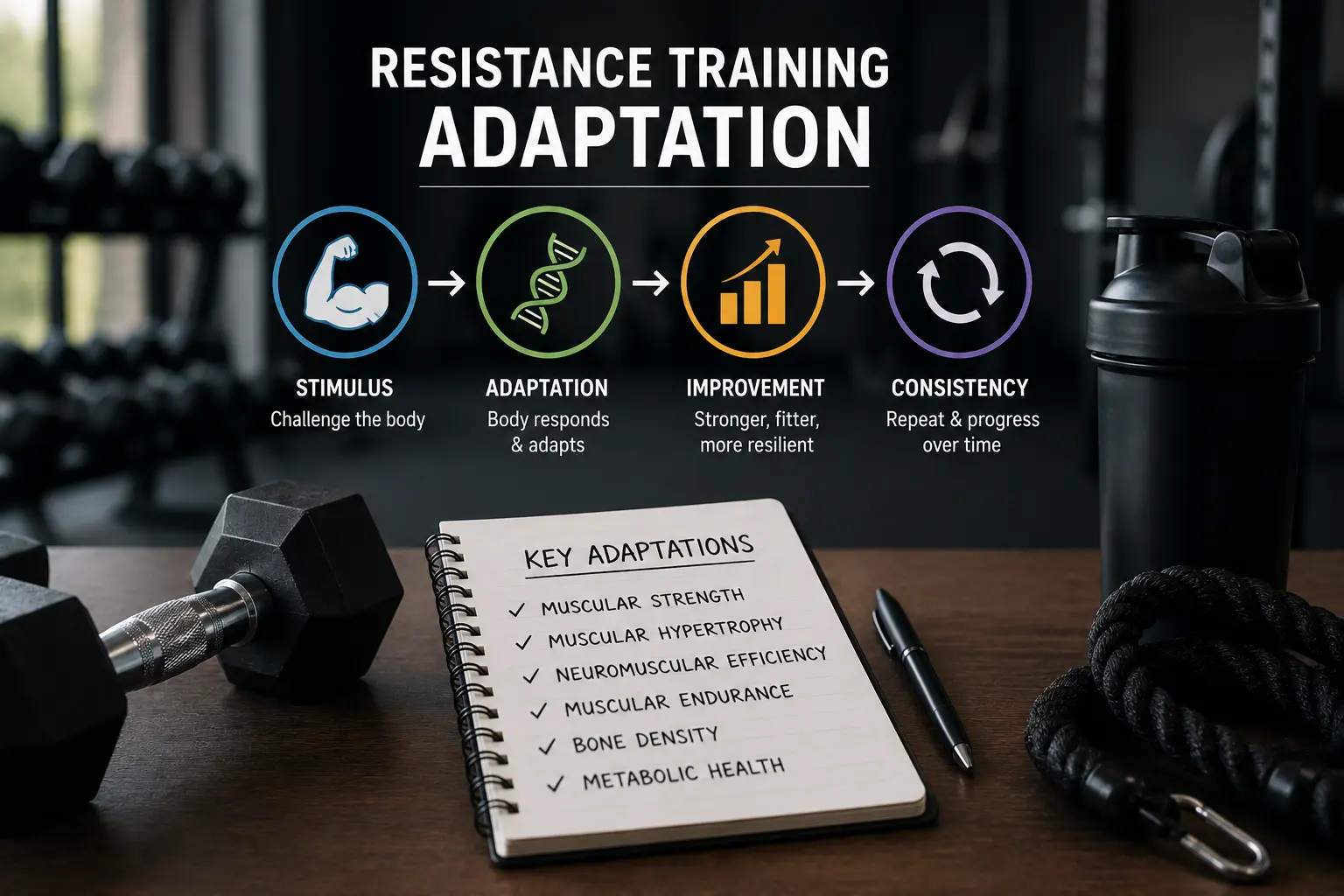
A significant gap in most personal training certification comparisons is what any certification — regardless of which one — does and does not prepare you for in actual coaching practice. This matters for managing expectations and for planning the education beyond the initial credential.
Certifications teach science; experience teaches coaching
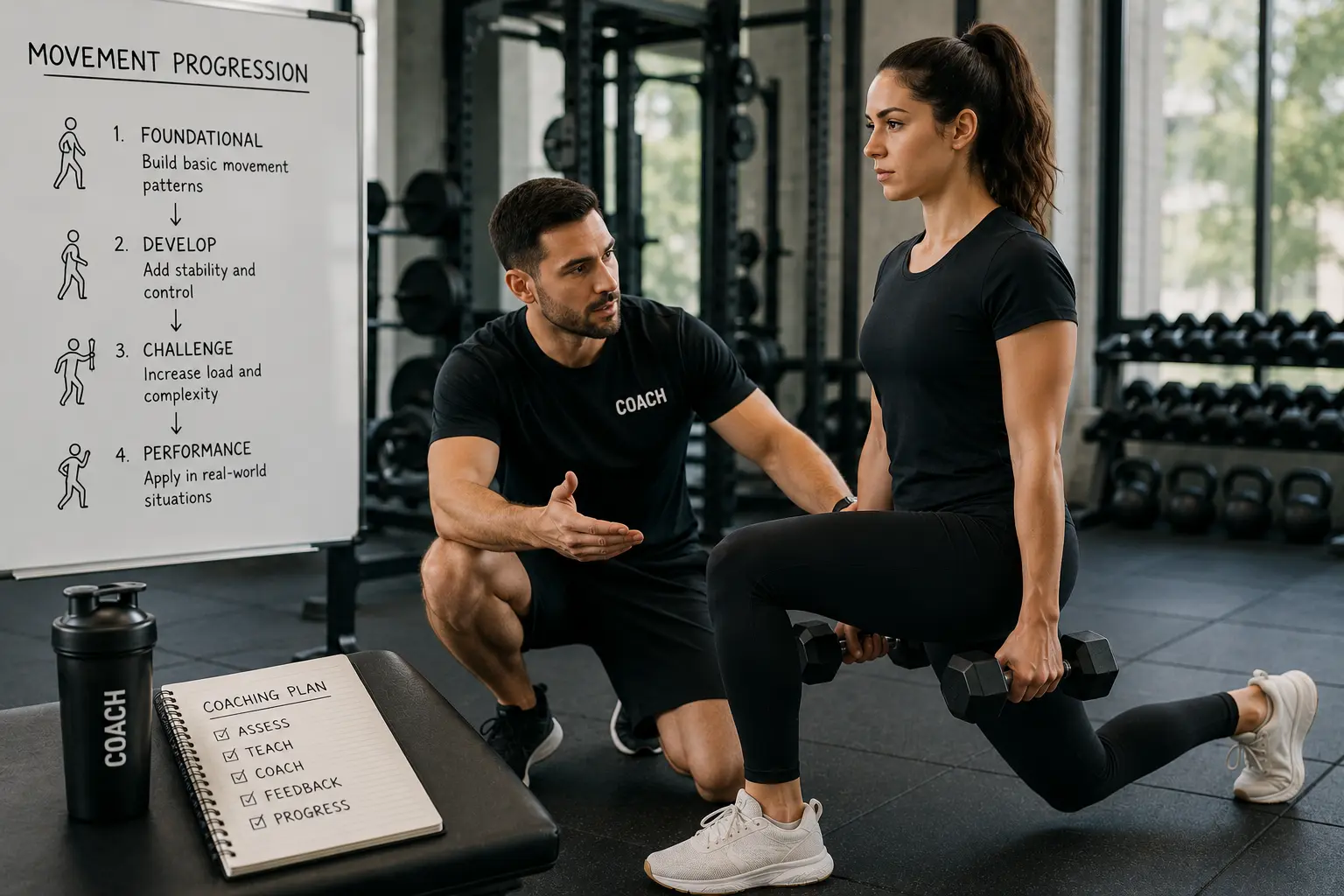
All three certifications cover exercise science, programme design, and client communication in adequate depth for an entry-level credential. None of them fully prepare a new trainer for actual coaching practice: reading a client's physical responses in real time, adjusting cues when a movement pattern is not producing the intended outcome, building genuine rapport with a wide range of client personalities, or managing the motivational dynamics of long-term client relationships.
These skills develop through practice, mentorship, and experience — not through any certification curriculum. The most valuable thing a newly certified trainer can do is accumulate practical coaching hours under more experienced supervision, which is precisely what working in a commercial gym environment provides even at modest starting rates. The certification is the licence to begin this accumulation; it is not the accumulation itself.
Part of that floor time is also the least glamorous kind of expertise: knowing every machine in the building well enough to explain it in ten seconds to a nervous first-time client. If you need a refresher aimed at true beginners, The Beginner's Guide to Actually Using a Gym covers the machine-by-machine explanations and etiquette from the client's side of the conversation.
Continuing education is where the real differentiation happens
The two-year continuing education requirements for all three certifications are the mechanism through which the initial credential is maintained and supplemented. The quality and specificity of CEUs accumulated in the first two to four years of a career matters considerably more for long-term coaching competence than the specific initial certification chosen. The most valuable continuing education directions for early-career trainers are specialised population training (older adults, pre- and post-natal, clients with specific health conditions), strength and conditioning science (NSCA-CSCS is the most respected performance credential globally), and practical workshop-based education that provides supervised practice hours no online curriculum can deliver.
Client acquisition is separate from certification quality
The income trajectory of a personal trainer depends far more on client acquisition, retention, and business management than on the specific certification held. A trainer with a strong network, genuine coaching skill, and consistent client retention will build a sustainable career regardless of whether they hold NASM, ACE, or ISSA. This is not an argument for ignoring certification quality — employer recognition and credential credibility open the doors that allow practice to accumulate. It is an argument for not over-indexing on the certification choice relative to the business, communication, and coaching practice skills that actually determine career success.
If You Already Have One: The Stacking Question
For trainers who already hold a certification and are considering adding a second, the calculus changes. The question becomes less about employer recognition — which your existing credential already provides — and more about which additional credential fills the most meaningful gap in your current coaching capabilities and service offering.
| Current Cert | Strongest Stacking Option | Why |
|---|---|---|
| NASM-CPT | NASM-CES or NASM-PES (within ecosystem), or ACE-CPT for behaviour-change depth | NASM specialisations build directly on the OPT model; ACE adds the coaching psychology dimension NASM underweights |
| ACE-CPT | NASM-CPT for OPT model and corrective exercise depth, or ISSA Nutrition for service expansion | NASM fills the movement assessment gap in ACE curriculum; ISSA Nutrition adds a revenue-generating service at low cost |
| ISSA-CPT | NASM-CPT to improve employer recognition and add OPT model depth, or NSCA-CSCS | NASM addresses any remaining employer recognition gap; NSCA-CSCS is the most respected performance credential globally |
| Any CPT | NSCA-CSCS for performance training niche | CSCS is the gold standard for strength and conditioning; most respected by athletic and performance-focused clients and employers |
The Decision Framework: How to Choose
The honest answer is that it depends on three variables specific to each person: where you want to work, what type of coaching you want to do, and what your realistic study style and available time look like.
The Certification Is the Starting Line
NASM, ACE, and ISSA are all credible starting points for a personal training career. The differences between them are real and matter for specific career contexts, but they are smaller than the marketing materials of any of the three organisations suggest. The choice between them is less consequential than what happens after the certification: the clients coached, the continuing education pursued, the mentorship sought, and the business built.
Choose the certification that matches your target employer context, your curriculum preferences, and your realistic study capacity. Study it well enough to pass the exam with confidence. Then treat the credential as what it actually is — permission to begin accumulating the practical experience and specific expertise that will define your competence as a trainer far more than any piece of paper ever will.
Once you're working with clients, the practical science of programme design matters just as much as the credential behind you. Our article on how much rest to programme between workout sessions is one of the most misunderstood areas for new trainers working with general population clients — and a good test of what the certification curriculum actually covers.
The certification is the licence to begin accumulating experience. It is not the accumulation itself — and the accumulation is what will define your competence far more than the credential will.
Which personal trainer certification is best: NASM, ACE, or ISSA?
Is ISSA NCCA accredited?
How much does a personal trainer certification cost?
Is NASM harder than ACE?
Which PT certification is best for working in a commercial gym?
Should I stack multiple personal trainer certifications?
This article reflects publicly available information about NASM, ACE, and ISSA certification programmes as of mid-2026. Pricing, package details, and accreditation status are subject to change — always verify current costs and requirements directly with each organisation before purchasing.