"Vagus nerve" has become one of those phrases that shows up everywhere — cold plunge videos, humming tutorials, ear-massage reels, all promising an instant nervous system "reset." Some of what gets claimed is genuine physiology, backed by real measurements. Some of it is a real nerve wearing a costume of pseudoscience.
This article separates the two: what the vagus nerve actually is and does, what "vagal tone" means and why it's worth caring about, and which of the popular techniques for stimulating it are supported by evidence — ranked honestly, not by how well they perform on video.
What the Vagus Nerve Actually Is
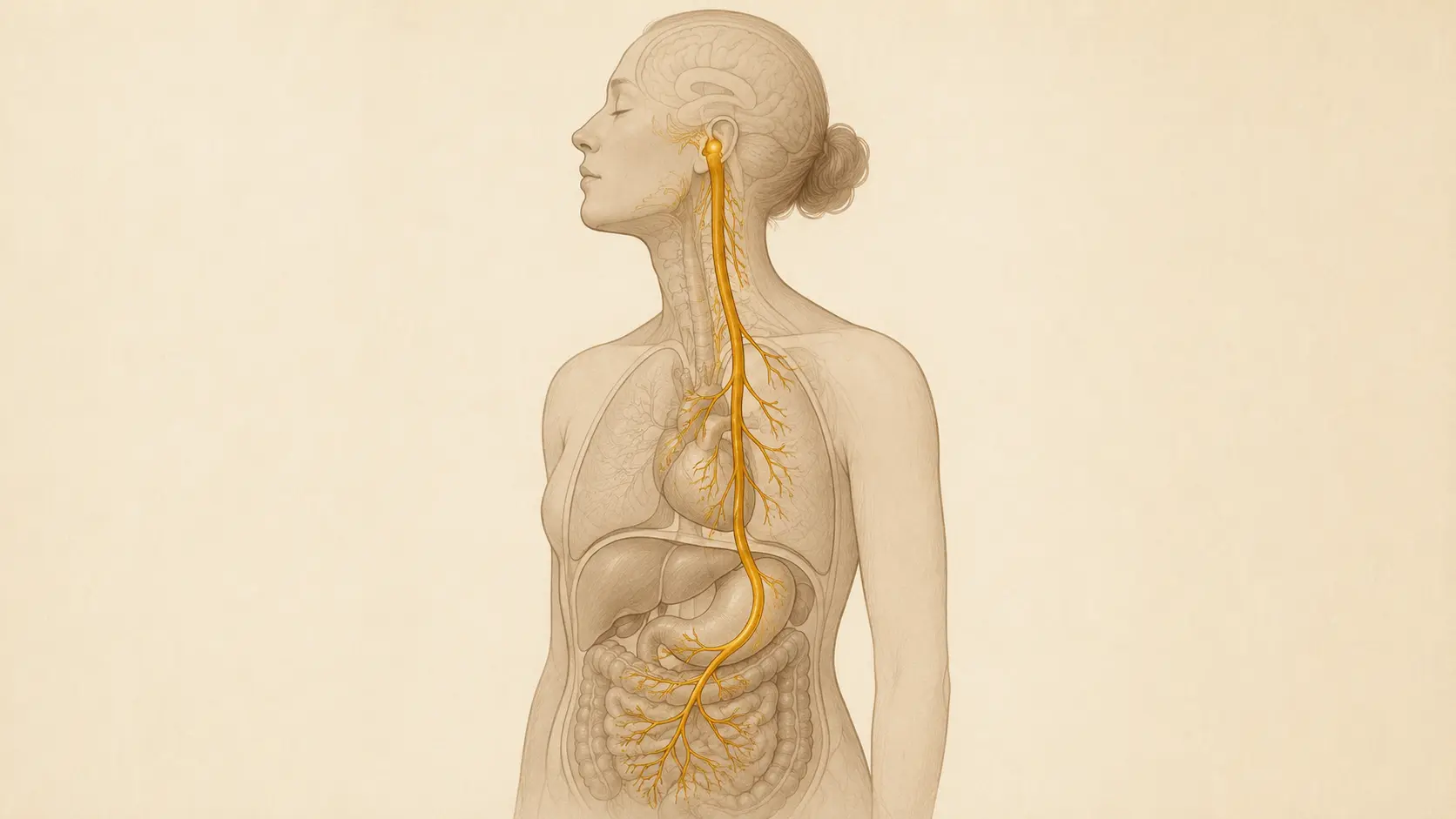
The vagus nerve is the tenth cranial nerve — one of twelve pairs of nerves that connect directly to the brain rather than routing through the spinal cord. Its name comes from the Latin vagus, meaning "wandering," because unlike most cranial nerves, which serve a single, localised area, the vagus nerve travels from the brainstem down through the neck, chest, and abdomen, touching the throat, lungs, heart, and most of the digestive tract along the way.
It is the primary channel of the parasympathetic nervous system — the "rest and digest" counterpart to the sympathetic "fight or flight" system. It slows heart rate, stimulates digestion, regulates breathing rate, and helps modulate inflammation throughout the body. It's also the main physical pathway behind much of what gets discussed under the broader umbrella of nervous system dysregulation — supporting vagal tone is one of the more concrete, actionable ways to support regulation more generally.
One detail surprises most people: roughly 80% of the vagus nerve's fibres are afferent, meaning they carry signals from the body up to the brain, not the other way around. The vagus nerve spends most of its time reporting your internal state to your brain — heart rate, gut activity, lung inflation — more than it spends issuing commands. This is part of why gut and heart sensations feel so directly tied to mood: a large share of that information genuinely is flowing upward, into the brain regions that shape how you feel.
What "Vagal Tone" Means — And Why It's Worth Caring About
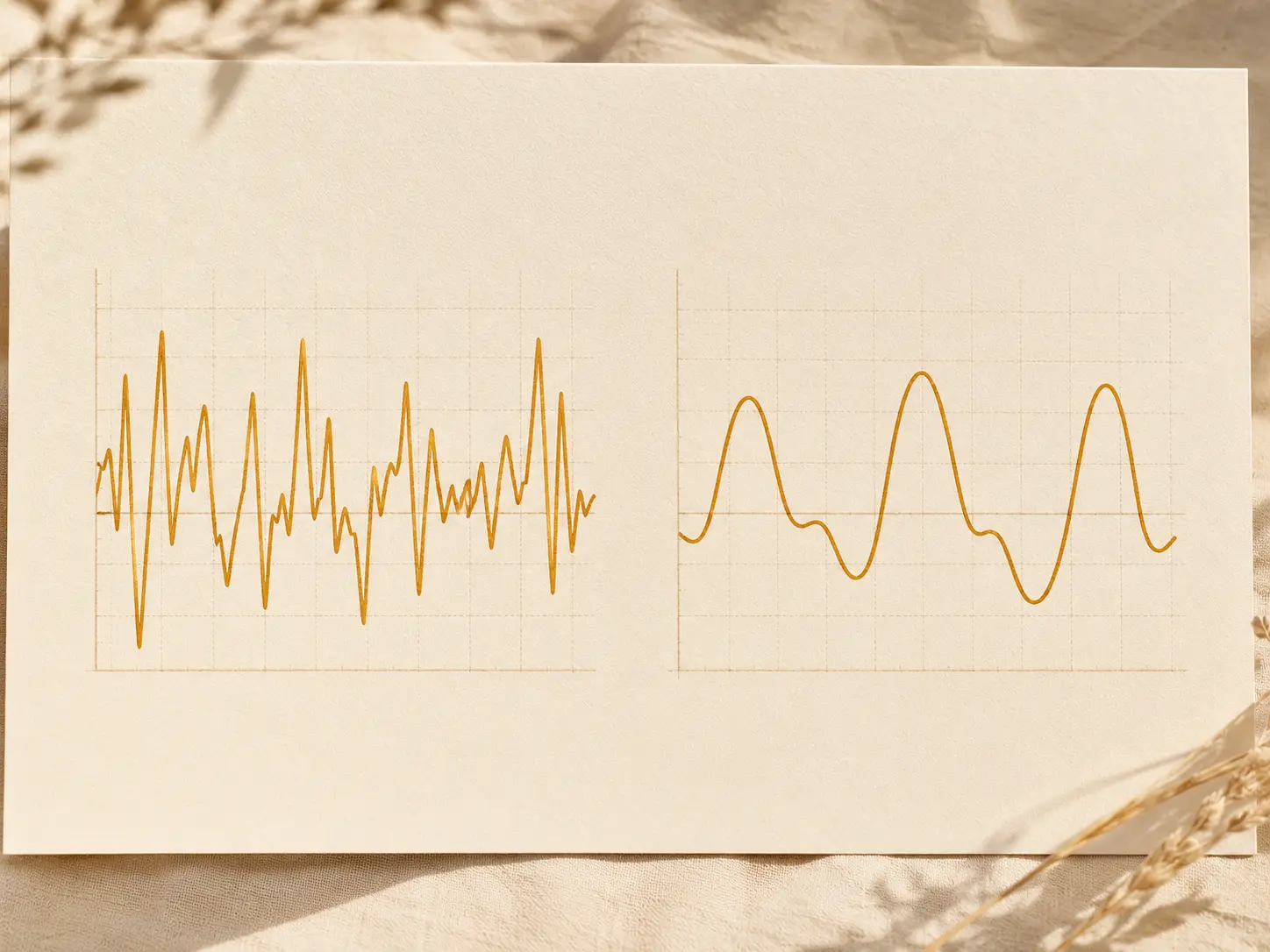
Vagal tone describes how active and responsive the vagus nerve is. It isn't measured directly in daily life; the standard proxy is heart rate variability (HRV) — the small, beat-to-beat variation in the time between heartbeats. Counter-intuitively, more variability is the healthy sign. A heart that speeds up slightly on the inhale and slows on the exhale, moment to moment, reflects a nervous system that can flexibly shift between activation and recovery. A heart beating at a rigid, unvarying interval reflects the opposite — a nervous system stuck in one gear.
Higher vagal tone is associated with faster recovery from stress, more stable mood, better digestion, and lower long-term cardiovascular risk. Lower vagal tone is associated with poorer stress resilience — and it is a documented, measurable consequence of unmanaged chronic stress specifically, not just correlated with it. The chronic stress and the body guide covers this directly: sustained sympathetic dominance progressively reduces HRV, and low HRV is itself an independent predictor of cardiovascular risk.
The Vagus Nerve and the Gut-Brain Connection
A large share of the vagus nerve's territory is the digestive tract, which is why it is central to the gut-brain axis — the bidirectional communication system between the gut and the brain. The vagus nerve carries signals about gut motility, the composition of the gut microbiome, and inflammatory activity in the intestines, back up to brain regions involved in mood and stress regulation.
This is one of the more concrete, non-mystical explanations for why chronic stress so often shows up as digestive symptoms, and why persistent gut symptoms can, in turn, feed back into anxiety and low mood. It is a real physiological loop, not a metaphor — covered in more depth in the gut section of the chronic stress guide.
Signs of Low vs High Vagal Tone
These are general associations, not a diagnostic checklist — plenty of other factors affect each one individually. HRV trends over weeks are far more informative than any single reading. If you want a structured way to track where your overall stress load stands, the Stress Level Quiz covers work, physical symptoms, emotional patterns, and recovery habits in one assessment.
How to Actually Stimulate the Vagus Nerve — Ranked by Evidence
Not every technique attributed to the vagus nerve has the same evidence behind it. Some produce measurable, replicated physiological effects. Others are plausible mechanistically but rest on thin or preliminary research. Here's an honest ranking.
| Technique | How it works | Evidence strength |
|---|---|---|
| Slow, extended-exhale breathing | Exhales longer than inhales mechanically shift the ratio of sympathetic to parasympathetic activation with each breath cycle | Strong |
| Cold water on the face | Triggers the mammalian dive reflex via the trigeminal nerve, increasing vagal activity to the heart | Strong |
| Regular moderate exercise | Builds resting vagal tone over weeks of consistent training, distinct from any single session's acute effect | Strong |
| Social connection | Oxytocin release during positive social contact supports parasympathetic activity and buffers stress responses | Strong |
| Meditation / mindfulness practice | Sustained practice over weeks is associated with measurable HRV improvements in multiple studies | Moderate |
| Humming, chanting, gargling | Engages pharyngeal and laryngeal muscles innervated by vagal branches; used clinically in some vasovagal contexts | Moderate (preliminary) |
| Ear or neck massage | Based on vagal branches near the outer ear; mechanistically plausible but weakly studied in humans | Weak / anecdotal |
Cold facial immersion deserves a closer look because the effect size is genuinely striking: controlled studies have recorded heart rate drops of 10 to 25 percent within roughly 30 seconds of cold water contact with the face, alongside measurable increases in HRV.[1] This is the same trigeminovagal mechanism that lets diving mammals conserve oxygen underwater — cold receptors on the face signal the brainstem directly, which dials up vagal output to the heart almost immediately.
Breathing sits at the top of the list for a different reason: it's the only technique here you can do anywhere, instantly, with no equipment and no risk. The full mechanism — including why the exhale matters more than the inhale, and how CO2 tolerance factors in — is covered in detail in box breathing, 4-7-8, and the physiological sigh, which walks through exactly which pattern to use and when.
The "Vagus Nerve Reset" Videos: What's Real and What's Overhyped
Two things are true at once here, and conflating them is where most of the online confusion comes from.
What's real: cold exposure and slow-exhale breathing produce genuine, measurable, replicated shifts toward parasympathetic activity within seconds to minutes. That physiology is not in dispute.
What's overstated: the idea that a single technique performed once "resets," "unlocks," or "heals" your vagus nerve or nervous system permanently. What actually happens is a temporary state shift — useful in the moment, and useful as a repeated practice that gradually shapes your baseline vagal tone over weeks. It is not a one-time fix, in the same way one good night's sleep does not undo months of sleep debt.
There's also a more specific scientific debate worth knowing about if you've encountered the phrase "polyvagal theory," which underlies a lot of the popular vagus nerve content online. Polyvagal theory, proposed by Stephen Porges in 1994, is a broader framework about hierarchical nervous system states and social engagement — distinct from the basic, well-established anatomy and physiology of the vagus nerve described earlier in this article. That broader framework is genuinely contested among researchers: a widely discussed 2026 paper co-signed by dozens of researchers argued several of its core claims are not well supported by current neurophysiological evidence, and Porges published a detailed rebuttal in the same venue.[2] The debate is active and unresolved. What this means practically: the vagus nerve's role in heart rate, digestion, and stress recovery is solid, mainstream physiology. Some of the broader theoretical claims built on top of it — particularly around trauma and social behaviour — are still being actively debated by the scientists who study them, and are worth holding a little more loosely.
A Simple Daily Vagal Tone Practice
Building vagal tone doesn't require a complicated protocol. A short, consistent routine beats an elaborate one you do twice and abandon.
- Morning (2 minutes): Five to six slow breaths with an exhale twice as long as the inhale, before checking your phone.
- Once during the day (30 seconds): Splash cold water on your face, or hold a cold (not ice-burning) compress against your cheeks and forehead for 20-30 seconds during a stressful moment.
- Most days (20-30 minutes): Moderate exercise — walking counts. This is the technique that shifts your baseline, not just your in-the-moment state. The 21-Day Movement Streak is a low-pressure way to build this consistently.
- Weekly: One genuine, unhurried social interaction — a call or an in-person conversation, not a text thread.
None of these individually will transform your nervous system overnight. Together, repeated consistently, they are the actual evidence-backed path to higher baseline vagal tone — the boring version of the exciting videos, and the version that works.
When Low Vagal Tone Signals Something More
Most fluctuation in vagal tone is a normal response to stress, sleep, and lifestyle, and responds to the practices above. Some symptoms warrant medical evaluation rather than a breathing app: fainting or near-fainting, an unusually slow or irregular heartbeat, persistent digestive dysfunction without a clear dietary cause, or dizziness on standing (a possible sign of dysautonomia). These can indicate an underlying vagus nerve or autonomic nervous system condition that lifestyle intervention alone will not resolve.
Final Thoughts
The vagus nerve is not a wellness trend — it's a real, extensively studied cranial nerve with a well-established role in calming the body down after stress. What deserves more scrutiny is the layer of claims stacked on top of that real physiology: the instant fixes, the permanent resets, the theoretical frameworks presented as settled fact when the researchers who study them are still actively debating the details.
Cold water on your face and a slower exhale really will shift your nervous system state within seconds. Building a nervous system that recovers from stress well, as a stable trait, takes the same thing every worthwhile physiological change takes: repetition, over weeks, without much drama.
If chronic stress is the reason you're looking into this in the first place, the practical stress management guide ranks nineteen evidence-based interventions by the time and effort they actually require — the physiological sigh, listed first there, is one of the fastest tools available for exactly the kind of in-the-moment activation this article describes.
Sources
[1] Studies on cold-water facial immersion and the mammalian dive reflex, documenting heart rate reduction and increased HRV via the trigeminovagal pathway. Available at: pmc.ncbi.nlm.nih.gov
[2] Ongoing scientific debate over Polyvagal Theory's core claims, including a 2026 multi-author critique and Stephen Porges' response. Overview available at: psychologytoday.com