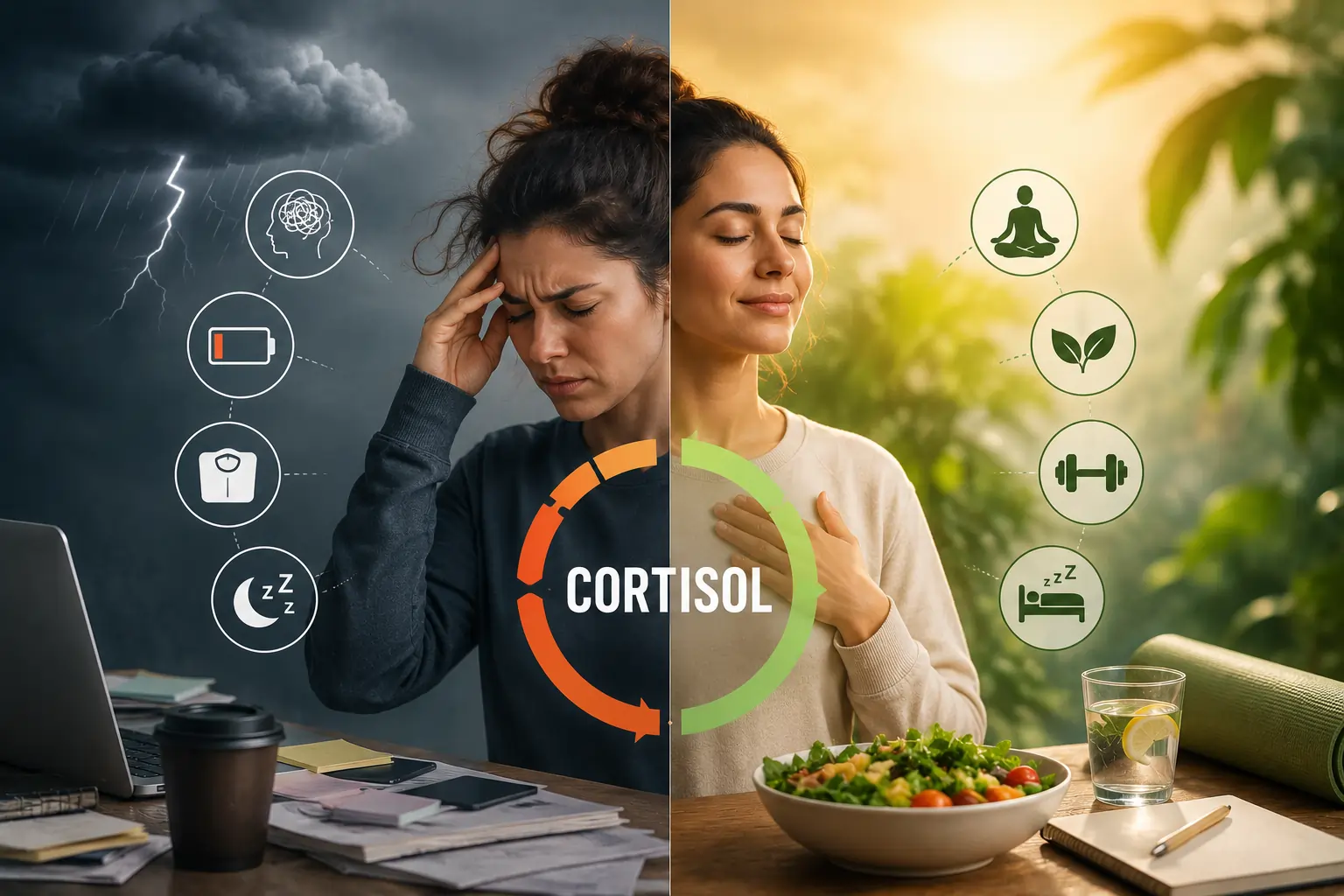
Cortisol has become one of the most talked-about hormones in wellness culture, and like most things that achieve mainstream attention, the conversation around it has drifted considerably from what the physiology actually shows. It is framed as the enemy — something to be suppressed, detoxed, or managed away. Products are sold to lower it. Morning routines are redesigned to avoid triggering it. Entire dietary approaches are built around the idea that cortisol is chronic and harmful and that reducing it is an unqualified good.
The reality is more interesting and considerably more nuanced. Cortisol is an essential hormone that performs dozens of vital functions. Without it, the body cannot regulate blood sugar, manage inflammation, maintain blood pressure, or wake up in the morning. The morning cortisol spike that wellness culture warns about is not a pathological response to be avoided — it is a precisely timed biological mechanism that initiates alertness and prepares the body for the demands of the day.
The problem with cortisol is not its existence or even its acute spikes. The problem is sustained elevation — cortisol levels that remain high across hours and days rather than rising and falling as the system is designed to do. That sustained elevation, driven primarily by chronic psychological stress, poor sleep, and lifestyle factors within most people's control, produces a specific and well-documented set of downstream effects. Understanding which is which — normal cortisol physiology versus chronic dysregulation — is the prerequisite for anything useful about managing it.
What Cortisol Actually Is
Cortisol is a glucocorticoid steroid hormone produced by the adrenal cortex — the outer layer of the adrenal glands, which sit atop the kidneys. It belongs to the same broad chemical family as other steroid hormones including testosterone, oestrogen, and aldosterone, all synthesised from cholesterol.
Cortisol is the primary output of the hypothalamic-pituitary-adrenal (HPA) axis — the hormonal cascade that coordinates the body's response to stress. The sequence runs: the hypothalamus releases corticotropin-releasing hormone (CRH); CRH signals the pituitary gland to release adrenocorticotropic hormone (ACTH); ACTH signals the adrenal cortex to produce and release cortisol. The entire cascade is regulated by a negative feedback loop: elevated cortisol signals back to both the hypothalamus and pituitary to suppress further CRH and ACTH release, keeping the system self-limiting under normal conditions.
This self-limiting design is important. Under normal circumstances, a cortisol spike is followed by a natural decline as the feedback loop operates. Chronic elevation occurs when the stressors driving cortisol production are persistent enough to override or blunt this feedback mechanism over time.
The Cortisol Daily Rhythm: What Normal Looks Like
Cortisol follows a pronounced 24-hour circadian rhythm in healthy individuals. Understanding this rhythm is essential for distinguishing normal cortisol physiology from the chronic dysregulation that causes problems.
The cortisol awakening response
In the thirty to forty-five minutes after waking, cortisol levels spike sharply — rising by 50 to 160% above baseline in most people. This is called the cortisol awakening response (CAR) and it is entirely normal and functional. The CAR prepares the body for the day: it mobilises glucose for energy, sharpens cognitive alertness, activates immune surveillance, and essentially performs a systems-readiness check for the waking period ahead.
The CAR is amplified by light exposure and by getting out of bed, which is why morning light and physical activity after waking enhance daytime alertness. It is blunted by poor sleep, chronic stress, and depression — which is one reason people with these conditions often feel cognitively flat and unready in the morning regardless of how long they slept.
The diurnal decline
After the morning peak, cortisol levels decline progressively across the day, reaching their lowest point in the late evening and early hours of the night. This low evening cortisol is what permits melatonin to rise and sleep to be initiated. When cortisol remains elevated in the evening — from late-night work stress, intense evening exercise, ongoing anxiety, or screen stimulation — it directly suppresses melatonin production and delays or disrupts sleep onset. A consistent evening wind-down routine is one of the most practical ways to support this natural cortisol decline.
| Time of day | Normal cortisol level | Biological function at this level |
|---|---|---|
| On waking (before CAR) | Low-to-moderate baseline | Overnight nadir; cortisol at its lowest point of the 24-hour cycle |
| 30–45 min after waking (CAR peak) | 50–160% above baseline | Glucose mobilisation; alertness initiation; immune activation; systems readiness |
| Late morning (9–11am) | High but declining from peak | Sustained energy and cognitive performance; immune function; anti-inflammatory action |
| Midday to early afternoon | Moderate; continuing decline | Glucose regulation; sustained wakefulness; diminishing from morning peak |
| Mid-to-late afternoon (3–5pm) | Low-to-moderate | Natural energy dip corresponds to lower cortisol; circadian biology, not caffeine withdrawal |
| Evening (6–9pm) | Low | Declining toward overnight nadir; should be low to allow melatonin rise and sleep preparation |
| Late evening and night | Very low (nadir) | Minimal cortisol permits melatonin dominance; deep sleep and recovery processes proceed |
The afternoon energy dip that most people attribute to lunch or to needing more caffeine is in significant part a normal circadian cortisol pattern. Cortisol is naturally lower in the mid-to-late afternoon, producing the reduced alertness most people experience at this time. This is not a problem to be solved with another coffee — it is a biological rhythm that has evolved for a reason and that the body returns to regardless of caffeine intervention.

What Cortisol Does: The Full Function List
Before addressing what goes wrong with chronic elevation, it is worth establishing what cortisol does when it is functioning correctly. The wellness narrative frames cortisol as primarily harmful, which produces a misunderstanding of what "lowering cortisol" actually means for the body.
| Function | How cortisol performs it | What happens without adequate cortisol |
|---|---|---|
| Blood glucose regulation | Stimulates gluconeogenesis in the liver; mobilises stored glycogen; counteracts insulin to maintain blood glucose | Hypoglycaemia; extreme fatigue; inability to sustain physical or cognitive effort |
| Anti-inflammatory regulation | Suppresses the immune system's inflammatory response; prevents immune overreaction; regulates cytokine production | Uncontrolled inflammation; autoimmune flares; excessive inflammatory response to minor stimuli |
| Circadian rhythm entrainment | The morning CAR is the primary signal anchoring the body's circadian clock to the light-dark cycle | Disrupted circadian timing; poor sleep onset; flat diurnal energy pattern |
| Blood pressure maintenance | Sensitises blood vessels to vasoconstrictive signals; supports vascular tone; works in concert with aldosterone | Low blood pressure; dizziness on standing; cardiovascular regulation problems |
| Stress response mobilisation | Rapidly mobilises energy substrates (glucose, fatty acids) during acute stress; shifts blood flow to muscles and brain | Inability to mount an adequate physiological response to acute stress; extreme fatigue under demand |
| Immune modulation | Balances immune activation and suppression; prevents both under-response (infection) and over-response (autoimmunity) | Impaired immune regulation; heightened allergy and autoimmune responses |
| Memory consolidation | Moderate cortisol enhances memory formation, particularly of emotionally significant events; hippocampal function is partially cortisol-dependent at normal levels | Impaired memory formation and consolidation at chronically low OR chronically high cortisol |
| Reproductive axis regulation | Modulates timing and magnitude of reproductive hormone release | Fertility disruption at both extremes of cortisol dysregulation |
The physiological importance of cortisol is most clearly illustrated by Addison's disease — the condition in which the adrenal glands fail to produce adequate cortisol. Addison's produces profound fatigue, low blood pressure, hypoglycaemia, inability to respond to physical or psychological stress, weight loss, and without treatment, potentially fatal adrenal crisis. The hormone that wellness culture frames as purely harmful is, in the right amount at the right time, essential for life.
What Chronic Cortisol Elevation Actually Does to the Body
With normal function established, the case against chronic cortisol elevation can be made accurately. The problem is not cortisol. The problem is cortisol outside its normal pulsatile rhythm — sustained at elevated levels across hours and days rather than rising and falling appropriately. Chronic elevation is primarily driven by persistent psychological stress, poor sleep, excessive high-intensity exercise without adequate recovery, and to a lesser degree by certain dietary patterns and medical conditions.
1. Metabolic disruption
Cortisol's normal role in glucose regulation becomes metabolically damaging when chronically elevated. Sustained cortisol stimulates continuous gluconeogenesis, maintaining elevated blood glucose even in the absence of actual energy demand. The pancreas responds by secreting insulin to clear the glucose. Over time, repeated cycles of cortisol-driven glucose elevation and compensatory insulin release can contribute to insulin resistance — the metabolic state underlying type 2 diabetes and metabolic syndrome.
Chronically elevated cortisol also promotes fat storage specifically in the visceral compartment — the abdominal adipose tissue surrounding the organs. Visceral fat is metabolically more active and inflammatory than subcutaneous fat, and its accumulation is independently associated with cardiovascular disease risk beyond what body weight alone predicts. This is the mechanism behind the characteristically central fat accumulation seen in Cushing's syndrome, the clinical condition of extreme cortisol excess.
2. Immune suppression and infection vulnerability
Cortisol's anti-inflammatory action is useful in acute stress but becomes counterproductive when sustained. Chronic cortisol elevation progressively suppresses immune function: T-cell activity is reduced, natural killer cell activity declines, and the body's ability to mount an effective immune response to pathogens is impaired. This is why people under sustained chronic stress get ill more frequently and recover more slowly — the immune system is operating at reduced capacity.
Paradoxically, long-term chronic stress can also produce immune dysregulation in the opposite direction: as the HPA axis becomes blunted and cortisol receptors downregulate in response to chronic over-stimulation, inflammatory cytokines can rise unchecked, contributing to chronic low-grade inflammation associated with cardiovascular disease, depression, and accelerated ageing. For a full breakdown of what happens to each body system under sustained HPA activation — including structural brain changes, metabolic consequences, and the reversibility timeline — see what chronic stress is actually doing to your body.
3. Hippocampal atrophy and cognitive effects
The hippocampus — the brain region central to memory formation, learning, and spatial navigation — has a high density of cortisol receptors and is acutely sensitive to sustained cortisol elevation. Chronic high cortisol is neurotoxic to hippocampal neurons: it reduces dendritic branching, suppresses neurogenesis (the production of new neurons), and over extended periods is associated with measurable hippocampal volume reduction.
The cognitive consequences are well-documented: chronic stress and sustained cortisol elevation impair working memory, declarative memory consolidation, cognitive flexibility, and sustained attention. Research by Lupien and colleagues tracking cortisol levels and cognitive performance over years found that individuals with consistently elevated afternoon cortisol showed significantly greater memory decline over time than those with lower and better-regulated cortisol profiles.[1]
4. Sleep disruption
Cortisol and sleep have a reciprocal relationship that creates vicious cycles when either is dysregulated. Elevated evening cortisol directly suppresses melatonin production and delays sleep onset. Poor sleep, in turn, blunts the cortisol awakening response, produces a flatter diurnal cortisol curve, and elevates baseline cortisol in subsequent days — which then further disrupts the next night's sleep.
This bidirectional relationship means that cortisol dysregulation and sleep disruption are often co-occurring and mutually reinforcing. Addressing one typically improves the other, which is why sleep is one of the most effective interventions for cortisol regulation and why cortisol management is central to sleep quality.
5. Muscle tissue breakdown and fat gain
Cortisol is catabolic at chronically elevated levels: it promotes the breakdown of muscle protein to provide amino acids for gluconeogenesis, the same process that maintains blood glucose under stress. Combined with the visceral fat accumulation from insulin dysregulation, this produces the body composition change most associated with chronic stress: simultaneous loss of muscle and gain of central fat. This combination is metabolically adverse, since muscle mass is the primary determinant of metabolic rate and glucose disposal capacity.
6. Reproductive and hormonal disruption
Chronic cortisol elevation suppresses the hypothalamic-pituitary-gonadal axis — the hormonal cascade responsible for sex hormone production. In men, sustained high cortisol is associated with reduced testosterone production. In women, it can suppress LH and FSH surges required for ovulation, producing menstrual irregularity or amenorrhoea. These effects are dose-dependent and reversible with cortisol normalisation, but in high-stress periods they represent a meaningful systemic consequence beyond the more commonly discussed cognitive and metabolic effects.
| System affected | Effect of chronic cortisol elevation | Timeline for effect | Reversibility |
|---|---|---|---|
| Metabolic / blood sugar | Insulin resistance; visceral fat accumulation; elevated fasting glucose | Weeks to months of sustained elevation | Largely reversible with stress reduction and lifestyle change |
| Immune system | Increased infection frequency; slower recovery; eventual low-grade inflammation as cortisol receptors downregulate | Weeks to months | Reversible; immune function recovers with cortisol normalisation |
| Hippocampus and cognition | Working memory impairment; declarative memory decline; reduced cognitive flexibility | Months to years for structural changes; functional changes faster | Partially reversible; neurogenesis can recover; some volume loss may persist |
| Sleep quality | Suppressed melatonin; delayed sleep onset; reduced deep sleep; fragmented architecture | Days to weeks | Highly reversible once the cortisol-disrupting stressor is reduced |
| Muscle and body composition | Muscle protein catabolism; central fat gain; metabolic rate reduction | Weeks to months of sustained elevation | Largely reversible; requires resistance training and protein adequacy alongside stress reduction |
| Reproductive hormones | Reduced testosterone (men); menstrual disruption; reduced fertility markers (both sexes) | Weeks to months | Reversible with cortisol normalisation; typically resolves as stress reduces |
| Cardiovascular system | Elevated blood pressure; endothelial dysfunction; increased atherosclerosis risk with very prolonged elevation | Months to years for structural changes | Partially reversible; modifiable risk factor |
What Actually Drives Chronic Cortisol Elevation
Before addressing interventions, it is worth being precise about what the primary drivers of chronic cortisol elevation actually are. Wellness culture tends to focus on specific food choices, morning routine optimisation, and supplement protocols as the primary levers. The evidence consistently identifies different culprits.
| Driver | Mechanism | Relative impact | Evidence quality |
|---|---|---|---|
| Chronic psychological stress (work, relationships, financial, existential) | Persistent HPA axis activation from psychological threat appraisal; overrides negative feedback loop over time | Very high — primary driver in most people | Very strong; most replicated finding in stress physiology |
| Insufficient or poor-quality sleep | Sleep deprivation elevates afternoon and evening cortisol; blunts CAR; disrupts diurnal rhythm; creates bidirectional reinforcing cycle | Very high — often the most modifiable single factor | Strong; well-documented across acute and chronic sleep restriction studies |
| Excessive high-intensity training without adequate recovery | Chronic overtraining elevates baseline cortisol and blunts the diurnal rhythm | Moderate — primarily relevant for people training at high volume | Moderate; well-documented in overtraining syndrome literature |
| Caloric restriction (significant deficit) | Perceived energy scarcity activates HPA axis; severe restriction elevates cortisol as a fuel-mobilisation response | Moderate — relevant for aggressive calorie deficits | Moderate; more pronounced with very low calorie intake |
| Excessive caffeine intake | Caffeine elevates cortisol acutely, particularly when consumed during the CAR peak | Low–moderate — acute and dose-dependent rather than producing chronic baseline elevation in most people | Moderate; acute effect well-documented; chronic baseline elevation less clear |
| Alcohol | Acute consumption elevates cortisol; chronic heavy use dysregulates the HPA axis significantly | Moderate for heavy use; low for moderate consumption | Moderate |
| Inflammatory diet and gut dysbiosis | Gut-brain axis signalling influences HPA axis tone; chronic gut inflammation may sustain low-grade cortisol elevation | Low–moderate — less well-characterised than psychological and sleep drivers | Emerging; mechanism plausible but less well-established |
| Social isolation and loneliness | Perceived social threat activates the same HPA pathways as physical threat; loneliness is one of the strongest psychological stressors documented | High — underappreciated in most cortisol management discussions | Strong; robust finding across epidemiological and experimental research |
The hierarchy of drivers is important because it determines where interventions produce the most leverage. Optimising morning routine timing while under severe chronic work stress is a low-leverage intervention applied to a low-leverage driver. Addressing the sleep deficit that is both caused by and contributing to elevated cortisol is a high-leverage intervention on a high-leverage driver. The interventions below are ordered accordingly. For a practical companion to this article — nineteen specific, ranked interventions you can apply within the constraints of your actual life, sorted by the time they require — see practical ways to lower your stress that don't require quitting your life.
How to Actually Bring Chronic Cortisol Down: What the Evidence Shows
The interventions with the strongest evidence for reducing chronic cortisol elevation are largely behavioural rather than supplemental or dietary. This is consistent with the driver hierarchy above: the primary drivers are psychological and sleep-related, and the most effective interventions address those drivers directly.
1. Sleep: the highest-leverage single intervention
Consistently adequate sleep is the single most impactful cortisol-regulating intervention available to most people. The evidence is consistent across research designs: improving sleep quality and duration reduces elevated cortisol, restores a healthier diurnal rhythm, and improves the cortisol awakening response. The mechanism operates in both directions — better sleep reduces the cortisol elevation that poor sleep causes, and reduced cortisol from better sleep further improves subsequent sleep quality.
The target is not just sleep duration but sleep quality. Eight hours of fragmented, poor-architecture sleep does not restore cortisol regulation the way seven hours of consolidated, deep-sleep-adequate sleep does. The specific practices that most reliably improve sleep quality — consistent wake time, a dark and cool sleeping environment, no screens in the hour before bed, managing evening cortisol triggers — are simultaneously cortisol management practices.
2. Exercise: the right dose at the right time
Exercise is a cortisol intervention with a strongly dose-dependent relationship. Acute exercise of moderate intensity (a thirty to forty-five minute brisk walk, a moderate-intensity strength session, a comfortable run) acutely elevates cortisol during the session but produces a meaningful post-exercise reduction in basal cortisol over time with consistent practice. Regular moderate exercise is one of the best-documented lifestyle interventions for reducing chronic cortisol elevation.
The dose-response relationship is non-linear. Very high-intensity training, particularly without adequate recovery, produces the opposite effect: sustained high cortisol, suppressed testosterone, and blunted diurnal rhythm — the hallmarks of overtraining syndrome. The exercise prescription for cortisol management is moderate intensity and consistent frequency, not maximum intensity and high volume. For building a sustainable daily movement habit, the framework in how to build a morning movement practice applies well here.
Timing matters more for cortisol than most exercise variables. High-intensity training in the evening elevates cortisol at precisely the time the diurnal curve should be falling. Evening cortisol elevation then suppresses melatonin and disrupts sleep, which perpetuates the elevated baseline. Training completed in the morning or early afternoon aligns better with the natural cortisol curve.
3. Mindfulness-based stress reduction and breathing practices
The evidence base for mindfulness-based interventions on cortisol is the strongest of any psychological intervention. A 2013 meta-analysis by Matousek and colleagues pooled data from multiple controlled trials and found significant reductions in cortisol from mindfulness-based stress reduction (MBSR) programmes compared to control conditions.[2] The effect sizes are modest in absolute terms but consistent across studies.
The mechanism is via the HPA axis feedback loop: mindfulness practices appear to reduce the perceived threat appraisal that activates the HPA axis in the first place, and to strengthen the prefrontal cortical regulation of the amygdala response that initiates the stress cascade. In other words, they change the psychological input to the cortisol system rather than directly altering cortisol physiology. Even a simple daily five-minute journalling or reflection practice can serve as an accessible entry point to this kind of intentional thought-offloading. For people whose cortisol elevation is driven substantially by psychological stress and ruminative thinking patterns — particularly catastrophising and anxiety spirals — the CBT reframing techniques for catastrophising address this driver more directly than general mindfulness.
Breathing practices — specifically slow diaphragmatic breathing at approximately five to six breaths per minute — activate the vagus nerve and shift autonomic nervous system balance toward parasympathetic dominance. Parasympathetic activation directly counteracts HPA axis activity: you cannot be in sustained fight-or-flight and in parasympathetic rest simultaneously. Even five minutes of slow breathing has been shown to produce measurable reductions in salivary cortisol in controlled studies. For a detailed breakdown of which technique works for which moment — box breathing, 4-7-8, and the physiological sigh — see the complete breathing techniques guide.
4. Social connection
Social support is one of the most consistently identified buffers against stress-driven cortisol elevation in the research literature, and one of the most systematically neglected in individual-level cortisol management discussions. The biological mechanism is direct: oxytocin, released during positive social interaction, inhibits HPA axis activity and reduces cortisol secretion. People with strong social support systems show blunted cortisol responses to acute stressors, faster recovery of cortisol to baseline after stressful events, and lower basal cortisol across most measurement conditions.
The converse is equally important: loneliness and social isolation are among the most potent activators of the HPA axis in the literature. For people with elevated cortisol whose lives involve significant social isolation — whether from remote work, geographic displacement, relationship difficulties, or other causes — this is a high-leverage driver that lifestyle interventions focused on sleep and exercise will not fully address. If the isolation shows up even in social settings — being around people without feeling connected to them — why you feel lonely even when you're surrounded by people covers why that happens and what actually helps.
5. Nature exposure
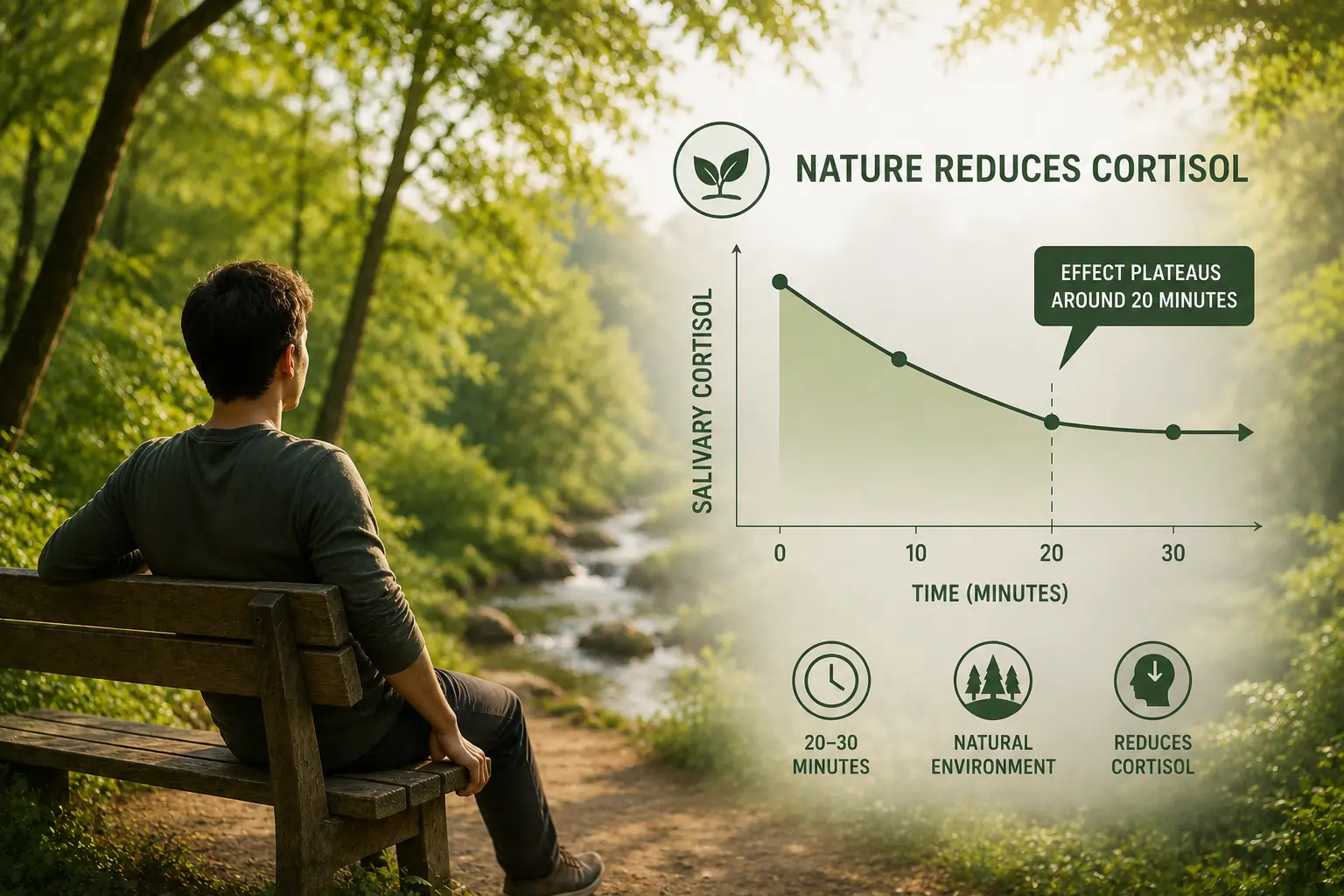
The evidence for nature exposure as a cortisol intervention is more robust than its mainstream reputation suggests. A 2019 study published in Frontiers in Psychology by Hunter and colleagues found that twenty to thirty minutes of sitting or walking in a natural environment produced significant reductions in salivary cortisol, with the effect plateauing around twenty to thirty minutes of exposure.[3] The mechanism involves reduced sensory stimulation compared to urban environments, activation of involuntary attention (which reduces directed cognitive effort and its associated stress), and possibly direct effects of green wavelengths and natural sounds on the autonomic nervous system.
The practical implication is straightforward: a twenty-minute walk in a park or natural environment, done consistently, is a low-cost, evidence-supported cortisol intervention that simultaneously provides moderate-intensity exercise benefits. The combination of physical movement, natural environment, and reduced sensory load addresses multiple cortisol-relevant pathways simultaneously.
6. Nutrition considerations
Nutrition's role in cortisol management is real but secondary to the sleep and psychological stress drivers. The evidence-supported nutritional considerations are:
- Avoiding severe caloric restriction. Cortisol rises in response to perceived energy scarcity. Aggressive calorie deficits activate the HPA axis as a fuel-mobilisation response. Moderate deficits (300 to 500 calories below maintenance) do not produce the same effect.
- Managing blood sugar stability. Rapid blood sugar swings — from high-glycaemic meals followed by crashes — trigger cortisol release as part of the glucose counter-regulatory response. Meals with adequate protein and fibre that slow glucose absorption produce more stable blood sugar and a smaller cortisol counter-regulatory response.
- Caffeine timing rather than elimination. Caffeine elevates cortisol acutely. Consuming caffeine immediately on waking, during the cortisol awakening response peak, piles an artificial cortisol spike on top of an already naturally elevated level. Delaying the first caffeine intake until sixty to ninety minutes after waking produces better overall energy regulation. For a detailed breakdown of caffeine's effects on sleep and energy, see Caffeine and sleep: how long it really stays in your system.
- Omega-3 fatty acids. Some evidence suggests omega-3 supplementation modestly reduces cortisol responses to psychological stress. A 2010 study by Delarue and colleagues found that omega-3 supplementation reduced the cortisol and epinephrine response to a psychological stressor.[4] The effect size is modest but the overall health evidence for omega-3s is strong enough to make this a reasonable dietary emphasis.
- Ashwagandha. Among adaptogenic supplements, ashwagandha has the strongest evidence base for cortisol reduction. A 2012 randomised controlled trial by Chandrasekhar and colleagues found that 300mg twice daily of ashwagandha root extract produced significant reductions in serum cortisol compared to placebo over sixty days, alongside self-reported reductions in stress.[5] The evidence is not as strong as for the behavioural interventions but is meaningfully better than most other supplements marketed for stress.
What Does Not Work (Despite the Claims)
The cortisol management space is one of the most heavily marketed in wellness. Because cortisol is a real hormone with real measurable effects, it provides a credible-sounding framework for selling products and protocols that range from ineffective to counterproductive.
Avoiding morning cortisol
A persistent wellness claim is that certain morning activities — checking your phone, drinking coffee, eating breakfast too early, vigorous morning exercise — should be avoided to prevent the morning cortisol spike. This misunderstands the cortisol awakening response as a problem rather than as an essential biological mechanism. The CAR is how your body wakes up. Attempts to minimise it are at best ineffective and at worst counterproductive, since a blunted CAR is associated with fatigue, depression, and poor diurnal energy regulation.
The correct framing is not to avoid the morning cortisol peak but to support it: morning light, movement, and avoiding unnecessarily stressful stimuli in the first thirty minutes after waking. The goal is a clean, well-functioning CAR — not a suppressed one.
Cortisol-specific diets
Several dietary frameworks are marketed specifically around cortisol management, typically involving specific food timing, avoidance of certain macronutrients, or consumption of specific foods at specific times. The evidence for diet as a primary driver of chronic cortisol dysregulation — independent of caloric restriction and blood sugar management — is thin. Diet is a secondary lever for cortisol after sleep, exercise, and psychological stress management. A cortisol-optimised diet that does not address the primary drivers is an expensive, effortful, and ineffective use of limited attention and willpower.
Most adaptogen supplements beyond ashwagandha
The adaptogen category — supplements claimed to help the body "adapt" to stress — is vast and largely unsupported by rigorous human clinical trials. Rhodiola rosea has some emerging evidence for fatigue reduction but weak cortisol-specific data. Holy basil (tulsi), reishi mushroom, lion's mane, and most others in this category lack well-controlled human trials demonstrating cortisol reduction. The category is not harmful in most cases at standard doses, but it is not evidence-supported as a cortisol intervention beyond ashwagandha.
Stress-relief gadgets and apps without behaviour change
Biofeedback devices, HRV trackers, guided relaxation apps, and stress monitoring wearables are useful to the extent that they facilitate the behavioural changes that actually reduce cortisol: better sleep timing, more breathing practice, more movement. They do not independently lower cortisol. Measuring cortisol-relevant metrics without acting on what they reveal produces no physiological benefit.
The Practical Framework: Ordered by Evidence and Leverage
| Intervention | Primary mechanism | Evidence strength | Practical implementation |
|---|---|---|---|
| Consistent sleep (7–9 hours, consistent wake time) | Restores diurnal cortisol rhythm; eliminates the bidirectional sleep-cortisol disruption cycle | Very strong | Set a consistent wake time 7 days a week; this is the anchor for the entire circadian system including cortisol |
| Reducing chronic psychological stressors | Removes the primary HPA axis activation input; the only intervention that addresses root cause directly | Very strong | Identify the primary chronic stressor and take one concrete action to reduce or restructure it; professional support where appropriate |
| Moderate-intensity exercise (morning or early afternoon) | Reduces basal cortisol long-term; improves diurnal rhythm; enhances sleep quality which further reduces cortisol | Strong | 30–45 minutes most days; timing matters; avoid high-intensity training in the evening |
| Morning light exposure (10–20 minutes) | Amplifies and anchors the CAR; supports the diurnal rhythm; reduces evening cortisol through circadian entrainment | Strong | Get outside or near a bright window within 30 minutes of waking; no sunglasses needed; even overcast sky is effective |
| Diaphragmatic breathing practice (5 min/day) | Activates vagus nerve; shifts autonomic balance to parasympathetic; directly counteracts HPA axis activity | Moderate–strong | 5 breaths per minute (4 seconds in, 6 seconds out) for 5 minutes; 5 minutes is sufficient for measurable effect |
| Social connection and reducing isolation | Oxytocin inhibits HPA axis; social support buffers cortisol responses; one of the most potent long-term modulators | Strong | Prioritise in-person interaction; identify and address isolation; this is a health behaviour with the same evidence weight as sleep and exercise |
| Nature exposure (20–30 min daily) | Reduces sensory load; involuntary attention reduces directed cognitive fatigue; autonomic nervous system calming | Moderate–strong | A daily walk in a green or natural environment; combines with the exercise intervention naturally |
| Caffeine timing (first coffee 60–90 min after waking) | Avoids artificial cortisol stack during CAR; better overall energy regulation | Moderate | A simple timing adjustment; displaces the first coffee to mid-morning rather than eliminating it |
| Blood sugar stability (protein and fibre at meals) | Reduces cortisol counter-regulatory response to blood sugar swings | Moderate | Protein anchor at every meal; avoid ultra-processed, high-glycaemic snacking between meals |
| Ashwagandha (300mg twice daily) | Modulates HPA axis tone; supported by multiple RCTs | Moderate (best in supplement category) | Evidence supports use; not a substitute for behavioural interventions; useful as adjunct once primary drivers are addressed |
Cortisol Is a Signal, Not an Enemy
The most useful reframe for cortisol management is treating chronically elevated cortisol not as a problem to be chemically suppressed but as a signal that the body's stress-response system is being asked to do more than the recovery and restoration systems can handle. The cortisol is not the problem. The imbalance between demands and recovery capacity is the problem. The cortisol is reporting it.
This framing produces a different intervention logic. Instead of asking "how do I lower my cortisol," it asks "what is driving my cortisol up, and which of those drivers can I reduce?" and "what recovery-side factors — sleep, movement, social connection, rest — can I strengthen to improve the system's capacity to recover from its demands?" The answers to those questions point to the interventions with the best evidence.
Sleep better. Move consistently at moderate intensity. Manage the most significant chronic stressors directly rather than around them. Spend time in nature. Maintain social connection. Get morning light. Breathe slowly for five minutes. Time your caffeine better.
These are not glamorous interventions. They do not require a supplement stack or a biohacking device or a specialised morning protocol. They are the interventions that work, applied consistently over weeks and months, producing a cortisol system that runs the way it was designed to run.
A structured way to put several of these interventions in place at once is the 30-Day Morning Routine Reset — a 30-day sequence built around morning light, movement, and consistent wake timing that directly addresses the cortisol awakening response covered in this article.
Sources & Citations
- Lupien SJ, et al. (2005). "Stress hormones and human memory function across the lifespan." Psychoneuroendocrinology. pubmed.ncbi.nlm.nih.gov/15857709
- Matousek RH, et al. (2010). "Cortisol as a marker for improvement in mindfulness-based stress reduction." Complementary Therapies in Clinical Practice. pubmed.ncbi.nlm.nih.gov/20347836
- Hunter MR, et al. (2019). "Urban Nature Experiences Reduce Stress in the Context of Daily Life Based on Salivary Biomarkers." Frontiers in Psychology. doi.org/10.3389/fpsyg.2019.00722
- Delarue J, et al. (2003). "Fish oil prevents the adrenal activation elicited by mental stress in healthy men." Diabetes & Metabolism. pubmed.ncbi.nlm.nih.gov/12634204
- Chandrasekhar K, et al. (2012). "A prospective, randomized double-blind, placebo-controlled study of safety and efficacy of a high-concentration full-spectrum extract of Ashwagandha root." Indian Journal of Psychological Medicine. pubmed.ncbi.nlm.nih.gov/23439798