Scope of practice defines what a nutrition coach is trained and qualified to do. Coaches share general, evidence-based nutrition information and help generally healthy people change habits. They don't diagnose, treat medical conditions, interpret lab tests, or advise on medication. Titles such as "dietitian" and "nutritionist", and nutrition advice to treat medical conditions, are regulated in many countries and regions — so always check the rules where you live and work (our plain-English guide to nutrition coach vs dietitian vs nutritionist compares all three). When a client's needs go beyond scope, the coach refers kindly and clearly, and often keeps supporting everyday habits alongside the client's healthcare team.
Lesson 1 introduced the coach's role. This lesson draws its boundaries — the line that keeps clients safe, protects the coach, and earns the trust of other health professionals. It's also one of the most heavily tested topics on the exam: many "best response" questions turn on knowing when a situation is outside scope.
Free on YouTube Subscribe to get every lesson video in this course SubscribeWhat Is Scope of Practice?
Scope of practice describes the activities a professional is trained, qualified and — where laws apply — permitted to carry out. It's shaped by three things: the person's education and credentials, the rules where they work, and the standards of their profession.
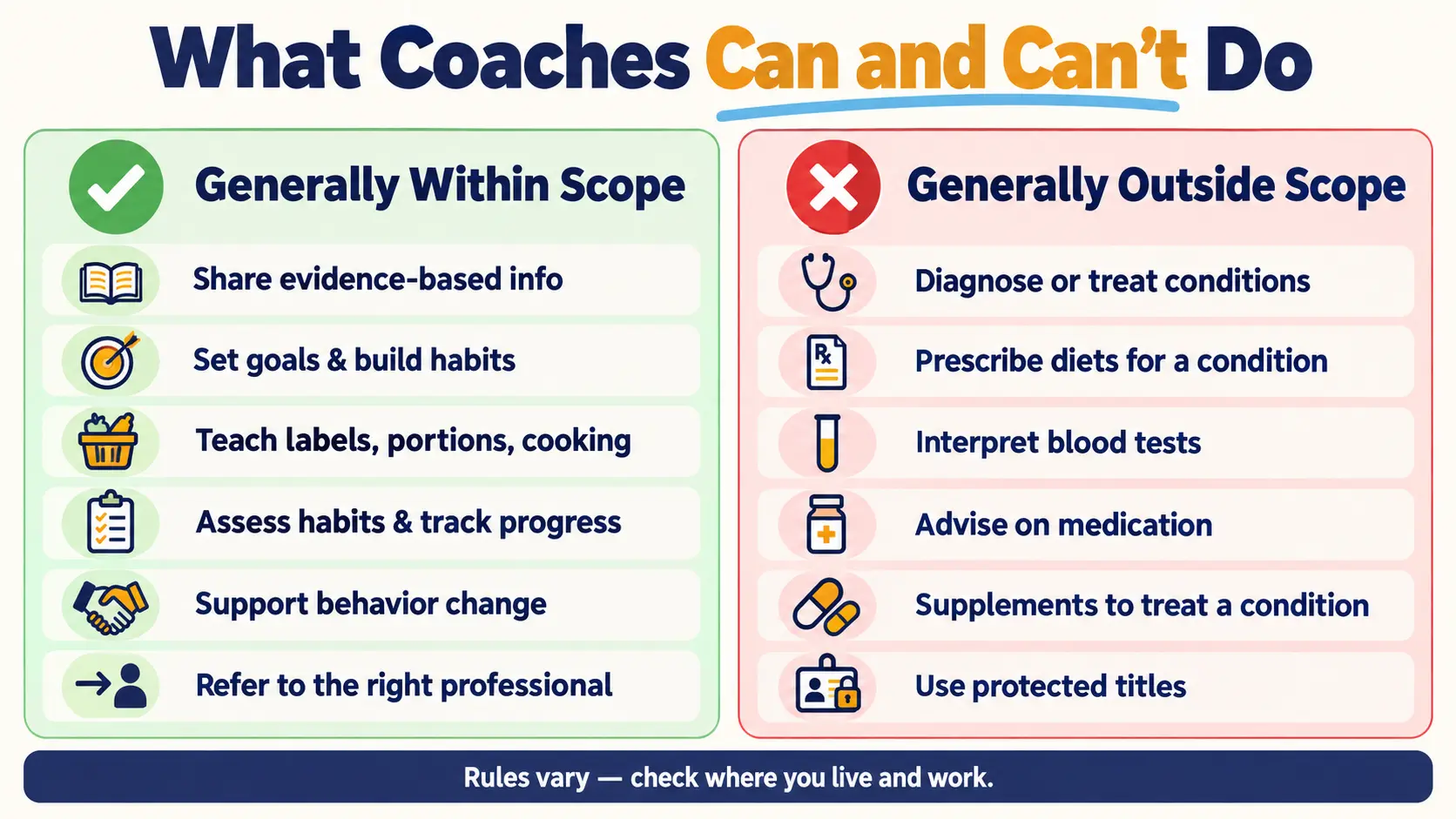
What Coaches Generally Can and Can't Do
| Generally within scope ✅ | Generally outside scope ❌ |
|---|---|
| Share general, evidence-based nutrition information and public health guidelines | Diagnose or claim to treat, cure or prevent any medical condition |
| Help clients set goals and build habits | Prescribe diets or meal plans to treat a medical condition (medical nutrition therapy) |
| Teach skills: label reading, portions, shopping, cooking, meal planning | Interpret blood tests, lab results or medical scans |
| Assess eating habits and track progress (Lesson 18) | Advise starting, stopping or changing medication |
| Use coaching skills to support behavior change (Lessons 14–17) | Recommend supplements to treat a condition (Lesson 13) |
| Offer accountability, encouragement and general meal ideas | Provide therapy for eating disorders or mental health conditions |
| Refer clients to the right professional | Use protected titles (such as "dietitian") without the required qualification |
Grey areas
- Meal plansRules vary. For generally healthy clients, many coaches stay on safer ground with general guidelines, sample meal ideas and flexible templates the client adapts — rather than rigid, prescriptive plans. Meal plans to treat a condition are outside scope.
- Questions about a conditionA coach can share general public health information (for example, "guidelines generally recommend more fibre and less added sugar"), but the specific plan for a condition belongs with the client's doctor or dietitian.
- SupplementsGeneral, evidence-based education is fine; recommending supplements to treat symptoms or conditions is not (Lesson 13).
- When unsurePause, check, and refer. Erring on the side of referral protects the client — and the coach.
Choosing your words
Language signals scope. Coaches educate, suggest, support and guide; they don't diagnose, prescribe, treat or cure. Compare "You need to cut out gluten for your stomach problems" with "Ongoing stomach problems are worth checking with your doctor — in the meantime, we can keep working on your regular meals."
When to Refer
| Red flag | Examples | Refer to |
|---|---|---|
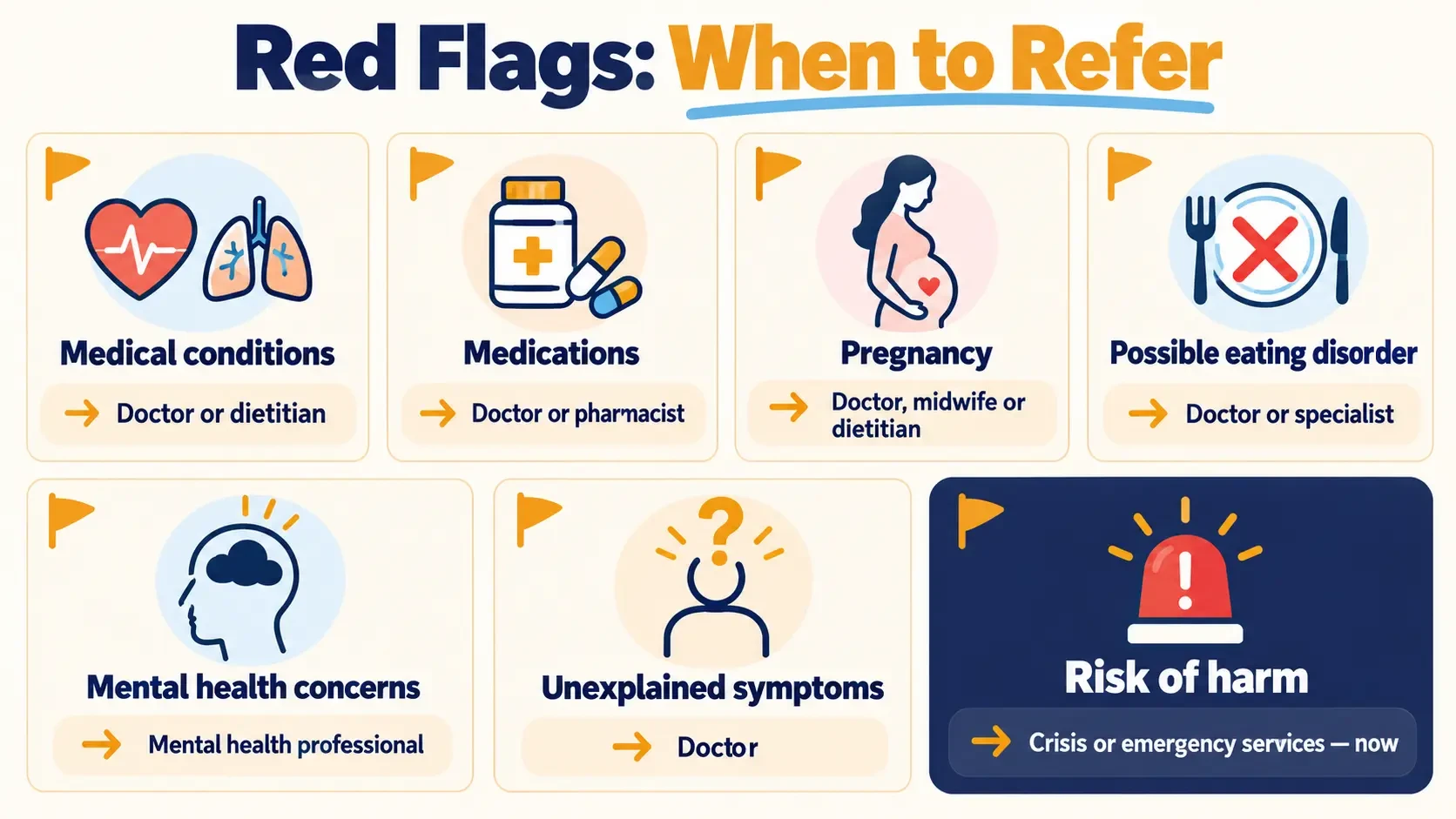
| Medical conditions | Diabetes, heart, kidney or liver disease, digestive disorders, food allergies | Doctor or registered dietitian |
| Medications | Insulin, blood thinners, blood pressure medication — anything diet could affect | Doctor or pharmacist |
| Pregnancy and breastfeeding | Specific nutrition needs or complications | Doctor, midwife or registered dietitian |
| Possible eating disorder | Severe restriction, bingeing, purging, intense fear of weight gain (Lesson 14) | Doctor or eating disorder specialist |
| Mental health concerns | Persistent low mood, anxiety, distress that affects daily life | Doctor or mental health professional |
| Unexplained symptoms | Unexplained weight loss, ongoing fatigue, persistent digestive problems | Doctor |
| Risk of harm | Thoughts of self-harm or harming others | Immediate support — a crisis service, or emergency services if in immediate danger |
How to refer
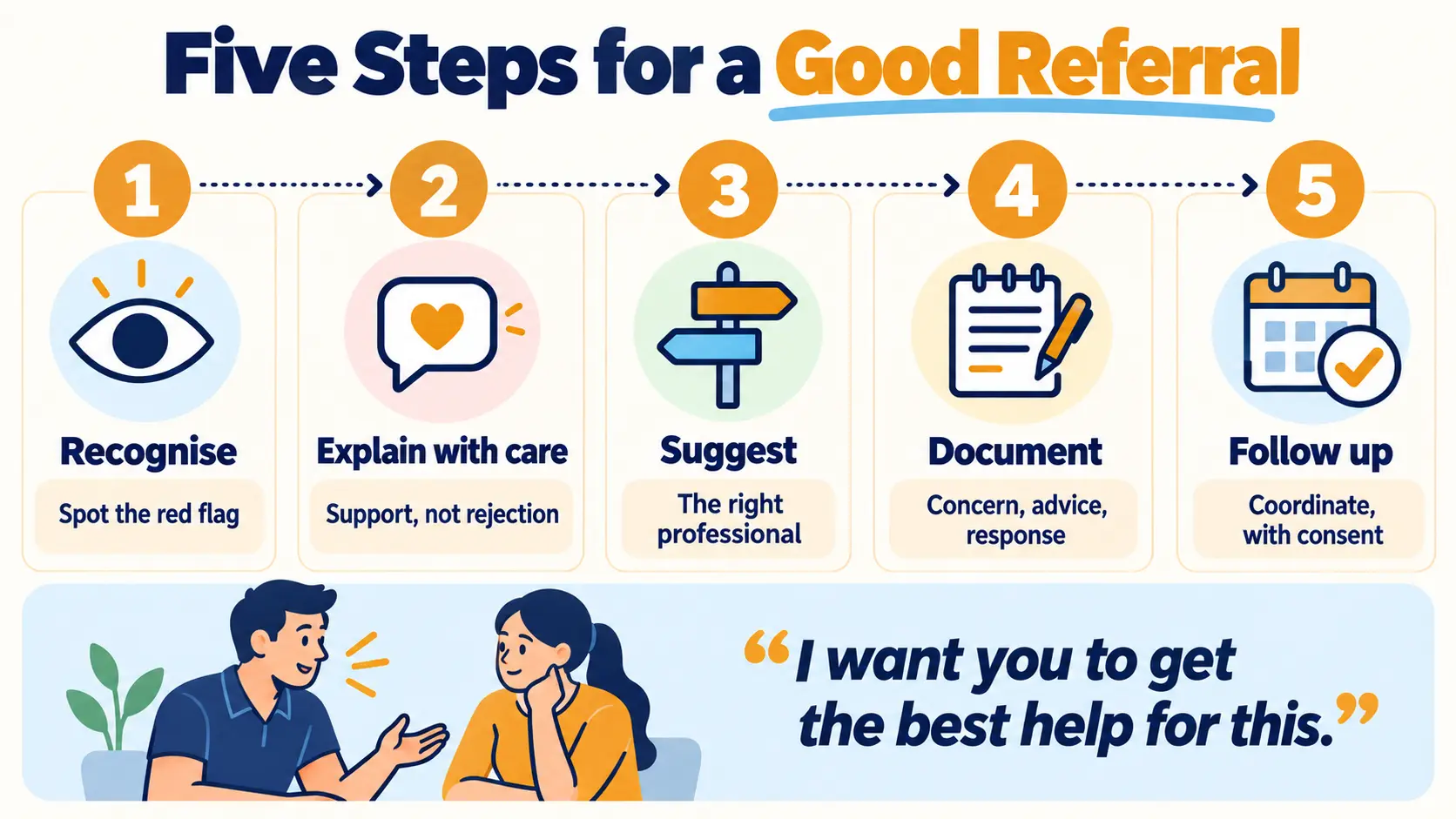
- 1. RecogniseNotice the red flag — at intake or any time later.
- 2. Explain with careFrame it as support, not rejection: "I want you to get the best help for this, and that's beyond what I'm trained to do."
- 3. Suggest the right professionalThe type of professional, and local options where you can.
- 4. DocumentNote the concern, what you recommended, and the client's response.
- 5. Follow up and coordinateCheck in, and — with the client's consent — support the plan from their healthcare team.
Working alongside healthcare professionals
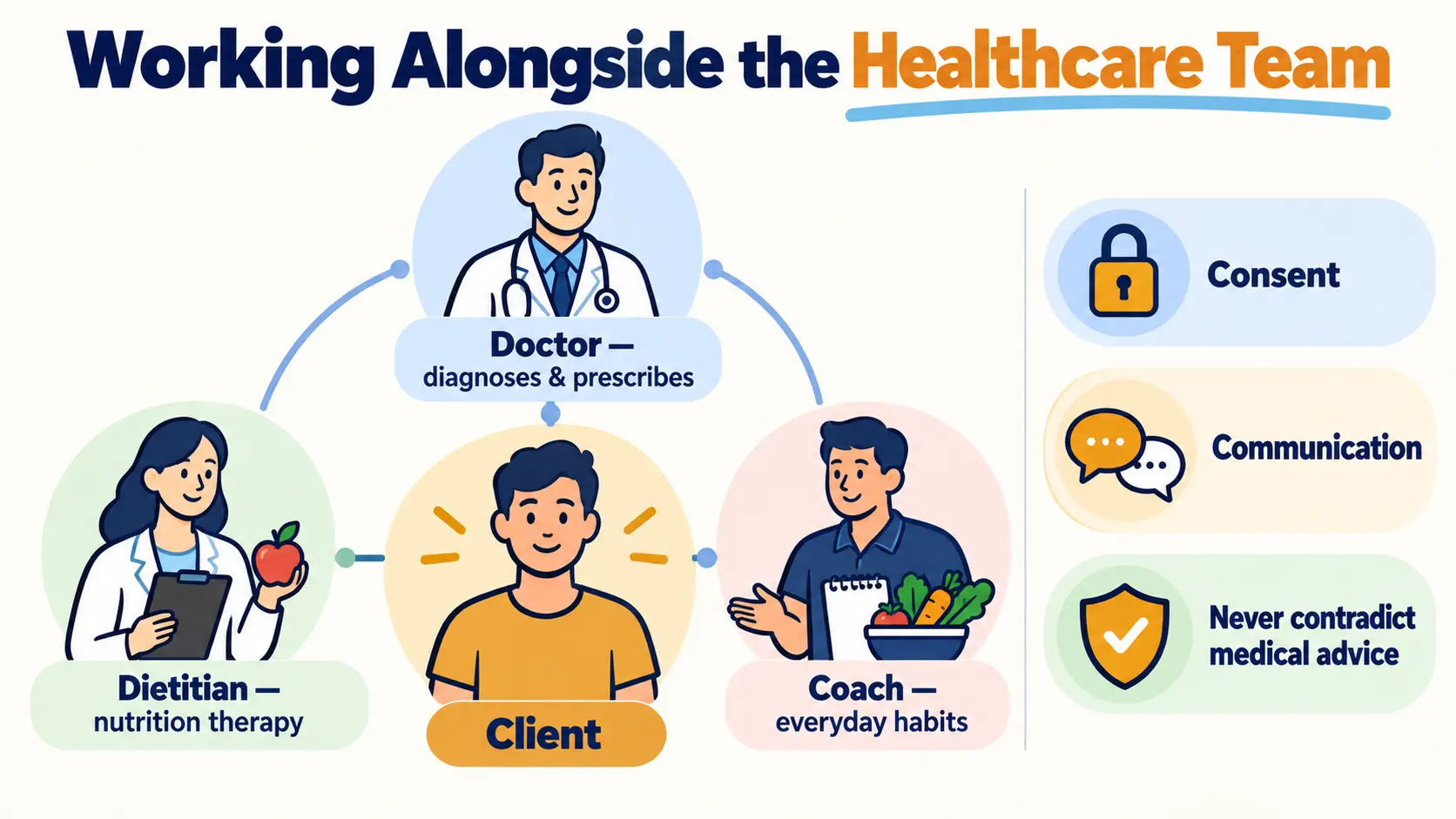
Referral often isn't the end of coaching. A client with type 2 diabetes, for example, may have their eating plan set by a doctor or dietitian, while the coach helps with the day-to-day habits — shopping, cooking, regular meals and confidence. The keys are consent (share information only with the client's permission), communication, and never contradicting medical advice.
Professional Boundaries and Ethics
| Principle | In practice |
|---|---|
| Confidentiality and privacy | Keep client information private and secure; share only with consent, except where there's a risk of harm; follow the privacy laws where you work |
| Informed consent | Explain what coaching involves, its limits, and how information is used before you start |
| Honesty about qualifications | Describe your credentials accurately; don't imply you're a dietitian or medical professional |
| No guarantees | Avoid promising specific results ("lose 10 kg in a month") |
| Conflicts of interest | If you sell or earn from products, disclose it and never pressure clients to buy |
| Professional relationships | Keep boundaries clear; avoid relationships that could compromise your judgement |
| Competence | Stay current through continuing education; recognise what you don't know |
| Respect | Respect clients' culture, beliefs, body size and choices; no judgement |
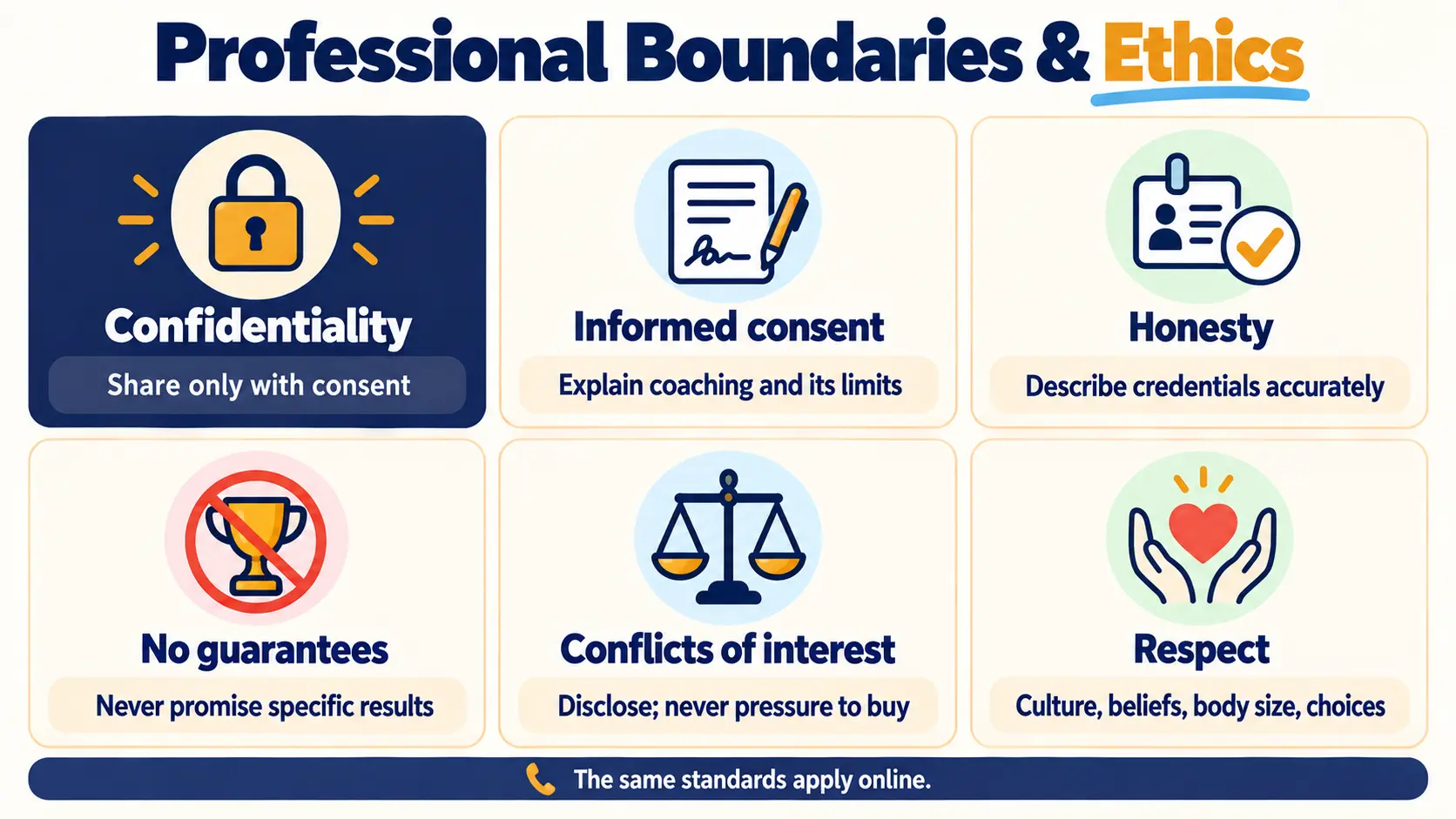
The same standards apply online. Social media posts, testimonials and marketing should be honest, avoid disease claims, and never share client details or photos without permission.
The situation: Ravi, 52, tells his coach he was recently diagnosed with type 2 diabetes and asks for "a diet to get my blood sugar down" and whether he can stop his tablets if he eats well.
Recognise: a medical condition and a medication question — both red flags.
Explain with care: "Those are really important questions, and they need your doctor's input. Medication decisions are always theirs, and a registered dietitian can build a plan for your diabetes."
Within scope: with Ravi's consent, the coach supports the plan his doctor and dietitian set — helping him with regular meals, shopping and cooking skills.
Document and follow up: the coach notes the referral and checks in at the next session.
For a coaching perspective on the same topic, see Precision Nutrition Level 1 Lesson 3: What Is a Great Coach?
12 questions in the style of the CNC exam. Score 70%+ to mark this lesson complete.
- Scope of practice depends on training, local rules and professional standards — check the rules where you work.
- Coaches educate, assess habits, set goals and support behavior change.
- Coaches don't diagnose, treat conditions, interpret lab tests, advise on medication or provide therapy.
- Refer for medical conditions, medications, pregnancy, eating disorders, mental health concerns and unexplained symptoms — and act immediately on any risk of harm.
- Refer with care: recognise, explain, suggest, document, follow up — and keep supporting habits within scope.
- Ethics: confidentiality, consent, honesty, no guarantees, and transparency about conflicts of interest.
Before moving to Lesson 3:
- Look up how titles like "dietitian" and "nutritionist" are regulated where you live.
- Write a short, kind referral script you could use with a client.
- List three local or online professionals you could refer to.
- Complete the knowledge check above and review any question you missed.