Protein is made of amino acids, and nine of them are essential — the body can't make them, so they have to come from food. Protein builds and repairs tissue and makes enzymes, hormones and antibodies. The RDA of 0.8 g per kilogram is a minimum, not an optimum: active people and anyone trying to keep muscle while losing fat usually do better with more, spread across the day's meals.
Lesson 5 showed that protein provides about 4 kcal per gram and has the highest thermic effect of any macronutrient. This lesson looks at protein itself: what it's made of, what it does, how to judge its quality, and how much people actually need. It's one of the most practical chapters for coaching — almost every client asks about protein.
Free on YouTube Subscribe to get every lesson video in this course SubscribeAmino Acids: The Building Blocks
Proteins are long chains of amino acids joined by peptide bonds. Two amino acids joined together form a dipeptide, three a tripeptide, and many form a polypeptide — which folds into a working protein. Every amino acid contains nitrogen, which is what sets protein apart from carbohydrate and fat.
The body uses 20 amino acids to build its proteins. They fall into three groups:
- Essential (9)The body can't make them, so they must come from food: histidine, isoleucine, leucine, lysine, methionine, phenylalanine, threonine, tryptophan and valine.
- Conditionally essentialNormally made by the body, but needed from food during illness, injury or other stress — for example arginine, cysteine, glutamine, glycine, proline and tyrosine.
- NonessentialThe body can make enough of these on its own — for example alanine, asparagine, aspartic acid, glutamic acid and serine. "Nonessential" means not needed from food, not unimportant.
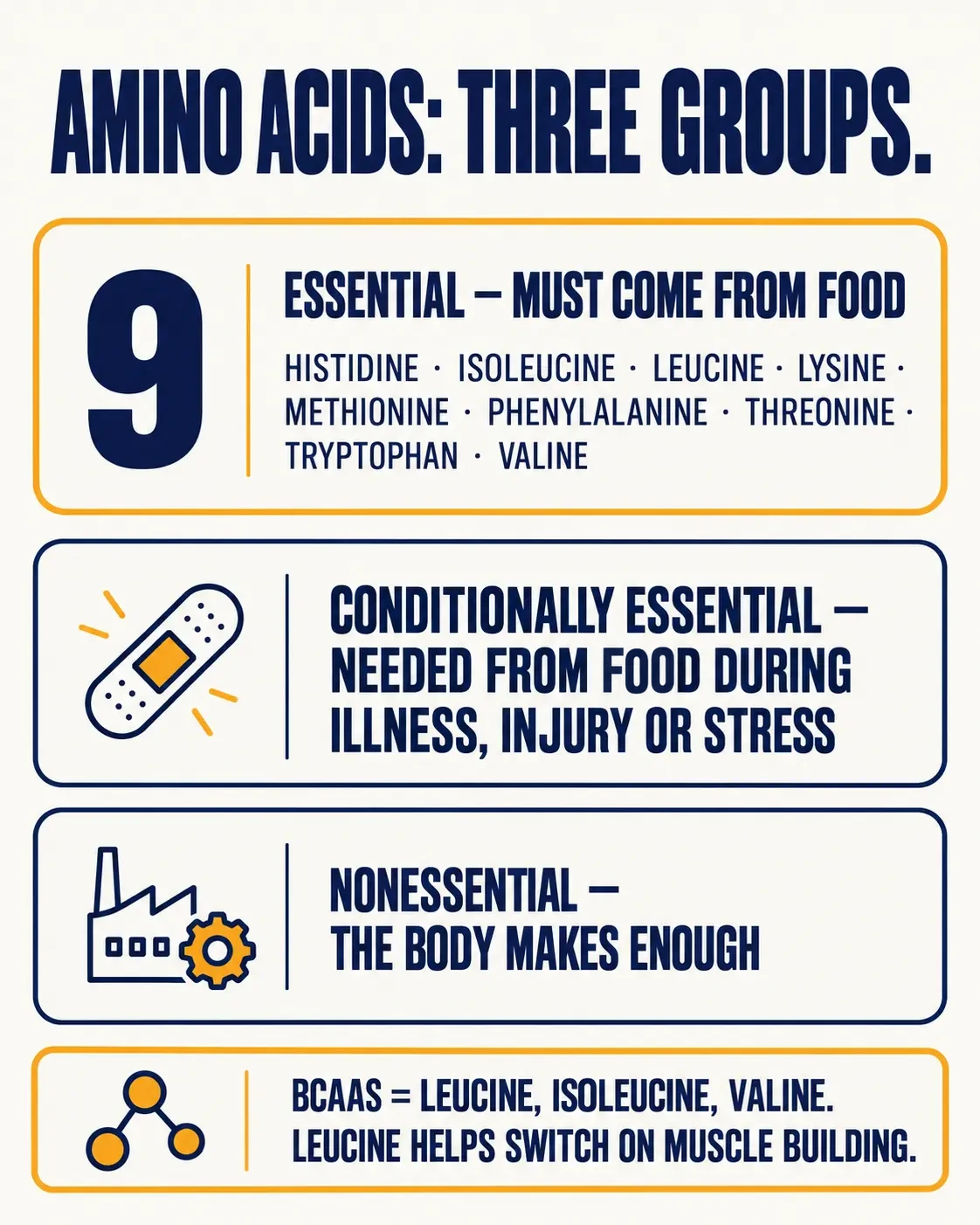
Three essential amino acids — leucine, isoleucine and valine — are called the branched-chain amino acids (BCAAs). Leucine gets special attention because it acts as a key signal for starting muscle protein synthesis.
What Protein Does in the Body
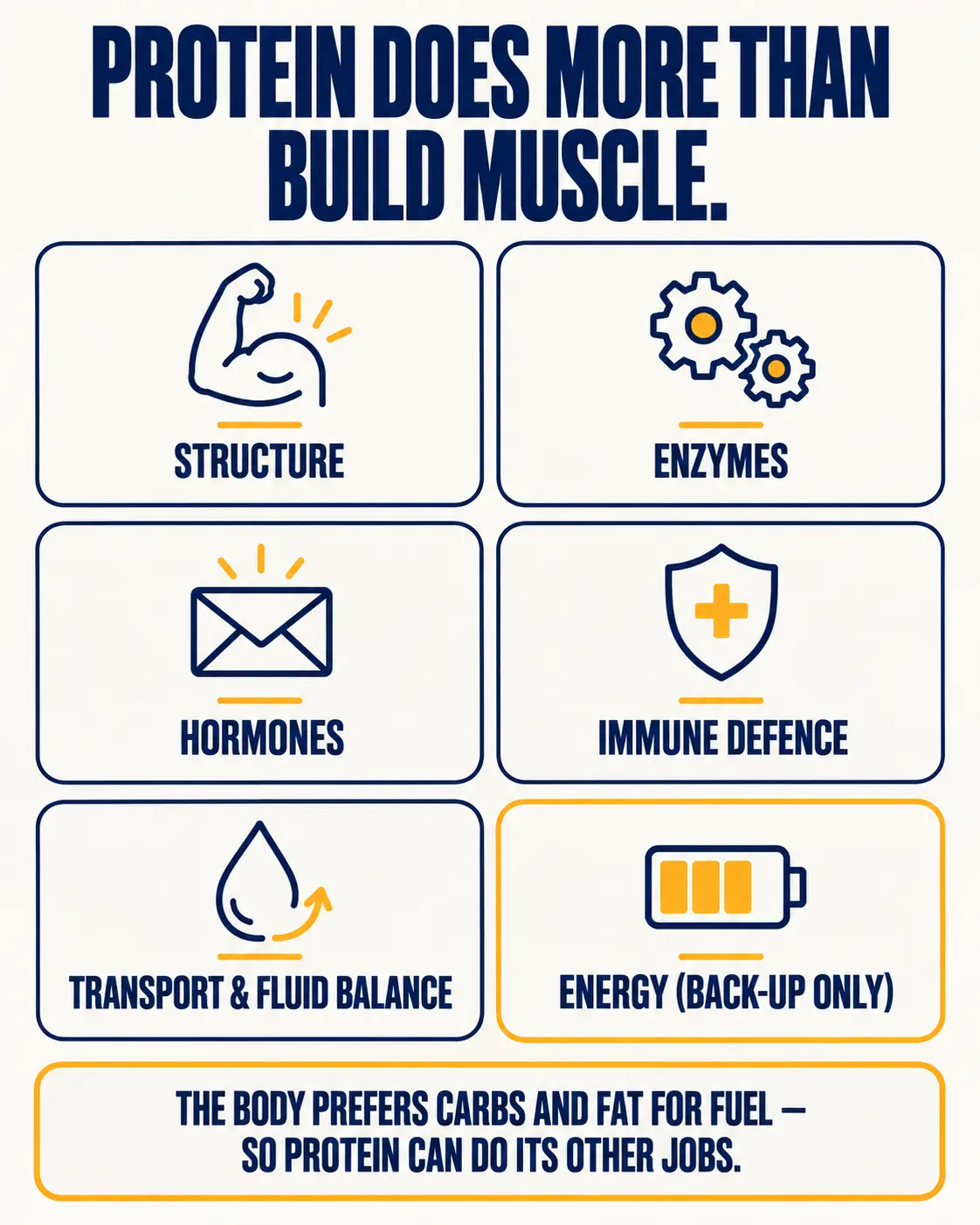
Protein is often thought of as "for muscle," but its jobs go far beyond that:
- StructureBuilds and repairs tissues — muscle, skin, hair, nails, bone matrix and connective tissue such as collagen.
- EnzymesSpeed up chemical reactions, including digestion and energy production.
- HormonesSome hormones, such as insulin, are proteins that carry messages around the body.
- Immune functionAntibodies that help fight infection are proteins.
- Transport and fluid balanceProteins such as haemoglobin carry oxygen, and blood proteins help keep fluid in the right places.
- Energy (a back-up role)Protein can be used for energy, but the body prefers carbohydrate and fat. Relying on protein for fuel means less is available for its other jobs.
Protein turnover and nitrogen balance
Body proteins are constantly broken down and rebuilt — a process called protein turnover. Because protein contains nitrogen (about 16% of its weight), researchers track protein status with nitrogen balance: nitrogen taken in compared with nitrogen lost.
| State | What it means | Typical situations |
|---|---|---|
| Positive nitrogen balance | More nitrogen in than out — the body is building tissue | Growth in childhood, pregnancy, building muscle |
| Negative nitrogen balance | More nitrogen out than in — the body is breaking tissue down | Starvation, severe illness, injury, very low protein intake |
| Nitrogen equilibrium | In matches out | Healthy adults eating enough protein and maintaining |
Protein Quality
Not all proteins are equal. Quality depends on two things: how well the protein supplies the essential amino acids, and how well it's digested and absorbed.
- Complete proteinContains all nine essential amino acids in adequate amounts. Animal foods (eggs, dairy, meat, fish, poultry) are complete; so are soy and quinoa.
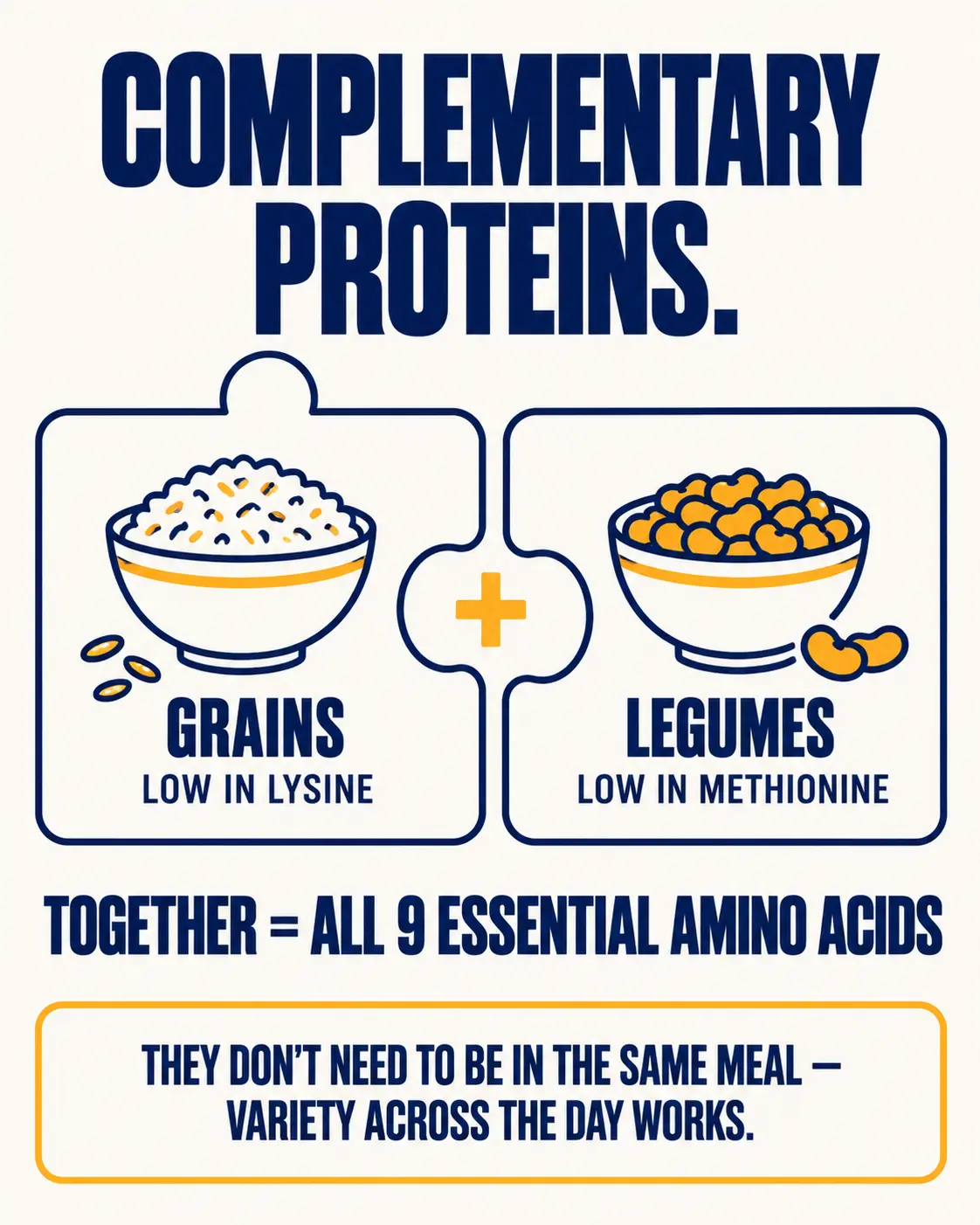
- Incomplete proteinLow in one or more essential amino acids — the limiting amino acid. Many plant proteins fall here: grains are often low in lysine, legumes in methionine.
- Complementary proteinsTwo incomplete proteins that cover each other's gaps, such as rice with beans or lentils. They don't need to be eaten in the same meal — across the day works.
- PDCAASProtein Digestibility-Corrected Amino Acid Score. Rates quality from 0 to 1.0, combining amino acid content and digestibility. Scores are capped at 1.0, so many high-quality proteins tie at the top.
- DIAASDigestible Indispensable Amino Acid Score — a newer method that measures digestibility of each amino acid at the end of the small intestine. It isn't capped at 1.0, so it separates top-quality proteins more clearly.
For coaching, the practical message is simple: people who eat animal foods usually meet their essential amino acid needs easily, and people who eat mostly or entirely plants can do the same by eating a variety of protein sources — legumes, soy, grains, nuts and seeds — across the day, and sometimes a little more total protein.
How Protein Is Digested
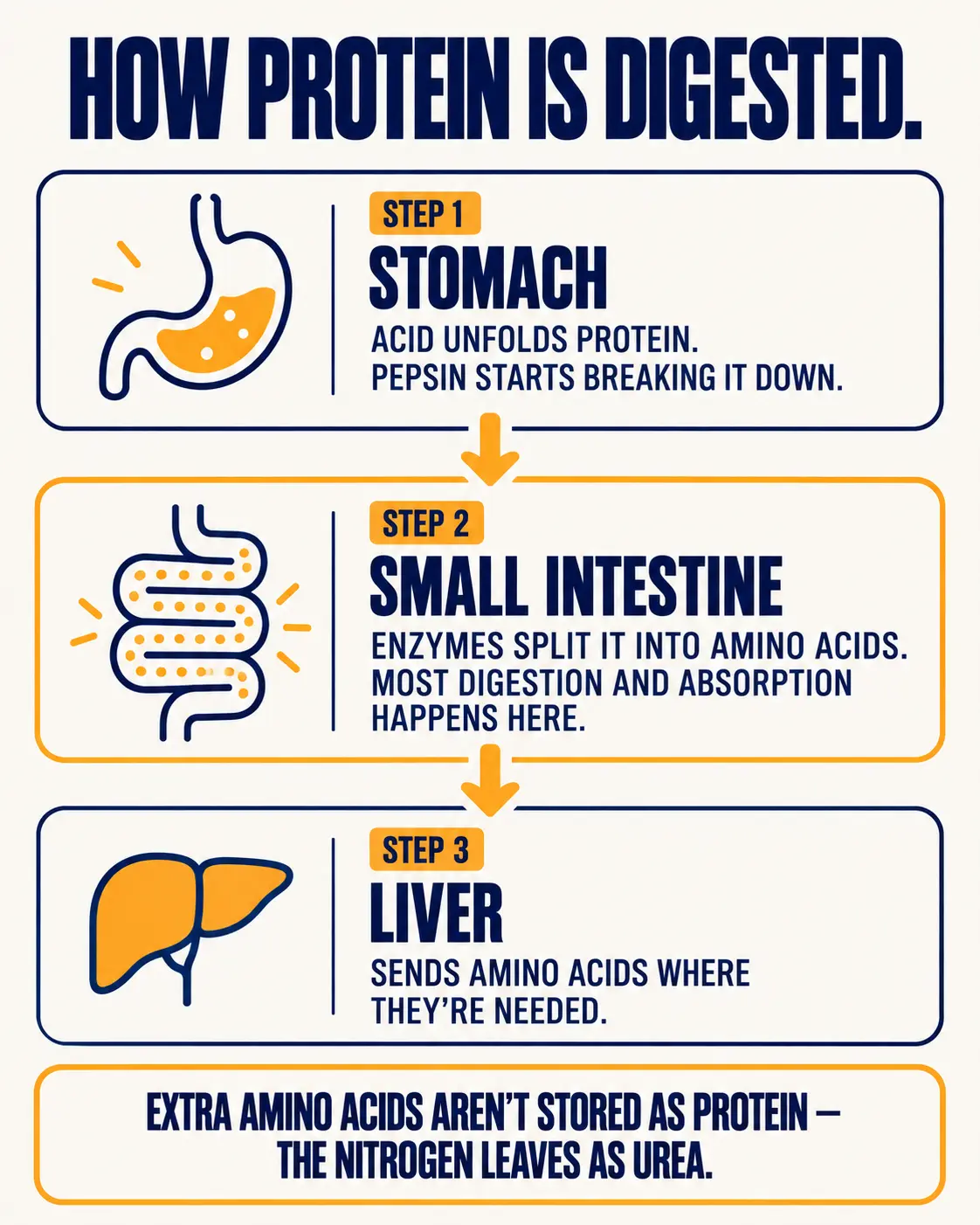
Protein digestion starts in the stomach, where stomach acid unfolds (denatures) proteins and the enzyme pepsin begins breaking them into shorter chains. Most of the work happens in the small intestine, where enzymes from the pancreas (such as trypsin and chymotrypsin) break the chains down into single amino acids and small dipeptides and tripeptides. These are absorbed into the blood and carried to the liver, which sends them where they're needed.
The body doesn't store extra amino acids the way it stores fat or carbohydrate. Amino acids beyond what it needs for building are broken down: the nitrogen is removed (and excreted as urea), and the rest is used for energy or converted and stored.
How Much Protein Do People Need?
Protein needs are usually expressed in grams per kilogram of body weight per day (g/kg/day).
| Group | Commonly cited intake |
|---|---|
| RDA for healthy adults (minimum to meet needs) | 0.8 g/kg/day |
| Older adults | Often around 1.0–1.2 g/kg/day, to help preserve muscle |
| People who exercise regularly | Roughly 1.2–2.0 g/kg/day |
| Losing fat while trying to keep muscle | Often toward the higher end — around 1.6 g/kg/day or more |
| Acceptable Macronutrient Distribution Range (AMDR) | 10–35% of total calories |
The RDA is set to cover the basic needs of most healthy adults; it isn't designed to maximise muscle building or recovery. That's why ranges for active people are higher.
Spreading protein across the day
Muscle protein synthesis responds to each protein-containing meal, so research commonly suggests spreading protein across the day rather than eating most of it at dinner. A frequently cited target is roughly 20–40 g of high-quality protein per meal (about 0.25–0.4 g/kg per meal), containing around 2–3 g of leucine. For more on this, see our post on how to distribute protein across meals.
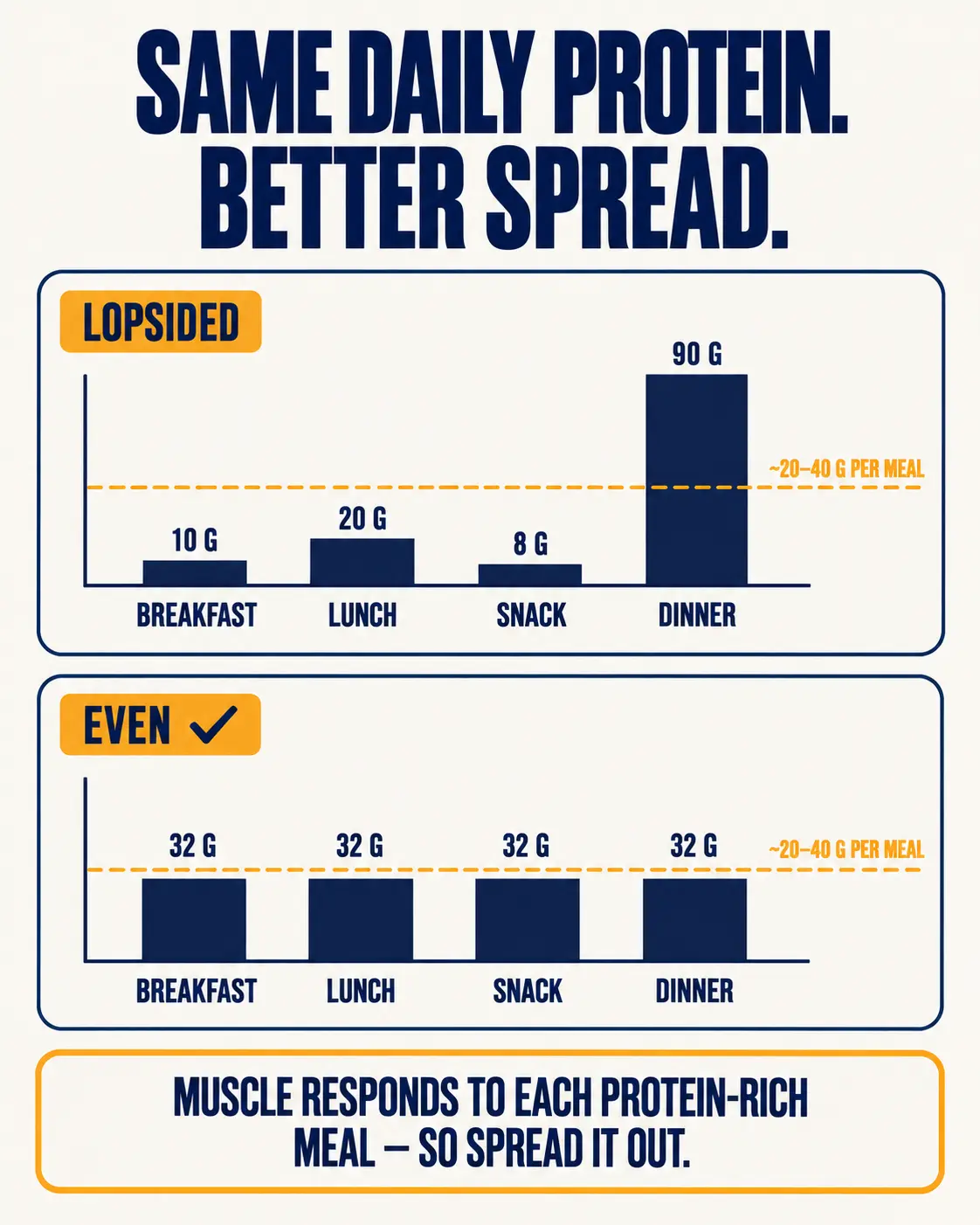
Sam weighs 80 kg (about 176 lb), strength trains four days a week, and wants to build muscle. A target of 1.6 g/kg fits the commonly cited range for active people.
Daily protein = 80 × 1.6 = 128 g/day (compared with an RDA of 80 × 0.8 = 64 g)
Per meal across four meals ≈ 128 ÷ 4 = 32 g per meal
Calories from protein ≈ 128 × 4 = 512 kcal/day — a useful check that the plan fits within Sam's overall energy needs.
Higher protein intakes also help with appetite: protein tends to be more filling than carbohydrate or fat, and its higher thermic effect (Lesson 5) slightly increases the energy used to process it. Both help explain why higher-protein diets are popular for fat loss.
Safety and scope
For healthy people, protein intakes within commonly recommended ranges are generally considered safe. Extra protein doesn't turn into extra muscle on its own — it needs training to go with it — and very high intakes can crowd out other foods. Anyone with kidney disease or another medical condition should get protein guidance from their doctor or a registered dietitian, not a coach.
Food Sources of Protein
| Source | Examples | Coaching notes |
|---|---|---|
| Animal | Eggs, milk, yogurt, cheese, fish, chicken, meat | Complete, highly digestible, rich in leucine. Choose leaner options when calories matter. |
| Soy | Tofu, tempeh, edamame, soy milk | Complete plant protein — a useful anchor for vegetarian and vegan eaters. |
| Legumes | Lentils, chickpeas, beans, peas | Good protein plus fibre; pair with grains across the day. |
| Grains and seeds | Quinoa, oats, rice, whole wheat, nuts, seeds | Lower in protein per serving; quinoa is complete. Nuts and seeds are energy-dense. |
| Supplements | Whey, casein, soy or pea protein powders | Convenient, not required. Covered in Lesson 13. |
If you want practical, food-first ideas, our High-Protein Eating guide and high-protein foods that aren't chicken are good places to start.
This chapter overlaps with PN Level 1's macronutrients chapter and NASM-CPT's nutrition lesson — useful for extra practice from a different angle.
11 questions in the style of the CNC exam. Score 70%+ to mark this lesson complete.
- Proteins are chains of amino acids; 9 are essential and must come from food.
- Protein builds tissue and makes enzymes, hormones and antibodies; energy is a back-up role.
- Positive nitrogen balance means the body is building tissue; negative means it's breaking tissue down.
- Complete proteins supply all essential amino acids; plant eaters cover gaps with variety across the day.
- The RDA is 0.8 g/kg — a minimum. Active people commonly need around 1.2–2.0 g/kg, spread across meals.
- Clients with kidney disease or other medical conditions need protein guidance from a doctor or dietitian.
Before moving to Lesson 7:
- Write out the nine essential amino acids from memory, then check them.
- Work out a daily protein target at 1.6 g/kg for your own body weight, and split it across your usual meals.
- List three complete protein sources and one complementary pairing you'd suggest to a vegetarian client.
- Complete the knowledge check above and review any question you missed.