Carbohydrates are the body's preferred fuel, especially for the brain and for hard exercise. They range from single sugars to long starch chains and fibre. Insulin and glucagon keep blood glucose in a healthy range, and extra glucose is stored as glycogen in the liver and muscles. For most people, the quality of carbohydrate — fibre-rich, minimally processed foods, and limited added sugar — matters more than cutting carbohydrate out.
Lesson 6 covered protein. This lesson turns to the macronutrient people argue about most. Carbohydrates are often blamed for weight gain, but the science is more balanced than the headlines: they're the body's most efficient fuel, and some of the most nutritious foods — fruit, vegetables, legumes and whole grains — are mostly carbohydrate.
Free on YouTube Subscribe to get every lesson video in this course SubscribeWhat Carbohydrates Do
- Primary energy sourceGlucose is the body's preferred fuel. The brain relies on it heavily, and it's the main fuel for moderate-to-high-intensity exercise.
- Protein sparingEating enough carbohydrate means the body doesn't need to break down protein to make glucose, leaving protein free for building and repair.
- Energy storageExtra glucose is stored as glycogen in the liver and muscles, ready for later use.
- Digestive healthFibre, a type of carbohydrate, supports regular digestion and feeds beneficial gut bacteria.
Types of Carbohydrates
Carbohydrates are made of sugar units called saccharides. They're grouped by how many units they contain.
| Type | Units | Examples |
|---|---|---|
| Monosaccharides (simple) | 1 | Glucose, fructose (fruit sugar), galactose |
| Disaccharides (simple) | 2 | Sucrose (table sugar) = glucose + fructose · Lactose (milk sugar) = glucose + galactose · Maltose = glucose + glucose |
| Oligosaccharides (complex) | 3–10 | Found in beans, onions and some other plants; partly fermented by gut bacteria |
| Polysaccharides (complex) | Many | Starch (plants' storage form), glycogen (animals' storage form), and most fibre |
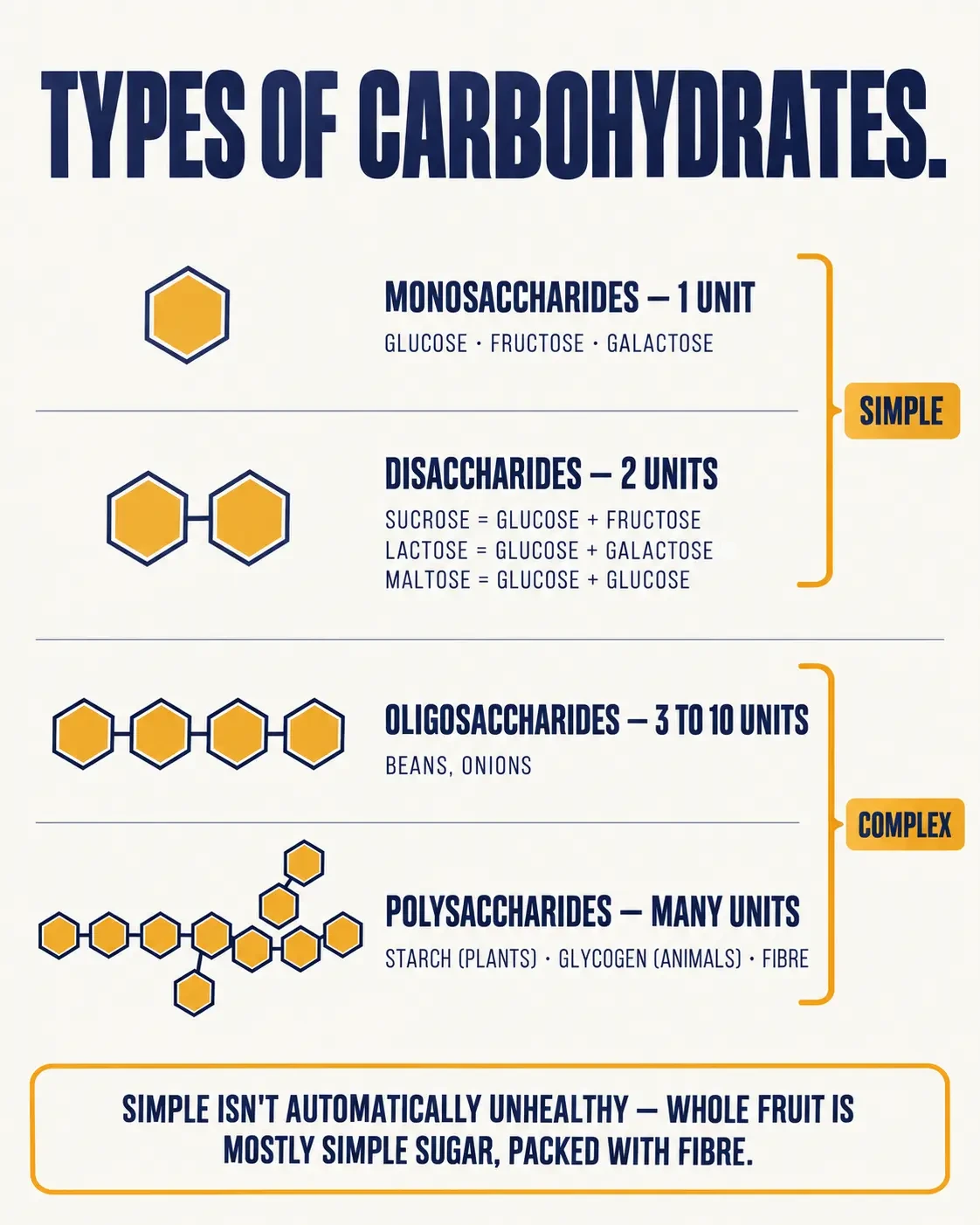
Mono- and disaccharides are called simple carbohydrates or sugars. Oligo- and polysaccharides are complex carbohydrates. "Simple" doesn't automatically mean unhealthy — whole fruit is mostly simple sugar and comes packaged with fibre, water and micronutrients — but most added sugar in the diet is simple sugar.
Fibre
Fibre is carbohydrate that human digestive enzymes can't break down. It passes into the large intestine, where some of it is fermented by gut bacteria into short-chain fatty acids that help keep the gut lining healthy.
- Soluble fibreDissolves in water to form a gel. Slows digestion and the rise in blood glucose, and can help lower LDL cholesterol. Sources: oats, barley, beans, lentils, apples, citrus.
- Insoluble fibreDoesn't dissolve. Adds bulk to stool and helps keep bowel movements regular. Sources: whole wheat, bran, nuts, vegetables and the skins of fruit and vegetables.
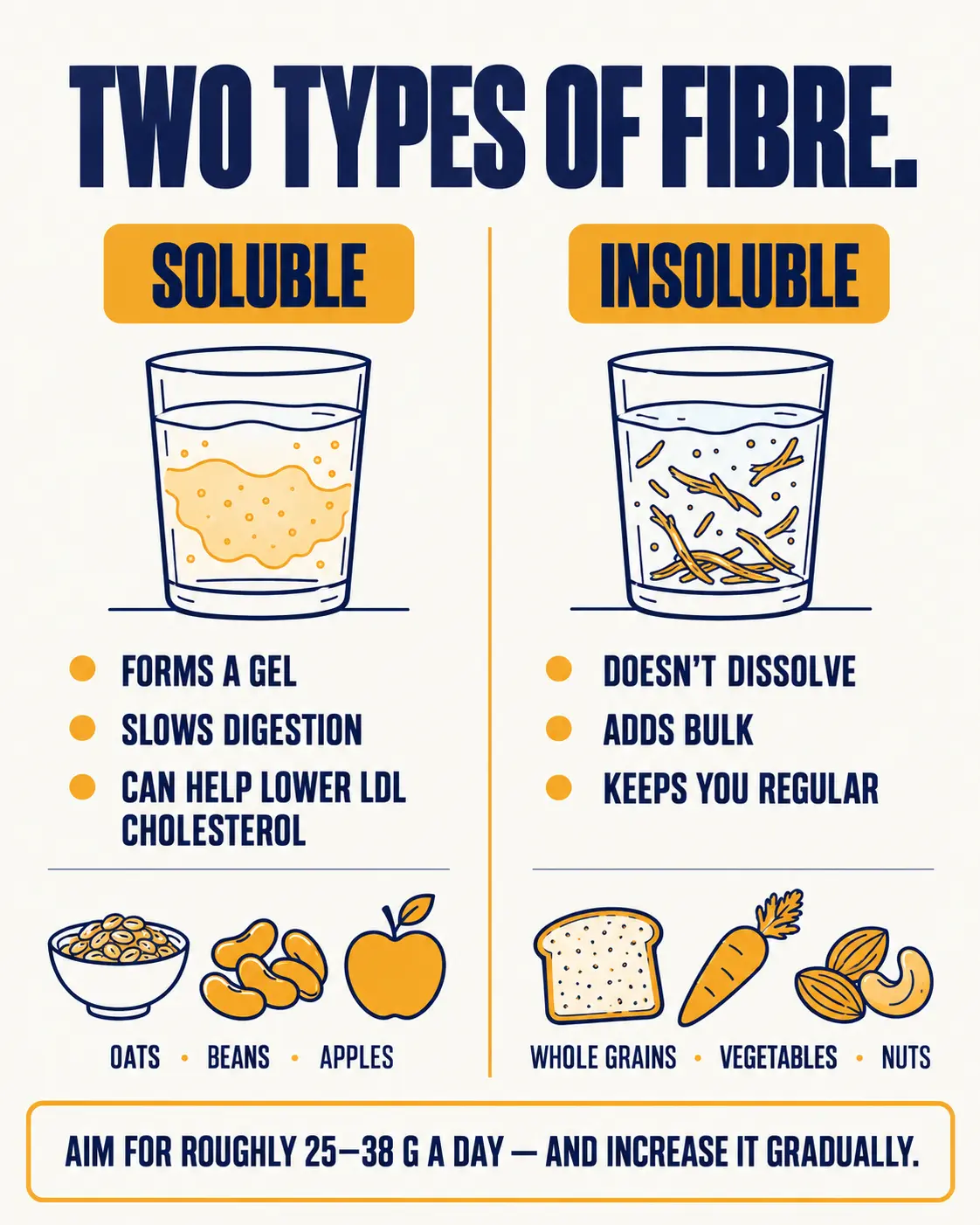
Commonly cited intake targets for adults sit around 25–38 g of fibre per day, or about 14 g per 1,000 kcal eaten. Most people eat well below this. Fibre also adds volume with few calories, which is one reason high-fibre foods are filling (see energy density in Lesson 5). Increase fibre gradually and drink enough fluid, as a sudden jump can cause bloating. More in our post on how much fibre you need per day.
How Carbohydrates Are Digested
Digestion starts in the mouth, where salivary amylase begins breaking starch into shorter chains. Very little happens in the stomach. In the small intestine, pancreatic amylase continues the work, and enzymes on the intestinal wall — such as sucrase, lactase and maltase — split disaccharides into monosaccharides. Only monosaccharides are absorbed into the blood.
Absorbed fructose and galactose travel to the liver, which mostly converts them to glucose. Fibre isn't digested and moves on to the large intestine. People with low lactase activity may have trouble digesting lactose; a client who suspects any food intolerance should see a doctor for proper assessment rather than self-diagnosing.
Blood Glucose, Insulin and Glycogen
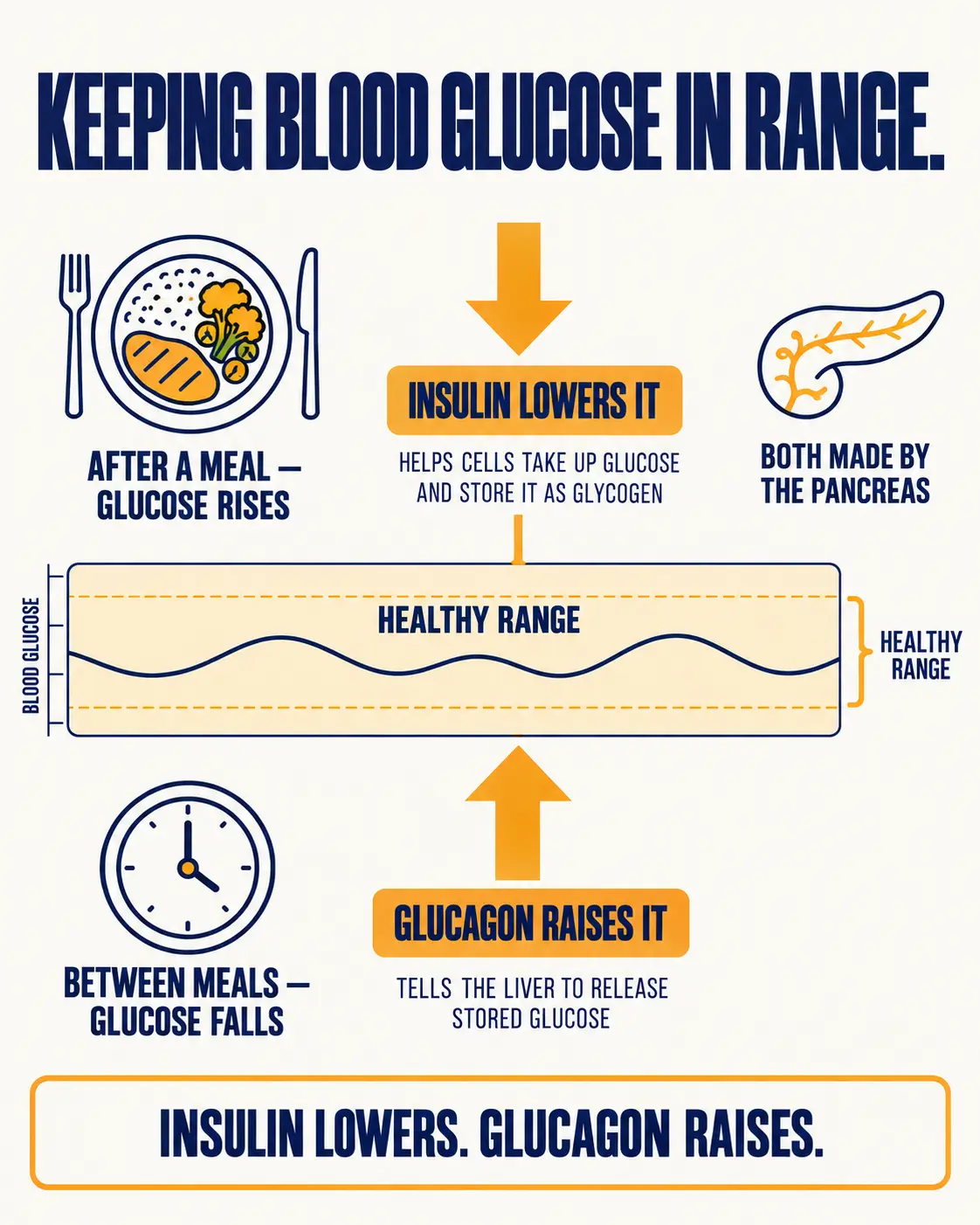
The body works to keep blood glucose within a narrow healthy range. Two hormones from the pancreas do most of the work:
- Insulin — lowers blood glucoseReleased after eating when blood glucose rises. Helps cells take up glucose and promotes storing it as glycogen (and, when stores are full and energy intake is high, as fat).
- Glucagon — raises blood glucoseReleased when blood glucose falls, such as between meals. Signals the liver to break down glycogen and release glucose into the blood.
Glycogen is how the body stores carbohydrate. The liver holds roughly 100 g, and muscles hold roughly 300–500 g depending on body size and training. The difference in their jobs is a classic exam point:
- Liver glycogen maintains blood glucose for the whole body, including the brain.
- Muscle glycogen fuels only the muscle it's stored in — it can't be released into the blood.
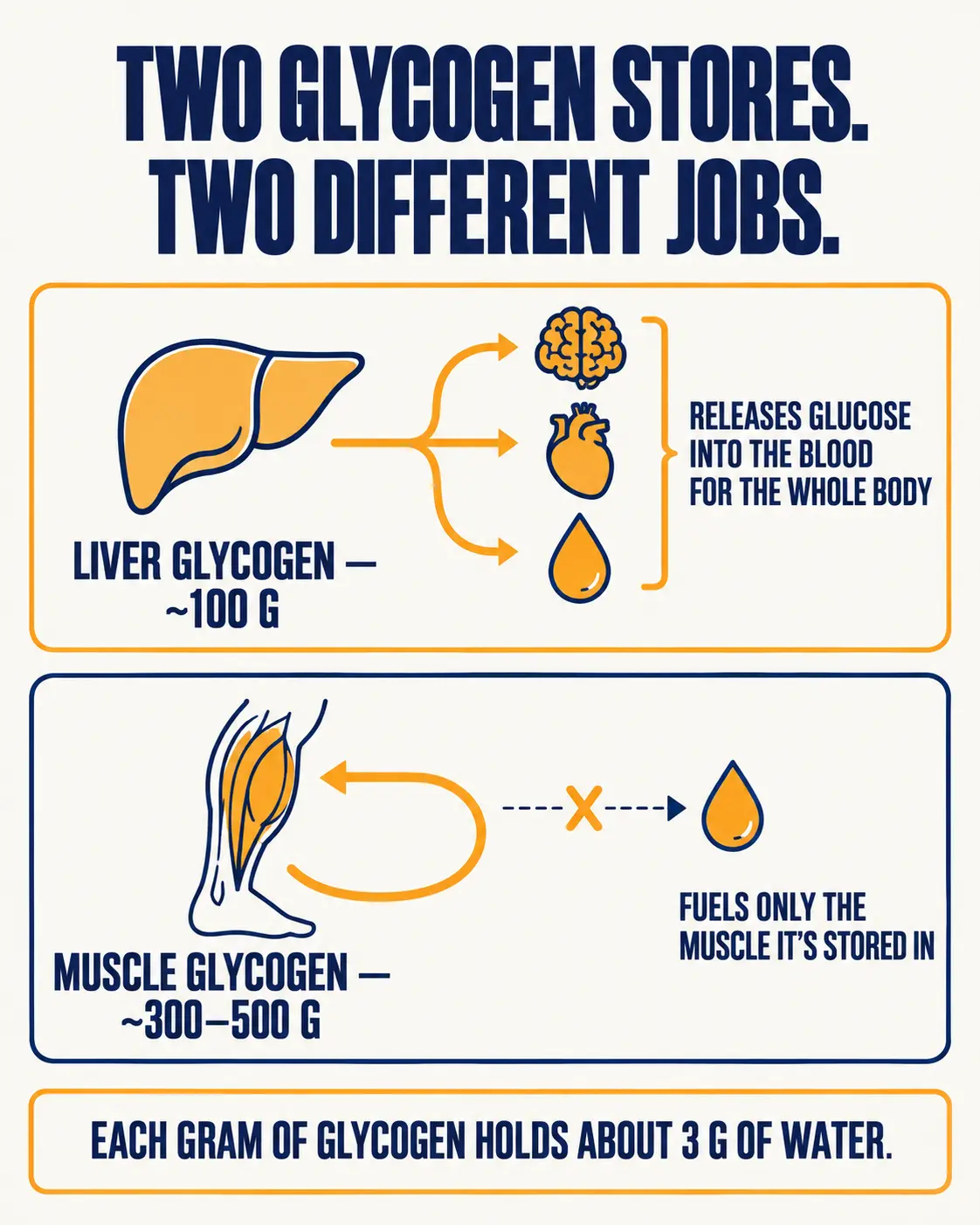
Each gram of glycogen is stored with roughly 3 g of water, which is why weight often drops quickly at the start of a low-carbohydrate diet: much of it is water, not fat. For a practical look at glucose after meals, see our post on blood sugar after eating.
Glycaemic Index and Glycaemic Load
The glycaemic index (GI) ranks how quickly a carbohydrate food raises blood glucose compared with pure glucose, which scores 100.
| Measure | Low | Medium | High |
|---|---|---|---|
| Glycaemic index (GI) | 55 or less | 56–69 | 70 or more |
| Glycaemic load (GL, per serving) | 10 or less | 11–19 | 20 or more |
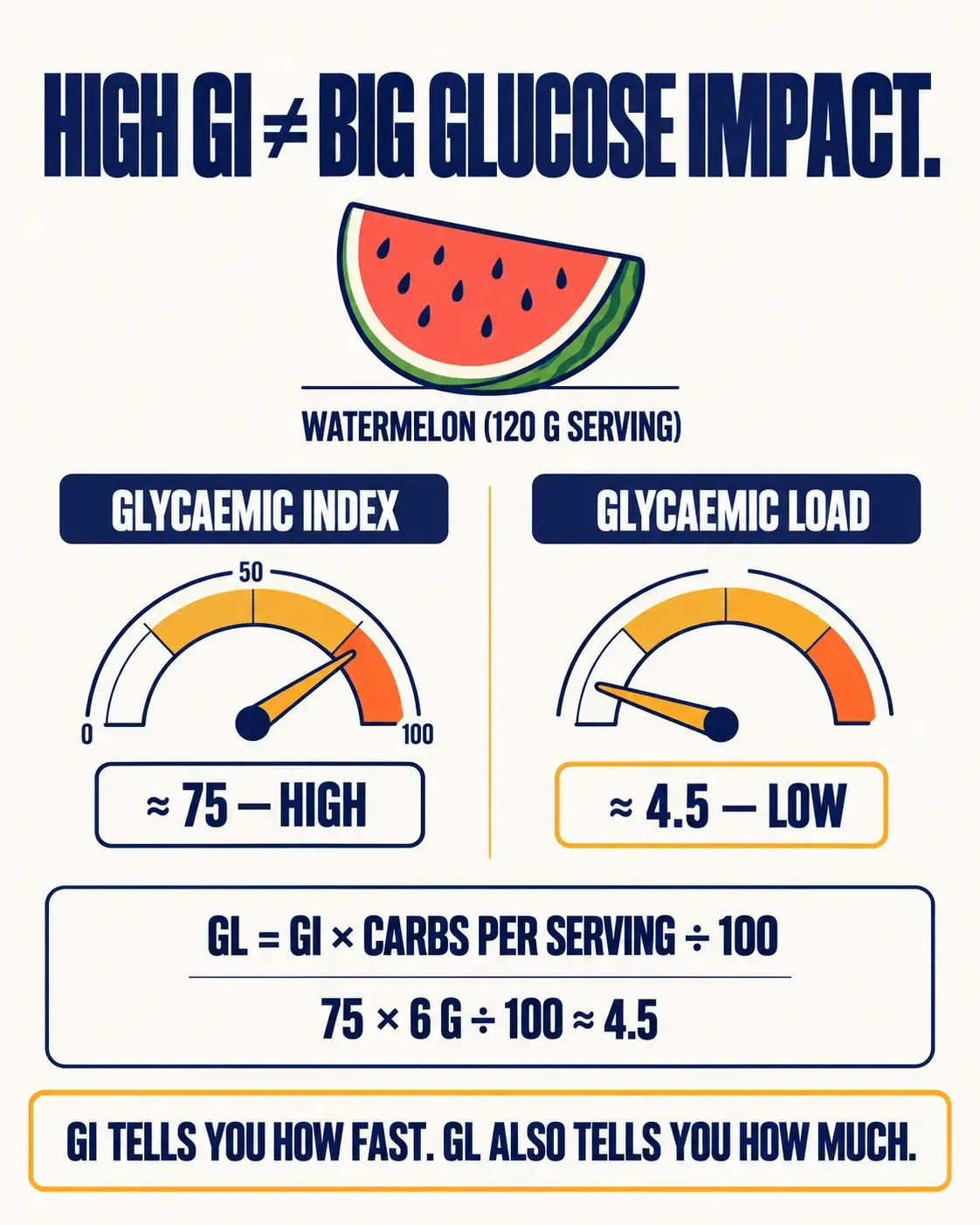
GI has a big limitation: it ignores how much carbohydrate a normal serving actually contains. The glycaemic load (GL) fixes that:
GL = GI × grams of carbohydrate per serving ÷ 100
Watermelon has a high GI of roughly 75, but a typical 120 g serving contains only about 6 g of carbohydrate.
GL = 75 × 6 ÷ 100 ≈ 4.5 — a low glycaemic load.
So a food's GI alone can be misleading. What's eaten with it matters too: fibre, fat and protein in a meal slow digestion and blunt the glucose rise, while ripeness, processing and cooking can raise a food's GI.
Added Sugars
Sugars naturally present in whole fruit, vegetables and plain milk come with fibre, water, protein or micronutrients. Added sugars — sugars and syrups added during processing or preparation — add energy without much else. The World Health Organization recommends keeping free sugars (added sugars plus those in honey, syrups and fruit juice) below 10% of total energy, with further benefits below 5%. Sugary drinks are usually the biggest single source. Our posts on fruit juice vs whole fruit and sugar cravings are good client-friendly reads.
How Much Carbohydrate Do People Need?
| Measure | Commonly cited figure |
|---|---|
| RDA (minimum to supply the brain with glucose) | 130 g/day |
| Acceptable Macronutrient Distribution Range (AMDR) | 45–65% of total calories |
| Athletes and very active people | Set in g/kg of body weight, rising with training volume — from roughly 3–5 g/kg for light training to 8–12 g/kg for very high volumes |
Priya eats about 2,000 kcal a day and wants carbohydrates to supply 50% of her energy — within the AMDR.
Calories from carbohydrate = 2,000 × 0.50 = 1,000 kcal
Grams of carbohydrate = 1,000 ÷ 4 kcal per gram = 250 g/day
Fibre target ≈ 14 g per 1,000 kcal × 2 = about 28 g/day
Very low-carbohydrate and ketogenic diets are covered in Lesson 21. Managing blood glucose for a medical condition such as diabetes is outside a coach's scope — those clients should get carbohydrate guidance from their doctor or a registered dietitian.
Food Sources and Coaching Takeaways
| Mostly choose | Limit |
|---|---|
| Whole grains (oats, brown rice, whole wheat, millets, quinoa) | Refined grains (white bread, many breakfast cereals) |
| Whole fruit and vegetables | Fruit juice and sugary drinks |
| Legumes (beans, lentils, chickpeas) | Sweets, pastries and foods high in added sugar |
| Plain dairy and dairy alternatives | Flavoured, sweetened dairy products |
The practical coaching message: focus on the quality and amount of carbohydrate to match the person's activity, rather than fearing carbohydrate itself. This chapter overlaps with PN Level 1's macronutrients chapter — useful extra practice.
12 questions in the style of the CNC exam. Score 70%+ to mark this lesson complete.
- Carbohydrates are the body's preferred fuel, spare protein, and include fibre for gut health.
- Mono- and disaccharides are simple sugars; oligo- and polysaccharides (starch, glycogen, fibre) are complex.
- Soluble fibre forms a gel and can help lower LDL cholesterol; insoluble fibre adds bulk.
- Insulin lowers blood glucose; glucagon raises it. Liver glycogen supports blood glucose; muscle glycogen fuels only that muscle.
- GL = GI × carbs per serving ÷ 100 — a high-GI food can still have a low GL.
- RDA 130 g/day, AMDR 45–65% of calories; keep free sugars under 10% of energy. Diabetes → doctor or dietitian.
Before moving to Lesson 8:
- Write out the three disaccharides and the two monosaccharides each one is made from.
- Estimate your own fibre intake for a typical day and compare it with 14 g per 1,000 kcal.
- Pick a food you eat often, look up its GI, and work out its GL for your usual serving.
- Complete the knowledge check above and review any question you missed.