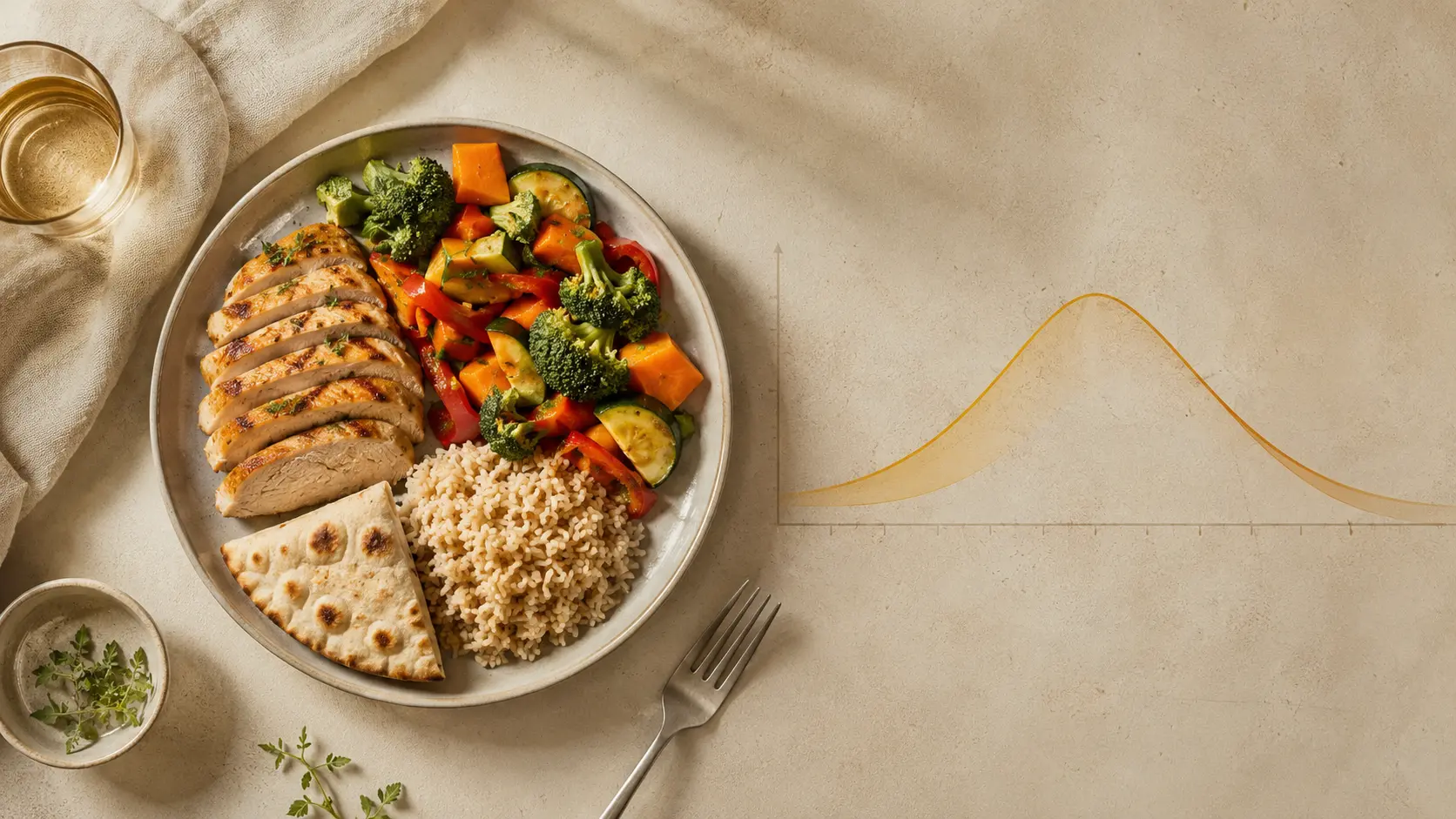
You don't need a diabetes diagnosis to care about what your blood sugar does after a meal. Every single time you eat carbohydrate — rice, bread, fruit, a chocolate bar, doesn't matter — your blood glucose rises and falls in a predictable pattern. For most people, most of the time, that pattern is completely normal and nothing to worry about.
But "normal" has a shape, and it's worth knowing what that shape actually looks like: how high a spike typically goes, how long it should take to come back down, what makes it bigger than it needs to be, and why the answer matters for energy, cravings, and long-term health even in people whose blood sugar will never come close to a diabetes diagnosis.
What Actually Happens to Your Blood Sugar After You Eat
Within minutes of eating carbohydrate, digestive enzymes begin breaking it down into glucose, which enters the bloodstream through the intestinal wall. Blood glucose starts rising almost immediately and continues as digestion proceeds. In response, the pancreas releases insulin, a hormone that signals cells throughout the body to take up glucose from the blood for immediate energy or storage.
The height and speed of that rise depends heavily on what you ate: liquid sugar (a soft drink) is absorbed almost immediately and produces a fast, sharp spike. A meal with fibre, protein, and fat slows gastric emptying and glucose absorption, producing a lower, more gradual rise. This is normal physiology, not a malfunction — a spike and return is exactly what a healthy glucose system is supposed to do after eating.
What Counts as Normal (vs Prediabetes vs Diabetes)
These are standard clinical reference ranges used by major diabetes associations. They're useful context, not a self-diagnosis tool — only a healthcare provider can interpret an individual result.
| Test | Normal | Prediabetes | Diabetes |
|---|---|---|---|
| Fasting glucose | Under 100 mg/dL | 100-125 mg/dL | 126 mg/dL or higher |
| 2 hours after eating (OGTT) | Under 140 mg/dL | 140-199 mg/dL | 200 mg/dL or higher |
| HbA1c (3-month average) | Under 5.7% | 5.7-6.4% | 6.5% or higher |
A useful reframe: a single post-meal spike, even a fairly large one, is not itself a diagnosis of anything. What matters clinically is the pattern over time — the fasting baseline, how high spikes typically go, and how quickly they return to baseline, averaged across weeks and months, which is what the HbA1c test actually measures.
Why Blood Sugar Spikes Happen — And What Makes Them Bigger
Four variables consistently make a glucose spike larger or smaller for the exact same amount of carbohydrate eaten:
- Refinement level. Refined carbohydrates (white bread, white rice, sugary drinks) are digested and absorbed quickly with little to slow them down. Whole, less-processed versions of the same food digest more slowly.
- What else is in the meal. Fibre, protein, and fat all slow gastric emptying and blunt the glucose curve — the same carbohydrate eaten alongside them produces a smaller spike than eaten alone. Most people are eating well under the daily fibre target that would make this effect count for much — see how much fiber you actually need per day for the real number and how to close the gap.
- Meal order. The sequence you eat foods in during the same meal measurably changes the glucose response — covered in detail below.
- Sleep and stress. Poor sleep the night before and elevated cortisol both reduce insulin sensitivity the next day, making the same meal produce a larger spike than it would on a well-rested, lower-stress day.
Why This Matters Even If You'll Never Get Diabetes
The most immediate, universally relatable reason has nothing to do with long-term disease risk: a sharp glucose spike followed by a sharp drop is directly linked to the energy crash, brain fog, and sudden hunger or cravings that show up an hour or two after a high-refined-carb meal. That crash is not imagined or "just tiredness" — it's the mirror image of the spike, and it's part of why a sugary breakfast so often leads to reaching for something else well before lunch. Sugar cravings explained covers exactly what's happening in your brain during that crash, and why the craving that follows tends to point straight back at more sugar.
There's also a broader, more preliminary line of research suggesting that even glucose variability within the "normal" range may relate to long-term cardiovascular and metabolic markers — but this evidence is less settled than the energy-crash and craving connection, and shouldn't be read as "any spike is dangerous." For most people without diabetes risk factors, the practical, well-supported reason to care is the same-day experience: steadier energy, fewer crash-driven cravings, and less of the up-and-down that makes consistent eating harder to sustain. This connects directly to why calorie counting alone tends to fail long-term — a body running on a cycle of spikes and crashes is fighting its own hunger signals the entire time.
Time of day is a variable worth factoring in too — the exact same meal tends to produce a larger glucose response late in the evening than it does earlier in the day, which is one of the more consistent findings in the research on whether meal timing matters for fat loss.
The Continuous Glucose Monitor Trend: What's Real and What's Overhyped
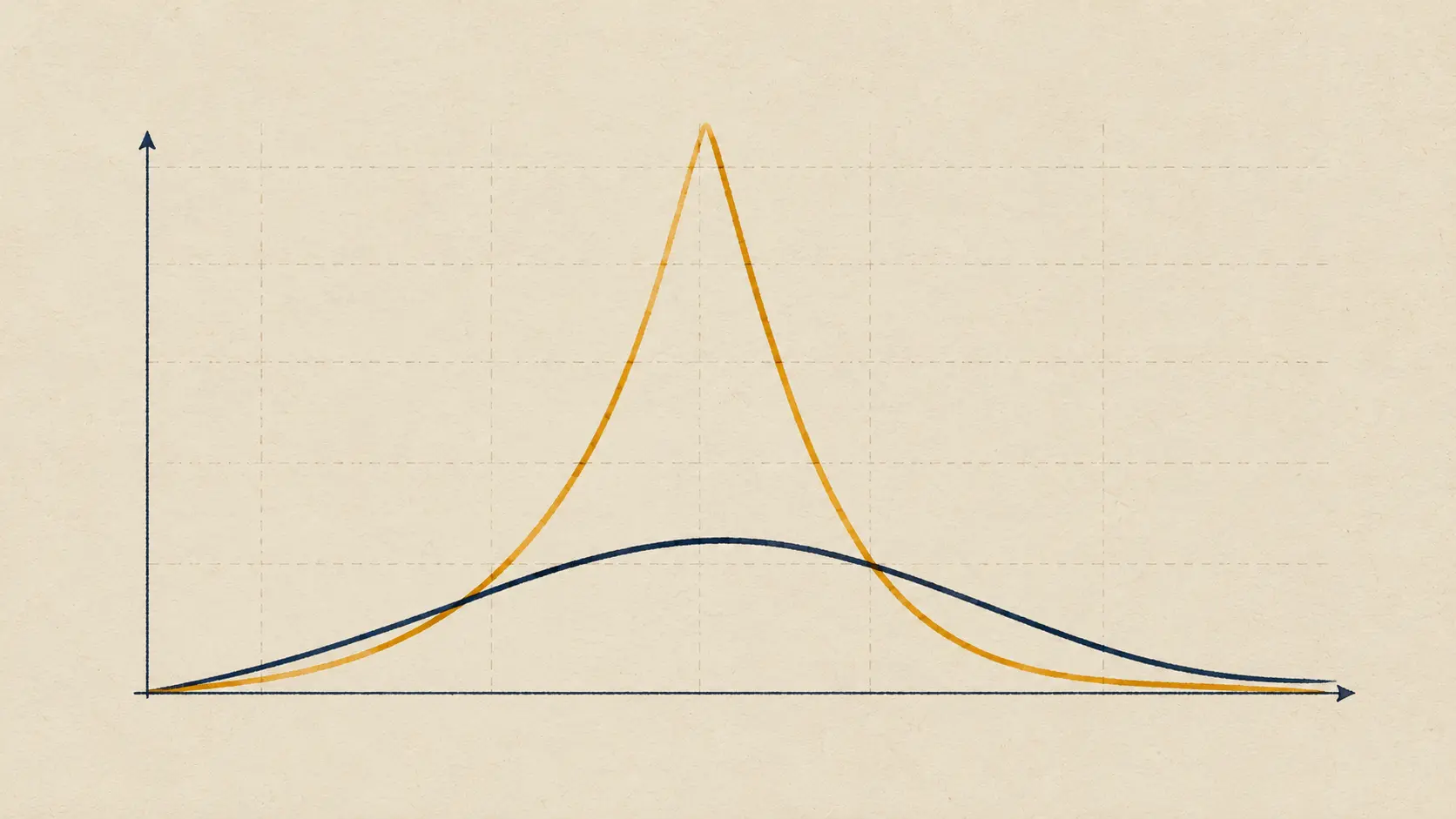
CGMs — small wearable sensors that track glucose continuously — have moved well beyond clinical diabetes management into general wellness marketing aimed at people with completely normal blood sugar. It's worth separating the genuine research from the sales pitch.
What's real: a well-known 2015 study published in Cell measured glucose responses to identical meals across hundreds of people and found substantial individual variation — the same food could spike one person's blood sugar significantly more than another's, based on factors including gut microbiome composition.[1] That's a genuine, interesting scientific finding about personalisation.
What's overstated: the jump from "individual variation exists" to "every healthy person needs to wear a continuous sensor to eat correctly." There is limited evidence that CGM use changes health outcomes in people without diabetes or prediabetes, and most of what a CGM would reveal for a healthy person — that sugary drinks and refined carbs spike glucose more than vegetables and protein — is already well established and doesn't require a sensor to act on.
Five Ways to Reduce Blood Sugar Spikes — Ranked by Evidence
| Technique | Effect | Evidence strength |
|---|---|---|
| Eat vegetables and protein before carbs | Reduced glucose by 28.6% at 30 min and 36.7% at 60 min in a controlled study, same meal, order changed only | Strong |
| Walk for 10-15 minutes after eating | Meaningfully blunts the post-meal spike; most effective when started soon after the meal, not delayed | Strong |
| Pair carbs with protein, fat, or fibre | Slows gastric emptying and glucose absorption versus eating refined carbs alone | Strong |
| Prioritise sleep the night before | Poor sleep measurably reduces next-day insulin sensitivity, increasing the spike from an identical meal | Strong |
| Diluted vinegar before a carb-heavy meal | Small studies show a modest blunting effect on the glucose response; effect size is smaller and less consistent | Moderate |
The food-order finding deserves a closer look because the effect size is larger than most people expect for something that costs nothing and takes no extra time. A 2015 study in Diabetes Care gave the same participants an identical meal on two separate occasions — once eating carbohydrates first, once eating vegetables and protein first, then carbs last. Total food and total calories were unchanged. Eating vegetables and protein first cut the glucose spike by more than a third at the one-hour mark, with correspondingly lower insulin levels.[2] Eating pace matters too, for a related but separate reason — mindful eating without a 40-minute meal covers how slower eating gives satiety signals time to register before overeating happens.
Walking after a meal has a similarly strong evidence base. A 2022 systematic review and meta-analysis found that light postprandial walking reduces the glucose spike compared with remaining seated, with the effect strongest when the walk begins soon after eating rather than being delayed by an hour or more.[3] Even short, broken-up bouts — three 15-minute walks across a day — have shown measurable benefits, which makes this one of the lowest-effort, highest-payoff habits on this list. If you're building consistent movement into your day, the TDEE calculator factors activity level into your overall energy needs, and the 21-Day Movement Streak is a low-pressure way to build a daily walking habit. Walking as exercise covers the broader evidence for daily walking beyond just this post-meal effect, including its impact on cardiovascular health and total calorie burn.
A Practical Blood-Sugar-Friendly Plate
None of this requires a special diet or cutting out carbohydrates. It requires building most meals around the same proportions covered in how to build a balanced plate without a food scale: vegetables and protein taking up most of the plate, a moderate portion of carbohydrate — ideally a less-refined version — and a small amount of fat. Eat the vegetables and protein portion first if the meal is served in courses, or simply eat those bites first from a mixed plate. Then, if you can, take a short walk afterward.
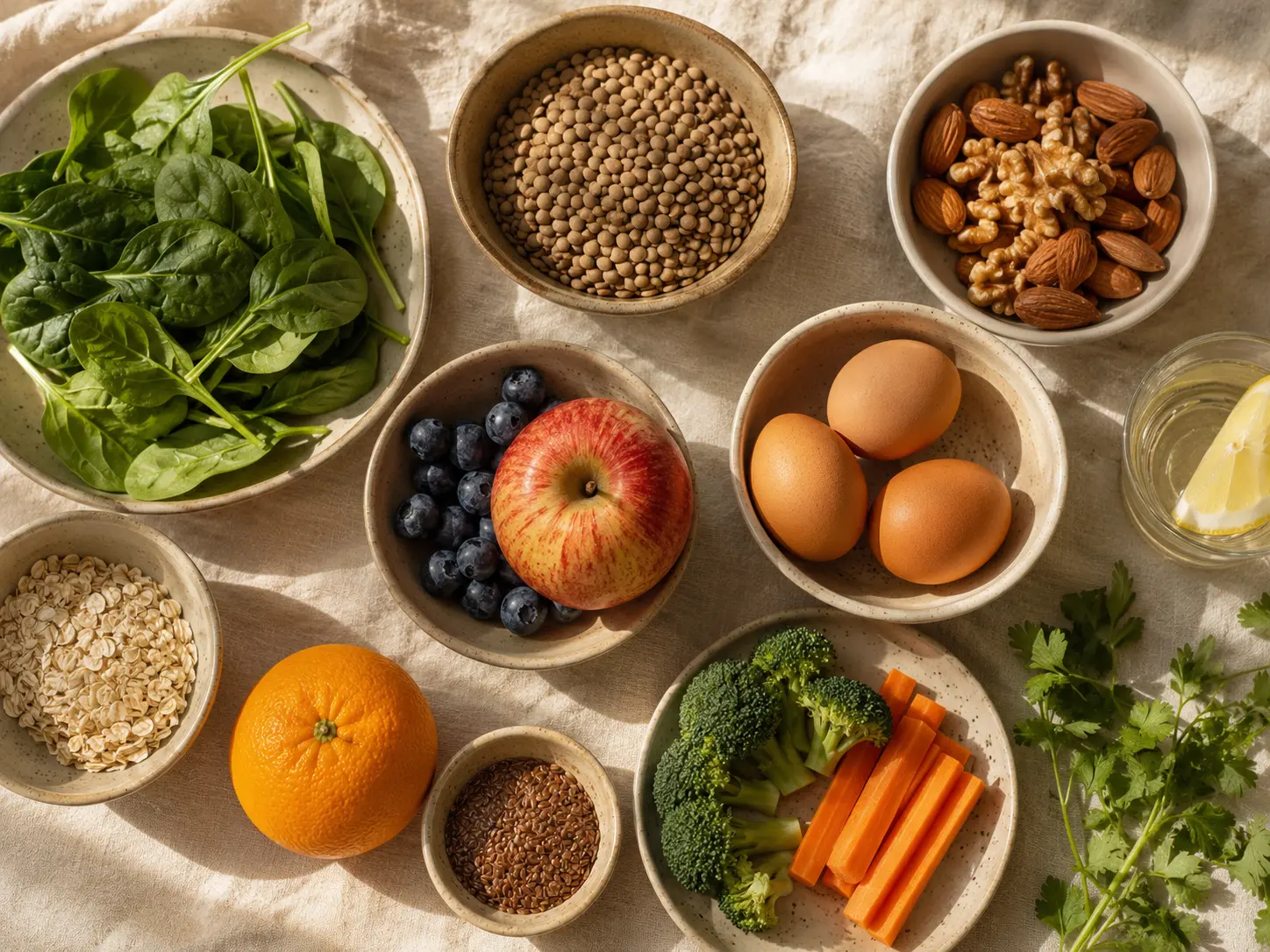
This isn't about achieving a flat line — some rise after eating is normal and expected. It's about avoiding the sharpest, fastest spikes that come from refined carbohydrate eaten alone on an empty stomach, and giving your body the small assists — order, movement, sleep — that measurably flatten the same meal's impact.
When to Actually Get Tested
Standard medical guidance recommends a fasting glucose or HbA1c screening starting around age 35 for most adults, or earlier if risk factors are present: a family history of diabetes, being overweight, high blood pressure, or a history of gestational diabetes. See a doctor sooner, regardless of age, if you notice unusual thirst, frequent urination, unexplained fatigue, or unexplained weight change. A single home reading or a wearable's estimate is not a substitute for a proper diagnostic test interpreted by a clinician.
Final Thoughts
Blood sugar rising and falling after a meal isn't a malfunction — it's exactly what's supposed to happen. What's worth paying attention to, diabetes diagnosis or not, is how sharp the rise is, how far it drops on the other side, and whether that pattern leaves you steady or leaves you crashing and reaching for something sweet an hour later.
You don't need a sensor on your arm to fix most of this. Vegetables and protein first, a short walk after eating, and a decent night's sleep move the needle more than most people expect from three completely free habits.
If fasting is part of how you already eat, the fasted-state side of this same glucose and insulin story — what happens to blood sugar when you're not eating at all — is covered in full in what intermittent fasting actually does to your body. And if you want six structured lessons that put balanced eating, protein, and meal planning into one system rather than isolated tips, the Eat With Intent course is free and requires no sign-up.
Hydration status affects this picture too — dehydration can concentrate blood glucose readings and is often mistaken for a craving. See why water alone isn't always enough for how sodium and fluid balance fit into the same system.
Sources
[1] Zeevi, D. et al. (2015). Personalized Nutrition by Prediction of Glycemic Responses. Cell, 163(5), 1079-1094.
[2] Shukla, A.P. et al. (2015). Food Order Has a Significant Impact on Postprandial Glucose and Insulin Levels. Diabetes Care, 38(7), e98-e99. Available at: diabetesjournals.org
[3] Systematic review and meta-analysis on postprandial walking and glycaemic response, Sports Medicine, 2022. Available at: pubmed.ncbi.nlm.nih.gov