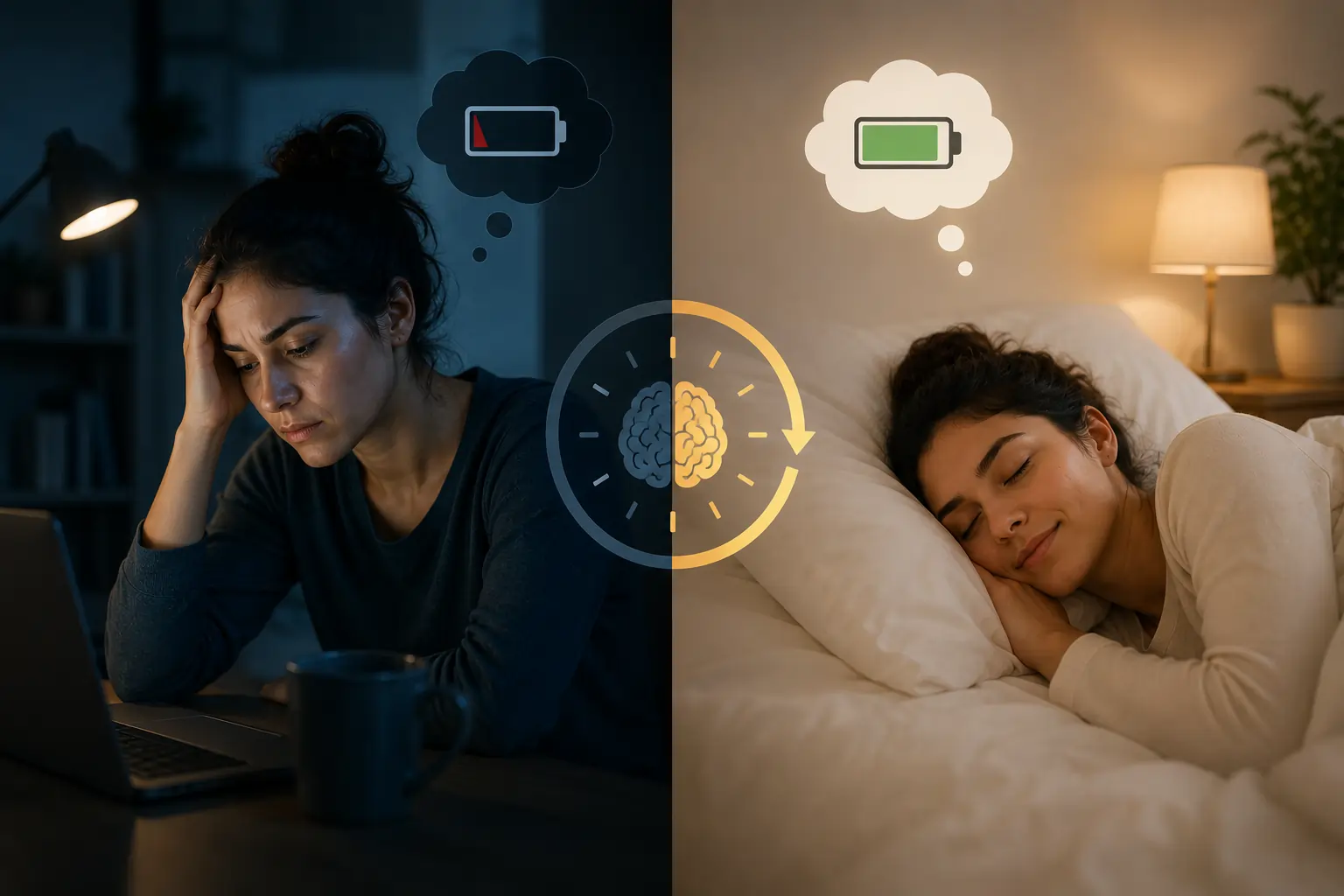
Most people who are not sleeping enough know it. What they typically do not know is what kind of not-enough they are dealing with. A terrible single night before a presentation. A period of reduced sleep during a crunch at work. Five years of consistently getting six hours when your body needs seven and a half. These are meaningfully different physiological situations that produce different kinds of damage, carry different risk profiles, and respond to different recovery approaches.
The terms 'sleep deprivation' and 'sleep debt' are often used interchangeably, which obscures a clinically relevant distinction. Sleep deprivation, in its precise sense, refers to acute insufficient sleep — a significant shortfall over a short period. Sleep debt refers to the cumulative deficit that accumulates when sleep is chronically insufficient — when you are consistently sleeping less than your biology requires, night after night, week after week.
The difference matters practically because the damage profiles are different, the subjective experience of them diverges in ways that make chronic sleep debt particularly dangerous, and the recovery timeline for chronic debt is considerably longer and less forgiving than the recovery from an occasional bad night.
Defining the Terms Precisely
Acute sleep deprivation
Acute sleep deprivation refers to a significant reduction in sleep below an individual's required duration over a short period — typically one to three nights. This can mean a single night of dramatically reduced sleep (two to three hours instead of eight) or several consecutive nights of moderate reduction during a work deadline or travel disruption.
Acute deprivation produces immediate, dramatic, and noticeable effects. Cognitive performance is visibly impaired. Emotional reactivity increases sharply. Coordination and reaction time degrade. The person knows they are impaired because the baseline against which they compare their current state is recent and clear. The sleepiness is strong enough to be inescapable.
Chronic sleep debt
Chronic sleep debt is the accumulated deficit from consistently sleeping less than the body requires over weeks, months, or years. It is defined by the regularity of the shortfall rather than the magnitude of any individual night. A person who needs eight hours of sleep but consistently sleeps six and a half hours has accumulated ninety minutes of debt per night, or ten and a half hours per week, or forty-plus hours per month.
The critical feature of chronic debt is that the brain adapts to the reduced sleep state in a way that masks the impairment. After several weeks of consistently insufficient sleep, subjective sleepiness stabilises and people report feeling 'fine' or 'used to it' — even while objective cognitive and physiological measures continue to show significant impairment. The adaptation is to the perception of impairment, not to the impairment itself.
How Sleep Need Is Determined: Finding Your Personal Baseline
Before calculating sleep debt, you need to know your personal sleep requirement — the duration at which your body is fully restored each night. The commonly cited 'eight hours' is a population median, not a universal prescription. Genuine short sleepers who thrive on six and a half hours exist. Genuine long sleepers who require nine or more exist. The normal range is approximately seven to nine hours for adults. Understanding why your sleep cycle structure matters is part of understanding how to assess your true requirement.
The free-running sleep experiment
The most accurate method for determining your personal sleep requirement is the free-running sleep experiment. Take ten to fourteen days during which you have no fixed wake time and no alarm — an extended holiday works best. Go to bed when you feel naturally tired each night. Wake when you wake naturally, without an alarm. Do not use caffeine in the morning during this period.
The first three to five days will likely involve sleeping longer than usual as sleep debt is repaid. By days seven to ten, sleep duration typically stabilises at a consistent nightly amount. This stable duration is a reliable approximation of your personal sleep requirement. Most people discover their requirement is between thirty minutes and one and a half hours more than what they routinely get.
Proxy indicators of adequate sleep
- You wake naturally at roughly the same time each morning without an alarm, feeling alert within fifteen to twenty minutes of waking.
- You do not need caffeine to feel functional before mid-morning. If caffeine's role in your day feels non-negotiable, that dependency is itself a signal.
- You do not feel a strong urge to sleep during the mid-afternoon dip — a mild dip is normal; an overwhelming urge to nap is not.
- You fall asleep within fifteen to twenty minutes of intending to sleep.
- You feel consistently energetic and cognitively sharp during the day without notable fluctuations.
How to Calculate Your Sleep Debt
Sleep debt is the cumulative sum of the differences between your required sleep duration and your actual sleep duration over time. The most practical approach is a two-week retrospective audit: for each of the past fourteen nights, estimate actual sleep (subtract time lying awake before sleep onset and any significant mid-night waking from time in bed), then subtract from your sleep requirement.
| Night | Required sleep | Actual sleep | Nightly debt / surplus |
|---|---|---|---|
| Monday | 8 hours | 6.5 hours | −1.5 hours (debt) |
| Tuesday | 8 hours | 6 hours | −2 hours (debt) |
| Wednesday | 8 hours | 7 hours | −1 hour (debt) |
| Thursday | 8 hours | 6.5 hours | −1.5 hours (debt) |
| Friday | 8 hours | 7.5 hours | −0.5 hours (debt) |
| Saturday | 8 hours | 9.5 hours | +1.5 hours (surplus) |
| Sunday | 8 hours | 9 hours | +1 hour (surplus) |
| Week 1 total | — | — | −5 hours net debt |
| Week 2 (same pattern) | — | — | −5 hours additional |
| Two-week cumulative debt | — | — | −10 hours |
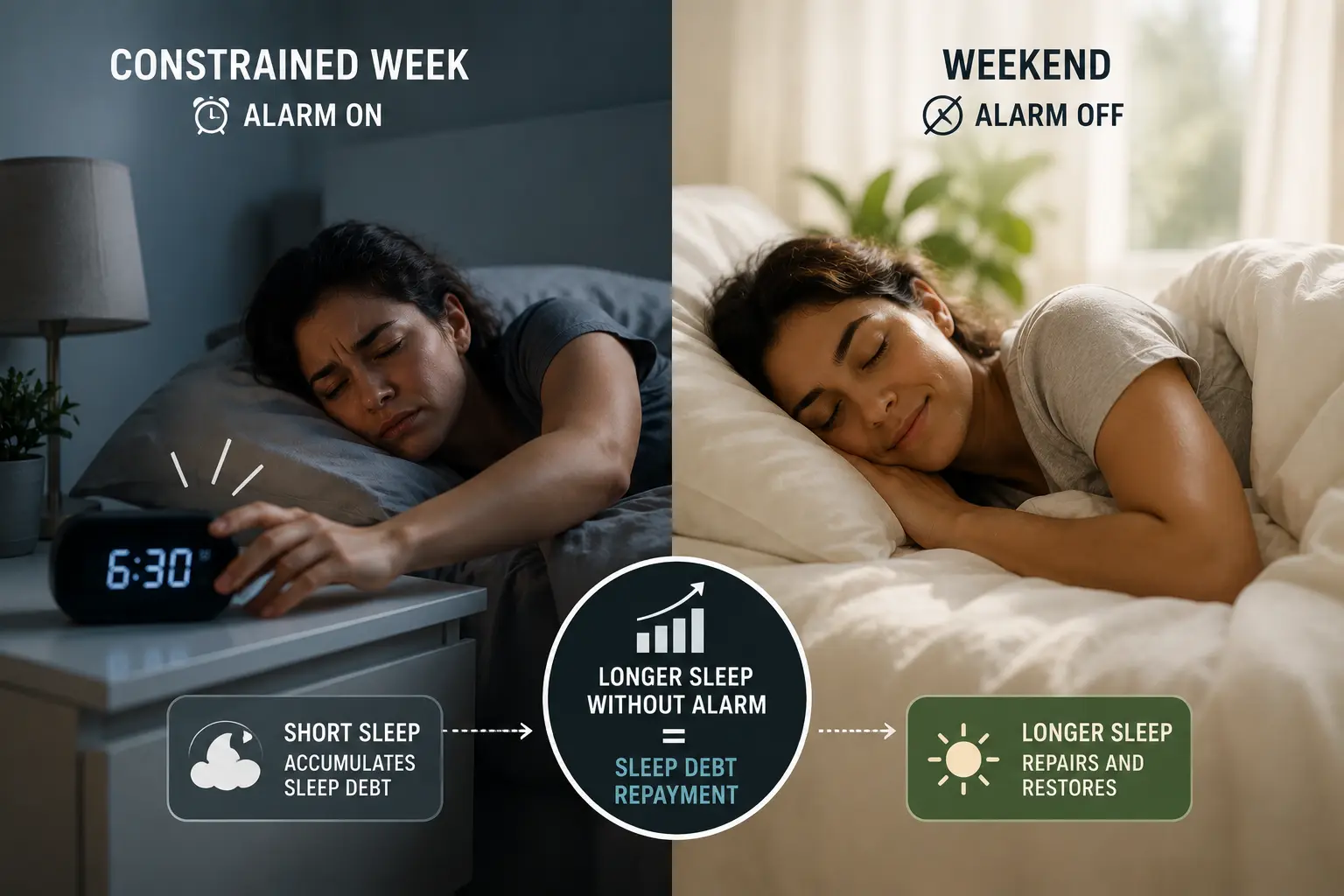
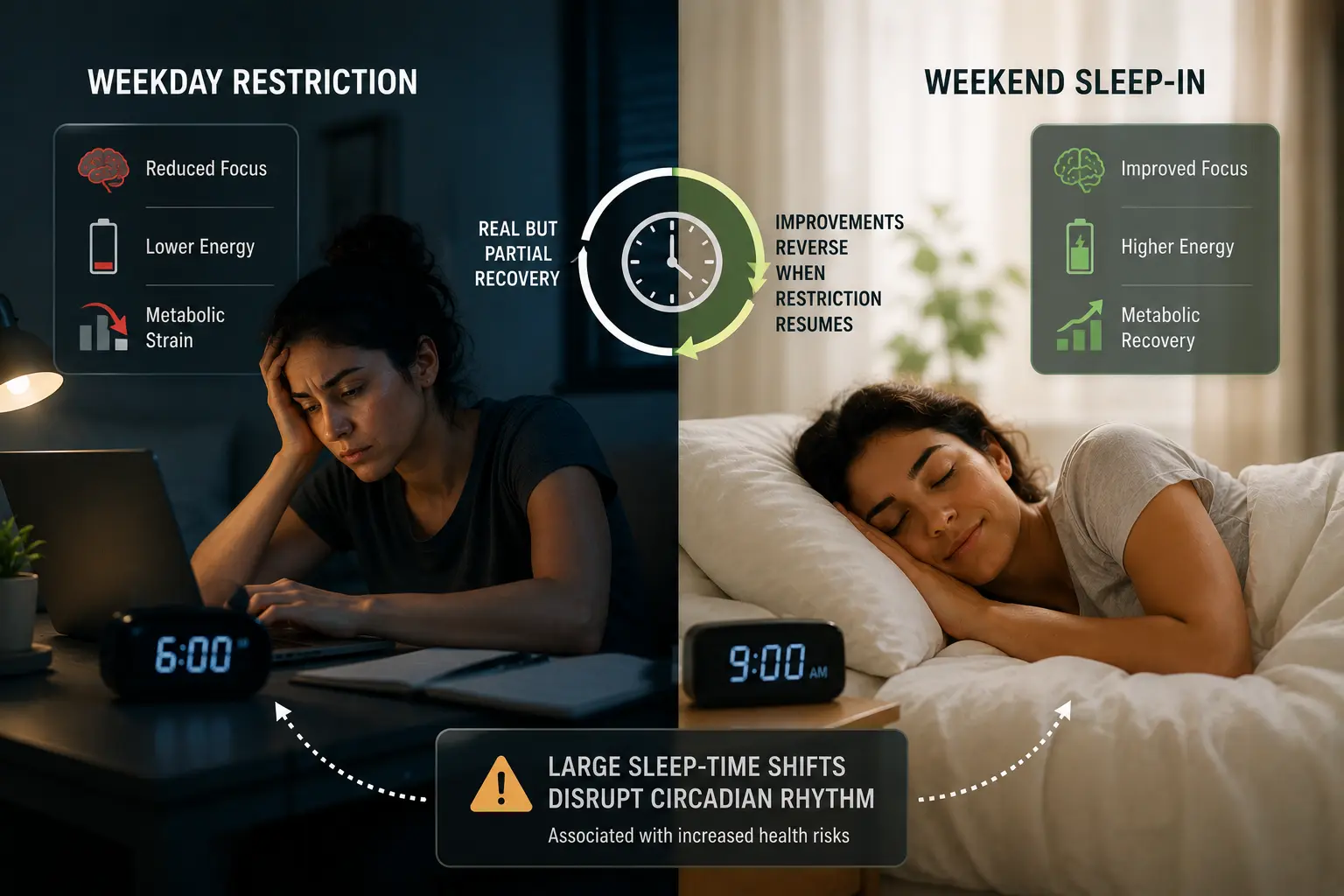
In the example above, the two-week debt is ten hours despite weekend sleep-ins that added two and a half hours of surplus. This illustrates that weekend recovery sleep is real but partial — the common strategy of 'catching up on the weekend' does not fully offset a week of significant weeknight shortfall.
The debt categories
What Acute Deprivation and Chronic Debt Do to the Body
The effects of sleep loss are not simply proportional to the total number of hours missed. Acute deprivation and chronic debt produce overlapping but distinct damage profiles, with different systems affected at different rates.
Acute sleep deprivation: the immediate effects
| System | Effect after one night of significant deprivation | Mechanism |
|---|---|---|
| Prefrontal cortex | 40–60% reduction in activity; impaired decision-making, impulse control, working memory, and risk assessment | The prefrontal cortex is disproportionately sensitive to sleep loss compared to other brain regions |
| Amygdala (emotional reactivity) | 60% increase in reactivity to negative stimuli; emotional responses become disproportionate | Disconnection of prefrontal regulatory input to amygdala removes top-down emotional control |
| Attention and concentration | Significant increase in attentional lapses; reaction time degradation comparable to legal intoxication after 17–19 hours awake | Adenosine accumulation and reduced norepinephrine signalling impair sustained alertness |
| Immune function | Immediate reduction in natural killer cell activity; reduced cytokine response | Sleep is the primary window for immune system maintenance and repair |
| Metabolic hormones | Elevated ghrelin (hunger hormone), reduced leptin (satiety hormone); increased insulin resistance | Sleep debt disrupts hormonal regulation of appetite and glucose metabolism within days |
| Cardiovascular | Elevated blood pressure, elevated resting heart rate; reduced heart rate variability | Sympathetic nervous system dominance from accumulated adenosine and cortisol elevation |
The ghrelin spike from a single bad night is not a minor footnote — it measurably raises hunger and shifts food preference toward sweet, high-calorie options, while the same night's drop in prefrontal cortex activity makes those cravings harder to resist. Sugar cravings explained covers this mechanism in more depth, including why fixing sleep is often a higher-leverage fix for cravings than any dietary tactic.
Chronic sleep debt: the longer-term damage profile
Chronic sleep debt produces a partially different set of effects. Many of the acute effects become adapted to — or at least the perception of them does — while structural and systemic damage accumulates below the level of conscious awareness.
| System | Effect of chronic sleep debt (weeks to months) | Why it differs from acute deprivation |
|---|---|---|
| Cognitive performance | Sustained impairment that plateaus at a degraded baseline; no longer perceived as impairment by the person | Subjective adaptation to the state makes self-assessment unreliable; the degradation becomes the new normal |
| Metabolic health | Increased insulin resistance; elevated fasting glucose; disrupted appetite regulation contributing to weight gain; increased visceral fat | Hormonal dysregulation from chronic debt compounds over time; acute disruption becomes structural |
| Cardiovascular system | Elevated blood pressure; increased inflammatory markers; meaningfully higher risk of heart disease with habitual short sleep (under 6 hours) | Cumulative effect of chronic sympathetic activation and inflammatory signalling |
| Immune system | Increased susceptibility to common infections; slower recovery from illness; blunted vaccine response | Chronic suppression of natural killer cell activity; immune maintenance is perpetually incomplete |
| Brain structure | Emerging evidence for reduced grey matter density in frontal areas; accelerated Alzheimer's-associated amyloid accumulation | The glymphatic system — the brain's waste-clearance mechanism that operates during deep sleep — is chronically underutilised |
| Mental health | Increased anxiety, depressed mood, emotional dysregulation; bidirectional relationship with depression and anxiety disorders | Chronic amygdala hyperreactivity and reduced prefrontal regulation; chronic cortisol elevation |
| Hormonal disruption | Reduced testosterone in men; disrupted menstrual cycle in some women; elevated cortisol baseline; reduced growth hormone secretion — overlapping with the hormonal effects of chronic stress | Sleep is the primary window for sex hormone and growth hormone pulses; chronic debt progressively reduces the available secretion window |
| Pain sensitivity | Lowered pain threshold; increased perception of chronic pain; reduced efficacy of pain management | Sleep has significant analgesic properties; chronic debt removes this buffering, amplifying pain signals |
The Subjective Adaptation Problem: Why You Cannot Trust How You Feel
The most counterintuitive and practically important feature of chronic sleep debt is the divergence between subjective experience and objective function. This is the feature that most determines why people do not address their sleep debt: they do not believe they have one because they do not feel as impaired as the objective data suggests they are.
| Sleep pattern | Objective impairment | Subjective experience | Why the gap exists |
|---|---|---|---|
| One night of total sleep deprivation | Severe; person is aware they are severely impaired | Feels terrible; sleepiness is inescapable | No time for adaptation; comparison against yesterday's well-rested baseline is recent and clear |
| 3 days of significant restriction (4–5 hrs/night) | Severe; equivalent to 24+ hours without sleep | Feels bad; sleepiness is still perceptible and reported as high | Adaptation beginning but not complete; subjective impairment is high though somewhat lower than objective |
| 2 weeks of moderate restriction (6 hrs/night) | Severe; equivalent to 48 hours without sleep on cognitive tasks | Feels mildly sleepy; reports functioning normally | Full adaptation; comparison baseline has shifted to the impaired state |
| Months to years of mild-to-moderate restriction (6–7 hrs in an 8-hr-need person) | Moderate-to-significant sustained impairment | Feels 'tired sometimes but basically fine'; may not connect tiredness to sleep | Complete adaptation; no memory of non-sleep-deprived baseline remains as reference |
Can You Catch Up on Sleep? What the Research Actually Shows
The intuitive strategy for managing weekday sleep debt is weekend recovery sleep: sleep in on Saturday and Sunday, repay the week's deficit, and start fresh on Monday. The research on this is considerably less reassuring than the intuition.
What weekend sleep-ins actually recover
Weekend recovery sleep does produce real and measurable benefits. Subjective sleepiness drops substantially after one or two nights of extended sleep. Some performance measures — particularly reaction time and sustained attention — show meaningful improvement. Appetite-regulating hormones begin to normalise.
What weekend sleep-ins do not recover
A 2021 meta-analysis by Depner and colleagues reviewing studies of recovery sleep found that a single night or two of extended sleep after a week of restriction produced incomplete cognitive recovery — particularly for executive function and sustained attention, which recover more slowly than simple reaction time. After five days of six-hour sleep, two nights of extended recovery sleep left residual impairment that persisted into the following week. [3]
The longer and more chronic the debt, the less effectively a short weekend recovery period addresses it. Acute debt from one or two bad nights recovers quickly and relatively completely with a night or two of adequate sleep. Chronic debt accumulated over months does not recover in a weekend, or even a week.
The Recovery Timeline: What Realistic Sleep Debt Repayment Looks Like
| Debt type | Duration of deficit | Full recovery timeline | Key recovery markers |
|---|---|---|---|
| Acute (1–3 nights) | 1–3 days of significant restriction | 1–2 nights of adequate sleep; 2–3 days for full immune and cognitive restoration | Reaction time, sustained attention, emotional reactivity, immune markers |
| Short-term (1–2 weeks) | 1–2 weeks of moderate restriction | 2–3 weeks of consistent adequate sleep | Executive function, working memory, metabolic hormones, mood stability |
| Moderate chronic (1–3 months) | 1–3 months of consistent shortfall | 4–6 weeks of consistently adequate sleep; longer for full hormonal restoration | Cognitive performance baseline, testosterone/growth hormone levels, inflammatory markers |
| Severe chronic (3+ months) | 3+ months of consistent shortfall | 3–4 months minimum; potentially longer for full restoration | All of the above; requires lifestyle change, not just additional sleep |
A critical practical note: after two weeks of sleep restriction, people typically feel substantially better within the first two to three recovery days and may conclude they have fully recovered. The data suggests cognitive impairment persists beyond what is subjectively perceptible at this stage. Treating the subjective recovery as the endpoint understates the actual recovery time required.
How to Actually Recover: Practical Sleep Debt Reduction
Set a consistent wake time first
The most effective single intervention for improving sleep quality and gradually reducing debt is setting and maintaining a consistent daily wake time — the same time every day including weekends. This anchors the circadian clock, which governs the timing of melatonin release, core body temperature nadir, and the hormonal cascade that initiates sleep. A consistent wake time produces more consistent sleep onset, deeper sleep architecture, and progressively longer sleep duration as the sleep system strengthens.
The counterintuitive aspect: the consistent wake time is more important than a consistent bedtime. Bedtimes are harder to standardise because they are downstream of everything else in your evening. Building a proper wind-down routine and optimising your sleep environment address the sleep-onset side; wake time anchors the system.
Extend sleep from the morning end, not the evening end
For people who need to recover debt, adding sleep time from the morning end — by setting the alarm thirty minutes later and going to bed at the same time — is more effective than going to bed thirty minutes earlier. The reason is sleep architecture across the night: slow-wave deep sleep dominates the first half of the night, and REM sleep dominates the second half. Extending the morning end adds disproportionately more REM, which is particularly depleted in chronic short sleepers. This is not the same as large weekend sleep-ins, which disrupt the circadian rhythm; it is a modest, consistent extension that does not create social jet lag.
Reduce the structural causes of the deficit
Debt recovery requires not just sleeping more but identifying and addressing why you are not sleeping enough in the first place. For most people with chronic debt, the causes fall into a small number of categories: habitual late bedtimes driven by screen use; sleep-disruptive environments; anxiety or rumination that delays sleep onset; caffeine that fragments second-half-of-night architecture; inconsistent schedules across the week. Addressing the structural cause prevents recovery from being undermined by continuation of the debt-generating pattern.
For a lot of people, that structural cause is work-related stress spilling into the hours that should be sleep. If the underlying driver is chronic workplace exhaustion specifically, burnout recovery: what actually works when you can't just quit covers how sleep debt and burnout reinforce each other, and what to address first.
Strategic napping for moderate debt
For people with moderate acute or short-term debt, a strategic nap — twenty to thirty minutes in duration, taken before 3pm to avoid disrupting nighttime sleep — provides meaningful cognitive recovery. Research consistently shows that a twenty-minute nap produces acute cognitive improvements comparable to a full night's extension of sleep for many performance measures. Napping is more effective as a supplement to adequate nighttime sleep than as a chronic compensation strategy.
| Recovery strategy | Best for | Key instruction | Common mistake |
|---|---|---|---|
| Consistent daily wake time | All debt levels; the foundation | Same time 7 days/week; within 30 minutes variation maximum | Making exceptions on weekends, which reset the circadian progress made during the week |
| Modest morning extension (30 min earlier alarm) | Mild to moderate debt; sustainable long-term | Move alarm back 30 minutes; maintain bedtime; allow the circadian shift to produce deeper sleep over weeks | Attempting large extensions that disrupt the social schedule and create resistance to sustaining the change |
| Weekend sleep-ins (limited) | Acute debt from a specific bad week; not chronic debt management | Limit to 1–1.5 hours beyond normal wake time; do not extend into late morning, which disrupts the following week | Using weekend sleep-ins as the primary chronic debt management strategy; produces social jet lag and incomplete recovery |
| Strategic napping (20–30 min, before 3pm) | Acute and short-term debt; high-performance situations | Set a timer; lie down immediately; even if you do not fully sleep, the rest provides benefit | Napping too long (produces sleep inertia) or too late (delays sleep onset) |
| Address structural causes | Chronic debt; required alongside all other strategies | Identify and change the primary reason you are not meeting your sleep requirement | Focusing only on adding sleep time without changing the habits that created the deficit |
Knowing Which Problem You Have: A Quick Self-Assessment
Given the subjective adaptation problem, the self-assessment for sleep debt cannot rely primarily on how you feel. It requires looking at behavioural indicators that are less susceptible to the normalisation effect.
| Indicator | Suggests acute deprivation | Suggests chronic debt | Suggests adequate sleep |
|---|---|---|---|
| Morning alarm experience | Struggling significantly more than usual; feel unusually bad on waking | Always need an alarm; could sleep much longer if permitted; sleeping in on days off produces 1+ hours extra | Often wake before or near the alarm; feel alert within 20 minutes |
| Caffeine dependency | Unusual need for more caffeine than normal | Cannot function without caffeine before 10am; headache or cognitive fog without it | Caffeine is a preference, not a functional necessity for morning operation |
| Subjective energy pattern | Markedly worse than your recent normal | Fatigue is normal; hard to remember when you last felt genuinely energetic | Consistent energy across the day with only normal afternoon dip |
| Emotional reactivity | Noticeably more irritable than usual; you and others notice | Mood is generally lower than it used to be; stress tolerance has reduced over time | Emotional responses proportionate to situations |
| Cognitive performance | Obvious difficulty with tasks that are normally easy | Performance feels normal but errors and lapses are more frequent; slower processing on demanding tasks | Consistently able to perform at expected level |
| Physical symptoms | Headache, heavy eyes, physical lethargy noticeably different from your normal | Chronic low-grade fatigue; getting ill more frequently; slow recovery from exercise | Illness frequency and recovery within personal historical normal range |
It's worth distinguishing this from a separate problem entirely: sleep debt assumes you're simply not spending enough time asleep, whether by choice or circumstance. If the real issue is that you have adequate opportunity to sleep but genuinely cannot, whether falling asleep or staying asleep, insomnia vs trouble falling asleep covers that different problem and why it needs a different fix than simply protecting more time for sleep.
The Debt You Cannot Feel Is Still the Debt You Are Paying
There is something quietly alarming about a form of impairment that reliably convinces the impaired person they are functioning normally. Sleep debt is unusual among health problems in that its primary mechanism — the subjective adaptation that makes people feel fine while they are significantly impaired — is also the primary reason people do not address it.
The distinction between acute deprivation and chronic debt matters because it determines the urgency, the recovery approach, and the realistic timeline. One bad night is a manageable one-time cost with a fast recovery. A year of six-hour nights in an eight-hour body is a different category of situation — one where the damage is cumulative, the recovery is long, and the first step is acknowledging that feeling 'used to it' is not the same as being fine.
The calculation is worth doing. The free-running experiment is worth running. The alarm test on a day off is worth noticing. Not because sleep is more important than everything else in a demanding life — but because the cognitive performance, the mood, the health, and the longevity that support everything else in that life are downstream of it.
If you want to build the full sleep system — cycle timing, wind-down, environment, and a two-week reset plan — the Sleep Better course covers all of it in six short lessons. Free, no sign-up required.
One of the most direct consequences of sleep debt that often goes unnoticed is extended workout recovery time. The same training session that requires 48 hours of recovery with adequate sleep may require 60 to 72 hours with sleep deprivation — which means training schedules built around fixed rest intervals start to break down. The guide to rest between workouts explains exactly how sleep affects each of the three recovery processes and how to adjust your training schedule accordingly.
Citations: [1] Dinges DF et al., Sleep 2003, PMID 12683469. [2] Wright KP Jr et al., Current Biology 2019, PMID 30611905. [3] Depner CM et al., meta-analysis of recovery sleep studies, 2021.